
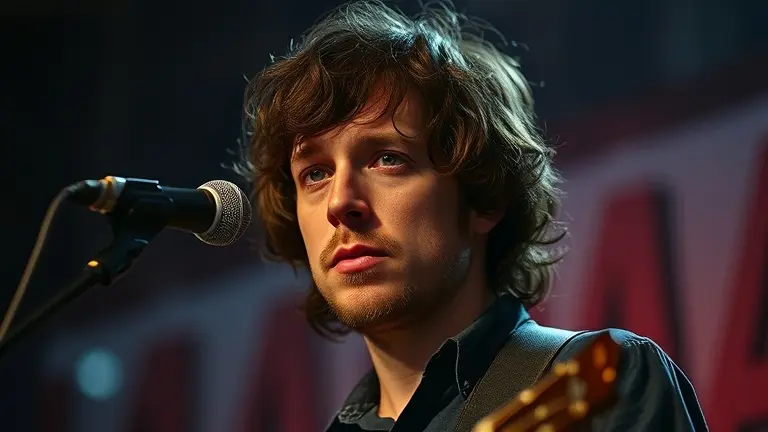
On July 22-23, 2026, the music world was brought to a standstill when singer-songwriter Ryan Adams announced the abrupt cancellation of his entire European tour. In an unvarnished and deeply raw statement shared across his social media platforms, Adams confessed, ‘I’m broke and sick and tired and defeated.’ While such a blunt admission has predictably ignited a firestorm of media speculation and fan disappointment, the reality of the situation touches on something far more profound than just a series of missed concerts. It exposes the fragile architecture of the modern touring industry and the heavy toll that constant public visibility takes on an artist’s mental and financial well-being.
For the thousands of ticket holders left in the lurch, the immediate concern remains centered on the logistics of refunds and the uncertainty of a summer without live performances. Yet, beneath the noise of the headlines lies a larger narrative about burnout, the economic volatility faced by independent artists today, and the human cost of maintaining a career in the spotlight. To understand this moment, we must move past the shock value and look at how we navigate our own pressures when we, like the artists we admire, feel pushed to the brink of exhaustion.
Ryan Adams Cancels European Tour: A Candid Admission of Personal Crisis
On July 22-23, 2026, the music industry was stunned by the abrupt Ryan Adams cancelled European tour announcement, a development that has triggered widespread debate regarding the sustainability of modern touring for legacy artists. In a series of raw and unfiltered social media posts, the singer-songwriter bypassed standard public relations protocols, declaring that he was “broke and sick and tired and defeated.” This candid admission highlights a growing trend of artists using social media as a direct line for psychological disclosure, stripping away the polished veneer often expected of high-profile musicians during times of professional hardship.
The cancellation is being framed by media outlets, including reports from al.com and Syracuse.com, as a poignant indicator of a continuing “career spiral.” By explicitly citing financial insolvency alongside personal health struggles, Adams has provided a jarring look at the precarious economic realities facing mid-to-large-tier touring musicians in 2026. The combination of rising logistical costs, unpredictable market demand, and the intense scrutiny of a long-standing public career appears to have culminated in this sudden withdrawal from the stage.
Understanding the Context of the Announcement
To understand the gravity of the situation, it is helpful to note the specific elements of this recent event:
- Radical Transparency: Unlike typical “scheduling conflict” statements, Adams chose to disclose his internal state, which has polarized public opinion but arguably invited more empathy from his core fanbase.
- Financial Vulnerability: His admission of being “broke” serves as a stark reminder that even acclaimed artists are not immune to the crushing financial pressures of international touring, where profit margins are increasingly thin.
- Reputational Impact: This latest incident adds a complex chapter to his career trajectory, prompting questions about how public figures manage their brands when professional obligations clash with personal well-being.
The immediate aftermath of this news focuses on the logistical chaos for ticket holders and the broader narrative regarding the sustainability of the touring model. As the situation develops, it remains clear that the intersection of personal crisis and public performance has become a defining—and increasingly difficult—aspect of the modern entertainment landscape.
Guide for Ticket Holders: Refund Processes and Expectations

Following the abrupt announcement regarding the Ryan Adams cancelled European tour, ticket holders should prioritize securing their financial reimbursements. When a tour is officially cancelled by the artist or promoter, standard industry protocols dictate that the primary ticketing platform—such as Ticketmaster, Eventim, or local venue box offices—is responsible for issuing refunds. In most cases, these refunds are processed automatically to the original method of payment within 7 to 10 business days. However, due to the high volume of requests triggered by this specific cancellation, fans should be prepared for potential delays in transaction processing times.
Navigating Refund Channels and Consumer Rights
If you purchased tickets through an official primary source, you generally do not need to take any action beyond monitoring your bank or credit card statements. If a refund is not reflected after the 14-day window, you should contact the ticketing agency’s customer support immediately. For those who utilized the secondary market (resale platforms), the situation is more complex. Most reputable resale sites offer a “Fan Guarantee” that provides a full refund if an event is cancelled; however, you must ensure you check the specific terms of the platform you used, as policies regarding service fees vary significantly.
Key steps for affected fans include:
- Check Official Communication: Monitor the email address associated with your purchase for direct instructions from the ticketing provider regarding the Ryan Adams tour cancellation.
- Keep Documentation: Retain your digital receipts, order confirmation numbers, and any correspondence with the promoter. This is vital if you need to file a dispute with your credit card issuer.
- Avoid Phishing Scams: Be wary of unsolicited messages claiming to help you “expedite” your refund; only interact with the official ticketing site where you made the original purchase.
- Credit Card Disputes: If the ticketing agency remains unresponsive after multiple attempts to contact them, contact your credit card provider to initiate a chargeback under the grounds of “services not rendered.”
While the news surrounding the Ryan Adams cancellation has left many fans frustrated, consumer protection laws in both the US and Europe provide a clear pathway for recovering your funds. Remain patient during the processing period, as logistical hurdles often occur when mass cancellations are announced unexpectedly.
The Economic Reality of Modern Touring: Why Mid-Tier Artists Are Struggling

The recent ryan adams cancelled european tour announcement serves as a stark reminder of the mounting financial pressures currently facing professional musicians. While the singer’s public admission of being “broke and sick and tired” made headlines for its vulnerability, it also highlights a systemic instability within the music industry. For mid-tier artists, the economics of touring in 2026 have shifted from a reliable revenue stream into a high-stakes gamble where profit margins are razor-thin, if not non-existent.
The Rising Cost of Global Logistics
The financial viability of international travel has plummeted due to a perfect storm of inflationary pressures and operational costs. Artists today must contend with:
- Escalating Transportation Costs: Fuel surcharges, increased airfare, and the rising expense of shipping equipment internationally have made traditional routing unsustainable.
- Insurance and Visa Hurdles: Navigating post-pandemic bureaucratic requirements for touring in Europe has significantly increased administrative overhead.
- Shrinking Profit Margins: With streaming revenues failing to keep pace with inflation, artists rely almost exclusively on ticket sales and merchandise. If ticket velocity slows, the entire tour infrastructure can collapse under the weight of daily guarantees and venue fees.
The Hidden Costs of Public Performance
Beyond the raw math, there is an immense toll on the human capital required to sustain a tour. The “glamour” of the road often masks the reality of exhaustion, where the cost of maintaining a crew, hotel accommodations, and daily per diems can exceed daily revenue. When an artist admits to being “defeated,” it reflects the psychological burnout that accompanies trying to balance these bottom-line realities against the expectations of a global fanbase. While the ryan adams situation is uniquely high-profile, it functions as a diagnostic for the broader industry; many independent and mid-tier acts are currently forced to choose between personal solvency and the fulfillment of tour dates, often leading to cancellations that are purely driven by financial necessity rather than lack of desire to perform.
Radical Transparency: The Evolution of Reputation Management in the Digital Age
The announcement regarding the Ryan Adams cancelled European tour represents a growing trend in the entertainment industry: the move away from polished, sanitized press releases toward “radical transparency.” By utilizing social media to confess personal financial distress and exhaustion, Adams bypassed traditional PR gatekeepers, opting instead for a raw, unfiltered digital narrative. This strategy, while controversial, highlights a seismic shift in how public figures navigate reputational crises in the age of constant connectivity.
The Mechanism of Unfiltered Expression
When an artist chooses to bypass standard public relations channels, they trade professional insulation for perceived authenticity. While this approach can foster deeper connections with a loyal fan base, it also presents significant risks. The move reflects a broader trend where public figures attempt to reclaim the narrative during a career spiral by framing their struggles in their own voice.
- Pros of Direct Communication: Enables immediate control of the narrative, fosters a sense of raw humanity, and cuts through corporate jargon that often alienates fans.
- Cons of Radical Transparency: Lack of a buffer can lead to impulsive statements that may exacerbate legal or financial liabilities; it also leaves little room for nuance when addressing complex topics like insolvency.
Managing Reputational Fallout
Whether these candid admissions serve as genuine disclosures or calculated moves to preempt negative press remains a subject of intense debate. Evidence suggests that while some audiences appreciate the vulnerability, others view such public breakdowns as a sign of professional instability. For an artist, the line between “being real” and alienating stakeholders—including concert promoters and investors—is incredibly thin. As the Ryan Adams case unfolds, it serves as a case study for how modern artists must balance the demand for constant access with the necessity of maintaining a professional facade in a high-stakes, unforgiving industry.
Reclaiming Your Clarity in a Chaotic World
The cancellation of Ryan Adams’ tour is a sobering reminder that even the most talented figures are not immune to the crushing weight of professional burnout and financial instability. While the headlines focus on the spectacle of a ‘public meltdown,’ the more meaningful takeaway is the necessity of protecting one’s mental and cognitive health before the walls close in. The struggle to stay focused, sharp, and resilient in a high-pressure environment is something many of us face daily, often without the magnifying glass of public scrutiny.
If you find yourself feeling mentally foggy or overwhelmed by the noise of today’s constant news cycles and professional demands, it is time to prioritize your internal equilibrium. Just as we analyze the pitfalls of the touring industry, we must also identify the tools that allow us to maintain our own focus. This is where The Brain Song becomes an essential, non-invasive asset in your daily routine. Designed to combat the mental fatigue that plagues high-stress lifestyles, this neuroscience-based approach helps you clear the fog and regain the cognitive clarity needed to perform at your best, even when life feels completely unmanageable.
By integrating this simple, 12-minute daily auditory experience, you can create a mental ‘reset’ that allows you to rise above the stress rather than being defeated by it. Do not let the chaos of the world dictate your cognitive state. Take control of your focus, sharpen your mind, and find the balance you deserve by starting your journey with us today.
 Discover how a simple 12-minute daily routine can help you clear the mental fog and reclaim your focus.Yes, I Want This Now!