
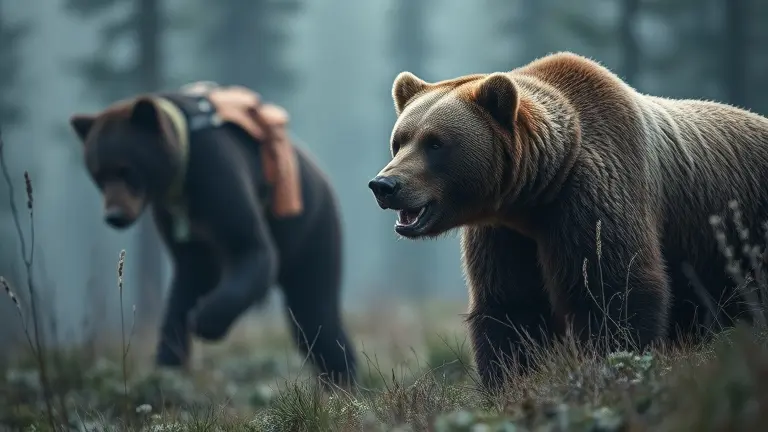
The recent, terrifying brown bear attack in Anchorage’s Bear Valley has sent shockwaves through the local hiking community, serving as a brutal reminder of the raw, unpredictable nature of the Alaskan wilderness. When a routine hike on a narrow, blind trail transforms into a life-or-death struggle, the aftermath leaves us with more than just questions; it demands a radical reassessment of how we navigate territory shared with apex predators. As authorities utilized drone technology to track the bear during the rescue, it highlighted a critical reality: our current reliance on basic safety protocols may not be enough when navigating the dense, restricted-visibility corridors that define our beautiful backcountry.
This incident is not just a news headline; it is a vital call to action for every hiker. Understanding how domestic dogs, trail foliage, and human behavior intersect in bear country is no longer optional—it is a survival imperative. In this guide, we move beyond generic advice to provide an investigative look at managing high-risk environments. Whether you are a local resident or visiting the Last Frontier, learning how to manipulate your surroundings and behave with tactical precision is the only way to ensure you never become part of the next news cycle.
The Bear Valley Incident: Analyzing the July 2026 Anchorage Attack

The July 2026 mauling in the Bear Valley area serves as a sobering case study for anyone planning an anchorage alaska hiking bear encounter. During this incident, a hiker and her three dogs were navigating a blind, narrow trail when they crossed paths with a brown bear. The bear’s response—a defensive attack—highlights the heightened risks associated with limited visibility in thick Alaskan foliage. By the time the hiker realized the predator was present, the proximity was too close to initiate a standard deterrent response, turning a routine trek into a life-threatening confrontation.
Key Factors in the Encounter
Several environmental and behavioral variables contributed to the gravity of this specific bear attack. Understanding these is essential for modern backcountry safety:
- Restricted Sightlines: The trail’s topography prevented the hikers and the bear from detecting one another until they were within a few feet, eliminating the “early warning” buffer zone.
- The Canine Factor: The presence of three dogs may have inadvertently acted as a catalyst. Experts often note that while dogs can sometimes detect wildlife, they may also provoke a bear’s predatory or defensive instincts, especially if they bark and then retreat toward their owners.
- Tactical Rescue Response: Following the attack, authorities utilized drones to monitor the bear’s location in real-time, allowing rescue teams to safely access the victim. This deployment represents a significant shift in search-and-rescue operations in Alaska, proving how modern technology is now vital for navigating volatile wildlife encounters.
While the victim’s injuries were fortunate to be non-life-threatening, the incident highlights the unpredictable nature of the Alaskan backcountry. Hikers must recognize that in areas with dense brush, the responsibility of avoiding a surprise encounter falls entirely on the individual. This event underscores that even well-traveled trails near metropolitan hubs require constant vigilance and a proactive approach to bear safety protocols.
The ‘Dog Factor’: When Pets Become Bear Magnets

The recent anchorage alaska hiking bear encounter serves as a sobering case study on how the presence of domestic dogs can fundamentally alter predator behavior. While many hikers view their pets as companions or security, wildlife biologists frequently categorize dogs as “bear magnets.” When a dog encounters a brown bear, its natural instinct is often to bark, growl, or pursue the animal. To a bear, a barking dog is not a pet—it is a territorial threat or a nuisance that triggers a defensive—and potentially lethal—aggression response. In dense, overgrown terrain where visibility is limited, a dog’s sudden movement can startle a bear at close range, removing the “buffer zone” that usually prevents human-bear conflicts.
Why Dogs Increase Encounter Risks
Expert analysis of wildlife interactions suggests that dogs inadvertently “lure” bears back to their owners. If a dog perceives a bear, it may bolt toward the hiker for safety, effectively leading an agitated, defensive bear directly into the group.
To mitigate these dangers during your next excursion, consider these critical safety protocols:
- Adhere Strictly to Leash Laws: Never allow your dog to roam off-leash in backcountry areas. A tethered dog keeps the animal under your immediate control, preventing it from charging a bear.
- Assess the Trail Environment: In high-density bear habitats or on “blind, narrow trails” like those found in the Bear Valley area, the risk of a surprise encounter is exponentially higher. In these settings, leaving your dog at home is often the safest choice.
- Recognize Predator-Prey Dynamics: Understand that your dog’s scent, movement, and vocalizations are unnatural in the Alaskan wilderness. They disrupt the bear’s ability to remain undisturbed, turning a potentially passive wildlife observation into a high-stress, dangerous defensive attack.
Ultimately, while the companionship of a dog is valued by many, the unpredictability of both canine and bear behavior creates a volatile mix. Hikers must weigh the risk of an encounter against the benefits of bringing a pet, prioritizing safety by avoiding known high-activity areas when accompanied by animals.
Navigating High-Foliage Trails: Survival Strategies for ‘Blind’ Terrain

The recent anchorage alaska hiking bear encounter serves as a grim reminder that dense, high-foliage trails are the most dangerous environments for hikers in brown bear country. In “blind” terrain—where thick brush or sharp topography limits visibility to only a few feet—the risk of a surprise encounter skyrockets. Unlike an open meadow where a bear can see you coming, a narrow trail surrounded by vegetation forces proximity. If you round a bend and find yourself within ten feet of a resting or feeding bear, the animal’s instinctual flight-or-fight response is often triggered instantaneously, leading to defensive aggression.
Tactical Auditory Awareness
To mitigate these risks, hikers must transition from passive observation to active auditory signaling. Relying on visual cues is insufficient in blind terrain. Implement these strategies to ensure you are heard long before you are seen:
- Persistent Noise: Use your voice to announce your presence periodically, especially when approaching blind corners or areas with loud environmental sounds like running water or wind.
- Group Dynamics: Large groups are inherently louder and provide a larger visual profile, which is naturally intimidating to bears.
- The ‘Pause and Listen’ Protocol: Before committing to a narrow or overgrown section of the trail, pause for ten seconds to listen for snapping twigs, heavy breathing, or rustling vegetation that might indicate nearby wildlife.
- Situational Awareness: Avoid using noise-canceling headphones or distractions that limit your ability to process environmental cues.
Managing a bear encounter in brush-heavy terrain requires maintaining peak awareness. If the trail is overgrown, assume a bear is present just around the next bend. By traveling in groups and projecting sound, you create a “safety bubble” that alerts bears to your location, allowing them the necessary time to vacate the trail—the most effective survival strategy for any Alaskan backcountry enthusiast.
Mastering Bear Spray: A High-Stress Deployment Guide

When an anchorage alaska hiking bear encounter escalates to a charge, your reaction time is measured in split seconds. It is critical to distinguish between tactical bear spray—which typically contains 1% to 2% capsaicin and deploys in a high-volume, long-range cloud—and standard self-defense pepper spray. Standard sprays are often too weak, have insufficient range, and lack the necessary propellant power to deter an aggressive grizzly or brown bear. When navigating narrow, high-foliage trails where visibility is restricted, your spray must be your first line of defense, not buried inside a backpack.
Accessibility and Tactical Deployment
Accessibility is the single most significant factor in surviving a bear charge. Statistics from Alaskan wilderness safety experts consistently show that hikers who keep bear spray in a hip holster or clipped to a chest strap are exponentially more likely to deploy it successfully than those who stow it in a pack. In a high-stress scenario, your heart rate will spike, and fine motor skills will diminish; if you have to unzip a bag, you have likely already lost the window of opportunity.
To master your deployment, consider these essential protocols:
- Practice the Draw: Regularly practice drawing your canister from its holster while wearing your full hiking gear. Muscle memory is the only thing that functions under extreme duress.
- Understand the Pattern: Bear spray is designed to create a “wall of fog” rather than a precision stream. Aim slightly downward at the base of the charging bear to compensate for the spray’s upward expansion and the animal’s rapid forward momentum.
- Compensate for Environment: Be hyper-aware of wind direction. If a crosswind is present, aim into the wind to ensure the cloud drifts toward the bear rather than back into your own face.
- The “Stop” Zone: Hold your fire until the bear is within 30 to 40 feet. Deploying too early wastes your payload, leaving you defenseless if the animal maintains its charge through the cloud.
By treating bear spray as a primary safety tool rather than a secondary precaution, you significantly increase your odds of de-escalating a dangerous wildlife encounter in the backcountry.
Take Proactive Control of Your Alaskan Backcountry Safety
The recent, harrowing bear attack in Bear Valley serves as a somber reminder that in Alaska, the line between an invigorating hike and a life-threatening encounter is defined by preparation. While carrying bear spray is essential, true safety in the wilderness requires a shift from passive awareness to active environmental management. By improving trail visibility and securing high-traffic corridors, we can significantly reduce the risk of surprise encounters that lead to these tragic incidents.
This is where your role as a steward of the land becomes paramount. While the news cycle moves on, the need for robust, bear-resistant infrastructure remains. You don’t need to be a professional contractor to make a difference. By utilizing professional-grade woodworking plans, you can build the very structures—from reinforced storage systems to clear signage—that safeguard our hiking communities and keep narrow, blind trails accessible yet secure.
Taking action now ensures that you are no longer just an observer of these events, but a builder of solutions. Empower yourself to create the physical barriers and safety infrastructure that protect both hikers and our local wildlife. Start building a safer trail future today by accessing the expert blueprints you need.
 Download the professional blueprints needed to build the protective trail infrastructure that keeps our hiking communities safe.Secure My Trail Protection Plans Now!