
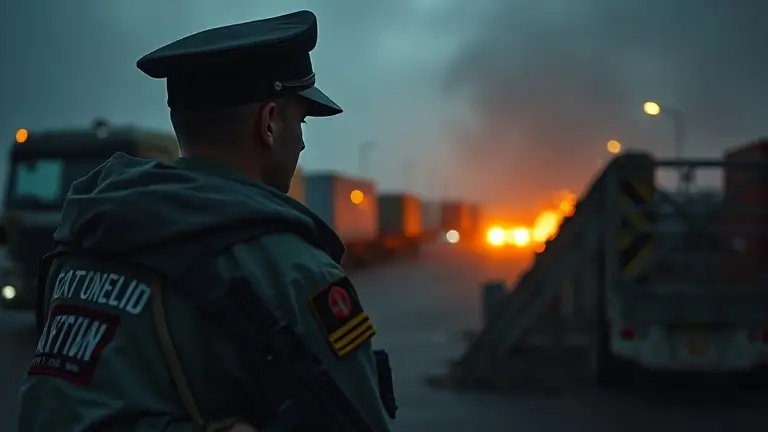
The conflict in Ukraine has entered a transformative phase that defies the conventional metrics of territorial gains and losses. As of July 23, 2026, the diplomatic theater at the ASEAN forum in Manila, underscored by the critical meeting between U.S. Secretary of State Marco Rubio and Russian Foreign Minister Sergei Lavrov, signals a desperate search for off-ramps amidst rising global instability. Simultaneously, the strategic landscape is being forcibly rewritten by Kyiv’s shift toward the Russian rear, specifically targeting commercial logistics hubs like ‘Wildberries’ warehouses. This move, coupled with the abrupt shakeup of top Ukrainian military command, including the dismissal of Oleksandr Syrskyi, suggests that the war is pivoting toward a total economic attrition model.
For those tracking these high-stakes developments, the challenge is no longer merely following the frontlines, but understanding the systemic risks articulated by leaders like Andy Burnham. As the conflict expands into the commercial and economic domains, the line between tactical military operations and global stability grows increasingly thin. To truly grasp the ‘why’ behind these command instabilities and the long-term implications of this new, unconventional warfare, we must look beyond the noise and analyze the structural pressures that are defining this pivotal moment in European history.
The Manila Summit and a Shift in Global Tensions

The high-level encounter between U.S. Secretary of State Marco Rubio and Russian Foreign Minister Sergei Lavrov at the ASEAN forum in Manila represents a critical, albeit fragile, attempt to manage the escalating Russia Ukraine crisis. As of July 23, 2026, the diplomatic atmosphere remains strained, with both powers acknowledging that while communication channels are open, the path to a sustainable resolution remains obstructed. This meeting marks a pivotal shift in the conflict’s narrative, transitioning from reactive battlefield updates to a broader conversation about the risks of global systemic instability.
Diplomatic Brinkmanship and Global Concerns
The urgency of the Manila summit is underscored by mounting international anxiety regarding the potential for geographic expansion. Prominent figures, including Andy Burnham, have publicly cautioned that the ongoing conflict in Ukraine is approaching a threshold that could trigger a wider, uncontrollable regional escalation. The following factors highlight why this specific diplomatic engagement is so significant:
- Communication Necessity: Despite “no quick deal” expectations, the Rubio-Lavrov dialogue serves as a vital circuit breaker to prevent miscalculation between two nuclear-armed states.
- Strategic Realignment: The meeting occurred amidst an aggressive shift in Ukrainian tactical operations, signaling to Moscow that the status quo of the conflict is no longer purely localized.
- Economic Pressures: With global grain markets experiencing renewed volatility due to Black Sea disruptions, the Manila forum provided a venue to address the mounting economic costs of the war that extend far beyond Eastern Europe.
Evidence suggests that the United States is seeking to balance unwavering support for Kyiv with a desperate search for a diplomatic off-ramp. However, the intersection of military command instability, such as the reported dismissal of Oleksandr Syrskyi, and the targeting of Russian commercial logistics, complicates these efforts. By engaging directly in Manila, the U.S. is attempting to contain a kinetic reality that is rapidly outpacing traditional diplomatic frameworks, forcing a recalibration of how the international community approaches the “Endgame” of the conflict.
From Frontlines to Warehouses: The Evolution of Ukraine’s Strategic Doctrine
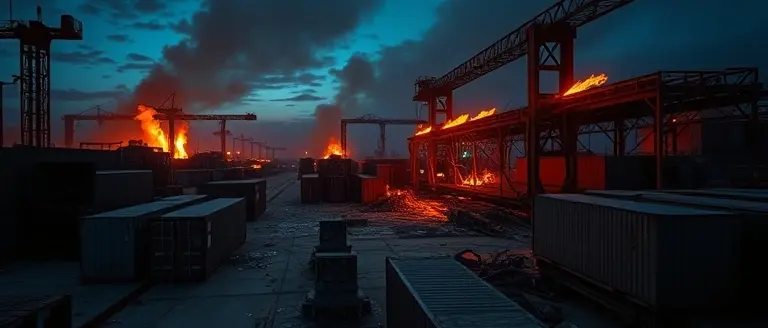
The Russia Ukraine conflict has entered a distinct phase of asymmetric warfare, characterized by a fundamental shift in Ukraine’s strategic doctrine. While the early stages of the conflict were defined by traditional, attrition-based frontline defense, Kyiv has recently pivoted toward systematic strikes on deep-seated Russian commercial and logistics infrastructure. This tactical evolution aims to transcend physical battlefield boundaries, directly challenging the Kremlin’s domestic stability by disrupting the flow of consumer goods and industrial supplies essential to the Russian economy.
Targeting the Economic Backbone
The recent strategic focus on high-value logistics hubs—most notably the attacks on Wildberries warehouses—serves as a primary case study in this new era of economic warfare. By targeting facilities that act as the backbone of Russia’s digital retail ecosystem, Kyiv is attempting to achieve several high-level objectives:
- Forcing Domestic Pressure: Disrupting the consumer supply chain creates tangible inconvenience for the Russian populace, shifting the perception of the war from a distant geopolitical event to a direct daily hardship.
- Degrading Logistical Capacity: Commercial infrastructure often shares transport networks with military supply chains; damaging these assets complicates the Kremlin’s ability to maintain efficient material flow.
- Psychological Deterrence: Proving that long-range assets can penetrate deep into Russian territory forces the Russian military to divert air defense resources away from the frontlines to protect critical domestic assets.
This transition reflects a broader recognition that a traditional military stalemate may persist without increasing the ‘cost of war’ for Russian society. As high-level diplomatic efforts, such as those recently involving U.S. Secretary of State Marco Rubio and Sergei Lavrov, struggle to find immediate common ground, these tactical maneuvers remain a key tool for Kyiv to leverage influence. By expanding the conflict’s scope to commercial logistics, Ukraine is actively seeking to destabilize the home-front economy, betting that internal pressure may ultimately dictate the tempo and duration of the war more effectively than direct frontline attrition alone.
Understanding the Command Crisis: Why Military Leadership is Changing
The recent dismissal of Oleksandr Syrskyi marks a pivotal moment in the ongoing Russia-Ukraine conflict, signaling a deep-seated attempt by the administration in Kyiv to overhaul its operational approach. Military analysts suggest this leadership shake-up is not merely a reaction to frontline stagnation but a calculated effort to revitalize a defense apparatus struggling against modern attrition warfare. By replacing top-level command, the government aims to rectify perceived failures in tactical flexibility and ensure that the Ukrainian military can adapt to the unconventional, high-stakes maneuvers that now define the current phase of the war.
Drivers Behind the Leadership Pivot
The decision to remove Syrskyi reflects several critical pressures currently weighing on the nation’s security infrastructure:
- Frontline Stagnation: After months of limited territorial shifts, there was mounting internal pressure to move beyond defensive rigidity and explore new methods of engagement.
- Political Accountability: As the intensity of the Russia-Ukraine war increases, domestic expectations for performance have heightened, necessitating clear evidence that the leadership is actively seeking solutions to logistical and operational bottlenecks.
- Strategic Realignment: The leadership transition is intended to synchronize military operations with new tactical pivots, such as the increased focus on disrupting Russian commercial logistics and supply chains.
The instability within the command structure serves as a litmus test for the resilience of the nation’s defense. While such high-level shifts often create temporary uncertainty, they are frequently utilized by the government to signal to international partners—including the United States—that Kyiv is willing to take bold, corrective measures to optimize performance. Ultimately, the success of this transition will be measured by whether the new command can sustain momentum while mitigating the risks of further military fragmentation. By addressing these internal friction points, officials hope to sharpen their strategy in a conflict that shows no signs of a simple or immediate diplomatic resolution.
Economic Impact: Visualizing the Disruption of Russian Logistics

The tactical evolution of the Russia Ukraine conflict has shifted significantly as Kyiv increasingly pivots toward targeting Russian commercial logistics hubs. By striking high-profile distribution centers, such as the recent attacks on ‘Wildberries’ warehouses, Ukraine is attempting to bypass the hardened military frontlines to impose direct pressure on the domestic Russian economy. This strategy targets the “Amazon-like” infrastructure that forms the backbone of civilian consumption and logistics, effectively turning the supply chain into a theater of war.
Vulnerabilities in the Domestic Supply Chain
The disruption of these massive distribution nodes creates a cascading effect throughout the Russian economy. Unlike military hardware depots, these commercial hubs are integrated into a delicate, just-in-time delivery network upon which the urban middle class has grown to rely. Key vulnerabilities include:
- Inventory Depletion: Sudden, localized shortages of essential goods lead to panic buying and inflationary spikes in specific regions.
- Logistics Bottlenecks: Destroying regional hubs forces the rerouting of goods through suboptimal, higher-cost infrastructure, driving up prices.
- Psychological Impact: By making the conflict visible within the sphere of everyday consumerism, these strikes undermine the government’s narrative of stability, potentially increasing domestic dissent.
Evidence suggests that these unconventional tactics serve a dual purpose. Beyond the immediate economic damage, the targeting of commercial logistics compels the Kremlin to redirect defensive resources—such as air defense systems and security personnel—away from the frontlines to protect vulnerable civilian infrastructure. As the war in Ukraine drags on, this shift toward targeting the economic well-being of the population represents a calculated effort to force a reckoning between the costs of the conflict and the reality of life inside Russia. Whether this pressure can reach a tipping point remains a central question for international observers monitoring the long-term sustainability of the Russian war effort.
Navigating the New Era of Global Strategic Uncertainty
As the Russia-Ukraine conflict evolves from a traditional front-line struggle into a complex web of commercial logistics warfare and shifting diplomatic alliances, the path to an endgame remains obscured. The convergence of high-stakes mediation at the ASEAN forum and the radical restructuring of military leadership suggests that we are entering a volatile new phase where economic stability is as much a target as territorial integrity. Understanding these deep-seated shifts requires more than just skimming headlines; it demands a high level of analytical clarity to process the rapidly changing landscape of international power.
Synthesizing the implications of this shifting global conflict requires extreme analytical focus; just as military strategists prioritize mental readiness to outmaneuver their opponents, keeping your own cognitive focus sharp is essential when tracking these volatile developments. When you are tasked with parsing dense geopolitical data and intricate strategic shifts, the cognitive load can lead to exhaustion, hindering your ability to grasp the broader narrative of the conflict.
This is where The Brain Song becomes an indispensable tool for the high-intellect observer. Designed to eliminate mental fog and enhance your natural learning capacity, this neuroscientific approach provides the clarity needed to maintain an analytical edge. By integrating this 12-minute daily routine, you are not just consuming news—you are optimizing your cognitive performance to fully comprehend the mechanisms of the current geopolitical crisis, ensuring you remain informed and precise in your analysis.
 Optimize your analytical focus for the next wave of developments; discover how a 12-minute daily routine can sharpen your cognitive edge.Sharpen My Cognitive Focus Now!