
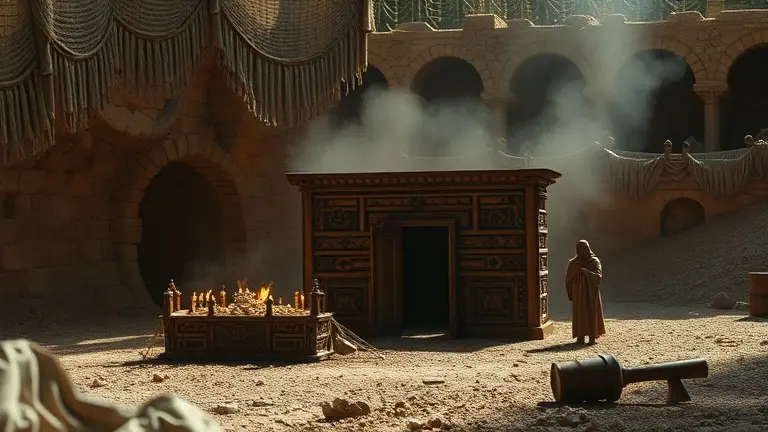
When news broke from biblical Shiloh in July 2026, the global imagination immediately turned to the fabled Ark of the Covenant. While the site remains steeped in the allure of ancient mystery, recent archaeological excavations have uncovered something far more tangible—and arguably more significant: a wealth of ancient food remains that offer a vivid, unfiltered look into the daily lives of 12th-century BCE inhabitants. By shifting the focus from the search for legendary relics to the scientific scrutiny of botanical and faunal data, we move away from sensationalism and into the realm of true discovery.
These findings do more than satisfy historical curiosity; they provide a blueprint for understanding the complex trade networks and agricultural economies of the Iron Age. In this deep dive, we strip away the Indiana Jones veneer to explore the methodical, technical rigor that archaeologists use to reconstruct a world long buried. We invite you to look past the myths and appreciate the meticulous craftsmanship and structured survival strategies that defined one of the most pivotal eras in human history.
Archaeological Findings at Shiloh: Beyond the Ark of the Covenant Headlines

In July 2026, a report from FOX 11 Los Angeles brought renewed public attention to the site of biblical Shiloh, specifically regarding new excavations. While media headlines frequently link these digs to the fabled Ark of the Covenant, the scientific reality of the recent fieldwork offers a far more grounded and historically significant narrative. Archaeologists working at the site have shifted their focus away from searching for elusive religious relics, instead prioritizing the analysis of material culture to better understand the socioeconomic fabric of the Iron Age. These findings provide critical data on how ancient communities functioned, traded, and thrived, rather than confirming legends associated with the resting place of the Ark.
Uncovering Iron Age Daily Life
The “unusual find” referenced in recent reports centers on the discovery of ancient food remnants. For archaeologists, these biological specimens are more valuable than gold or artifacts, as they offer a direct window into the 12th-century BCE economy. By analyzing these remains, researchers can reconstruct the dietary habits, agricultural capabilities, and trade networks of the inhabitants who lived at this pivotal sanctuary site.
Key insights from the recent excavation data include:
- Dietary Reconstruction: Identification of diverse protein and grain sources that reveal how inhabitants managed local food security.
- Economic Trade Patterns: Evidence of non-local botanical remains suggests that Shiloh served as a centralized node for regional exchange.
- Sanctuary Infrastructure: The spatial distribution of these remnants helps clarify the site’s layout, distinguishing between domestic living areas and public or ceremonial zones.
By focusing on these verifiable archaeological markers, scholars are stripping away the sensationalist “Indiana Jones” allure often cast upon Shiloh. The objective of current research is to build a high-resolution model of life in the Levant during a period of transition, moving beyond the myths surrounding the Ark of the Covenant to provide an evidence-based look at the daily routines and survival strategies of its ancient population. This methodological approach ensures that the study of Shiloh remains a cornerstone of academic inquiry rather than a pursuit of speculative folklore.
Dietary Habits and Economic Indicators: Analyzing 12th-Century BCE Remains

The recent archaeological excavations at the site traditionally associated with the Ark of the Covenant in Shiloh offer far more than biblical intrigue; they provide a granular look at the Iron Age I economy. By employing rigorous zooarchaeological and archaeobotanical methodologies, researchers are reconstructing the daily subsistence patterns of 12th-century BCE inhabitants. Rather than focusing on religious artifacts, this scientific approach analyzes carbonized seeds, pollen grains, and fragmented faunal bones to map the dietary reliance of the ancient population. These remnants serve as essential biological data points that reveal how early settlers managed livestock and navigated the challenging agricultural landscape of the central highlands.
Analyzing Sustenance and Livestock Management
The identification of faunal remains, primarily consisting of sheep, goat, and cattle bones, indicates a sophisticated pastoral strategy. Archaeologists analyze wear patterns on teeth and the distribution of skeletal elements to determine the age of slaughter and the primary use of these animals. Evidence suggests that while livestock were vital for secondary products like milk and wool, the periodic consumption of meat points to a society with stable access to protein, likely supplemented by specialized small-scale agriculture. Key indicators observed during the analysis include:
- Faunal Assemblages: The prevalence of caprine remains suggests a climate-adapted herd management system, allowing the community to thrive on rugged terrain.
- Botanical Evidence: The recovery of charred cereal grains and legumes provides direct proof of early dry-farming techniques, showing the inhabitants’ ability to store and process seasonal harvests.
- Economic Resilience: The diversity in food remains implies a self-sufficient economy capable of buffering against poor harvest cycles, a hallmark of Iron Age stability in the region.
By shifting the focus from the mythos surrounding the Ark of the Covenant to the material culture of the site, these findings illuminate the complex interplay between environmental adaptation and socio-economic survival. This methodological rigor allows historians to move beyond conjecture, grounding the history of Shiloh in the verifiable facts of daily life, agricultural innovation, and economic strategy.
Trade Networks and Social Complexity in Iron Age Shiloh

The recent excavations at the Shiloh site, while capturing public imagination due to its historical association with the Ark of the Covenant, offer far more significant insights into the Iron Age economy than traditional treasure-hunting narratives suggest. By analyzing the recovered food remains and botanical samples, archaeologists are piecing together a complex picture of regional connectivity and socio-economic sophistication in the 12th century BCE. These findings move the conversation away from myth and toward a verifiable understanding of how early highland communities sustained themselves through sophisticated trade networks.
Indicators of Regional Connectivity
The discovery of non-local dietary items and specialized ceramic storage vessels provides compelling evidence that Shiloh was not an isolated settlement. Instead, it functioned as an active participant in a broader Mediterranean trade ecosystem. Key observations regarding these archaeological findings include:
- Diverse Botanical Remains: The presence of seeds and pollen from plants not native to the immediate Shiloh plateau suggests the importation of luxury goods or staple crops from coastal regions or the Jordan Valley.
- Specialized Storage Technology: The identification of pithoi—large, specialized storage jars—indicates a communal or centralized method of managing food surpluses, essential for supporting a population during seasonal droughts or periods of social upheaval.
- Economic Specialization: Proximity to trade routes allowed these inhabitants to exchange local agricultural yields for specialized metal tools or exotic items, reflecting a society moving toward increased social complexity.
Rather than viewing Shiloh solely through the lens of a religious epicenter, these data points characterize it as a dynamic hub of daily life. The ability to manage logistics and participate in long-distance exchange implies a structured leadership or collective organizational framework. By studying these food remnants, experts are gaining a nuanced view of the Iron Age demographic, where dietary habits serve as a proxy for social status and inter-regional cooperation. This shift in focus underscores that the true “treasure” of Shiloh lies in its contribution to our understanding of early human resilience and communal survival in the Levant.
The Scientific Process: Distinguishing Fact from Speculation

Modern biblical archaeology operates far removed from the dramatic, cinematic hunts for the Ark of the Covenant popularized by Hollywood. While public interest often fixates on the possibility of recovering legendary artifacts, the actual scientific process at sites like Shiloh is defined by meticulous, multi-year labor. Rather than chasing myths, field researchers employ rigorous methodologies, including stratigraphy, carbon dating, and zooarchaeological analysis, to reconstruct the daily lives of ancient inhabitants. The recent discovery of organic food remains at the Shiloh site serves as a prime example of this empirical focus; by examining discarded bones and charred plant matter, scientists gain objective data regarding trade, diet, and economic resilience in the 12th-century BCE.
Bridging the Gap Between Legend and Data
To maintain academic integrity, archaeologists must intentionally decouple their findings from religious narratives. The transition from speculation to peer-reviewed fact involves several critical steps:
- Controlled Excavation: Site grids are meticulously documented to ensure that every artifact—no matter how mundane—retains its exact spatial context.
- Chronological Verification: Researchers rely on radiocarbon dating of organic materials to place strata within a specific historical timeline, often challenging long-held assumptions.
- Peer Review: Findings are subjected to scrutiny by the broader scientific community, ensuring that conclusions are supported by verifiable, reproducible evidence rather than anecdotal or theological interpretations.
By shifting our focus toward the material history of the region, we move beyond the allure of the Ark of the Covenant and engage with a far more profound narrative: the lived reality of humanity. Distinguishing fact from speculation is not merely an academic exercise; it is the fundamental requirement for understanding the cultural and economic legacy of the Southern Levant. Prioritizing this evidence-based approach ensures that our appreciation for history remains rooted in objective reality rather than evolving myths.
Mastering the Craft of History
The archaeological investigation at Shiloh reminds us that history is not just about what is lost, but about how it was constructed and sustained. Just as we analyze the meticulous precision of Iron Age builders to understand their daily diet and trade, many of us seek that same level of technical clarity when tackling our own modern building projects. The bridge between the ancient world and the modern workshop is built on a foundation of disciplined, methodical practice.
If you have ever felt the frustration of amateur guesswork in your own creative or construction endeavors, you understand the need for professional, reliable guidance. Whether you are building furniture, structural frames, or decorative pieces, the path to mastery requires more than just inspiration; it demands the right resources. This is where the structural discipline of history meets modern utility.
By integrating professional-grade, workshop-tested plans into your projects, you eliminate uncertainty and gain the confidence of a master builder. Ted’s Woodworking provides the ultimate toolkit for technical reconstruction, offering 16,000 professional plans that allow you to apply the same structured, methodical mindset used by archaeologists to your own creative legacy. It is time to treat your personal projects with the same rigorous care that preserves the story of our past.
 Explore the precise, step-by-step methodologies of professional builders and start your own structural project with Teds Woodworking.Yes, I Want to Build Like a Pro!