
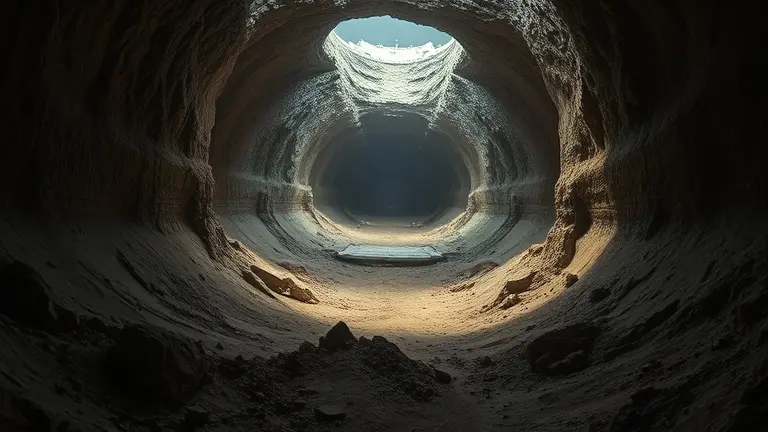
Pickaxe Mountain has emerged as the latest flashpoint in the escalating U.S.-Iran nuclear standoff, transforming from an obscure intelligence designation into a central pillar of geopolitical tension. Located just a mile from the Natanz enrichment site, this deeply buried, hardened facility represents a significant shift in defensive engineering. With President Trump publicly signaling the possibility of aerial strikes to neutralize the site, the world’s focus has sharpened on the technical reality of destroying such a fortified, subterranean bunker.
Understanding the significance of Pickaxe Mountain requires moving past the headlines and examining the structural “how” behind its construction. Military analysts are currently grappling with the logistical nightmare of targeting a site specifically designed to withstand conventional deep-penetration munitions. This analysis explores the intersection of hardened infrastructure design and the strategic realities of modern warfare, providing a clear-eyed look at what makes this site a unique challenge and why it marks a new chapter in the ongoing nuclear debate.
Understanding ‘Pickaxe Mountain’: The New Focal Point of Iran’s Nuclear Program

Pickaxe Mountain has rapidly emerged as the epicenter of renewed geopolitical volatility regarding Iran’s nuclear ambitions. This highly classified, subterranean facility is situated in central Iran, located approximately one mile from the long-standing Natanz enrichment complex. Unlike traditional surface-level installations, this site is engineered as a deeply buried, hardened bunker, specifically designed to withstand significant conventional kinetic strikes. The facility represents a sophisticated evolution in Iran’s defensive architecture, aimed at insulating its most sensitive nuclear infrastructure from external detection and potential aerial bombardment.
The sudden global attention surrounding the site stems from recent, high-profile statements by President Donald Trump, who identified the location as a critical target for U.S. military intervention. Intelligence reports suggest that Iran has initiated a strategic transfer of advanced nuclear centrifuges and raw materials to the site, raising alarms in Washington and among regional allies. This shift in operational activity marks a significant departure from previous protocols and has prompted a major pivot in U.S. policy, with the administration signaling that active military engagement is being considered to prevent the facility from becoming fully operational.
Why This Site is a Strategic Priority
The intensity of the current standoff is driven by several key factors that distinguish Pickaxe Mountain from previously monitored Iranian nuclear locations:
- Geological Hardening: The facility’s construction deep within mountainous terrain creates extreme logistical challenges for standard munitions, necessitating specialized deep-penetration weapons.
- Proximity to Natanz: Being located just one mile from the primary Natanz site suggests a deliberate effort to create a redundant or “overflow” nuclear production capacity.
- Policy Escalation: The explicit naming of the site by U.S. leadership indicates that traditional diplomatic or covert disruption methods may have been sidelined in favor of direct, large-scale kinetic deterrence.
As the situation develops, military analysts are closely watching the facility for further signs of equipment movement or ventilation system upgrades, which could signify the facility approaching a state of operational readiness. This site remains a primary flashpoint in the ongoing U.S.-Iran nuclear crisis, requiring constant surveillance and high-level international scrutiny.
Strategic Significance and Technical Challenges of the Facility
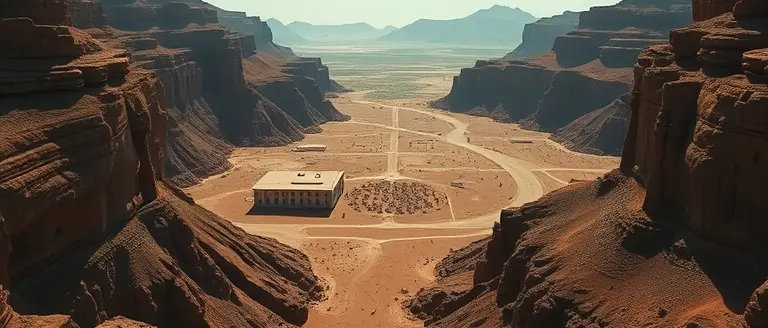
The emergence of Pickaxe Mountain in Iran as a focal point of geopolitical tension highlights a sophisticated shift in nuclear defense strategy. Unlike traditional surface-level enrichment facilities, this site is described by defense analysts as a deeply buried, hardened bunker. The strategic importance of the facility lies in its location near the Natanz site, suggesting it serves as a redundant, fortified hub designed specifically to house sensitive nuclear infrastructure—including advanced centrifuges—away from the vulnerability of conventional aerial reconnaissance and standard munitions.
Engineering Hardened Defenses
The technical challenges associated with neutralizing a site like Pickaxe Mountain are substantial. Military planners categorize such facilities as “hard and deeply buried targets” (HDBTs). These structures are typically carved deep into mountain bedrock, utilizing several hundred feet of granite and reinforced concrete to mitigate the shockwaves of conventional ordnance. Key engineering features include:
- Blast Mitigation: Massive subterranean chambers designed to absorb the kinetic energy of penetrating weapons.
- Geological Shielding: The use of natural rock mass as a deterrent against seismic vibrations caused by explosive impacts.
- Redundancy Protocols: The incorporation of independent power and ventilation systems that allow the facility to operate autonomously even if surface entry points are compromised.
A Critical Escalation Point
The rhetoric surrounding Pickaxe Mountain represents a significant escalation in the U.S.-Iran nuclear standoff. Because the site is engineered to withstand traditional bunker-buster capabilities, a successful strike would require precision, volume, and specialized munitions capable of penetrating extreme depths. The public acknowledgement of this site by President Trump signals that the United States considers the relocation of centrifuges to this mountain bunker a “red line.” Consequently, the facility is no longer viewed merely as a static infrastructure project, but as an active component of Iran’s nuclear program that challenges the efficacy of standard diplomatic pressure, forcing a transition toward contingency planning for military engagement.
Proximity to Natanz: Analyzing the Geopolitical Map
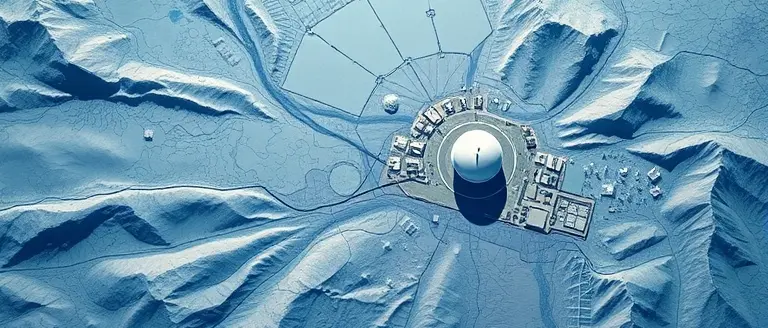
The emergence of Pickaxe Mountain as a critical focus in the ongoing standoff between the United States and Iran is largely defined by its geographical relationship to the existing Natanz uranium enrichment site. Located approximately one mile from the main Natanz facility, this newly identified, deeply buried bunker represents a deliberate shift in Iran’s nuclear infrastructure strategy. By establishing a high-security facility in such close proximity to the primary enrichment plant, Iran appears to be utilizing a “redundancy” model, effectively creating a hardened satellite site that can support or house sensitive centrifuges and materials away from conventional monitoring oversight.
Strategic Implications of Dual-Site Operations
The tactical logic behind this proximity is multi-fold. By keeping the new infrastructure near Natanz, Iranian planners likely benefit from existing regional security perimeters, logistical support networks, and power grids already optimized for nuclear operations. However, this clustering significantly complicates the regional “security bubble.” Defense analysts suggest that:
- Enhanced Survivability: The deep-burial techniques used at Pickaxe Mountain suggest that the site is specifically designed to withstand kinetic strikes that might otherwise jeopardize above-ground or shallower facilities.
- Consolidated Defense: Placing nuclear assets in a concentrated zone allows for the centralization of anti-aircraft systems and surveillance, creating a more daunting defensive umbrella for regional adversaries to penetrate.
- Escalation Risk: The proximity effectively turns a localized site into a consolidated complex, meaning any US or international military action risks a broader conflict, as a strike on the new bunker would almost certainly result in unintended damage to the adjacent Natanz infrastructure.
This structural choice signals an evolution in how Iran manages its nuclear program. By forcing the international community to account for a dual-site operational framework, the Iranian government has raised the threshold for successful military intervention. As Washington continues to analyze the site’s vulnerabilities, the closeness of these facilities remains a primary variable in evaluating the regional stability of Central Iran and the broader Middle East.
Official Statements and Real-Time Policy Shifts

The current geopolitical climate surrounding Pickaxe Mountain in Iran is defined by a sharp escalation in rhetoric from the highest levels of the United States government. President Donald Trump has publicly signaled a potential shift toward kinetic military action, explicitly naming the facility as a primary target for aerial strikes. This stance marks a departure from previous diplomatic containment strategies, as the administration cites intelligence reports indicating that Iran is actively relocating sensitive nuclear centrifuges and enrichment infrastructure into the deep-underground bunker. These statements have placed the site at the epicenter of international security concerns, forcing global observers to scrutinize the feasibility of neutralizing such a heavily fortified location.
In contrast, the Iranian government has maintained a posture of defiance, typically characterizing such reports as Western propaganda designed to destabilize the region. While official Tehran media outlets have not explicitly confirmed the technical specifications of the Pickaxe Mountain site, they have framed recent US warnings as violations of sovereignty. The lack of transparency from the Iranian side complicates the intelligence picture, leaving defense analysts to rely on satellite imagery and clandestine reporting to verify the status of the facility.
Navigating the Diplomatic and Military Standoff
Because the situation remains highly fluid, it is essential for stakeholders to monitor updates from the Pentagon and official White House channels. The discrepancy between US claims of nuclear material relocation and Iranian denials suggests a critical intelligence gap that defines the current crisis. Key considerations include:
- Intelligence Verification: Distinguishing between satellite-based observations of construction and the presence of functional nuclear components.
- Strategic Rhetoric: Assessing whether high-level warnings serve as an immediate prelude to military engagement or as a tool for diplomatic leverage.
- Regional Stability: Evaluating the risk of escalation should military action proceed against a site located in close proximity to the established Natanz facility.
As reports continue to evolve, the distinction between active construction and fully operational status at Pickaxe Mountain remains the primary point of contention, necessitating extreme caution in interpreting incoming claims from both sides.
The Architecture of Precision: Beyond Geopolitical Complexity
The situation surrounding Pickaxe Mountain highlights a fundamental reality: whether in global defense or intricate engineering, the margin for error is non-existent. The strategic hardening of this facility is not merely a product of brute force but of meticulous, high-stakes structural planning where every centimeter of reinforcement is calculated to withstand extreme forces. This level of technical rigor is the hallmark of any project destined for success, proving that complex outcomes are only possible when supported by reliable, technical blueprints.
Just as engineers at these sites rely on verified schematics to ensure the integrity of deep-earth structures, your own personal projects demand an uncompromising approach to detail. Whether you are building a secure workshop or a legacy piece of furniture, the difference between failure and a master-class in precision lies in your planning. By mastering the art of structural accuracy, you take control of your results rather than leaving them to chance.
Bridge the gap between theoretical knowledge and practical execution by leveraging the same professional-grade structural planning used by experts. Start your journey toward flawless craftsmanship today with the ultimate library of 16,000 professional plans designed for those who refuse to cut corners.
 Master the art of structural precision and start your own high-level project with the ultimate library of 16,000 professional plans.Transform My Projects Now!