
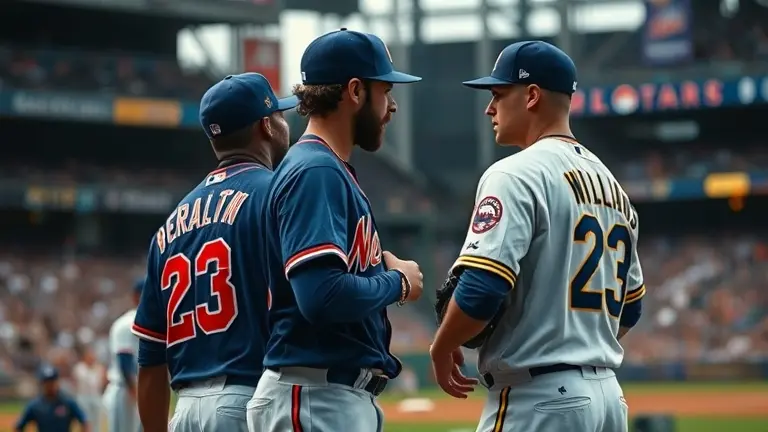
The return to American Family Field carries an electric, almost cinematic tension as the New York Mets arrive in Milwaukee to face the Brewers in a pivotal three-game MLB showdown. At the heart of this reunion are former Milwaukee staples Freddy Peralta and Devin Williams, now wearing Mets colors and returning to the very mound where they once defined the Brewers’ pitching identity. This isn’t just another mid-summer series; it is a tactical convergence orchestrated by Mets President of Baseball Operations David Stearns, the architect behind the Brewers’ past success, now applying those same organizational blueprints to elevate the New York roster.
For the astute sports analyst and the dedicated bettor, the ‘Mets vs Brewers’ narrative offers a masterclass in front-office strategy and psychological pressure. Beyond the headlines of the homecoming, the real story lies in the data: how has the transition to the Mets’ system fundamentally altered these pitchers’ efficiency, and how will they perform under the scrutiny of a crowd that once cheered their every strikeout? As we dive into the statistical realities of this series, we invite you to sharpen your focus—because when analyzing high-leverage variables and shifting betting odds, your cognitive edge is your most valuable asset.
The Ultimate Reunion: Mets vs. Brewers at American Family Field

The mets vs brewers series starting July 20, 2026, at American Family Field transcends a typical mid-season set, evolving into the most narrative-rich event of the MLB calendar. This series serves as a homecoming for key personnel who were instrumental in defining the Brewers’ culture during the early 2020s. For fans in Milwaukee, the return of right-handed pitcher Freddy Peralta and closer Devin Williams—now wearing New York Mets colors—adds an intense layer of emotional complexity to an already pivotal divisional-adjacent matchup. The atmosphere is further charged by the presence of Mets President of Baseball Operations David Stearns, the primary architect behind the Brewers’ resurgence, who now orchestrates the New York roster with the same analytical precision he once deployed in Wisconsin.
A Tactical and Emotional Homecoming
The strategic implications of this series are vast, as both franchises face mounting pressure to secure postseason positioning. Observers are keenly focused on how the Milwaukee crowd receives their former stars and whether that environment impacts the performance of the visitors. The “reunion” aspect isn’t merely sentimental; it serves as a litmus test for the long-term effectiveness of Stearns’ roster philosophy. Key factors defining this series include:
- The Transition Test: Analysts are scrutinizing whether Peralta and Williams have successfully integrated into the Mets’ pitching development system or if the familiarity of their former teammates against them will provide the Brewers with a tactical advantage.
- Front Office Philosophy: This series effectively pits the “Stearns blueprint” against the current organizational infrastructure of the Brewers, offering a rare look at how a system evolves after its primary architect departs.
- Psychological Edge: Historically, high-profile returns often lead to volatile performances; betting markets are particularly cautious, as the emotional weight of playing at one’s former home stadium can disrupt even the most seasoned veterans.
Evidence suggests that this series will be decided by how effectively the Mets can utilize their former Brewers assets to dismantle the very culture they helped build. As the mets vs brewers series unfolds, the interaction between Stearns’ vision and his former team’s resilience will likely provide the definitive storyline for the 2026 postseason push.
The Stearns Era: Assessing the Front Office Strategy
The current mets vs brewers series acts as a tactical mirror, reflecting the evolution of David Stearns’ front office philosophy. During his tenure as the architect of the Milwaukee Brewers, Stearns was forced to master the art of “small-market efficiency,” prioritizing high-upside pitching prospects and versatile, cost-controlled talent. Now, as the President of Baseball Operations in New York, Stearns is applying those same analytical frameworks but with the distinct advantage of a substantial MLB payroll. This hybrid approach—marrying Milwaukee’s data-driven talent identification with New York’s financial muscle—is the central pillar of the current Mets’ roster construction.
Scaling the “Stearns Blueprint” in New York
Evidence suggests that the Mets are effectively mirroring the structural success Stearns once orchestrated in Wisconsin. By acquiring established talents like Freddy Peralta and Devin Williams, Stearns is not merely importing former players; he is stabilizing the Mets’ bullpen and rotation with assets he personally vetted and developed. The key differences in his current strategy include:
- Asset Flexibility: Unlike the budget-constrained environment in Milwaukee, the Mets provide Stearns the bandwidth to retain core performers rather than trading them at the height of their value.
- Depth Over Dependence: The Mets’ current roster reflects a deeper bench, allowing for the tactical versatility Stearns famously utilized to keep the Brewers competitive throughout the grind of a 162-game season.
- Targeted Acquisitions: By targeting players familiar with his organizational culture, Stearns is reducing the “adaptation lag” typically associated with high-profile free-agent signings.
While the Brewers continue to rely on a revolving door of elite scouting and player development, the Mets under Stearns are becoming a juggernaut that combines that scouting prowess with the ability to secure frontline superstars. As this series unfolds, the contrast between the two franchises serves as a litmus test for whether a “money-backed” version of the Milwaukee model can achieve the championship success that largely eluded the Brewers during the Stearns era. For bettors and analysts alike, the performance of these former Milwaukee mainstays in New York colors remains the most significant metric of this front-office transition.
Player Performance Analytics: Tracking the Transition

The arrival of Freddy Peralta and Devin Williams in New York has become the defining subplot of this Mets vs Brewers series. As these former Milwaukee staples return to American Family Field, analytical focus shifts toward whether their production has evolved under the Mets’ pitching infrastructure or if they are simply sustaining the elite benchmarks they established in the National League Central. Evaluating their tenure in Queens requires a nuanced look at high-leverage efficiency and the adjustments made by the coaching staff.
Statistical Baseline and Development
Evidence suggests that while both players have maintained their core identities, their usage patterns have shifted. Peralta, traditionally a high-volume starter, has seen his strikeout-to-walk ratio fluctuate slightly as he adjusts to the heightened scrutiny of the New York market. Meanwhile, Williams continues to demonstrate the elite velocity that made him a premier closer, though his reliance on his signature changeup remains a point of tactical interest.
- ERA Consistency: Both athletes have shown a remarkable ability to keep their ERA within a tight variance compared to their Milwaukee career averages, indicating that the Mets’ system has successfully preserved their baseline talent.
- Velocity Metrics: Radar data shows that Peralta’s fastball velocity has remained stable, dispelling rumors of fatigue, while Williams’ movement profiles on secondary pitches are arguably sharper than his final season in Wisconsin.
- Adaptive Usage: Under the Mets’ pitching philosophy, there is evidence of refined pitch tunneling, specifically for Peralta, which aims to maximize his effectiveness against hitters seeing him for the second or third time in a rotation.
Ultimately, the transition appears to be a success of optimization rather than radical reconstruction. The Mets have effectively leaned into the strengths of their new acquisitions, ensuring that the “reunion” narrative is backed by reliable on-field performance as they navigate this pivotal series against the Brewers.
Betting Insights: Strategic Outlook for the Three-Game Set

The Mets vs Brewers series presents a unique challenge for sports bettors, as the “reunion” narrative introduces emotional variables that often deviate from standard statistical projections. When assessing the odds, picks, and predictions for this three-game set in Milwaukee, analysts must account for the intimate knowledge David Stearns holds regarding the Brewers’ roster construction. Because Stearns built much of the core currently playing in Milwaukee, the New York Mets possess a distinct tactical advantage in scouting and situational pitch-calling. Evidence suggests that teams facing former front-office architects often struggle to adapt to familiar aggressive shifting and high-leverage bullpen management, providing the Mets a slim but measurable edge in late-inning decision-making.
Tactical Betting Considerations
- Bullpen Volatility: The return of Freddy Peralta and Devin Williams to American Family Field adds significant pressure on the visitors. Expect high-stress innings that could lead to unconventional usage patterns; bettors should monitor live lines if a high-leverage spot arises in the 8th or 9th.
- The “Stearns Factor”: Historical data on reunions indicates that the team with the former executive often maintains a higher ground-ball rate against known hitters, potentially tilting the Under/Over outcomes toward the under if starting pitching remains efficient.
- Player Focus: While professional athletes remain disciplined, the psychological impact of pitching against a former home crowd can lead to elevated pitch counts. Look for early-game variance in starting pitching props as pitchers adjust to the atmosphere.
For those looking to capitalize on this series, the betting value currently lies in fading the public perception that the Mets are significantly weakened by their recent struggles. While the Mets’ transition period has been bumpy, their familiarity with the Brewers’ offensive tendencies makes them a strong play on the moneyline in games where the starting pitching matchup is perceived as neutral. Bettors should prioritize series-opening lines, as the tactical advantage of Stearns’ institutional knowledge is most potent before the Brewers can adjust their offensive approach mid-series.
Beyond the Box Score: Sharpening Your Analytical Edge
As the Mets and Brewers series unfolds in Milwaukee, the narrative is about far more than just wins and losses. We are witnessing a complex chess match orchestrated by David Stearns, where the emotional weight of a homecoming meets the cold, hard reality of statistical transition. Whether you are tracking the refined slider mechanics of Freddy Peralta or weighing the impact of Devin Williams in a high-leverage spot, understanding these nuances requires more than just a casual glance at the standings; it demands a deep, analytical focus that cuts through the noise.
Just as the Mets front office utilizes proprietary data to maximize pitcher performance, your ability to process these intricate player-reunion dynamics and betting trends hinges on your own cognitive clarity. When the stakes are this high, mental fatigue is the enemy of the smart bettor. That is where The Brain Song comes in—a performance-based cognitive tool designed to elevate your focus, ensuring you can digest complex scouting reports and statistical shifts with the same precision as a professional front-office analyst.
By integrating a daily 12-minute brain-optimization routine, you move beyond the surface-level narratives and gain the mental endurance necessary to spot value where others see only chaos. Don’t let cognitive fog cloud your judgment during this high-stakes series. Prepare your mind, sharpen your analytical edge, and stay ahead of the curve before the next pitch is thrown.
 Unlock your analytical peak and process complex sports data with ease—start your daily 12-minute Brain Song routine before the next pitch.Transform My Analytical Focus Today!