
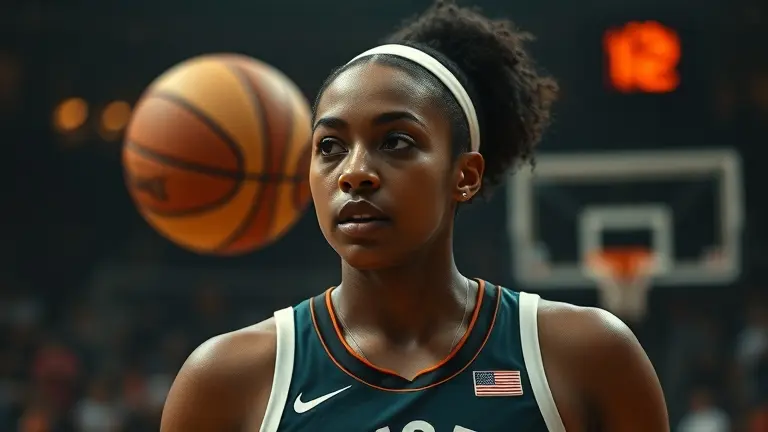
When Caitlin Clark was excluded from the 2024 U.S. Women’s Olympic Basketball Team, the immediate public response was a masterclass in modern sports polarization. Fans and media outlets flooded the airwaves with passionate arguments, framing the decision through the lens of meritocracy versus marketing power. Yet, looking back from the vantage point of 2026, the real story is not the ‘snub’ itself, but what this moment revealed about the shifting tectonic plates of professional sports. The friction between veteran-led team chemistry and the unstoppable force of individual brand identity has fundamentally rewritten the playbook for how the WNBA—and global sports—must view the evolution of the modern superstar.
By stripping away the emotive vitriol that defined those initial reactions, we can begin to analyze the strategic, data-driven decisions that govern elite organizations. This is no longer just about a roster spot; it is about the long-term sustainability of the league and the complex interplay between ‘celebrity athletes’ and traditional team building. To truly grasp how these high-stakes decisions reshape the industry, we must move beyond surface-level discourse and sharpen our analytical focus on the underlying business dynamics.
Beyond the 2024 Olympic Selection: Analyzing a Turning Point in WNBA History
The discourse surrounding Caitlin Clark and her exclusion from the 2024 U.S. Women’s Olympic Basketball Team serves as a critical case study in the rapid professionalization of the WNBA. Rather than viewing the decision solely through the lens of a “snub,” industry analysts now recognize this moment as a structural pivot point where traditional sports governance collided with the modern era of the celebrity athlete. The intense caitlin clark wnba olympian reactions underscored a systemic tension: the clash between institutional team-building strategies—which prioritize continuity, established chemistry, and international experience—and the commercial demand to elevate the league’s most recognizable faces.
This friction highlights three fundamental shifts in how the WNBA and its stakeholders now operate:
- Marketing vs. Meritocracy: The selection process triggered a debate on whether governing bodies should prioritize “growing the game” through star-power visibility or adhere strictly to historical selection metrics.
- The Influence of Digital Media: The public reaction demonstrated that individual athlete brands now possess enough momentum to challenge, or at least force public accountability upon, established selection committees.
- League Maturation: As NBA Commissioner Adam Silver noted, Clark’s career has become a lightning rod for broader cultural discussions. Her status as a “political football” reflects the league’s transition into a major cultural entity where off-court narratives are as influential as on-court performance.
By moving past the initial controversy, we see that the 2024 roster decision accelerated the WNBA’s evolution. It forced a necessary industry-wide conversation regarding the definition of value in professional sports. The league is currently navigating a period where media marketability and traditional talent assessment are no longer separate silos but are increasingly intertwined. As the WNBA continues to see record-breaking growth, this moment remains the most prominent example of the growing pains associated with balancing a legacy sports hierarchy with the demands of an hyper-engaged, global digital audience. The retrospective analysis confirms that this wasn’t merely a roster choice, but a definitive signal that the league has entered a high-stakes era of commercial and cultural scrutiny.
The Economics of Star Power: How Clark Redefined WNBA Marketability

The arrival of Caitlin Clark in the WNBA signaled a seismic shift in how professional sports leagues monetize individual fame. While the initial discourse regarding Caitlin Clark WNBA Olympian reactions focused heavily on the optics of her roster exclusion, the long-term business implications have proven far more significant. Clark’s presence accelerated a transition from a league-centric marketing strategy to an athlete-led celebrity model, mirroring the growth trajectories of the NBA and European soccer leagues. By commanding unprecedented viewership numbers and driving record-breaking corporate sponsorship interest, Clark transformed the league’s economic floor, forcing stakeholders to reconcile traditional team-building philosophies with the demands of a globalized, star-driven fan base.
Balancing Celebrity Dynamics and Competitive Integrity
Teams and league executives are now navigating the complex friction between fostering a rising star’s brand and maintaining historical competitive standards. The following points highlight how this evolution is reshaping the WNBA business landscape:
- Viewership and Monetization: Evidence suggests that games featuring high-profile stars like Clark consistently generate higher ad revenue and broader media rights interest, creating a “Clark effect” that benefits the entire WNBA ecosystem.
- Corporate Sponsorship Shifts: Sponsors are increasingly pivoting away from generalized league-wide branding to strategic, player-aligned partnerships, emphasizing the value of personal brand equity over legacy franchise loyalty.
- Strategic Marketing Evolution: The league is actively balancing the influx of casual, celebrity-focused viewers with the need to retain long-term fans who prioritize traditional basketball metrics and team-centric parity.
As the league continues to mature, the challenge remains in integrating these high-visibility athletes into a structure that still values the technical rigor of veteran squads. While the debate surrounding her Olympic absence highlighted a clash of eras, the underlying market data confirms that the “celebrity athlete” is no longer an outlier in the WNBA—it is the new foundation of the league’s commercial growth.
Tactical Evolution: Balancing Veteran Chemistry and Next-Gen Talent

The discourse surrounding caitlin clark wnba olympian reactions often overlooks the complex logistical realities inherent in elite team assembly. When USA Basketball selectors faced the challenge of finalizing a roster, the decision-making process centered less on individual scoring potential and more on the technical nuances of FIBA-style basketball. Integrating a high-usage player like Clark into an established, veteran-led system requires a significant shift in team architecture, particularly in the condensed timeframe of an Olympic training camp. Unlike the extended WNBA season, international play demands immediate chemistry, specialized defensive rotations, and a collective familiarity with international officiating standards.
The Dynamics of Roster Construction
The selection committee prioritized players who had logged extensive minutes in international settings, where the pace and physical spacing differ significantly from the domestic league. For high-profile rookies, the transition to this level is rarely linear. Tactical integration involves:
- Positional Versatility: International teams prioritize players who can rotate through multiple defensive assignments without needing extensive schematic adjustments.
- Veteran Synergy: Establishing chemistry among teammates who have played together for multiple Olympic cycles provides a strategic floor that developmental growth cannot replace.
- Efficiency vs. Usage: In a roster stacked with WNBA All-Stars, the need for a primary ball-handler who commands 30%+ usage—the role Clark occupied early in her career—diminishes. Teams instead require off-ball threats and perimeter defenders who thrive in limited-possession environments.
Evidence suggests that the “rookie transition” is fundamentally a challenge of recalibration. While public narratives focused on individual celebrity, the committee’s mandate was to create a cohesive unit capable of winning gold. For the future of the WNBA, this highlights an ongoing tension: the league’s marketing power is increasingly driven by individual star power, yet the highest level of international competition remains anchored in traditional, veteran-centric team building. Moving forward, the development of future stars will likely require a specialized “bridge” program to acclimate young talent to these rigorous tactical standards earlier in their professional tenure.
The ‘Clark Effect’ and the Future of Sports Discourse

The intense public reaction to the 2024 Olympic roster selection served as a catalyst for a broader evolution in professional basketball. NBA Commissioner Adam Silver recently noted that Caitlin Clark has inadvertently become a “political football” in modern sports discourse, representing a friction point between traditional meritocratic team-building and the explosive influence of individual star power. Rather than merely viewing the exclusion as a temporary controversy, the WNBA has utilized this period of hyper-scrutiny to professionalize its media ecosystem and accelerate its transition into mainstream sports media saturation.
Navigating the Cultural Landscape
The shift in fan engagement has been profound. Early caitlin clark wnba olympian reactions were defined by reactive, often divisive social media rhetoric; however, the long-term impact has seen the league benefit from a more sophisticated, analytical fan base. The “Clark Effect” has pushed sports journalism beyond simple game recaps, forcing outlets to grapple with the business-side implications of marketing, viewership demographics, and the structural challenges of league expansion. This transition highlights several critical themes:
- Mainstream Visibility: The intersection of celebrity status and athletic performance has forced even legacy sports networks to prioritize women’s basketball as a top-tier broadcast commodity.
- Tactical Evolution: The debate regarding “veteran chemistry” versus “marketable star power” has forced the WNBA to refine its developmental pathways, ensuring that the next generation of superstars is integrated more seamlessly into international competition frameworks.
- Sustainability Metrics: League leadership is now tasked with balancing immediate short-term growth driven by high-profile personalities with the long-term goal of building a durable, team-centric product that sustains interest beyond individual narratives.
Ultimately, the scrutiny surrounding Clark has forced the WNBA to mature rapidly, fostering a climate where the quality of play remains the primary driver of growth, even as the league leverages the massive visibility afforded by its most prominent cultural icons.
Mastering the Analytical Edge
The saga surrounding the Olympic selection process serves as a definitive case study in the tension between established tradition and rapid commercial disruption. As we continue to evaluate the broader impact of Clark’s trajectory on the WNBA’s growth, it becomes clear that success—whether on the court or in the boardrooms that govern professional sports—requires a move toward objective, data-backed synthesis. Moving past the noise requires a higher standard of cognitive performance to connect the dots between player development, marketing reach, and long-term organizational success.
Just as the WNBA is evolving through data-driven team building, your ability to synthesize these complex sports narratives requires a sharpened, distraction-free mindset. To parse these deep-dive data sets and move beyond reactive cultural commentary, you need a sustained, high-functioning cognitive state. The Brain Song acts as the essential performance tool for professionals tasked with analyzing these industry transitions, providing the mental clarity needed to cut through the clutter and isolate what truly moves the needle.
This is your hidden advantage: the ability to maintain rigorous analytical focus where others succumb to mental fatigue. Elevate your research and perspective by integrating this protocol into your daily routine, and experience the difference that peak cognitive performance makes in high-stakes analysis.
 Optimize your analytical focus for the next breakdown—try the 12-minute protocol today.Transform My Analytical Focus Today!