

The NBA landscape has been sent into a tailspin following the news that the Milwaukee Bucks are under formal investigation regarding the four-year, $64 million contract signed by Gary Trent Jr. For a player who struggled mightily during a career-low season, the financial terms have sparked widespread skepticism among fans and league analysts alike. At the heart of this controversy is the complex web of the Collective Bargaining Agreement (CBA) and the league’s rigorous pursuit of uncovering potential ‘cap circumvention.’ This investigation is not merely about a single player’s salary; it is a high-stakes look at how teams attempt to manipulate financial loopholes to gain a competitive edge.
Understanding this situation requires peering behind the curtain of professional sports management, where even the slightest misinterpretation of rules can lead to league-wide penalties. Much like an amateur builder attempting a complex renovation without a master plan, the Bucks now find themselves navigating a minefield of regulations. Success in the NBA—and indeed in any high-stakes project—requires total technical accuracy to avoid the disastrous consequences of ‘structural’ failure. As the league digs into the fine print of this deal, we are reminded that in both professional roster management and precision woodworking, clarity and adherence to expert-tested frameworks are the only ways to ensure long-term stability.
Understanding the NBA Investigation into Gary Trent Jr.’s Bucks Contract
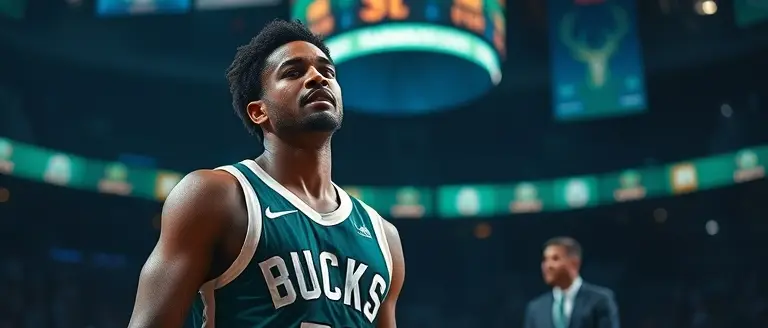
The NBA has officially launched an investigation into the four-year, $64 million contract signed by Gary Trent Jr. with the Milwaukee Bucks, citing concerns over potential cap circumvention. This inquiry follows a period where the league has tightened enforcement of its Collective Bargaining Agreement (CBA) to prevent teams from artificially inflating salaries or engaging in back-channel agreements that violate salary cap restrictions. At the heart of the league’s review is the significant disparity between the player’s recent on-court production and the financial terms of the deal, which reportedly far exceeded market projections for a player of his recent output.
During the most recent campaign, Gary Trent Jr. recorded a career-low average of 9.7 points per game, a dip in performance that led many analysts to believe he would be signing a deal closer to the league minimum. The jump to a $64 million valuation has raised red flags regarding whether the Bucks or third parties facilitated financial arrangements outside the scope of the standard player contract. To determine if a violation occurred, the league is currently analyzing:
- Contractual Discrepancies: Whether the financial structure of the deal aligns with standard league-wide salary benchmarks for role players with similar statistical profiles.
- Potential Side Agreements: Investigating any evidence of off-the-books promises, business ventures, or payments involving external parties that could influence the signing.
- CBA Compliance: Ensuring that the Bucks did not utilize restricted loopholes to bypass the severe financial penalties associated with the current CBA’s second-apron restrictions.
The investigation into the Gary Trent Jr. deal serves as a litmus test for the NBA’s commitment to competitive balance. If the league finds that the contract violates cap circumvention rules, the Bucks could face severe sanctions, including the voiding of the contract, heavy fines, or the loss of future draft capital. As the situation develops, observers are watching closely to see how the league defines the boundaries of permissible contract negotiations in an era defined by stricter spending limitations.
Comparative Analysis: Performance Metrics vs. Contract Value

To understand why the NBA is investigating Gary Trent Jr. and his $64 million contract with the Milwaukee Bucks, one must examine the stark contrast between his recent statistical output and his compensation. In the professional basketball landscape, salary valuations are typically tethered to a player’s efficiency, role, and historical production. Over the last three seasons, Trent Jr.’s trajectory has faced significant volatility. While he previously established himself as a reliable perimeter shooter, his most recent campaign saw a regression in key performance metrics, including a drop to 9.7 points per game.
The Disparity Between Stats and Salary
Market expectations for Gary Trent Jr. heading into free agency were largely conservative. Given his decline in scoring efficiency and reduced playing time, analysts and league insiders widely anticipated he would secure a deal near the league’s minimum salary or a standard veteran exception. Instead, the $16 million average annual value (AAV) provided by the Bucks places him in the tier of established, high-impact secondary scorers. This move deviates significantly from standard market projections, creating a mathematical outlier that has attracted the league’s front office.
Key Data Points Under Investigation
The league’s scrutiny focuses on whether this valuation represents a legitimate market rate or a form of cap circumvention. To contextualize the situation, consider these performance trends:
- Scoring Efficiency: A noticeable downward trend in points per game over the past 24 months, contrasting with the upward trajectory of his contract value.
- Role Transition: The shift from a primary offensive option to a rotational role player, which typically triggers a decrease in annual salary under the current Collective Bargaining Agreement (CBA) guidelines.
- Market Comparison: When measured against similar role players who signed for minimum deals this offseason, the discrepancy in the Bucks’ offer becomes a focal point for investigators looking for non-standard financial arrangements.
By analyzing these figures, the NBA is attempting to determine if the contractual terms violate the spirit of the salary cap, specifically regarding whether off-book agreements or non-traditional incentives were utilized to facilitate the signing.
Demystifying ‘Cap Circumvention’ for NBA Fans

In the landscape of professional basketball, the NBA Collective Bargaining Agreement (CBA) acts as a rigid rulebook designed to maintain competitive balance. At the heart of the current investigation involving Gary Trent Jr. is the complex concept of “cap circumvention.” Simply put, cap circumvention occurs when a team and a player—or their representatives—attempt to bypass salary cap restrictions by using unauthorized methods to finalize a deal. This includes off-the-books agreements, undisclosed side deals, or promises of future compensation that are not reflected in the official contract submitted to the league office.
How the League Monitors Compliance
The NBA maintains strict oversight to ensure that all financial transactions remain transparent. When a contract is signed, the league initiates a comprehensive auditing process to verify that the numbers align with both the team’s cap space and the player’s market valuation.
To ensure fairness, the league office employs several mechanisms:
- Contract Audits: The league reviews every clause to ensure no “hidden” payments or prohibited performance incentives are buried in the fine print.
- Informal and Formal Inquiries: The NBA has the authority to interview agents, front-office executives, and players to confirm that no clandestine deals influenced the signing.
- Third-Party Verification: Investigators scrutinize the timeline of negotiations to ensure that the compensation structure is not being artificially inflated to aid a franchise in bypassing luxury tax brackets or roster-building constraints.
In the case of Gary Trent Jr., the primary point of contention is the significant discrepancy between his recent statistical performance and the valuation of his new deal with the Milwaukee Bucks. While teams are allowed to pay for potential, the league must verify that the contract was negotiated in good faith within the confines of the CBA. If investigators find evidence of collusion or side agreements, the consequences for the organization could be severe, ranging from heavy fines to the potential voiding of the contract itself. As the investigation progresses, the NBA continues to prioritize the integrity of its financial system to ensure that all thirty teams compete on a level playing field.
What Happens Next: The NBA’s Review Process and Potential Outcomes

The investigation into the Gary Trent Jr. contract with the Milwaukee Bucks serves as a high-profile test case for the league’s rigorous oversight of the Collective Bargaining Agreement (CBA). Under NBA protocols, the league office possesses broad authority to scrutinize any deal that appears to diverge significantly from established market value or suggests back-channel agreements. During this period, the league’s legal and salary cap experts perform an exhaustive audit, analyzing team-player communications and financial records to ensure no “side agreements” or undisclosed incentives exist to bypass the salary cap.
Potential Regulatory Outcomes
The NBA’s review process is meticulous, typically involving interviews with relevant team personnel and a forensic examination of the contract’s structure. Depending on the findings, the league faces several procedural paths:
- Contract Validation: If the league finds that the $64 million contract was negotiated in good faith and aligns with CBA requirements, the deal will be cleared, and the investigation will conclude without further action.
- Fines and Forfeitures: Should investigators identify minor administrative discrepancies or unintentional violations, the NBA may impose significant monetary fines on the Bucks organization or strip the team of future draft assets.
- Contract Voidance: In cases of severe “cap circumvention,” the league maintains the power to void the contract entirely, which would force the player back into free agency and leave the team without his services.
As this is an active inquiry, fans and stakeholders should remain cautious, as no official ruling has been issued by the league office. The disparity between Trent Jr.’s recent statistical output and his market valuation remains the primary focal point of this probe. Any final determination will set a significant precedent for how teams leverage financial flexibility while operating under the league’s increasingly complex financial guardrails. Until an official statement is released, the long-term roster implications for the Bucks remain in a state of monitored uncertainty.
Build Your Foundation on Precision
The investigation into Gary Trent Jr.’s contract serves as a stark reminder that when complex rules meet high expectations, there is absolutely no room for error. The NBA is looking for ‘cap circumvention’ because they demand technical perfection—a standard that is often missing when teams or individuals fail to utilize clear, proven guidelines. Whether you are managing an NBA salary cap or attempting a home renovation, the risk of ‘structural failure’ is high when you lack a master blueprint. Just as the Bucks need a perfect plan to navigate the nuances of the CBA, you need a reliable roadmap to ensure your projects are completed with total technical certainty.
This is where Ted’s Woodworking becomes the essential tool for those who value structure over guesswork. Much like the league’s strict regulations, complex builds can easily fall apart if your blueprints are incomplete or ambiguous. Our platform provides 16,000 professional-grade plans that strip away the mystery and frustration of DIY, replacing ‘trial-and-error’ with the confidence that comes from expert-tested precision. Stop guessing and start building with the technical accuracy that separates the pros from the amateurs.
Don’t leave your next project to chance. By choosing a framework built on total clarity, you ensure that every cut, joint, and design decision leads to success rather than a ‘regulatory’ headache. Join thousands of makers who have transformed their craft by following the most comprehensive blueprint library available. Success is not an accident—it is the result of following the right plan from day one.
 Just as the Bucks need a perfect plan to navigate the CBA, ensure your own projects are built on a solid foundation; download your professional blueprint library here.Transform My Projects Today!