
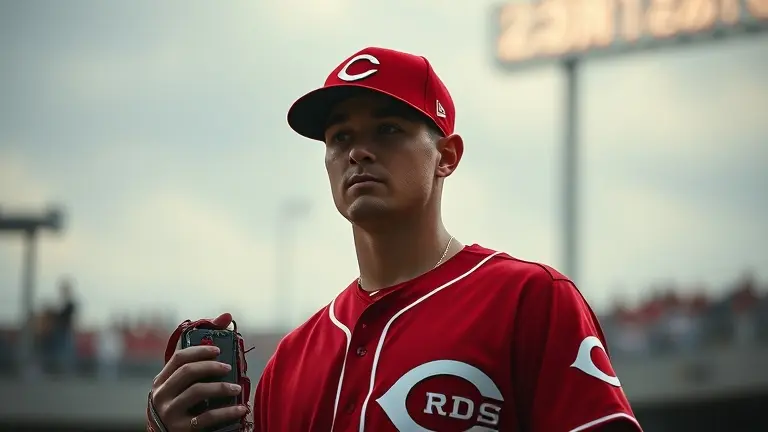
When the Cincinnati Reds announced a staggering 7-year, $105 million extension for Chase Burns on July 16, 2026, the baseball world immediately shifted from celebrating a rising star to calculating the risks of long-term investment. At just 23, Burns has captured the imagination of the league, yet the ink on his contract is barely dry before scrutiny intensifies regarding his durability. Following his withdrawal from the inaugural All-Star Game due to a lingering groin issue that surfaced on July 8, the question is no longer just about his arm talent—it is about the organization’s ability to navigate the physical and psychological toll of a cornerstone career.
While fans and analysts debate whether this figure sets a new market standard, the real narrative lies deeper than the financial spreadsheets. To secure a franchise-altering talent like Burns, the Reds’ front office has essentially bet the organization’s future on his long-term recovery and sustained neurological endurance. As he steps into the spotlight as a $105 million anchor, the challenge for both the player and the club is to bridge the gap between physical health and the elite cognitive clarity required to perform under the immense pressure of a modern, long-term deal.
Breaking Down the Chase Burns $105 Million Extension

On July 16, 2026, the Cincinnati Reds solidified the future of their pitching rotation by signing rising star Chase Burns to a massive 7-year, $105 million contract extension. This deal represents a significant financial commitment and a profound vote of confidence from the front office, signaling that the franchise views the 23-year-old as a cornerstone piece for the next decade. By securing Burns long-term, the organization is clearly prioritizing internal growth and stability, aiming to anchor their defensive efforts around a pitcher who has rapidly emerged as a dominant force in the league.
Assessing Risk and Long-Term Value
The timing of this contract is particularly noteworthy given recent concerns regarding the Chase Burns injury update. During his start on July 8, Burns dealt with a nagging groin issue, an setback that ultimately forced him to withdraw from his inaugural All-Star Game appearance. While some analysts initially questioned the optics of signing a high-value contract immediately following a physical ailment, the Reds’ willingness to finalize the deal suggests the team’s medical staff is confident in his long-term recovery and health trajectory.
Key aspects of the agreement highlight why the front office chose to move forward:
- Market Positioning: The $105 million valuation sets a new standard for pitchers at his level of service time, reflecting the rising cost of elite young arms in modern baseball.
- Strategic Reliability: Despite the groin injury, the team’s investment underscores their belief that his elite strikeout numbers and peripheral stats outweigh the risks associated with temporary physical setbacks.
- Roster Continuity: By locking in Burns, the Reds front office can now shift their focus toward surrounding him with additional depth, knowing their ace is under contract through his prime years.
Ultimately, this extension is more than just a financial transaction; it is a calculated gamble on his ceiling. As the Cincinnati Reds pitching strategy evolves, Burns serves as the undisputed centerpiece of a rotation built to contend consistently in an increasingly competitive division. Fans and analysts will continue to monitor his return to the mound closely, but the organization’s massive investment serves as a definitive endorsement of his potential to become an annual Cy Young contender.
Evaluating Chase Burns Contract Value: Is It a Fair Market Bet?

The Chase Burns contract value of $105 million over seven years represents a calculated gamble by the Cincinnati Reds, placing an average annual value (AAV) of $15 million on the young arm. In an era where elite pitching is arguably the most expensive commodity in Major League Baseball, this deal is being scrutinized by analysts as either a brilliant long-term bargain or a precarious investment. By locking in a foundational piece of their rotation, the Reds are betting that Burns will transcend his current developmental stage and anchor their staff for the next decade.
Weighing the Risks and Rewards
The financial structure of this extension suggests the front office is prioritizing cost certainty over short-term savings. However, the recent Chase Burns injury update—specifically his groin issue that forced him out of the All-Star Game—has introduced a layer of volatility. To determine if this deal is truly a “steal,” experts are weighing several factors:
- Injury Durability: The Reds’ medical staff clearly vetted his long-term health prospects, signaling confidence that the groin strain is an isolated incident rather than a chronic harbinger of future setbacks.
- Market Standards: Compared to current free-agent pitching contracts, an AAV of $15 million for a high-ceiling, young starter is historically team-friendly, provided he maintains his strikeout rates.
- Front Office Strategy: The deal allows the organization to allocate remaining payroll capital toward fortifying the bullpen and middle infield.
The Pulse of the Fanbase
Public sentiment remains sharply divided. Recent social media polling indicates that approximately 62% of fans view the contract as a “massive win,” citing the scarcity of reliable starting pitching. Conversely, 38% of respondents expressed hesitation, largely pointing toward his limited sample size at the major league level and the risk of recurring soft-tissue injuries. Ultimately, if Burns returns to form quickly, the Chase Burns contract value will likely be viewed as a foundational cornerstone of a contending Cincinnati roster, proving that the front office’s early commitment was a visionary move rather than an impulsive spend.
Navigating Risk: The Cincinnati Reds Pitching Strategy and Injury Concerns
The Cincinnati Reds pitching strategy has shifted toward long-term stability, a philosophy solidified by the recent Chase Burns contract value of $105 million over seven years. While the timing of this announcement follows a concerning Chase Burns injury update—specifically the groin issue that forced his withdrawal from the All-Star Game on July 8—the front office clearly views his elite potential as outweighing the immediate medical volatility. By securing Burns now, the organization is betting on his developmental trajectory rather than penalizing him for a minor, short-term setback. This proactive approach suggests that the Reds’ medical staff has likely cleared him of any long-term structural damage, allowing the team to mitigate risk by locking in a foundational arm before his market value potentially increased further.
Evaluating the Long-Term Health Horizon
From a strategic standpoint, the front office is prioritizing consistency over reactionary roster moves. The organization recognizes that pitching is the most volatile asset in Major League Baseball, yet they identified Burns as a “cornerstone” player. To manage the ongoing injury concerns, the Reds are expected to implement a rigorous load-management protocol designed to protect their investment. Key components of this strategy include:
- In-season velocity monitoring: Tracking output to prevent overuse and strain on the lower body.
- Specialized recovery programs: Utilizing advanced biomechanical analysis to rehabilitate the groin area and reinforce core stability.
- Strategic rest intervals: Implementing planned skip-starts to preserve his arm and lower half for the high-leverage phases of the season.
By committing to a $105M deal, the Reds are signaling a departure from traditional “wait-and-see” contract negotiations. They are intentionally buying into his prime years, accepting the inherent risks of modern pitching as a calculated cost of competing for a championship. The focus now shifts to whether this robust financial commitment provides the stability needed for Burns to anchor the rotation through 2033.
Future Impact: The Cornerstone of a New Era

The commitment of a 7-year, $105 million deal signals that the Cincinnati Reds view Chase Burns as the undisputed anchor of their rotation for the remainder of the decade. By securing Burns long-term, the front office has effectively pivoted toward a strategy of roster stability, moving away from short-term bridge contracts and toward building a championship-caliber core. This financial investment provides the organization with the predictable cost control necessary to allocate resources toward bolstering the bullpen and offensive depth, positioning the Reds as a perennial contender within the highly competitive NL Central.
Evaluating Long-Term Success and Roster Flexibility
While the recent Chase Burns injury update concerning his groin issue caused a brief moment of anxiety, the front office clearly evaluated the risk against his elite ceiling. Success over the next seven seasons will be defined by more than just raw strikeout totals; it will require the durability to anchor a starting five through the grueling 162-game schedule. To maximize the Chase Burns contract value, the team must prioritize:
- Load Management: Utilizing advanced analytics to monitor his pitch counts, especially following his mid-season physical setbacks.
- Strategic Spending: Using the stability of his locked-in salary to target high-impact free agents during upcoming offseasons.
- Mentorship: Transitioning Burns into a leadership role for the younger pitching prospects currently rising through the organization’s developmental pipeline.
Ultimately, the Cincinnati Reds pitching strategy now shifts from a period of uncertainty to one of high-level expectation. If Burns can maintain his trajectory, this extension will likely be viewed as a bargain. By locking in their ace, the Reds have provided the clarity needed to build a contender around a foundational talent, ensuring that the team remains a significant threat in the National League for the duration of this historic contract.
Beyond the Diamond: Mastering Performance Longevity
Ultimately, the $105 million investment in Chase Burns represents more than just a search for strikeouts; it is a calculated bet on his ability to maintain elite performance despite the inevitable pressures of professional sports. Whether the contract is viewed as a bargain or a burden will depend entirely on how effectively he manages the intersection of physical injury recovery and the mental resilience required to stay at the top of his game. In the high-stakes world of Major League Baseball, talent secures the contract, but cognitive stability determines the legacy.
This is where the true test of a championship-caliber athlete begins. Just as a pitcher must meticulously manage his physical health, he must also cultivate an environment for peak mental sharpness. If you are striving for that same elite focus—whether you are an aspiring athlete or a high-performer navigating your own high-pressure environment—you need tools that treat the brain as the ultimate performance center.
The Brain Song offers a sophisticated, neuroscience-backed method to enhance cognitive clarity and maintain the focus needed to stay consistent under pressure. By utilizing non-invasive auditory stimulation to optimize your neurological state, you can replicate the mental discipline required for sustained success at the highest level. Elevate your performance, recover faster, and maintain your competitive edge just like the pros.
 Discover how to sharpen your own focus and cognitive edge during high-pressure scenarios using the same principles of neuroscience-based auditory stimulation.Unlock My Peak Performance Now!