

The professional golf world is currently caught in a period of intense volatility as reports confirm that the Saudi-backed Public Investment Fund (PIF) has officially committed to funding LIV Golf only through the conclusion of the 2026 season. This announcement has shattered the league’s previous narrative of long-term stability, replacing it with urgent speculation regarding its future viability. For dedicated fans and industry observers alike, the news has transformed from mere rumor into a structural crisis that demands a deeper understanding of the financial and contractual realities governing the sport.
As athletes like Jon Rahm and Bryson DeChambeau continue to compete in high-stakes environments like Mexico City, they are simultaneously navigating an increasingly uncertain career landscape. This era of ‘professional limbo’ isn’t just an administrative hurdle for the players; it is a complex puzzle for anyone invested in the trajectory of the game. Navigating this sea of shifting data, legal speculation, and contractual cliffs requires a level of objective, sustained focus that is often hindered by the constant barrage of media-driven anxiety and emotional reporting.
In this comprehensive dossier, we move beyond the headlines to examine the hard data behind the LIV funding model. By analyzing the ‘post-LIV’ possibilities, the realities of contract termination, and the historical context of sovereign wealth investments in sports, we aim to provide the clarity you need. Just as these elite athletes must maintain laser-like precision amidst the noise of the funding collapse, we invite you to clear the mental fog and sharpen your analytical edge as we dissect the most significant shift in professional golf history.
The 2026 Funding Cliff: Understanding LIV Golf’s Strategic Crossroads

The landscape of professional golf shifted dramatically on April 18, 2026, when LIV Golf CEO Scott O’Neil confirmed that the Public Investment Fund (PIF) has limited its financial commitment to the league through the end of the 2026 season. This “funding cliff” has transformed lingering speculation into a tangible administrative crisis, forcing the organization to confront a future where its current capital-heavy model may no longer be sustainable without a major pivot. As the tour continues its schedule, including the high-stakes event in Mexico City, the looming deadline has cast a pall over the league’s operations, leaving stakeholders and fans to question the long-term viability of the LIV brand.
Navigating the Narrative: Player Responses and Internal Reality
For marquee athletes, the news has necessitated a delicate balancing act between maintaining competitive focus and addressing the existential uncertainty of their careers. Players such as Jon Rahm and Bryson DeChambeau, who have been the faces of the league’s massive recruitment efforts, are now the primary targets for media inquiry. While Rahm has publicly suggested that there is “no point in dwelling on” the potential demise of the league, behind closed doors, the atmosphere is reportedly one of caution and strategic appraisal.
The current situation highlights several critical pressures on the league’s leadership:
- Contractual Vulnerability: Many high-profile players are now evaluating the fine print of their guaranteed contracts, specifically regarding what happens if the PIF ceases backing or if the entity undergoes a forced restructuring.
- Operational Uncertainty: With the Michigan event and other future stops already facing questions, the league must “work like crazy” to secure independent revenue streams, such as domestic broadcasting rights and corporate sponsorships, to fill the projected post-2026 budget void.
- Market Sentiment: Industry analysts are closely monitoring how this instability affects team franchise valuations, which rely heavily on the assumption of long-term existence and a stable tournament calendar.
Ultimately, the uncertainty surrounding LIV Golf news has shifted from a peripheral narrative to a central component of the sport’s broader conversation. Whether the league can successfully pivot to a self-sustaining model or remains a temporary disruptor depends entirely on its ability to demonstrate financial independence before the 2026 window closes.
The Post-LIV Landscape: Mapping Pathways to Traditional Tours

As LIV Golf news dominates the sporting headlines, the prospect of a dissolved league forces a critical re-examination of how elite talent might transition back to the PGA Tour or DP World Tour. Should the Saudi-backed Public Investment Fund (PIF) withdraw support post-2026, the current administrative “career limbo” facing stars like Jon Rahm and Bryson DeChambeau would likely shift toward complex legal negotiations. A wholesale return is not as simple as re-applying for membership; it would require navigating a labyrinth of disciplinary repercussions, pending litigation, and existing structural barriers within traditional golf organizations. Industry experts suggest that a “merger-of-equals” remains the most viable, albeit unlikely, mechanism to facilitate a seamless reintegration of these athletes without massive litigation fees.
Strategic Hurdles for Reintegration
The path back to traditional circuits for LIV-affiliated players is obstructed by several significant barriers that current league leadership must resolve before any exit strategy can be finalized:
- Disciplinary Sanctions: The PGA Tour maintains strict bylaws regarding unauthorized events. Any path back would likely necessitate a settlement involving significant fines or mandatory “suspension periods” to appease legacy members.
- Qualification Rankings: Because LIV Golf events currently lack official OWGR points, players have plummeted in the rankings. A return would require the PGA Tour to grant special exemptions or “fast-track” qualification status for former major champions.
- Contractual Termination Clauses: Individual contracts are tied to the league’s viability. If the PIF ceases funding, legal discovery will likely focus on whether these contracts provide guaranteed exit clauses or if players remain tethered to non-compete agreements.
Ultimately, if the LIV Golf model collapses, the industry will likely see a bifurcation of talent. Top-tier stars with significant brand equity may find individual settlement deals to rejoin the PGA Tour, while mid-tier players face a difficult reality of rebuilding their careers through secondary tours or regional qualification series. The financial model shift from the current “guaranteed money” structure to a performance-based system remains the most difficult adjustment for those having spent years competing in the LIV format.
Contractual Reality: What the 2026 Deadline Means for Stakeholders

The announcement that the Public Investment Fund (PIF) will conclude its primary funding commitment to LIV Golf by the end of 2026 has sent shockwaves through the professional landscape, turning the league’s ambitious franchise model into a precarious economic puzzle. For the athletes and team principals involved, this “funding cliff” necessitates a transition from reliance on guaranteed capital to a model of self-sustainability that many LIV teams have yet to achieve. Contractually, most high-profile stars currently operate under multi-year agreements that prioritize guaranteed, upfront payments. However, as the 2026 expiration approaches, the legal fine print regarding termination clauses and “force majeure” events becomes critical. Industry insiders suggest that these contracts likely contain specific language protecting the league against sudden liquidation, but they offer little long-term security for the players should the franchise model fail to generate sufficient commercial revenue to replace PIF subsidies.
Implications for Players and Team Owners
The shift in financial strategy forces a re-evaluation of individual earning potential and team valuation. For players like Jon Rahm and Bryson DeChambeau, the immediate concern lies in the viability of their team-based revenue streams. If the league cannot secure third-party sponsorship or broadcast profitability by the 2026 deadline, the following contractual realities may materialize:
- Contract Renegotiation: Players may face “haircuts” on their existing guaranteed money as the league attempts to preserve cash flow and extend operations beyond the PIF sunset period.
- Performance-Based Triggers: Expect a pivot toward performance-driven compensation models as the league attempts to mimic the PGA Tour structure to maintain competitive integrity and appeal to advertisers.
- Exit Clauses: Many contracts likely include “escape hatches” if the league dissolves or significantly alters its tournament format, allowing stars to explore paths back to the PGA Tour or DP World Tour.
- Franchise Liquidation: For team owners, the inability to prove independent profitability could lead to the dissolution of teams, effectively voiding existing marketing and endorsement assets tied to the LIV branding.
As the industry tracks the latest LIV Golf news, the focus remains on whether these stakeholders can pivot to a traditional commercial model in time. The current economic reality suggests that without a fundamental restructuring—or a breakthrough in broadcasting rights—the league’s current business framework remains on thin ice, leaving players in a state of indefinite career uncertainty.
The PIF Playbook: Global Sports Investment in Historical Context
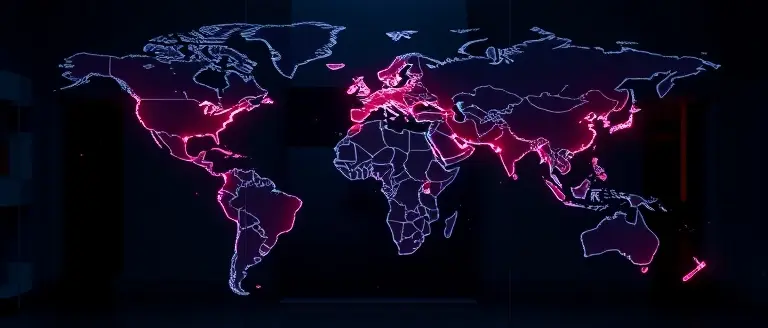
The Public Investment Fund (PIF) of Saudi Arabia has systematically utilized high-profile sports acquisitions to diversify its national portfolio and enhance its global soft power. Unlike traditional corporate sponsors, the PIF operates with a long-term, state-level mandate that often prioritizes market penetration and brand alignment over immediate quarterly profitability. To understand current LIV Golf news and the precarious 2026 funding cliff, one must view it as part of a broader, aggressive investment timeline:
- 2021: The acquisition of Newcastle United in the English Premier League marked a major entry into European football, followed by heavy investments in local Saudi clubs.
- 2022-2023: The launch of LIV Golf and subsequent investments in Formula 1 sponsorship and combat sports (specifically high-profile heavyweight boxing matches in Riyadh).
- 2024-2026: A period characterized by “market stabilization,” where the PIF began evaluating the return on investment (ROI) for these high-spend, disruptor-style entities.
Evaluating the 2026 Pivot: Failure or Strategic Re-evaluation?
While observers frequently interpret the 2026 funding uncertainty as an “imminent demise” of the league, historical patterns within sovereign wealth funds suggest a more calculated approach. In the context of global sports, the PIF’s strategy often follows a cycle of initial capital injection followed by a “re-evaluation phase.” In football, for instance, early excessive spending gave way to more structured, revenue-driven operational mandates once a foothold was established.
Evidence suggests that the current tension surrounding LIV Golf is not necessarily a precursor to a total exit, but rather a pivot toward a more sustainable financial model. By capping direct funding, the PIF is effectively forcing the league to transition from a venture-capital-backed startup to an entity that must demonstrate internal revenue generation. For players and stakeholders navigating this career limbo, the 2026 deadline functions as a necessary mechanism to test whether the LIV product can survive—or must eventually be absorbed into a consolidated, global golf ecosystem. This transition mirrors previous PIF maneuvers, where initial disruption is traded for long-term integration into the global sports infrastructure.
Charting Your Course Through the Chaos
The unfolding drama surrounding LIV Golf is a testament to the volatility inherent in modern global sports, where state-level capital and traditional sporting heritage collide. Whether the league successfully navigates the 2026 funding cliff or undergoes a radical transformation, one reality remains: the landscape of professional golf is in flux. As fans, we are witnessing a fundamental recalibration that will affect the competitive and economic structure of the sport for decades to come.
Navigating these complex narratives requires more than just interest; it requires exceptional mental clarity. The barrage of speculation, contractual jargon, and conflicting news reports can easily lead to cognitive fatigue, clouding our ability to see the strategic moves happening behind the scenes. This is where your ability to process information objectively becomes your greatest advantage.
To truly analyze the future of the game without falling prey to the noise, you need a sharp, focused mind. That is where The Brain Song becomes an essential tool for your analytical arsenal. By providing a scientifically backed method to combat mental fog, it offers the cognitive stamina needed to parse through these dense, high-stakes scenarios with ease. Don’t let media-driven anxiety dull your perspective—sharpen your focus and process the complex future of golf with clarity; discover how The Brain Song can reset your cognitive state in just 12 minutes a day.

Sharpen your focus and process the complex future of golf with clarity; discover how The Brain Song can reset your cognitive state in just 12 minutes a day.
Unlock My Results