
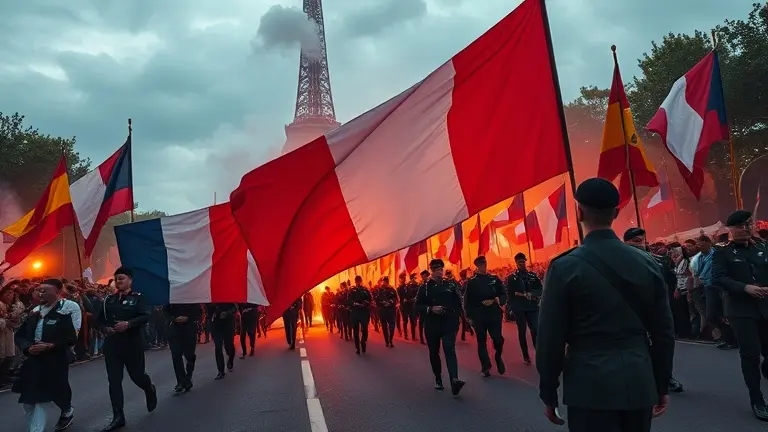
Bastille Day 2026 arrives not merely as a celebration of French history, but as a defining junction of the decade. As Paris hosts its final National Day parade under President Emmanuel Macron—a display of European military resolve against a backdrop of escalating tensions in Ukraine—the global focus simultaneously shifts across the Atlantic to Dallas. Here, the France versus Spain FIFA World Cup semi-final collision promises to be more than a sporting event; it is a high-octane cultural clash, amplified by recent geopolitical friction that threatens to spill over from the diplomatic stage onto the pitch.
This unprecedented synchronization of state-level ‘hard power’ and international ‘soft power’ demands a sophisticated analytical lens. Most observers are treating these events as distinct silos, missing the deeper, emerging narrative of a ‘Global France’ in transition. To truly grasp the implications of this convergence—from the streets of Paris to the heat of Texas—one must possess the sustained focus to synthesize these disparate, fast-moving threads of European identity, geopolitical instability, and elite athletic competition.
The Historic Convergence: Why July 14, 2026, Defines a New Era
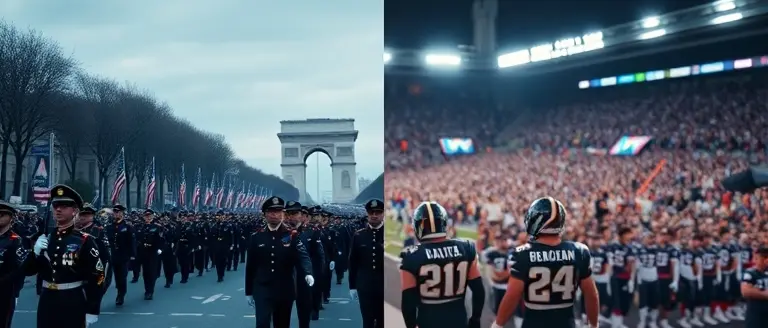
Bastille Day 2026 represents a rare historical intersection where the traditional symbols of French national pride collide with urgent geopolitical realities and high-stakes international competition. Unlike previous anniversaries, July 14, 2026, is defined by a unique convergence: the final military parade of President Emmanuel Macron’s administration occurring simultaneously with the diplomatic and cultural pressures of the FIFA World Cup. This year’s celebrations serve as a stage for “Global France,” projecting a vision of European Unity in the face of the ongoing conflict in Ukraine, while simultaneously testing the nation’s soft power on the global stage.
Geopolitical Stakes and Sporting Rivalries
The intensity of this year’s events stems from the fusion of military strategy and athletic spectacle. As the French military highlights regional solidarity in Paris, millions of eyes are fixed on Dallas, Texas, for the high-profile France vs. Spain World Cup semi-final. This match has transcended typical sports rivalry, fueled by recent, inflammatory commentary from former Spanish PM Mariano Rajoy that has added a layer of diplomatic friction to the pitch.
Key factors contributing to the volatility of this date include:
- The Macron Transition: As this marks the Macron final parade, the spectacle carries heightened domestic scrutiny regarding his administration’s lasting legacy on European security.
- Diplomatic Sports: The Dallas match has become a flashpoint for national identity, with the French diaspora in the United States serving as a bridge between the intense political developments in Paris and the sporting enthusiasm in Texas.
- Global Security Focus: The parade underscores France’s commitment to the war in Ukraine, moving away from purely celebratory displays toward a narrative of hardened military readiness.
By synthesizing these disparate events, observers can identify a shift toward a more precarious form of cultural diplomacy. The events of July 14, 2026, prove that national identity is no longer confined to local borders but is instead negotiated through the complex interplay of international military alliances and professional global sports.
Macron’s Final Parade: A Geopolitical Statement of European Unity
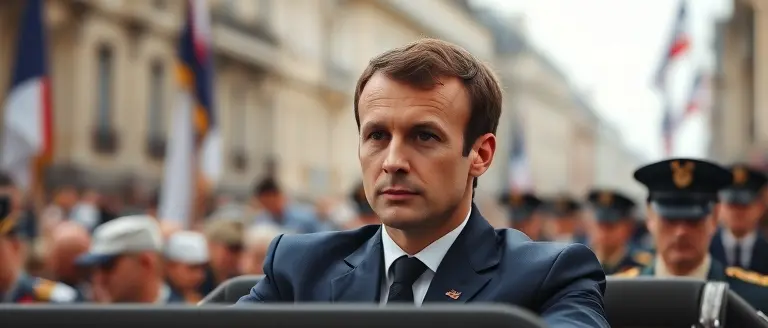
The Bastille Day 2026 celebrations in Paris carry a weight far beyond historical commemoration. As President Emmanuel Macron leads his final parade in office, the event has been recalibrated from a purely ceremonial display into a pointed geopolitical manifesto. In the context of the ongoing war in Ukraine, the parade serves as a deliberate theater for European unity, showcasing a hardened military posture that emphasizes the continent’s collective defense capabilities. Observers note that this year’s march signifies a pivotal shift in French strategy: moving away from traditional nationalist pageantry toward a cohesive, integrated vision of European security architecture.
A Legacy of Defense and Integration
This transition underscores a critical moment for the “Global France” identity. By highlighting interoperability between French forces and their European counterparts, Macron is actively crafting a legacy centered on strategic autonomy. The optics are undeniable: France is positioning itself as the primary architect of a resilient Europe, leveraging the military parade to reassure allies and signal regional resolve.
Key pillars defining this shift include:
- Integrated Defense Initiatives: Emphasizing shared hardware and multinational battalions to reinforce the NATO-EU cooperative framework.
- Symbolic Solidarity: Incorporating units from frontline states to underline that France’s security interests are inseparable from the stability of the Eastern flank.
- A Shift in Rhetoric: Moving the narrative from local pride to existential continental security, signaling to both domestic critics and global adversaries that France remains the anchor of Western stability.
For international stakeholders, the Macron final parade functions as a signal of institutional continuity. Even as France approaches a period of political transition, the display of high-tech military assets and tactical coordination confirms that the nation’s commitment to a militarized, unified defense strategy remains a cornerstone of its current diplomatic and security policy.
Diplomatic Sports: The France vs. Spain World Cup Clash in Dallas
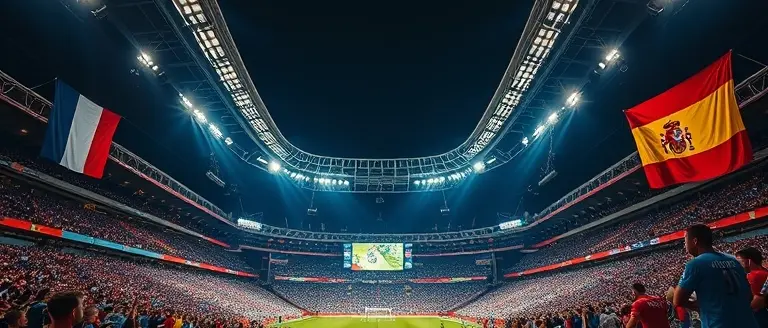
The scheduling of the France vs. Spain World Cup semi-final on July 14, 2026, has transformed a routine athletic contest into a flashpoint for international tension. While Bastille Day 2026 usually serves as a moment of French national pride, this year’s convergence with the Dallas-based tournament brings diplomatic friction to the forefront. The match has become an unintended stage for political posturing, exacerbated by recent comments from former Spanish Prime Minister Mariano Rajoy. These remarks, which questioned French leadership priorities during the ongoing conflict in Ukraine, have turned the stadium into a proxy for broader European ideological disagreements.
The intersection of sports and statecraft is particularly visible in how US-based supporters are reacting to the match:
- Geopolitical Proxy: Fans and analysts are increasingly viewing the game through the lens of Diplomatic Sports, where victory on the pitch is interpreted as a symbolic validation of national policy.
- The Rajoy Factor: The controversial statements by the former Spanish PM have polarized the diaspora, turning a standard semi-final into a high-stakes debate over EU policy and regional influence.
- Cultural Identity: The event serves as a high-pressure test for the “Global France” identity, as the French team represents a nation currently balancing the gravity of Macron’s final parade in Paris with the high-energy spectacle of an American-hosted World Cup.
Beyond the noise of social media commentary, the Dallas event highlights a profound shift in how modern sports diplomacy functions. Rather than acting as a neutral ground, the match serves as a theater where domestic European disputes are amplified by a global audience. For observers of international affairs, the outcome in Texas is now inextricably linked to the broader climate of European Unity and the specific challenges France faces during this pivotal political transition year. Whether the tension dissipates following the final whistle or intensifies the diplomatic rift remains a key point of concern for observers in both Paris and Madrid.
Beyond Paris: How Global Strongholds and US Cities Mark the Day
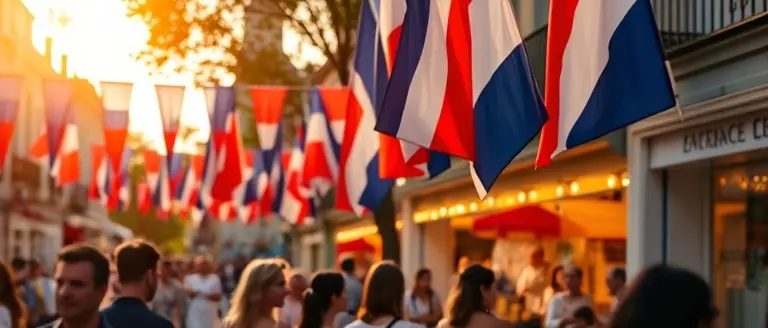
While the Macron final parade in Paris commands the global geopolitical spotlight for Bastille Day 2026, the spirit of the French national holiday resonates far beyond the borders of Europe. In historical strongholds like Puducherry, India, the day is marked by a unique blend of post-colonial heritage and modern celebration. Local communities engage in traditional flag-hoisting ceremonies and cultural exchanges that emphasize the endurance of French influence in South Asia. These commemorations serve as a reminder that the reach of “Global France” extends deep into international territories, maintaining a diplomatic bond that transcends current political cycles.
Diaspora Engagement in the United States
In the United States, the convergence of Bastille Day 2026 with the high-stakes France vs. Spain World Cup match has transformed local community gatherings into intense cultural flashpoints. In cities like Los Angeles, where the French diaspora is significant, celebrations are shifting from traditional street fairs to centralized viewing parties.
- Cultural Diplomacy: US-based French cultural centers are leveraging the holiday to host forums on European unity, connecting the festive atmosphere with the gravity of the ongoing security challenges in Ukraine.
- The Dallas Factor: With the FIFA World Cup semi-final taking place in Dallas, Texas, the atmosphere among US-based Francophiles is particularly charged. The game acts as a bridge between French identity and American sporting culture, creating a unique environment where fans navigate both the pride of their heritage and the tension of international sporting rivalries.
The synthesis of these localized events suggests that the diaspora views this date as more than just a celebration of history; it is a moment to assert their presence during a period of intense global scrutiny. Whether in India or the United States, the day remains a critical barometer for how French soft power is perceived and practiced by those living outside of the hexagonal borders.
Navigating the Global Crossroads of 2026
As we witness this historic convergence, the intersection of Paris’s high-stakes geopolitics and the electric atmosphere of the World Cup in Dallas underscores a world in rapid transition. Whether it is the closing chapter of the Macron era or the intense rivalry between France and Spain, staying informed requires more than just passive observation—it demands a razor-sharp ability to synthesize complex, multi-layered data points in real time.
In an era where global dynamics shift as rapidly as the 2026 World Cup momentum, maintaining sharp cognitive clarity is essential for staying ahead of the narrative. This is where The Brain Song becomes an indispensable tool for the modern analyst. By enhancing your mental acuity and reducing cognitive fatigue, this supplement ensures you possess the intellectual endurance necessary to deconstruct the ‘hard power’ geopolitical narratives and ‘soft power’ cultural implications defining this unique moment in history.
Integrating this cognitive edge into your daily routine is the natural next step for anyone committed to true strategic awareness. Don’t let the complexity of these high-stakes events cloud your judgment; elevate your processing power and ensure you never miss a nuance in the shifting sands of global politics and sports.
 Unlock your peak mental performance to stay ahead of the curve: integrate The Brain Song into your daily routine.Yes, I Want Peak Cognitive Performance!