
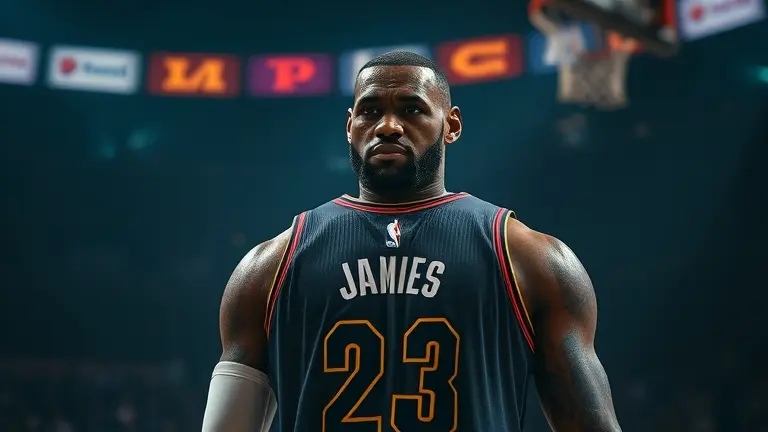
As the NBA world fixates on the latest LeBron James news, the conversation has moved far beyond simple headlines. Entering his 24th season, the legendary forward stands at a career-defining crossroads as an unrestricted free agent, with rumors swirling about a potential shift to the Philadelphia 76ers. However, looking past the surface-level noise reveals a high-stakes chess match involving complex salary cap mechanics and the necessity of building a championship-ready roster from the ground up.
For those dissecting the legacy implications and tactical ‘what-if’ scenarios of his potential landing spots, it is clear that LeBron’s late-career moves require more than just athleticism—they demand elite strategic foresight. Understanding these shifting dynamics is akin to mastering the game itself, requiring a level of mental acuity that few possess. To truly decode the impact of such a monumental move, we must first sharpen the very tool that allows us to process this level of intense sports analysis: our own cognitive precision.
The July 2026 Free Agency Landscape: Where Does LeBron Stand?

As of July 2026, the NBA free agency market is dominated by a singular, historic narrative: the unrestricted status of LeBron James. Entering his staggering 24th season, the legendary forward has transformed the off-season into a high-stakes chess match. Unlike previous years where his destination felt inevitable, the current landscape is defined by deep uncertainty, with analysts and fans alike dissecting his social media activity for cryptic clues regarding his next championship pursuit. According to recent LeBron James news, the superstar is not merely looking for a contract, but for a tactical environment that maximizes his remaining elite production.
The Philadelphia 76ers and Strategic Realignment
The most persistent rumors point toward the Philadelphia 76ers as a potential landing spot. Philadelphia’s front office has reportedly been aggressive in exploring pathways to accommodate James, focusing on roster flexibility that allows for a championship-caliber core. Emerging reports suggest that any successful acquisition of James might involve a “package deal” strategy, potentially including longtime allies or veteran All-Stars like Kevin Love. This approach highlights a deliberate attempt to prioritize experience, chemistry, and high-IQ basketball over youth development.
Key Factors Influencing the Decision
The decision-making process for James appears to hinge on several critical variables:
- Salary Cap Implications: Teams must navigate complex luxury tax penalties to assemble a roster capable of supporting an aging superstar, requiring precise cap maneuvers.
- Legacy Ambitions: James is famously motivated by the prospect of adding another ring, influencing his preference for established contenders over rebuilding franchises.
- Tactical Synergy: Evidence suggests he is seeking a system that leverages his playmaking ability, reducing his defensive workload while allowing him to control the offensive tempo.
Ultimately, the 2026 free agency period has become a referendum on James’ career goals. Whether he remains in a familiar environment or embarks on a final, calculated “superteam” experiment, his choice will fundamentally alter the power structure of the Eastern Conference for the remainder of the decade.
The Tactical Impact of LeBron in Philadelphia

Integrating LeBron James into the Philadelphia 76ers’ roster represents a massive strategic shift, moving beyond mere LeBron James news to address specific mechanical deficiencies in their current rotation. While the 76ers have long prioritized size and interior defense, the addition of a floor general with James’s unique profile would fundamentally stabilize their half-court execution. By operating as a primary playmaker, James would alleviate the heavy burden currently placed on the team’s backcourt, allowing them to shift into secondary scoring roles that maximize their perimeter efficiency. Advanced metrics suggest that his court vision would bridge the gap in Philadelphia’s transition offense, turning stagnant sets into fluid opportunities while ensuring high-percentage looks for his teammates.
Tactical Synergy and Roster Construction
The fit between James and the existing Philadelphia core relies on his ability to act as a force multiplier. His presence would necessitate a tactical adjustment that prioritizes high-IQ spacing and movement. Key tactical benefits include:
- Secondary Playmaking: James reduces the “dead-ball” stretches that have historically hampered the 76ers, ensuring the offense retains its rhythm throughout all four quarters.
- Pick-and-Roll Versatility: His ability to initiate the pick-and-roll at his age is still elite, providing a gravity-pulling threat that opens lanes for cutters and perimeter shooters.
- Veteran Stability: As the team chases a championship ring, James brings a “championship-proven” framework to the locker room, helping the roster execute during high-leverage late-game situations.
Evidence suggests that if the 76ers successfully navigate their salary cap constraints to secure him, the tactical ceiling for the franchise rises significantly. By shifting the offensive architecture toward a playmaking-heavy system, Philadelphia could transform into a top-tier title contender. This move is not merely a headline-grabbing gamble; it is a calculated effort to optimize a championship window through unparalleled basketball IQ and veteran leadership.
Data-Driven Projections: LeBron’s Performance Metrics at Year 24
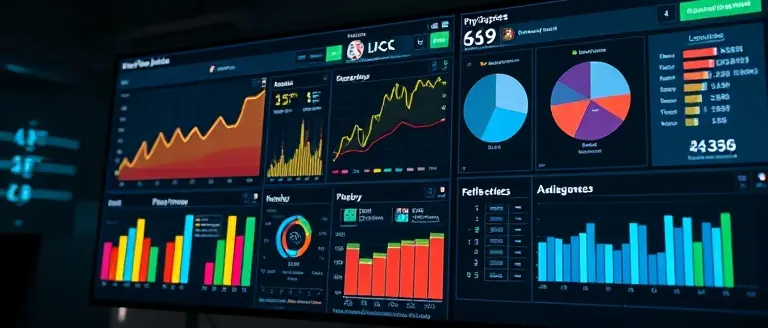
As LeBron James navigates the unprecedented territory of his 24th NBA season, the latest lebron james news centers on whether his physical output can sustain a championship-caliber contender. Analytical modeling suggests that while his raw athleticism has evolved, his efficiency remains in the league’s top tier. Current metrics indicate a strategic shift: James has successfully preserved his durability by curbing high-intensity transition sprints in favor of an elite, high-IQ floor general capacity. This evolution is critical for any team—such as the Philadelphia 76ers—considering a high-stakes free agency acquisition, as his value now lies in playmaking consistency rather than pure scoring volume.
When dissecting his performance data against the requirements of modern championship contenders, several key metrics emerge as indicators of his late-career utility:
- Usage Rate Adjustment: Data suggests James is most effective when his usage rate hovers between 26% and 28%, allowing him to maximize shooting percentages while maintaining defensive energy for closing stretches.
- Rebounding and Defensive Anchoring: His defensive rebound percentage remains elite for his position, proving that his length continues to provide essential stability for team rebounding structures.
- Minutes-Per-Game Optimization: Evidence suggests that capping his involvement at 32-34 minutes per game is the “sweet spot” for maintaining his shooting efficiency, particularly from the three-point line, throughout a grueling postseason run.
The ongoing NBA free agency speculation implies that teams are not just paying for a superstar name, but for a high-efficiency tactical engine. By integrating into a roster with secondary scoring options, James can transition into a facilitator role, mitigating the physical wear of a primary-option burden. Whether he signs as part of a package deal or independently, his ability to manage his own workload remains the primary factor in his legacy-defining pursuit of another championship ring. Through this data-driven lens, it is clear that James is not seeking to outrun his age, but to leverage his basketball intelligence to outmaneuver it.
Legacy Architecture: Seeking the Final Championship Ring

As LeBron James navigates his 24th season, the current LeBron James news cycle transcends mere free agency speculation; it represents the final blueprint of an unparalleled career. For a player who has already secured four titles with three different franchises, this late-career move is a study in “Legacy Architecture.” The prevailing narrative pits the “Ring-Chaser” profile against the “System-Builder” archetype. While traditionalists often compare his longevity to icons like Michael Jordan or Bill Russell, James is carving a unique path by attempting to integrate his high-level IQ into a refined, championship-ready contender rather than attempting to carry a rebuilding roster solo.
The Psychological Profile of the ‘Last Dance’
The decision-making process for James in 2026 mirrors the “last dance” psychological profile, where personal statistical milestones are secondary to the strategic pursuit of a final ring. Analyzing his potential fit with a team like the Philadelphia 76ers suggests a desire for tactical synergy rather than volume-heavy scoring. If he opts for a “package deal,” it highlights a commitment to roster efficiency—pairing high-IQ veterans to bypass the developmental hurdles younger cores face.
- Strategic Leverage: By prioritizing established winning systems, James secures his standing as a player who values winning architecture over tenure-based loyalty.
- Historical Standing: Successfully leading a fourth distinct franchise to a title would provide a unique argument in GOAT debates, emphasizing adaptability over static dominance.
- The Veteran Catalyst: Historical context suggests that when aging stars choose to join high-ceiling systems, the result is often a transformation in team identity, prioritizing efficiency and championship-level execution.
Ultimately, the goal is clear: cementing a legacy that proves he can elevate any environment, even in his mid-40s. Whether he joins an established powerhouse or builds a new nucleus, the focus remains firmly on tactical viability. Every social media post and front-office meeting serves as a pivot point for a legacy that now hinges on this definitive, calculated move.
Mastering the Strategic Mindset of a Legend
LeBron James’s career has always been defined by his unparalleled basketball IQ and his ability to see the game three steps ahead. Whether he chooses to anchor a new project in Philadelphia or pursue legacy-building rings elsewhere, his decision-making remains the cornerstone of his longevity. Just as the greatest players in history rely on immense mental clarity to process game-changing decisions under pressure, you need that same level of sharpness to digest the complex tactical shifts we have analyzed here.
To navigate the nuances of sports management, salary caps, and high-stakes performance, you require more than just passion—you need optimized cognitive power. The Brain Song is designed to provide exactly that, utilizing neuroscience-based auditory stimulation to enhance focus and processing speed. By integrating this tool into your daily routine, you move beyond merely reading the news and start internalizing the strategic architecture behind the headlines, gaining the mental edge required to follow complex narratives with total clarity.
Sharpen your cognitive performance to match the intensity of the game, and unlock the mental bandwidth needed for deep, analytical thinking. It is time to treat your focus with the same dedication that champions bring to the court.
 Sharpen your focus to match the intensity of the game—try the 12-minute daily audio routine that pros use for mental clarity.Unlock My Cognitive Potential Now!