

In the high-stakes world of professional golf, few topics have generated as much turbulence as the recent reports surrounding the future of LIV Golf. As news cycles churn with speculation about the league’s long-term sustainability and whether the organization is facing an existential threat after the 2026 season, fans and stakeholders are left searching for clarity amidst a deluge of conflicting reports.
Understanding the current state of the league requires looking past the sensationalist headlines of the tour shutting down and diving into the actual contractual, financial, and operational realities. While the ambiguity regarding funding from the Saudi Public Investment Fund (PIF) creates a significant air of uncertainty, it is crucial to recognize that the tour remains an active, operating entity with a full, guaranteed schedule of events.
As we untangle the complex web of financial reports, legal clauses, and professional trajectories defining the future of LIV Golf, maintaining cognitive clarity is essential to understanding the real stakes at play. In an environment saturated with noise, your ability to synthesize this data accurately is your most valuable asset.
LIV Golf’s Financial Outlook: What Scott O’Neil’s Recent Comments Really Mean
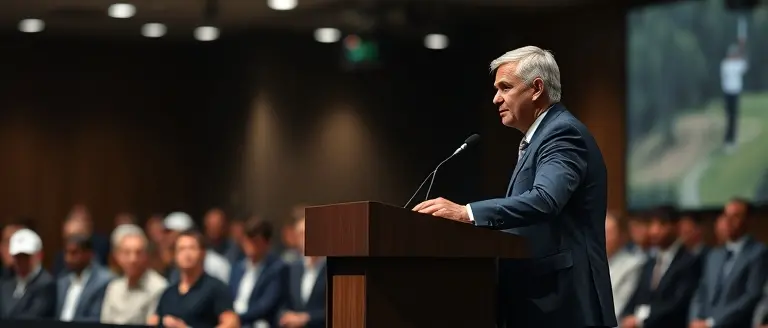
Recent LIV Golf news has been dominated by speculation regarding the league’s long-term viability, triggered by reports that Saudi Public Investment Fund (PIF) support may shift after the 2026 season. LIV Golf CEO Scott O’Neil has publicly addressed these concerns, confirming that the tour is fully funded through the remainder of the 2026 calendar year. While this announcement provides immediate stability for the current slate of tournaments, it has also prompted industry analysts to question the league’s transition toward becoming a self-sustaining entity. O’Neil’s messaging underscores a strategic pivot: moving away from reliance on infinite state-backed subsidies toward a business model defined by commercial growth and independent revenue streams.
Distinguishing Operational Stability from Industry Speculation
It is essential to separate the current operational reality from the long-term financial questions surrounding the circuit. Despite the noise regarding the league shutting down, LIV remains an active, ongoing professional tour with a packed schedule of events. The dissonance between the high-stakes financial headlines and the competitive action on the course is notable, but for the time being, the league’s day-to-day operations remain unaffected.
Key Factors Shaping the Future of the League
As stakeholders look beyond the 2026 threshold, several critical factors will determine the path forward for the organization and its athletes:
- Financial Independence: The primary challenge lies in the league’s ability to generate sufficient sponsorship, broadcast revenue, and ticketing income to operate without the backing of the PIF.
- Player Contractual Future: Many high-profile LIV golfers are currently tied to long-term agreements. If the funding model shifts, these contracts may face restructuring or provide exit clauses that could alter the landscape of professional golf.
- Strategic Growth: Scott O’Neil has explicitly stated his intention to “work like crazy” to secure the organization’s future, signaling that the league is actively exploring new equity partners and revenue channels.
- Professional Continuity: While anxiety remains, there is currently no evidence of imminent closure. The focus for management is on proving the tour’s value as a standalone sports product rather than merely a recipient of institutional investment.
While the “financial cliff” at the end of 2026 remains a central point of discussion, the organization is effectively using this period to transition toward a sustainable professional golf model that can compete in the global market.
Analyzing the 2026 Schedule: What’s Guaranteed and What’s at Risk

Despite recent headlines regarding LIV Golf news and questions about long-term financial viability, the league’s 2026 calendar remains fully operational. Current reports have created significant confusion, leading many fans to search for whether the tour is “shutting down.” It is important to clarify that there is no immediate cessation of events. LIV Golf CEO Scott O’Neil has publicly confirmed that the tour has secured the necessary funding to fulfill its commitments through the end of the 2026 season. Consequently, fans can expect the remaining schedule, including upcoming high-profile tournaments in Mexico City and other international venues, to proceed exactly as planned.
The Reality of Operational Cycles
Professional golf tours function on structured, annual business cycles that require meticulous logistical planning months in advance. The current dissonance between the tour’s day-to-day operations and the existential financial questions stems from the distinction between “in-season” activity and long-term capital investment. Because the infrastructure, broadcasting contracts, and venue bookings for 2026 are already secured, the league is effectively insulated from an immediate collapse.
- Operational Security: All scheduled 2026 events remain on the calendar, ensuring that players like Jon Rahm and Bryson DeChambeau continue their seasons without interruption.
- The 2026 Horizon: The “financial cliff” identified by industry analysts refers exclusively to post-2026 operations. O’Neil has indicated that while support from the Saudi Public Investment Fund (PIF) past this year is uncertain, the league is currently executing a transition strategy toward sustainable revenue models.
- Logistical Consistency: Golf tournaments require significant lead times for site preparation, vendor contracts, and player logistics. The presence of ongoing events like the Mexico City tournaments serves as a physical indicator that the tour’s administrative and operational arms remain fully functional.
While the future beyond 2026 remains a subject of intense speculation, the “LIV is shutting down” narrative is premature. The league is currently prioritizing the delivery of its existing product while shifting its executive focus toward long-term institutional sustainability.
Contractual Realities for LIV Golf’s Star Players

As LIV Golf news dominates the sports landscape following the recent announcement regarding the expiration of Saudi Public Investment Fund (PIF) support after the 2026 season, the professional futures of high-profile athletes like Jon Rahm and Bryson DeChambeau have entered a period of intense scrutiny. From a legal standpoint, professional golf contracts are complex instruments that typically function as private employment agreements rather than standard tournament entry forms. These deals generally consist of two primary components: substantial guaranteed money—often paid as signing bonuses or image rights fees—and performance-based incentives linked to individual and team standings. In the event of a structural dissolution or the league shutting down, these contracts likely contain “force majeure” or “cessation of business” clauses. These legal provisions dictate whether the entity remains liable for outstanding payments or if the contracts become void, effectively rendering the players free agents.
Navigating the Path to Reinstatement
The uncertainty surrounding the league’s long-term funding forces a difficult conversation regarding the potential return of LIV golfers to traditional circuits like the PGA Tour. Should a player seek to transition back, they face significant contractual and administrative hurdles:
- Exit Clauses: Players may need to negotiate buyouts or legal releases to void their existing LIV obligations, a process that could involve significant litigation or financial settlements.
- PGA Tour Reinstatement: Current policies require former members to undergo a formal application process, which may include suspensions, fines, or a return to conditional status rather than full tour exemptions.
- OWGR Status: Many LIV participants have seen their Official World Golf Ranking (OWGR) decline, which complicates their eligibility for major championships if they are forced to leave the league.
While CEO Scott O’Neil maintains that the tour is actively seeking a path to sustainability, the reality of these contracts suggests that top-tier stars are likely protected by multi-year guarantees. However, the lack of long-term PIF backing shifts the leverage, as players must now weigh their current funding security against the long-term risk of a league that may not have the capacity to honor extended obligations beyond the 2026 cliff.
Performance Metrics: The State of Play in the 2026 Season

Despite the recent swirl of LIV Golf news regarding long-term financial backing, the competitive output on the course remains at an all-time high. The 2026 season has seen a noticeable tightening of the leaderboard, with scoring averages across the field dipping lower than in previous iterations of the league. Players are clearly treating every event as a critical showcase of talent, effectively distancing themselves from the organizational uncertainty surrounding the tour’s funding model. By analyzing current performance data, it is evident that the commitment to professional excellence from LIV golfers has not wavered, even as stakeholders navigate the prospect of the league’s future beyond the current calendar.
Competitive Consistency and Scoring Trends
The parity within the current circuit is highlighted by the statistical performance of top-tier talent. Stars like Jon Rahm and Bryson DeChambeau continue to deliver high-level results that mirror their historical peaks, proving that the pressure of the LIV environment serves as an intense proving ground. Current metrics indicate:
- Scoring Averages: The average score to par for tournament winners in 2026 has remained consistent with major championship trends, underscoring the high quality of course setups and player preparation.
- Field Depth: Data shows a decrease in the variance between the top-ranked players and the mid-tier of the standings, suggesting that the talent pool is maturing under the league’s unique format.
- Consistency Metrics: Leading players are exhibiting a higher percentage of “birdie or better” conversion rates, demonstrating that the competitive urgency is driving aggressive play rather than defensive, conservative strategies.
While speculative questions about LIV Golf shutting down have dominated headlines, these performance metrics serve as a vital reminder that the product on the grass remains a high-stakes competition. For the athletes involved, maintaining world-class performance metrics is not just about the current purse; it is a tactical necessity to ensure their individual brand value remains intact, regardless of any future shifts in the golf ecosystem or potential pathways back to traditional tours.
Sharpen Your Focus Amidst the Sports Industry Noise
Ultimately, while the headlines surrounding LIV Golf suggest a league on the brink, the reality is a nuanced transition period. The 2026 season remains secure, and the primary challenge for the organization is not an immediate collapse, but a long-term evolution toward commercial sustainability. For the dedicated follower of sports business, this environment is filled with complex, often anxiety-inducing data that requires a calm and analytical mind to interpret correctly.
Navigating this constant stream of shifting reports, contractual legalities, and financial projections can lead to significant mental fatigue. To stay ahead of the narrative and truly understand the stakes, you need more than just quick updates—you need peak cognitive endurance. That is where The Brain Song becomes an essential tool for your analytical toolkit.
Designed to support mental clarity and combat the ‘noise’ of modern information consumption, The Brain Song helps you sharpen your focus and improve your learning capacity. By incorporating this into your daily routine, you ensure that you aren’t just reacting to the headlines, but proactively synthesizing the complex, fast-paced world of professional golf. Restore your clarity and maintain your analytical edge as the 2026 sports season continues to unfold.

Restore your focus and sharpen your analytical edge for the upcoming 2026 sports season with The Brain Song.