
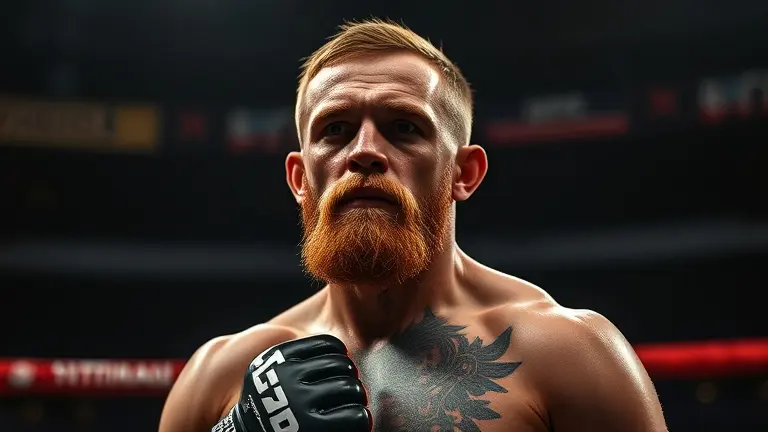
The roar of the crowd in Las Vegas is set to reach a deafening crescendo as Conor McGregor makes his long-awaited return to the octagon at UFC 329. After a five-year hiatus that left fans and analysts questioning whether his speed and agility would ever return to championship form, the narrative surrounding the McGregor vs. Holloway 2 rematch has evolved into a historic saga of endurance and adaptation. This isn’t merely a fight; it is a profound exploration of human limits, as the 13-year gap since their last encounter forces a re-evaluation of how age and experience alter the landscape of elite mixed martial arts.
As the UFC 329 fight card looms, the sports world is fixated on the technical adjustments McGregor has made to combat the inevitable deceleration that plagues even the most legendary athletes. Beyond the spectacle of the press conferences and the intensity of the weigh-ins, the true intrigue lies in the metabolic and physical demands placed on a fighter returning to the top tier of competition after such a prolonged layoff. This fight marks a critical turning point—not just for the featherweight and lightweight divisions, but for our understanding of how longevity can be engineered in the face of time.
The Return of The Notorious: Conor McGregor vs. Max Holloway at UFC 329
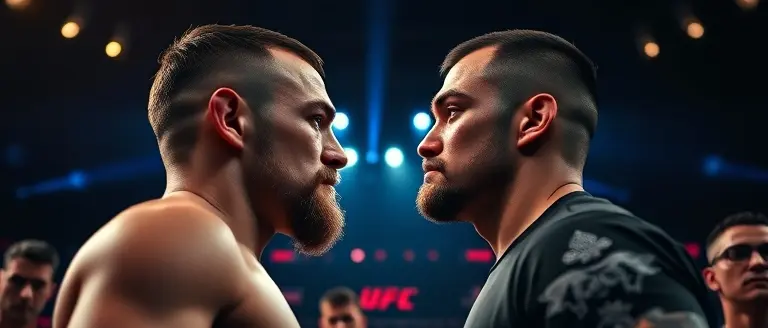
The combat sports world has descended upon Las Vegas for UFC 329, an event defined by the high-profile return of Conor McGregor after a staggering five-year hiatus. This main event mcgregor fight carries immense historical weight, serving as a 13-year-long awaited rematch against Max Holloway. Their initial meeting in 2013 launched McGregor toward superstardom, but this return represents a different chapter entirely. Following successful weigh-ins on July 10, 2026, the physical transformation of “The Notorious” has become a focal point for analysts, as he looks to prove that his elite-level power remains intact despite the lengthy layoff from active competition.
Historical Context and Strategic Stakes
The significance of McGregor vs. Holloway 2 cannot be overstated, as both fighters have evolved into vastly different athletes since their first encounter. UFC CEO Dana White has fueled the fire surrounding the ufc 329 fight card, publicly stating that he has already mapped out “five scenarios” for the Irishman’s future depending on the outcome of this bout. For McGregor, a victory would validate his intense training regimen and silence critics skeptical of his longevity. Meanwhile, Holloway enters the octagon as a battle-tested veteran, making this conor mcgregor comeback a defining test of agility and ring rust.
Key highlights leading into the event include:
- The Five-Year Gap: Experts are closely monitoring how McGregor’s conditioning holds up compared to the relentless pace set by modern featherweight and lightweight elites.
- Weigh-in Precision: Both athletes hit their marks cleanly during the July 10, 2026, ceremonies, signaling professional commitment despite the massive media circus.
- The Dana White Factor: The UFC leadership’s explicit interest in a post-fight roadmap suggests that this bout is a centerpiece for future divisional title implications.
As the octagon doors close, the focus shifts from speculation to execution. Whether McGregor can reclaim his place at the top or Holloway solidifies his legacy against his former rival remains the primary question defining UFC 329.
UFC 329 Full Results: Breaking Down the Fight Night
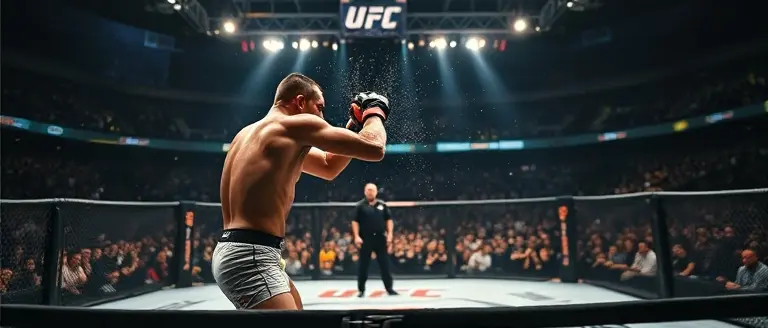
The atmosphere inside the Las Vegas arena for UFC 329 was electric, as fans witnessed the long-awaited return of Conor McGregor to the octagon. After a grueling five-year layoff, the McGregor fight against Max Holloway delivered on its historical promise, marking a 13-year journey from their initial encounter. The main event showcased a tactical chess match that tested the endurance and ring rust of the former two-division champion against the relentless volume striking of Holloway. From the opening bell, the contrast in styles was evident; while McGregor sought to utilize his signature counter-striking precision, Holloway maintained a high-pressure pace that forced the Irishman to dig deep into his cardiovascular reserves.
Round-by-Round Momentum and Scoring
The trajectory of the McGregor vs. Holloway 2 bout shifted significantly through the middle rounds. Early momentum favored McGregor, whose movement and timing appeared sharp despite the extended absence. However, as the fight progressed into the championship rounds, the technical gap regarding sustained output became the primary narrative. Critical moments included:
- Early Rounds: McGregor utilized range-finding kicks and sharp lead-hand counters, momentarily staggering Holloway.
- Mid-Fight Transition: Holloway’s defensive adjustments allowed him to close the distance, nullifying some of McGregor’s power shots with heavy clinch work.
- Championship Rounds: The tactical battle intensified as both fighters exchanged heavy volume, with judges closely monitoring the accuracy of McGregor’s power strikes versus Holloway’s significant strikes landed.
Immediate post-fight reactions underscored the immense respect between the two athletes. Inside the octagon, both men acknowledged the sheer intensity of the contest, which served as a litmus test for what’s next for Conor McGregor. While the final scorecards remain the focal point of the UFC 329 fight card discourse, the physical resilience shown by McGregor during this high-profile return provides significant data for analysts questioning how a half-decade hiatus impacts elite-level agility and performance. As UFC CEO Dana White evaluates the performance, the outcome of this clash will undoubtedly dictate the immediate future of the lightweight and featherweight divisions.
Technical Analysis: The Impact of a Five-Year Hiatus

The return of Conor McGregor to the octagon at UFC 329 brings a unique technical question to the forefront: how does a five-year layoff impact an elite athlete’s neuro-muscular timing and cardiovascular baseline? In professional mixed martial arts, the “game” evolves rapidly, and the tactical landscape that McGregor dominated over a decade ago has seen significant shifts in defensive wrestling and high-volume striking patterns. Unlike the modern crop of fighters who emphasize relentless pace, McGregor’s historical success was predicated on elite-level snap, distance management, and precision counter-striking. Analysts observing the McGregor fight preparations have noted that while his power remains, the challenge lies in maintaining that explosive “pop” against a seasoned veteran like Max Holloway, who has remained hyper-active in the interim.
The Evolution of Fight Mechanics
The disparity between the 2013 version of these fighters and the 2026 iteration is stark. During his absence, the sport has moved toward more complex movement-based defense and heavy reliance on sports science for recovery.
- Timing and Reflexes: Evidence suggests that long layoffs primarily impact “micro-timing”—the ability to recognize cues in a split second. McGregor must overcome the rust that typically affects distance gauging.
- Cardiovascular Endurance: While his weigh-ins were successful, the functional endurance required for a 25-minute championship-level bout is vastly different from training gym cycles.
- Stance Adaptations: Observers noted subtle adjustments in his stance, likely designed to mitigate the heavy calf-kick strategies that have become a standard defense against aggressive strikers in the modern era.
Whether McGregor vs Holloway 2 results in a victory for the Irishman will largely depend on whether he has successfully adapted his signature style to counter the current “volume-first” defensive paradigms. If he has stagnated, the strategic depth of a veteran like Holloway could expose the gaps created by his half-decade hiatus. Ultimately, this matchup serves as a litmus test for whether, in the modern UFC, technical brilliance can outweigh the cumulative impact of time away from active competition.
What’s Next for Conor McGregor: The Future of a UFC Icon

Following his high-stakes return at UFC 329, the professional landscape for Conor McGregor has shifted from speculation to strategic reality. UFC CEO Dana White has publicly disclosed that there are at least “five scenarios” mapped out for the Irishman, depending on the outcome of his McGregor vs Holloway 2 rematch. Regardless of the tactical results in the octagon, McGregor’s long-term standing remains tied to his ability to maintain elite-level agility after a staggering five-year hiatus. His performance during this conor mcgregor fight serves as the definitive litmus test for whether he remains a viable title contender or transitions into a “legacy fighter” role, focusing on high-profile attraction bouts rather than championship rankings.
Potential Career Paths and Legacy Fights
Industry experts and analysts suggest that a victory could propel McGregor back into the conversation for a lightweight or featherweight title shot, potentially reshaping the UFC 329 fight card narrative into a springboard for one final championship run. Conversely, should the 13-year rematch gap prove too difficult to bridge against a veteran like Max Holloway, retirement or a transition to specialized “super fights” becomes a distinct possibility. Key considerations for his immediate future include:
- Championship Re-entry: Seeking an immediate title opportunity against the current divisional kingpin to solidify his place in the history books.
- Legacy Matchups: Pursuing high-revenue, non-title fights against other marquee stars to leverage his massive personal brand.
- Strategic Retirement: Choosing a graceful exit if the physical toll of his five-year layoff results in a sub-par performance, preserving his status as a legendary figure in the sport.
- Consultancy/Brand Management: Increasing his executive involvement in the UFC through promotional partnerships, further expanding the reach of the McGregor brand beyond active competition.
Ultimately, the McGregor return breakdown suggests that while his marketing power remains unparalleled, his competitive future depends entirely on his ability to adapt to the evolution of the division. Whether he pursues gold or pivots to legacy-based exhibition, the world will be watching to see how he manages the next chapter of his storied combat sports career.
Reclaiming Your Competitive Edge Beyond the Octagon
The return of Conor McGregor at UFC 329 is more than just a fight; it is a masterclass in the unrelenting pursuit of physical mastery after a half-decade hiatus. While the eyes of the world are fixed on Las Vegas to see if the ‘Notorious’ one can recapture his former glory, his journey highlights a universal reality: maintaining peak physical output becomes an uphill battle as time progresses. The technical adjustments required to keep pace with younger, faster fighters mirror the challenges many of us face in our own health journeys, where metabolic efficiency begins to dictate our energy levels and performance capacity.
While McGregor relies on elite training camps to battle age-related decline, the average person needs a more sustainable, everyday strategy to overcome the invisible hurdle of metabolic slowdown. This is where CitrusBurn becomes your ultimate training partner. Just as an athlete optimizes their internal engine to sustain elite performance, CitrusBurn is engineered to help you reactivate your natural fat-burning processes and restore the vibrant energy levels you thought were behind you. It is the perfect tool for those looking to reclaim their vitality and mirror the comeback spirit of professional athletes.
Don’t let your own potential be sidelined by a sluggish metabolism. Whether you are an avid fan of the sport or simply an individual seeking to regain your physical edge, the science of metabolic optimization is the key to unlocking a new version of yourself. Just like the pros prioritize metabolic health to extend their careers, you can optimize your own physical performance—learn how to unlock your natural fat-burning potential here.
 Just like the pros prioritize metabolic health to extend their careers, you can optimize your own physical performance—learn how to unlock your natural fat-burning potential here.Yes, I Want To Transform My Metabolism Now!