
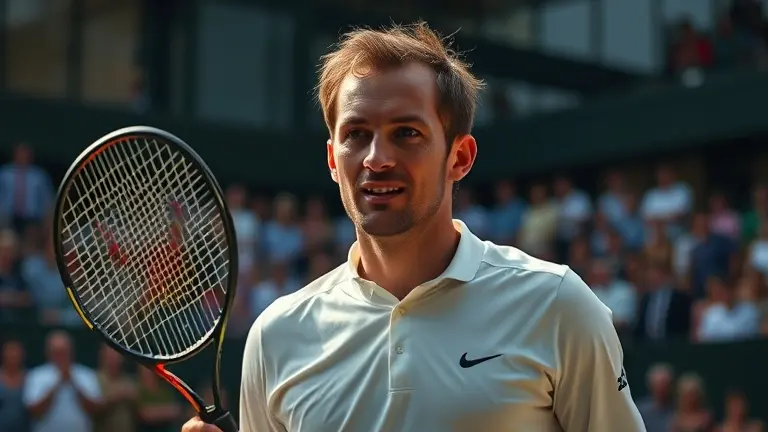
When Arthur Fery stepped onto Centre Court to face Flavio Cobolli in the 2026 Wimbledon quarter-finals, the atmosphere was thick with the weight of expectation. Yet, what unfolded was not merely a Cinderella story of a wildcard entry, but a clinical masterclass in tennis strategy. In a commanding straight-sets victory (6-4, 7-6, 6-0), Fery displayed a level of tactical poise that belied his ranking, effectively dismantling Cobolli’s game plan with surgical precision. As the tennis world looks on—comparing his meteoric rise to the gritty, concurrent success of players like Linda Noskova—it is clear that Fery’s emergence is not just a matter of luck, but the result of intense cognitive preparation.
While the headlines focus on the emotional fairytale, a deeper analysis reveals a competitor who has mastered the art of mental endurance. Fery’s transition from the Challenger tour to a Grand Slam semifinalist has been defined by his ability to maintain absolute composure under high-stress conditions. By deconstructing the tactical shifts he utilized against Cobolli, we can uncover the blueprint of a modern athlete who understands that championship performance is forged as much in the mind as it is on the baseline. Preparing for his next challenge against Alexander Zverev requires more than just physical talent; it demands the peak mental clarity that distinguishes a champion from a contender.
The Wimbledon Breakthrough: Arthur Fery’s Historic Quarter-Final Win

The 2026 Wimbledon Championships will be remembered for the meteoric rise of Arthur Fery, whose journey from a British wildcard entry to a tournament semifinalist has captivated the tennis world. On July 8, 2026, Fery delivered a masterclass on Centre Court, dismantling the highly-rated Flavio Cobolli in a commanding straight-sets victory (6-4, 7-6, 6-0). This performance was not merely a win; it was a tactical statement that silenced critics who previously viewed the 114th-ranked player as a mere footnote in the tournament draw. By neutralizing the aggressive baseline play of Cobolli, Fery demonstrated the composure and technical refinement typically associated with seasoned Grand Slam veterans rather than a wildcard entrant.
This “fairytale run” has shifted the narrative of the entire tournament, placing fery tennis at the center of the sports conversation. His ability to maintain intensity—evidenced by his flawless 6-0 third-set clincher—highlights a significant evolution in his game. This momentum coincides with the parallel excitement surrounding Noskova, whose own deep run through the women’s bracket has added to the palpable energy at the All England Club. Together, these breakthrough athletes have injected a sense of unpredictability into this year’s Wimbledon, proving that ranking is often an imperfect metric for current form.
Key Factors in the Quarter-Final Success:
- Tactical Versatility: Fery successfully adjusted his defensive positioning to counteract the heavy topspin used by his opponent.
- Psychological Resilience: Despite the immense pressure of playing on Centre Court, Fery remained composed, particularly during the high-stakes second-set tiebreak.
- Physical Conditioning: The dominant 6-0 final set underscored a superior level of stamina, allowing him to overwhelm a fatigue-stricken opponent in the closing stages.
- Home Court Advantage: The vocal support from the British crowd provided a tangible boost that allowed the wildcard to maintain his aggressive court coverage.
As Fery prepares for his upcoming semifinal showdown against Alexander Zverev, the tennis community is shifting its focus from simple live-reporting to a deeper analysis of how his playing style might translate against elite competition. His emergence as a semifinalist serves as a testament to his preparation and tactical maturity, setting the stage for what many now consider one of the most compelling underdog stories in recent tennis history.
The Tactical Blueprint: Analyzing the Fery Strategy

Dismantling the Competition: Statistical Precision
The victory of Arthur Fery over Flavio Cobolli in the Wimbledon quarter-finals was not merely an emotional fairytale; it was a masterclass in tactical discipline. Fery’s performance reflected a significant evolution in his game, specifically regarding his efficiency under pressure. By maintaining an exceptionally high first-serve percentage throughout the match, Fery neutralized Cobolli’s ability to dictate points early in the rally. Analysis of the match data highlights that Fery’s break-point conversion rate reached a critical threshold in the second set, which proved to be the turning point of the contest. While Cobolli struggled to find rhythm against Fery’s depth, the British wildcard utilized superior court positioning to force errors, effectively shifting the momentum before his dominant 6-0 sweep in the third set.
Defensive Resilience and Tactical Adaptations
Beyond the raw statistics, the “fery tennis” brand has become synonymous with defensive resilience and intelligent point construction. During this tournament, Fery has shown a remarkable ability to transition from a defensive stance to an offensive strike with minimal wasted movement. His movement across the baseline has been surgically precise, allowing him to absorb pace from high-seed opponents while waiting for the optimal moment to redirect the ball.
Key tactical shifts that defined his progress include:
- Neutralizing Pace: Utilizing heavy topspin to push opponents like Cobolli back behind the baseline, nullifying their aggressive intent.
- Point Construction: Prioritizing high-percentage shots during the crucial tie-break in the second set to avoid unforced errors.
- Court Coverage: Exhibiting elite lateral speed that forces opponents into “extra-ball” scenarios, eventually breaking their mental resolve.
As Fery prepares for the next round, his ability to force a “white-wash” scenario—as seen against Cobolli—signals a dangerous level of tactical maturity. Much like Linda Noskova, who has captured similar attention during her own deep run, Fery is proving that lower-ranked competitors can disrupt the status quo through high-level tactical adjustments and psychological fortitude.
From Challenger to Centre Court: The Rise of an Underdog

The meteoric ascent of Arthur Fery at the 2026 Wimbledon Championships is far more than a simple stroke of luck; it is the culmination of years spent grinding through the unforgiving landscapes of the ATP Challenger Tour. Before his commanding quarter-final victory over Flavio Cobolli, where he secured a definitive 6-4, 7-6, 6-0 result, fery was largely considered an outsider ranked 114th in the world. His journey is a masterclass in resilience, transforming the anonymity of lower-tier tournaments into the precise, high-stakes tactical awareness he now exhibits under the intense scrutiny of Centre Court. This transition from professional journeyman to a household name mirrors the paths of tennis legends who used early-career adversity to forge the “steel” required for Grand Slam success.
Building Mental Fortitude
Developing the mental toughness to excel at this level requires more than just physical prowess. The challenges inherent in the Challenger circuit—limited resources, grueling travel, and the mental fatigue of frequent losses—have served as the crucible for Fery’s development. By the time he stepped onto the grass this July, he had already cultivated the defensive capabilities and composure necessary to dismantle established stars. Analysts have noted that his ability to remain focused during crucial points, as evidenced in the second-set tiebreak against cobolli, demonstrates a maturity far beyond his previous ranking.
Key elements of his evolution include:
- Tactical Flexibility: A shift from baseline defense to aggressive, proactive shot-making that keeps opponents off balance.
- Emotional Regulation: Mastering the pressure of British crowd expectations, a feat that has derailed many local wildcards in the past.
- Physical Conditioning: Sustaining high-intensity output over best-of-five matches, a rigorous standard he struggled to meet in his early Challenger days.
As the tennis world turns its eyes toward his upcoming semifinal, the narrative of Arthur Fery remains one of the most compelling stories in modern sports. While contemporaries like Noskova are making their own headlines, the fery tennis brand has become synonymous with the “Cinderella story” of the 2026 season. His journey proves that talent, when tempered by years of hard-fought competition in the shadows, can eventually illuminate the brightest stages in the sport.
Looking Ahead: Preparing for the Zverev Semifinal Showdown

The transition from a wildcard entry to a Wimbledon semifinalist is a monumental shift, but for Arthur Fery, the challenge only intensifies as he prepares to face Alexander Zverev. Following his clinical demolition of Flavio Cobolli, where Fery displayed tactical maturity well beyond his previous ranking of 114th, the British hopeful must now navigate the psychological and physical demands of a high-stakes encounter with a seasoned veteran. Unlike his earlier opponents, Zverev offers a baseline depth and defensive resilience that will test the sustainability of Fery’s aggressive, flat-hitting game plan.
Tactical Shifts for the Semifinal
To extend his fairytale run, Fery must refine the aggressive court positioning that proved so effective against Cobolli. While the 6-4, 7-6, 6-0 scoreline suggests dominance, the upcoming match requires a more nuanced approach. Key strategic adjustments should include:
- Neutralizing the Zverev Serve: Zverev relies on his massive first serve to dictate points. Fery must maintain the high return percentage he demonstrated earlier in the tournament to put immediate pressure on the German’s weaker second-serve delivery.
- Controlling the Baseline: Zverev excels in extended baseline rallies. Fery should look to utilize his inside-out forehand to pull his opponent wide, preventing Zverev from finding his preferred rhythm.
- Mental Fortitude: As seen with the simultaneous success of players like Noskova, the atmosphere at Wimbledon can be overwhelming. Fery must rely on the confidence gained from his breakout performances to remain focused amidst the heightened public scrutiny.
Ultimately, the match hinges on whether Fery can maintain his composure during long rallies against a Grand Slam finalist. If he can dictate the pace early and utilize his wildcard “freedom” to take calculated risks, he may well push the heavy favorite to his limits in what promises to be the most critical match of his burgeoning career.
Master Your Own Mental Centre Court
The journey of Arthur Fery is a profound reminder that greatness is rarely accidental. His ability to stay present, process court geometry in real-time, and execute under the blinding lights of Wimbledon proves that superior mental processing is the ultimate competitive advantage. Just as Fery utilizes rigorous tactical preparation to clear his mind and dominate on the grass, true elite performance in any field begins with the ability to optimize your own cognitive processing.
You don’t need to be a professional athlete to harness this level of precision. High-stakes life requires the same rapid decision-making and resistance to burnout that Fery exhibits during his toughest rallies. That is where The Brain Song becomes your essential edge, serving as a non-invasive, neuroscience-based performance enhancer designed to eliminate brain fog and elevate your focus. By training your mind to sustain peak performance, you turn mental clarity from an elusive goal into a consistent, daily technical skill.
Ready to unlock the kind of focus that turns pressure into progress? Stop leaving your concentration to chance and start treating your cognitive health with the professional rigor it deserves.  Harness the same mental clarity as a Wimbledon semifinalist; start your 12-minute daily cognitive routine with The Brain Song today.Yes, I Want Peak Focus Now!