

The sudden escalation in the Middle East, marked by the breakdown of the ceasefire agreement and the resulting naval tensions near the Strait of Hormuz, has sent shockwaves through the global energy sector. With crude oil prices experiencing sharp, volatile swings following President Trump’s latest directives at the NATO Summit, investors are facing a landscape defined by uncertainty rather than steady growth. This is not merely a temporary market tremor; the revoking of Iran’s oil export license and the looming mid-August expiry of interim diplomatic agreements suggest that we are entering a phase of systemic instability that could reshape energy security for the remainder of the year.
As global markets react to the threat of active blockades and supply chain disruptions, retail investors are rightfully concerned about inflationary pressures and the hedging strategies required to protect their portfolios. While headlines focus on the daily tracking of crude oil prices, a deeper analytical look reveals that the real risk lies in our reliance on these fragile, macro-level systems. To navigate this high-stakes environment, one must look beyond the ticker tape and address the core necessity of building resilience within your own sphere of control.
Diplomatic Collapse: The Catalyst Behind the July 2026 Oil Surge
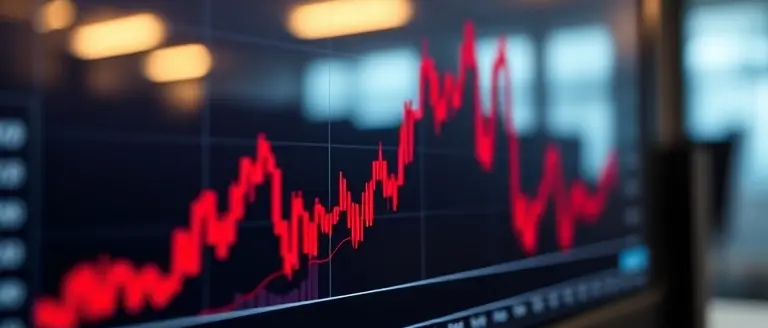
The sudden escalation in oil futures on July 7-8, 2026, serves as a direct market reflection of the deteriorating geopolitical climate in the Middle East. Following President Donald Trump’s formal announcement at the NATO Summit in Ankara, Türkiye, that the ceasefire agreement with Iran has been terminated, global energy markets have entered a period of extreme volatility. This diplomatic breakdown, prompted by renewed hostile actions against commercial vessels near the Strait of Hormuz, has forced traders to aggressively re-price the risk of supply disruptions. As market sentiment shifts, investors are moving away from speculative assets toward energy-linked holdings, driving significant rallies in major sector stocks like ExxonMobil and Chevron.
The Impact of Sanctions and Regional Volatility
The decision by the U.S. government to revoke Iran’s license to export oil acts as a powerful supply-side shock, further tightening the global crude market. Because the Strait of Hormuz remains a critical “chokepoint” for global energy transit, any military friction in this corridor creates immediate upward pressure on crude oil prices. Financial analysts, including Philip Wee of DBS Group Research, have cautioned that this volatility is far from over, specifically highlighting the mid-August expiry of interim agreements as a “real risk” point that could lead to even more severe market reactions.
Key factors currently driving the instability include:
- Renewed Direct Strikes: Escalating military engagements between U.S. and Iranian forces have heightened the threat of a full-scale blockade.
- Supply Contraction: The revocation of export licenses removes a significant volume of barrels from the global supply, forcing a scramble for alternative sources.
- Mid-August Deadline: The impending expiration of the current interim ceasefire creates a psychological and operational deadline for hedge funds and institutional traders.
Ultimately, the surge in crude oil prices today reflects a systemic concern regarding global energy security. As the international community monitors the situation, the intersection of diplomatic failure and critical maritime logistics continues to make oil a volatile, yet central, focus for portfolio hedging strategies heading into the late summer.
The Mid-August Cliff: Evaluating the Critical Risk Window

As geopolitical tensions escalate following the collapse of the U.S.-Iran ceasefire, market participants are increasingly focused on the mid-August expiry of interim diplomatic agreements. This date has transitioned from a routine administrative milestone into a “real risk” inflection point that institutional traders are aggressively pricing into oil futures. Analysts, including Philip Wee of DBS Group Research, emphasize that this deadline acts as a focal point for market volatility, as the expiration creates a vacuum where existing constraints on hostilities—and Iranian oil exports—officially lose their legal underpinning.
Market Anticipation and Institutional Positioning
Institutional investors are currently hedging against the “mid-August cliff” by shifting capital toward energy-heavy portfolios and long-dated commodity contracts. The surge in crude oil prices is not merely a reaction to current naval skirmishes near the Strait of Hormuz, but a forward-looking premium placed on the potential for a full-scale regional blockade. Key factors driving this institutional sentiment include:
- Supply Chain Fragility: The potential for a complete cessation of maritime transit through the Strait of Hormuz, a critical global energy artery.
- Regulatory Enforcement: The U.S. government’s revocation of Iran’s oil export licenses, which removes a significant volume of supply from the global market, thereby tightening physical inventories.
- Inflationary Hedging: Traders are utilizing crude oil prices today as a barometer for broader economic stability, anticipating that supply disruptions will exert immediate upward pressure on global inflation metrics.
The market is currently treating this date as a binary outcome event. Should diplomatic efforts fail to secure a renewal, the result could be a sustained period of market volatility, forcing a re-evaluation of energy supply security across the Middle East. For investors, the period leading up to mid-August represents a critical window of risk, as the interplay between diplomatic posturing and kinetic military activity threatens to permanently alter the energy supply landscape.
Geopolitical Volatility and the Future of Energy Security

The current escalation in the Middle East has moved the conversation regarding oil futures beyond simple intraday speculation. As U.S.-Iran tensions reach a critical impasse following the collapse of the ceasefire, the structural integrity of global energy supply chains is under unprecedented pressure. Markets are no longer just reacting to crude oil prices; they are pricing in a long-term shift in the geopolitical risk premium that characterizes transit through the Strait of Hormuz. This narrow waterway, which facilitates roughly one-fifth of the world’s petroleum consumption, has become a focal point of systemic instability, forcing major importing nations to reconsider their reliance on traditional, high-risk maritime routes.
Strategic Realignment and Supply Chain Resiliency
The volatility witnessed on July 7-8, 2026, serves as a catalyst for a forced re-evaluation of energy logistics. While traders track crude oil prices today to manage immediate exposure, national security agencies are looking toward mid-August and beyond, anticipating that this disruption may become the “new normal.” To mitigate these vulnerabilities, several structural changes are emerging:
- Diversification of Import Sources: Major economies are accelerating the shift toward Western Hemisphere suppliers and internal production to circumvent volatile Middle Eastern choke points.
- Expansion of Pipeline Infrastructure: There is renewed pressure to finalize land-based corridors that bypass the Strait of Hormuz, effectively decoupling regional conflicts from global energy flow.
- Energy Stock Hedging: Institutional investors are increasingly utilizing oil futures as a mechanism to hedge against the inflationary impacts of a sustained blockade, viewing these contracts as a necessary component of portfolio insulation during diplomatic collapses.
As we approach the mid-August expiry of the interim agreement, the threat of active blockades or further sanctions on Iranian supply suggests that energy security will remain a top-tier macroeconomic priority. The transition away from concentrated reliance on the Strait of Hormuz is likely to involve a period of persistent price premium, as the market adjusts to the costs of long-term logistical redundancies. Investors should monitor how energy producers and major importers navigate this transition, as these strategic shifts will define the energy landscape for the remainder of the decade.
Macro-Economic Fallout: Inflationary Pressures and Portfolio Hedging

The sudden surge in oil futures following the collapse of the U.S.-Iran ceasefire is already rippling through the broader U.S. economy. Because energy costs serve as a foundational input for logistics, manufacturing, and consumer goods, sustained price hikes in crude oil prices function as a “stealth tax” on the average household. As fuel prices rise, the cost of transporting everything from groceries to electronics increases, threatening to reverse progress made in cooling headline inflation. Analysts are closely monitoring the upcoming mid-August deadline, noting that if the geopolitical instability in the Strait of Hormuz leads to prolonged trade blockades, the inflationary pressure could force the Federal Reserve to reconsider its monetary policy trajectory.
Interpreting Energy Sector Resilience
For the retail investor, the rally in energy giants like ExxonMobil and Chevron is a common response to the current market volatility. However, it is essential to distinguish between fundamental hedging and speculative momentum chasing:
- Systemic Risk Hedge: Energy stocks often act as a natural hedge because their earnings are directly correlated with the underlying commodity prices. When crude oil prices today spike, these companies often see expanded margins, helping to offset losses in other, more interest-rate-sensitive areas of a portfolio.
- Speculative Positioning: Traders should exercise caution, as these rallies are heavily driven by news cycles. Investing based solely on the current geopolitical heat can be dangerous if a sudden diplomatic breakthrough occurs.
- The Mid-August Risk: As Philip Wee of DBS Group Research highlighted, the real danger lies in the expiration of interim agreements. Investors should evaluate whether their energy allocations are meant for long-term defensive positioning or short-term gains, adjusting their exposure accordingly as the mid-August date approaches.
By focusing on the macro-economic reality rather than just the daily price swings, investors can better position their assets to weather the uncertainty currently gripping the global energy landscape.
Mastering Resilience in an Uncertain World
As we monitor the mid-August window for potential further sanctions and supply shocks, the primary takeaway is clear: external market stability is increasingly fragile. While oil futures offer a mechanism for financial hedging, the most secure investment you can control right now is your own self-reliance. Just as we analyze complex futures and geopolitical data to forecast market movements, you can master your immediate environment by applying the same level of structured, technical precision to your own home and infrastructure.
In a world where global supply chains are unpredictable and professional services become less reliable during times of crisis, Ted’s Woodworking serves as your ultimate hedge against uncertainty. It provides the exact, workshop-tested blueprints you need to take control of your physical surroundings, eliminating the guesswork and costly trial-and-error of amateur DIY projects. By investing your time in creating tangible, value-adding assets, you move from the role of a passive observer of market volatility to an empowered builder of your own security.
When global shipping lanes are unstable, having the technical certainty to build what you need becomes the ultimate form of localized independence. Stop relying on uncertain external supplies and start building your future today.
 Take control of your home’s infrastructure today—click here to access the library of 16,000 workshop-tested plans and stop relying on uncertain external supplies.Secure My Independence Now!