

On July 7, 2026, the heart of Midtown Manhattan ground to a halt as reports of buckling columns and falling debris emerged from 235 East 42nd Street. The former iconic Pfizer building, currently undergoing an ambitious transformation into luxury residential units, became the epicenter of a major structural emergency. As the FDNY ordered an immediate evacuation and established a sprawling collapse zone, the incident has reignited urgent questions regarding the safety protocols governing the rapid conversion of mid-century office towers into high-density housing.
The chaos near Grand Central Station serves as a sobering reminder of the complex engineering challenges inherent in repurposing massive urban structures. While investigators from the Department of Buildings (DOB) work to determine the exact cause of this nyc building collapse scare, the incident highlights a critical vulnerability in modern urban development: the intersection of aggressive construction timelines and the physical limitations of aging steel-and-concrete skeletons. This situation is evolving, leaving professionals and residents alike to demand higher standards of accountability in luxury high-rise conversions.
Emergency Evacuation at 235 East 42nd Street: Current Status
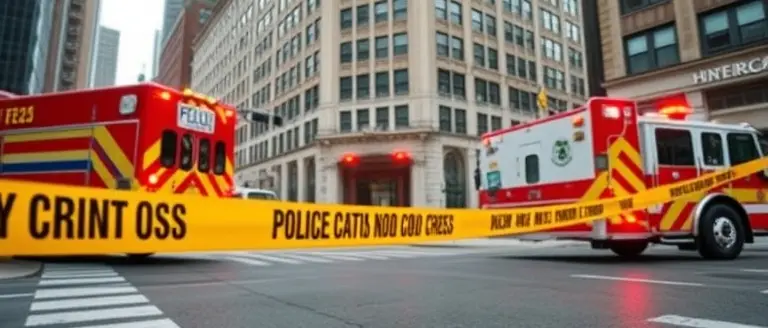
On July 7, 2026, a major structural emergency was declared at 235 East 42nd Street, the historic Pfizer building in NYC, as construction crews and safety officials identified alarming signs of instability. The site, which is currently undergoing a high-profile conversion from commercial office space to luxury residential units led by developers David Werner and Metro Loft, was evacuated following reports of buckling columns and falling bricks. The FDNY responded immediately to the scene, establishing a significant collapse zone and ordering the mandatory evacuation of both the structure and several neighboring properties to ensure public safety.
Transit and Safety Impacts
As the situation remains active, local authorities have implemented extensive street closures in the immediate vicinity of the Midtown building evacuated site. Because of the location’s proximity to Grand Central Terminal, the structural integrity concerns are causing widespread disruption to local traffic patterns and pedestrian access. Commuters are strongly advised to avoid the area surrounding 42nd Street, as emergency responders continue to conduct a thorough structural assessment. Officials are prioritizing the stabilization of the site to prevent a building collapse in NYC, and the Department of Buildings (DOB) is expected to provide further updates as investigators determine the primary cause of the structural failure.
Key safety directives currently in place include:
- Avoid the Exclusion Zone: Pedestrians and motorists must adhere to all cordoned-off areas established by the NYPD and FDNY.
- Commuter Advisories: Expect significant delays near Grand Central; utilize public transit detours away from the 42nd Street corridor.
- Monitor Official Channels: Follow real-time alerts from the NYC Office of Emergency Management for updates on street re-openings and safety status.
The site, formerly known as the Pfizer building, has been a focal point of recent urban revitalization efforts. However, this incident highlights the complex engineering challenges involved in repurposing mid-century high-rises. Authorities continue to monitor the integrity of the structure, and the public is urged to exercise caution and prioritize guidance from personnel on the ground until the area is deemed safe for re-entry.
Official Statements and Safety Protocols from the DOB

The New York City Department of Buildings (DOB) has taken a lead role in managing the structural emergency at 235 East 42nd Street, issuing a series of directives aimed at stabilizing the site and protecting the surrounding Midtown neighborhood. Following reports of buckling columns and debris, DOB engineers were immediately dispatched to conduct an intensive review of the pfizer building conversion project. According to official statements, the agency has ordered an immediate halt to all construction activity as they investigate the structural integrity of the site. Officials are currently prioritizing the safety of the public by establishing an expansive collapse zone, which remains under strict perimeter control by the FDNY and the NYPD to prevent unauthorized access.
Engineering Protocols and Developer Cooperation
To ensure comprehensive oversight, the DOB has mandated that the development team, led by David Werner and Metro Loft, retain independent structural engineering firms to provide a secondary, verified assessment of the building’s load-bearing capacity. The developers are legally required to submit a detailed remediation plan before any work—or even the removal of equipment—can resume. Current safety protocols being enforced include:
- Daily Structural Monitoring: Real-time seismic and movement sensors have been installed throughout the tower to detect any potential shifting within the internal framework.
- Full Site Inspection: Every floor of the midtown building evacuated site is being inspected to ensure that the ongoing conversion process did not compromise critical structural elements during the demolition or retrofitting phases.
- Coordination with Transit Authorities: Given the site’s proximity to Grand Central Station, the DOB is working closely with the MTA to ensure that the nyc building collapse fears do not compromise the integrity of nearby tunnels and subway infrastructure.
The DOB emphasizes that the investigation into the root cause of the structural failure remains ongoing. While the developers have stated they are cooperating fully with city officials, the agency maintains that no occupancy or construction permits will be reinstated until the structural engineers provide a signed and sealed certification confirming the site’s stability. Residents and commuters are urged to avoid the area and follow official updates from city portals to stay informed on the evolving situation.
The Evolution of Office-to-Residential Conversions in NYC

The push to transform aging mid-century office towers into luxury residential units has become a cornerstone of New York City’s urban planning strategy. However, the structural emergency at 235 East 42nd Street—the former Pfizer building—serves as a sobering case study on the inherent technical risks of adaptive reuse. Converting commercial spaces into high-density housing requires radical modifications, often involving the gutting of internal infrastructure and the re-distribution of loads that mid-century engineering was never designed to support. As seen in the recent midtown building evacuated order, when retrofitting projects encounter unforeseen structural weaknesses, the margin for error in a dense urban environment like Manhattan is virtually non-existent.
Technical and Regulatory Challenges in Retrofitting
Repurposing office towers for residential use involves navigating complex zoning laws, seismic safety requirements, and aging HVAC systems. Developers like David Werner and Metro Loft face significant hurdles when attempting to align decades-old floor plates with modern, high-end residential expectations. Key challenges include:
- Load Bearing Constraints: Altering floor layouts often requires shifting structural columns or beams, which can destabilize an aging frame if not executed with extreme precision.
- Regulatory Scrutiny: The NYC Department of Buildings (DOB) enforces rigorous protocols for high-rise conversions to ensure that structural integrity is maintained throughout the demolition and construction phases.
- Logistical Density: Working in proximity to high-traffic hubs like Grand Central Station necessitates complex site management to prevent public danger during a potential building collapse NYC event.
The situation at 235 East 42nd Street highlights that while office-to-residential conversion is a viable path for revitalizing Midtown, the engineering complexity cannot be understated. Reports of “buckling columns” and “falling bricks” during this renovation indicate that even minor miscalculations in structural load transfers can lead to emergency closures. As the industry advances, stakeholders must prioritize rigorous, non-invasive structural health monitoring to prevent future instances where a renovation project triggers an uncontrolled structural failure.
Infrastructure and Commuter Impact Near Grand Central
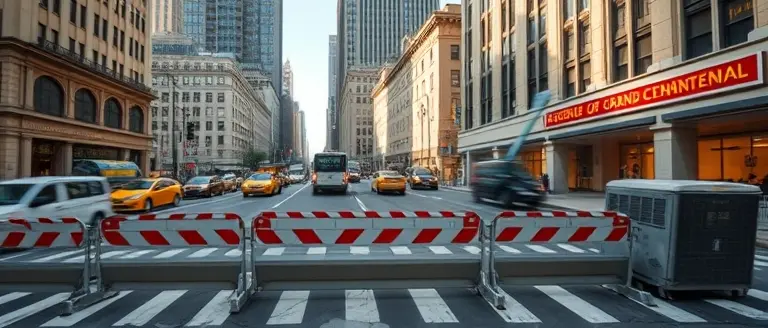
The structural emergency at 235 East 42nd Street has triggered widespread disruptions across one of Manhattan’s busiest transit hubs. Because the Pfizer building is situated in close proximity to Grand Central Terminal, the FDNY’s establishment of an expansive “collapse zone” has effectively paralyzed arterial traffic flow. This perimeter forces significant closures on 42nd Street and surrounding avenues, severely limiting vehicular access for cross-town commuters and complicating pedestrian navigation during peak travel hours. The immediate priority for city officials remains the containment of the site, as the threat of a potential building collapse in NYC necessitates a wide safety buffer that disrupts standard traffic patterns for thousands of daily commuters.
Navigating Transit Disruptions and Safety Protocols
The impact of this midtown building evacuated event extends beyond simple road closures, as MTA bus routes and taxi services are being rerouted to avoid the exclusion zone. For those navigating the area, the following steps are recommended to mitigate travel delays:
- Monitor Real-Time Transit Alerts: Check the MTA website or official transit apps for specific bus detours, as surface-level transit is most heavily impacted by the 235 East 42nd Street exclusion zone.
- Utilize Alternative Transit Hubs: If your commute involves the Grand Central area, consider accessing subway lines at alternate entrances or switching to different transit nodes to avoid the immediate radius of the Pfizer building NYC site.
- Follow Official FDNY Channels: Residents and workers in the area should prioritize updates from the NYC Office of Emergency Management (Notify NYC) to receive the latest information on street reopenings and structural stability reports.
- Anticipate Pedestrian Bottlenecks: Expect heavier-than-normal foot traffic on parallel avenues as local authorities redirect pedestrians away from the potential building collapse NYC site.
Authorities emphasize that the safety perimeter is fluid and may expand or contract based on ongoing engineering assessments. Commuters are advised to exercise patience and avoid the immediate vicinity until structural integrity is confirmed by the Department of Buildings (DOB).
Ensuring Structural Integrity in Every Project
The structural instability observed at the former Pfizer building highlights a fundamental reality: when it comes to construction and renovation, there is zero margin for error. Whether managing a skyscraper conversion or executing a personal project, the difference between success and catastrophic failure often rests on the precision of the planning and the reliability of the technical blueprints employed by the builders.
While elite engineering teams manage the monumental structural risks of towers like 235 East 42nd Street, the same principles of meticulous planning and technical certainty are vital at every level of construction. This is where Ted’s Woodworking becomes an essential resource for those who prioritize structural integrity. By providing a comprehensive library of tested, error-free blueprints, this platform eliminates the dangerous risks of trial-and-error, ensuring that your projects are built upon a foundation of accuracy and proven safety standards.
Adopting a ‘safety-first’ mentality isn’t just for massive developers; it is the hallmark of every serious craftsman. By relying on rigorous, verified planning, you avoid the costly mistakes that compromise safety and structural reliability, giving you the professional peace of mind you deserve.
 Learn how to adopt a ‘safety-first’ approach to your own projects with the same meticulous attention to detail required by structural engineers.Secure My Error-Free Plans Now!