
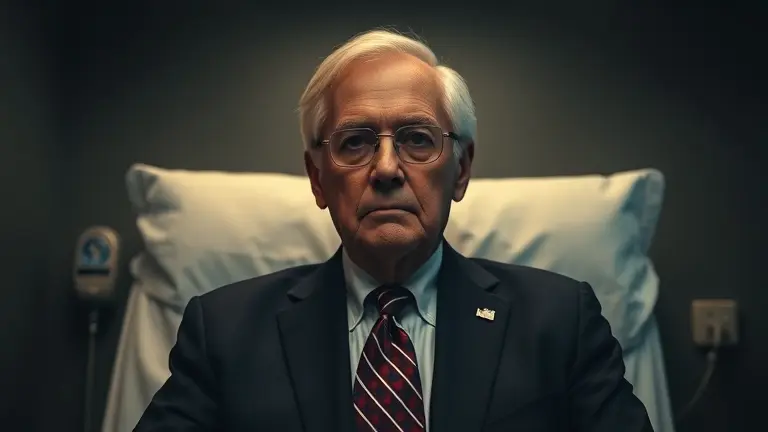
As Senator Mitch McConnell enters his third week of hospitalization following a June 14, 2026 admission, a profound ‘transparency gap’ has emerged, fueling national debate regarding the health standards of high-level legislative officials. With his office providing only minimal updates regarding his status and ongoing recovery, the information vacuum has inevitably led to widespread online speculation. This absence of verified, detailed medical reporting—compounded by the Senator’s advanced age—has triggered intense public interest in the stability of his Kentucky Senate seat and the broader implications for political leadership transparency.
While tabloid-style rumors continue to circulate, a more objective look at the timeline reveals a recurring challenge in modern governance: the intersection of high-profile political life and the realities of aging. Rather than relying on conjecture regarding the Senator’s specific condition, it is critical to examine the precedent for long-term absences in the Senate and why public trust hinges on clear, consistent communication. By analyzing the verified facts against the expectations for legislative accountability, we can better understand why this silence remains a flashpoint for a nation seeking both stability and clarity in its leadership.
,slug:
Understanding the Current Situation: Senator McConnell’s Hospitalization

Since June 14, 2026, the legislative status and Mitch McConnell health update cycle have become a focal point of national political discourse. Following his admission to the hospital on that date, the Senator has remained under medical care for over three weeks, creating an extended period of absence that has prompted significant public inquiry. As of July 6, 2026, the situation remains characterized by a notable “transparency gap,” as his office has limited its public communications to brief, high-level summaries regarding his recovery process. These statements have consistently maintained that the Senator is “continuing his recovery” and remains in communication with his staff, yet the lack of granular detail has fueled widespread online speculation.
To provide a clear picture of the timeline, it is essential to distinguish between verified reporting and unsubstantiated rumors. The following summary reflects the official information provided by the Senator’s office:
Verified Timeline of Events
- June 14, 2026: Official notification of Mitch McConnell’s hospitalization for an undisclosed medical issue.
- Mid-June to July 2026: Recurring, brief updates from the office asserting that the Senator is resting and performing limited official duties from the hospital facility.
- July 6, 2026: Confirmation that the Senator remains hospitalized after more than 20 days, continuing his recovery process without a scheduled press conference or direct public address.
The persistence of these questions—specifically regarding is Mitch McConnell still alive or facing long-term incapacitation—stems directly from the brevity of these official updates. In the context of American politics, long-term legislative absences are not unprecedented, but they often raise constitutional and procedural questions regarding the continuity of representation. By focusing on the verified timeline rather than medical speculation, observers can better understand the current Mitch McConnell health update status as a matter of political communication protocol, rather than engaging in the misinformation that frequently surrounds high-profile figures during medical leave. Public interest remains high, and the demand for greater clarity regarding his capacity to resume full duties persists as the primary driver of the current news cycle.
The Transparency Gap in Political Communication

The ongoing hospitalization of Mitch McConnell has brought the concept of the “transparency gap” into sharp focus. Since his admission on June 14, 2026, the scarcity of verified information regarding his mitch mcconnell health status has created a void that is increasingly filled by public uncertainty and rampant speculation. At the core of this issue lies a fundamental tension between the personal medical privacy rights of a high-ranking legislative official and the democratic imperative for the public to be informed about the functionality of their government leaders. When officials opt for minimalist statements, they inadvertently signal a lack of clarity, which triggers legitimate questions—ranging from “is mitch mcconnell still alive” to inquiries regarding his long-term capacity to serve.
The Consequences of Information Voids
When an office provides only vague assurances that a leader is “continuing his recovery,” the absence of detail often does more harm than good. In the current era of digital misinformation, this information vacuum acts as a catalyst for viral rumors. Without regular, substantive mitch mcconnell health updates, the public—and the media—are forced to rely on unofficial narratives. This dynamic presents several risks:
- Erosion of Institutional Trust: A perceived lack of transparency undermines the credibility of the office.
- Market and Political Instability: Ambiguity regarding the status of a Senate leader complicates legislative planning and creates uncertainty within the Kentucky Senate seat’s future.
- Proliferation of Misinformation: The “is mitch mcconnell dead” search queries represent a failure of the official communication apparatus to satisfy the public’s reasonable demand for baseline transparency.
Ultimately, the standard for political health reporting requires a delicate balance. While no public official should be forced to disclose intimate medical records, the extended nature of this hospital stay—now exceeding three weeks—shifts the expectation of disclosure. For a figure as influential as the Senator, the public’s need to know whether their representative is incapacitated or actively engaged in legislative duties is not a matter of idle curiosity, but a central component of government accountability.
Historical Precedents for Political Health Disclosure

The current uncertainty surrounding Mitch McConnell’s health and his prolonged absence from public view reflects a longstanding tension between the privacy of elected officials and the public’s right to information. Historically, the standard for political health disclosure has shifted dramatically. In the early 20th century, leaders like Woodrow Wilson were able to shield the severity of health crises from the public entirely. When President Wilson suffered a debilitating stroke in 1919, his condition was hidden for months, fundamentally altering the way the executive branch operated without public oversight. This era was defined by a culture of medical secrecy that modern constituents no longer accept, particularly as digital connectivity fuels immediate demand for a mitch mcconnell health update.
Evolution of Transparency Standards
As media scrutiny has intensified, the “transparency gap” has become a central issue in American politics. The expectation for clarity has grown significantly due to several factors:
- 24/7 News Cycles: The immediacy of online media ensures that any prolonged absence, such as the current hospitalization that began on June 14, 2026, triggers immediate speculation regarding whether is mitch mcconnell still alive or facing severe incapacity.
- Constituent Expectations: Voters increasingly view medical transparency as a prerequisite for fulfilling the duties of a high-profile legislative office, especially when a senator’s vote impacts national policy.
- Technological Access: Social media platforms allow rumors regarding “is mitch mcconnell dead” to circulate virally, forcing official channels to address concerns that might have been ignored in previous decades.
These shifts illustrate why the current silence regarding the senator’s recovery is viewed through a more critical lens today than it would have been a century ago. While legal privacy protections exist, the political burden of proof has shifted toward greater disclosure. As modern observers look for clarity, the case of the Kentucky senator highlights a growing disconnect between outdated institutional communication strategies and a public that demands consistent, data-driven updates from its elected leadership.
The Evolution of Public Expectation in the Digital Age

In the modern political landscape, the threshold for transparency has shifted dramatically, driven largely by the 24/7 news cycle and the instantaneous nature of social media. When a high-profile figure like Mitch McConnell experiences a prolonged absence—such as his current hospitalization beginning June 14, 2026—the resulting “information vacuum” is immediately filled by public inquiry. Where previous generations might have accepted a standard medical leave without detailed disclosure, contemporary constituents now demand real-time Mitch McConnell health updates. This shift reflects a broader societal transition toward radical transparency, where citizens view personal health data of public officials not merely as private medical information, but as essential indicators of their representative’s capacity to serve.
The Transparency Gap and Political Accountability
The challenges faced by legislative press offices are increasingly complex as they attempt to balance legitimate privacy rights with the growing demand for political accountability. The current discourse surrounding whether Mitch McConnell is still alive or facing incapacity highlights the friction between institutional tradition and digital-age expectations. Several factors contribute to why this skepticism has reached a “High Alert” status:
- The Information Vacuum: When official statements are limited to generic phrases like “continuing his recovery,” the public often perceives a lack of candor, which unintentionally fosters conspiracy theories and viral speculation.
- The Pace of Communication: In an era where news breaks in seconds, a multi-week silence is often interpreted by voters as a deliberate attempt to withhold critical information regarding the stability of a legislative seat.
- Heightened Expectations: Voters are increasingly sensitive to the age and vitality of leadership, leading to heightened scrutiny whenever a long-term mitch mcconnell health incident occurs without a formal press conference or visual confirmation.
Ultimately, the pressure on the Senator’s office to provide granular updates represents a new normal for American politics. The expectation is no longer just “is he working,” but “how is he working.” As digital connectivity continues to shrink the distance between politicians and the public, the ability to maintain a balance between personal privacy and transparent governance will likely become a primary determinant of public trust in legislative institutions.
Prioritizing Cognitive Longevity in an Aging Era
The uncertainty surrounding Senator Mitch McConnell’s health serves as a stark reminder of the complexities inherent in public service during the later stages of a long career. While the current ‘transparency gap’ regarding his recovery timeline remains a point of intense public interest and media scrutiny, the broader conversation must shift toward the universal challenges of aging. Regardless of political tenure, the core issue remains the preservation of mental acuity and cognitive resilience as we navigate the pressures of modern life.
While the nation remains focused on the medical timeline of our aging leaders, many are increasingly turning their attention to the science of cognitive resilience and maintaining mental clarity as we age. This shift in perspective moves us away from speculative political rumors and toward proactive, science-backed solutions. If we are to demand transparency and peak performance from our officials, it is equally important that we take charge of our own neurological health through non-invasive, evidence-based practices.
By integrating tools that leverage neuroscience to support focus and combat age-related cognitive decline, you can build a foundation for long-term mental sharpness. The Brain Song offers a modern, auditory-based approach to wellness, providing a seamless way to incorporate cognitive support into your busy daily routine. Taking control of your brain health today is the most effective way to ensure your own longevity and clarity for years to come.
 Discover how to sharpen your own focus and combat cognitive decline by integrating The Brain Song into your daily routine.Transform My Cognitive Clarity Today!