
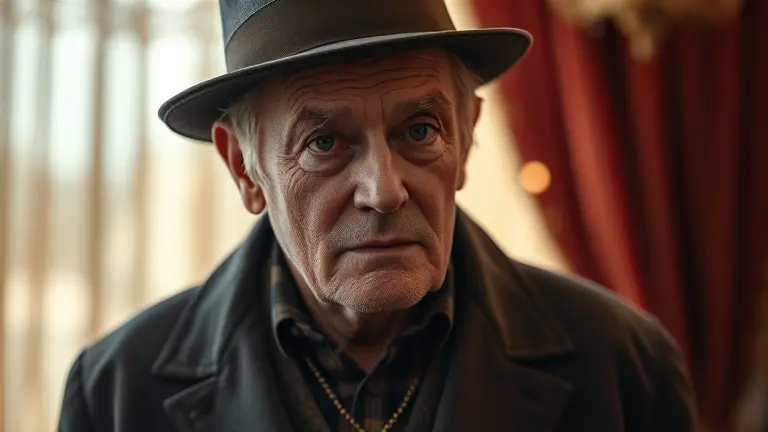
The entertainment world is mourning the passing of Michael Byrne, a formidable British character actor who mastered the art of the screen with a career spanning over five decades. While recent headlines have rightly centered on his memorable role as the older Gellert Grindelwald in Harry Potter and the Deathly Hallows: Part 1, Byrne’s legacy is far broader than any single franchise. From his icy, calculated turn as Colonel Ernst Vogel in Indiana Jones and the Last Crusade to his vast body of work in prestige television and classic British cinema, Byrne was the ultimate “working actor”—a performer who elevated every scene he graced through sheer technical discipline and quiet, commanding intensity.
As we reflect on his passing at the age of 82, it becomes clear that Byrne’s brilliance was rooted in his consistency and an ability to embody complex antagonists that felt profoundly human. His work serves as a reminder of the power of intellectual dedication and the necessity of keeping one’s craft razor-sharp, regardless of the role or the passage of time. Beyond the spotlight of major blockbusters, Byrne’s journey is a testament to the cognitive endurance required to thrive in a demanding industry, inviting us to consider how we might nurture our own mental longevity as we navigate our own stages of life.
Remembering Michael Byrne: A Legacy in British Character Acting
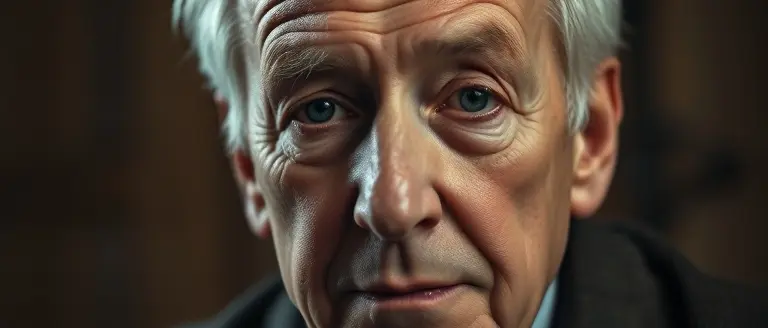
The entertainment world is mourning the loss of Michael Byrne, the veteran British character actor whose death on June 20, 2026, at the age of 82, marks the end of a distinguished career that spanned over five decades. Known for his remarkable gravitas and technical precision, Byrne was a foundational figure in both British television and major international blockbusters. While his passing has triggered an outpouring of tributes from fans and peers alike, his legacy extends far beyond the credits on his final projects; he was the consummate “working actor” who possessed the rare ability to command the screen regardless of the size of his role.
A Career Defined by Versatility
Byrne’s filmography serves as a masterclass in supporting character work. He avoided the trap of being typecast, even as he became a go-to performer for complex, authoritative figures. His professional journey was defined by:
- Impeccable Range: From historical dramas and tense thrillers to high-fantasy epics, he approached every script with a rigorous commitment to the character’s internal logic.
- Franchise Impact: Beyond his chilling portrayal of the villainous Colonel Ernst Vogel in Indiana Jones and the Last Crusade, he left an indelible mark on the Wizarding World.
- The Grindelwald Legacy: His turn as the older Gellert Grindelwald in Michael Byrne Harry Potter and the Deathly Hallows: Part 1 provided a crucial, somber layer to the franchise’s lore, showcasing his ability to project menace and regret in equal measure.
Throughout his life, Byrne remained a respected presence in the industry, admired for his understated elegance and dedication to the craft of acting. Whether he was playing a high-ranking officer or a subtle, nuanced antagonist, he brought an authenticity that grounded even the most fantastical narratives. His contributions to cinema ensured that he would not merely be remembered as a face in the crowd, but as an actor who elevated the quality of every production he graced.
The Menace of Colonel Vogel: Defining the Indiana Jones Villain
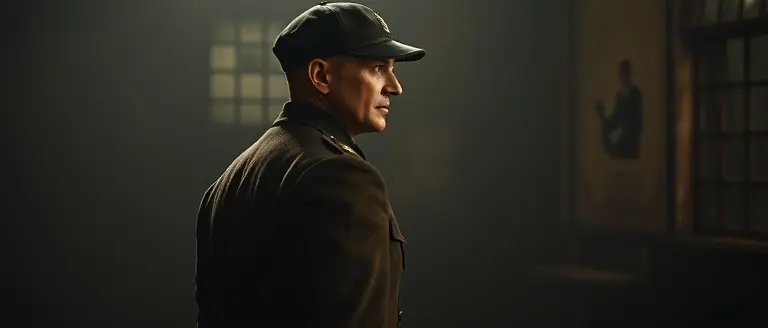
While Michael Byrne is being widely remembered today for his turn as Gellert Grindelwald in Harry Potter and the Deathly Hallows: Part 1, his portrayal of Colonel Ernst Vogel in the 1989 classic Indiana Jones and the Last Crusade remains a masterclass in cinematic villainy. As the primary antagonist alongside the Nazis, Byrne brought a cold, calculated efficiency to the role that served as a perfect foil to Harrison Ford’s rugged, improvisational Indiana Jones. Unlike the more flamboyant or mystical villains of the franchise, Vogel was defined by a terrifying, bureaucratic cruelty. Byrne played the character not as a mustache-twirling caricature, but as a grounded, dangerous military man whose commitment to the Nazi cause made him a genuine threat to both Indy and his father, Henry Jones Sr.
Byrne’s ability to imbue supporting roles with such high-stakes tension was a hallmark of his long career. In The Last Crusade, he elevated several key sequences—most notably the exhilarating tank chase—by providing a sense of relentless, unyielding pressure. His performance helped cement the film as one of the most beloved installments in the series, balancing high-adventure thrills with a grounded sense of danger.
To understand why Byrne’s Colonel Vogel remains an iconic figure in action cinema, consider these elements of his performance:
- Calculated Menace: Byrne mastered the art of “quiet” villainy, using subtle facial expressions to convey superiority and contempt rather than over-the-top monologues.
- Physical Presence: He maintained a rigid, disciplined posture that contrasted sharply with Indy’s frantic, reactive style, highlighting the ideological clash between the two characters.
- Stunt Integration: Byrne was highly effective at anchoring high-octane action sequences, ensuring the threat remained personal and visceral even during the film’s most elaborate stunt set-pieces.
This role solidified his reputation as a “working actor” who could vanish into a character, a skill he would later bring to the Harry Potter franchise. By delivering a performance that felt authentic and truly menacing, Michael Byrne ensured that Colonel Vogel would be remembered as one of the quintessential adversaries in the Indiana Jones legacy. His ability to make the audience genuinely despise the character while respecting his tactical prowess is a testament to the immense talent lost with his passing.
Revisiting Grindelwald: A Subtle Performance in the Potterverse
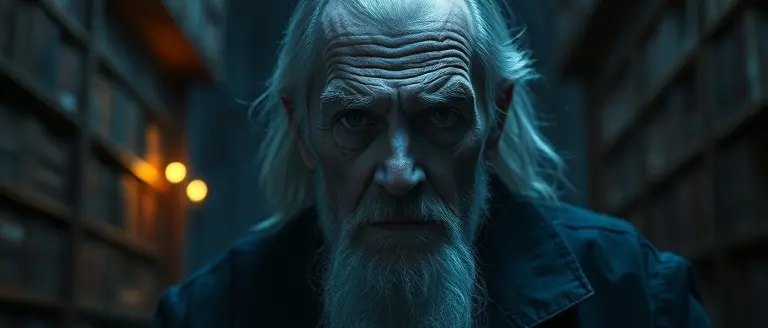
While the cinematic history of the wizarding world features several high-profile actors taking on the mantle of dark wizards, Michael Byrne delivered a performance in Harry Potter and the Deathly Hallows: Part 1 (2010) that remains a masterclass in economy and character depth. As the older Gellert Grindelwald, Byrne faced the daunting task of portraying a man who had spent decades incarcerated in Nurmengard. Unlike more flamboyant depictions of the character seen elsewhere in the franchise, Byrne’s version was defined by a weary, hollowed-out gravitas that suggested centuries of accumulated regret and iron-willed obsession.
The Art of the Static Villain
Byrne understood that the true power of Grindelwald lay not in explosive displays of magic, but in his psychological defense against Voldemort. In his pivotal scene, he conveyed a lifetime of history through his eyes alone. Even when faced with his own mortality, Byrne’s portrayal resisted the urge to succumb to cowardice, instead choosing a stoic defiance that added layers to the character’s legacy. Key elements of his performance included:
- Paternal Weariness: He depicted Grindelwald as a man who had transcended his early radicalism, arriving at a state of detached nihilism.
- Vocal Precision: His delivery was measured and deliberate, making every word feel like a calculated piece of a larger, tragic puzzle.
- Physicality: Byrne used stillness to command the frame, proving that a character’s influence on the Harry Potter lore could be seismic even with limited screen time.
Critics and fans often overlook this brief appearance, yet it served as the essential emotional anchor for the film’s exploration of the Elder Wand’s history. By bringing a grounded, grounded intensity to the screen, Michael Byrne ensured that the older Grindelwald felt like a tangible, dangerous, and deeply human force—a testament to his enduring skill as a veteran character actor capable of elevating every project he touched.
A Prolific Career Beyond the Blockbusters
While global audiences remember Michael Byrne for his chilling turn as the older Gellert Grindelwald in Harry Potter and the Deathly Hallows: Part 1 or as the formidable Colonel Ernst Vogel in Indiana Jones and the Last Crusade, these blockbuster appearances represent only a fraction of his extensive professional journey. Byrne was the quintessential “working actor,” a pillar of the British dramatic tradition whose career spanned over five decades. His versatility allowed him to pivot seamlessly between high-stakes Hollywood productions and the nuanced, character-driven landscapes of British television and regional stage theater, earning him the deep respect of his peers.
The Foundation of a British Character Actor
Byrne’s value to the industry was defined by his range rather than a singular archetype. Long before he gained worldwide recognition for his Harry Potter connection, he was a regular fixture in the golden age of UK television. His ability to inhabit complex characters made him a reliable presence in procedural dramas, period pieces, and thrillers. Key highlights of his diverse body of work included:
- Television Staples: His frequent contributions to iconic British series like Coronation Street, The Bill, and Casualty showcased his capacity to ground episodic storytelling in realism.
- Period Dramas: He possessed a rare, authoritative screen presence that made him a natural choice for historical narratives, where his gravitas elevated even the most secondary roles.
- Stage Mastery: Byrne cut his teeth in the theater, where his rigorous training in projection and ensemble chemistry informed his disciplined approach to screen acting.
This sustained output demonstrates why his death at the age of 82 has left a palpable void; he represented a dying breed of actor who valued the craft over the celebrity. By treating every role—whether a blink-and-you-miss-it appearance or a franchise-defining antagonist—with the same level of professional rigor, Michael Byrne ensured that his legacy would be one of consistency, longevity, and profound technical skill. He remained a working professional until the very end, serving as a testament to the essential role that character actors play in holding the fabric of cinema and television together.
A Lasting Legacy of Precision and Craft
Michael Byrne’s career serves as a masterclass in the art of the character actor. He did not merely play roles; he inhabited them, bringing a chilling authority to villains and a nuanced depth to supporting characters that anchored some of the most iconic films of the last half-century. Whether he was looming as the ruthless Colonel Vogel or capturing the complex, fractured soul of an older Gellert Grindelwald in Harry Potter and the Deathly Hallows, Byrne demonstrated that true cinematic greatness lies in the details—the quiet intensity, the precise gesture, and the unwavering mental focus required to remain relevant in a changing industry.
Much like Michael Byrne’s ability to remain razor-sharp and versatile throughout his decades-long career, maintaining mental acuity is a goal we all strive for in our later years. It requires a commitment to cognitive longevity, ensuring that our minds remain as disciplined and agile as those of the performers we admire. The Brain Song offers a sophisticated approach to this pursuit, utilizing neuroscience-based auditory stimulation to help you sharpen your focus and combat the cognitive fog that often comes with age.
By integrating this tool into your daily routine, you are choosing to prioritize your mental clarity, honoring the same spirit of professional excellence that defined Byrne’s long and storied tenure on screen. It is an elegant, non-intrusive solution for those who understand that a sharp mind is the most valuable asset one can possess. Embrace the opportunity to sustain your brilliance and refine your cognitive edge, ensuring that your own legacy is defined by your enduring vitality.
 Explore how to maintain your own mental clarity and focus, just as the industry’s finest have done for generations.Sharpen My Mind Today