

As the 2026 Wimbledon Championships ignite the grass courts, all eyes remain fixed on Naomi Osaka. While her striking, Kill Bill-inspired all-white kimono dominated social media discourse following her dominant first-round appearance, the true story lies beneath the aesthetic. Osaka’s ability to command global headlines while navigating the intense technical transition required for grass court play speaks to a unique, high-pressure balancing act. As she moves into her second-round match against Anastasia Gasanova, she is not just competing against an opponent; she is managing the constant friction between her status as a global style icon and the cold, unforgiving precision required to win at the All England Club.
This dichotomy defines the modern elite athlete. Beyond the fashion choices and media noise, Osaka represents a masterclass in psychological compartmentalization. To succeed on the tour in 2026, she must filter out the external fanfare to maintain the tactical sharpness necessary for deep tournament runs. Understanding this ‘Performance vs. Presentation’ dynamic provides us with a profound look at how top-tier professionals achieve their goals while under the unrelenting glare of the spotlight.
Naomi Osaka at Wimbledon 2026: A Fashionable Start
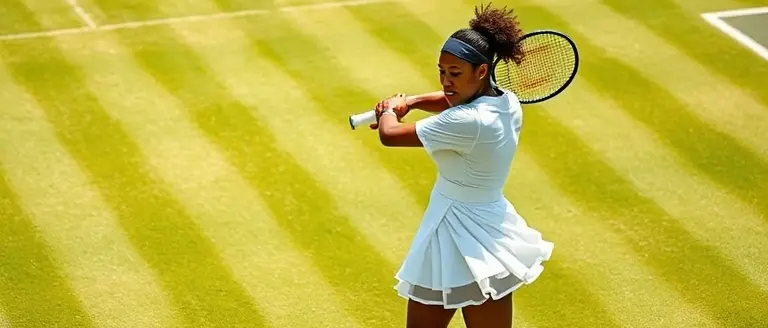
Naomi Osaka has officially set the tone for the 2026 Wimbledon Championships, blending high-stakes professional tennis with a distinctively bold aesthetic. Following a dominant performance in her first-round match, the four-time Grand Slam champion has become the primary talking point of the tournament, not just for her clinical court coverage, but for her unique interpretation of the All England Club’s strict white dress code. By stepping onto the grass courts in a custom, ‘Kill Bill’-inspired kimono, Osaka has successfully solidified her status as a global sports icon who refuses to sacrifice personal expression for traditional uniformity.
Performance Meets Personal Branding
The immediate viral reaction to her attire underscores the dual nature of Osaka’s career trajectory in 2026. While the fashion world focused on the structural details of her kimono, tennis analysts were quick to note that her on-court movement showed significant tactical improvement compared to previous grass-court seasons. The marriage of her brand-forward approach and technical discipline suggests a refined focus heading into the deeper rounds of the tournament.
Key highlights from her opening engagement include:
- Tactical Precision: Osaka demonstrated a heightened ability to manage rallies on the slick grass, adjusting her footwork to accommodate the faster pace of the surface.
- Cultural Influence: Her “Kill Bill” ensemble sparked widespread media coverage, effectively bridging the gap between mainstream pop culture and elite athletic competition.
- Momentum Building: By successfully advancing past her initial opponent, Osaka has secured a critical second-round matchup against Anastasia Gasanova.
As she prepares for the next phase of her Wimbledon journey, the focus shifts toward how she will maintain this momentum. The intersection of her high-profile celebrity status and the rigorous demands of grass-court tennis remains the defining narrative of her current run, keeping both fans and critics eager to see how she balances the pressures of the spotlight with her pursuit of another championship title.
Performance vs. Presentation: The Osaka Branding Blueprint

At the 2026 Wimbledon Championships, Naomi Osaka has effectively dismantled the antiquated notion that high-fashion aesthetics and elite athletic focus are mutually exclusive. By stepping onto the grass courts in an all-white, ‘Kill Bill’-inspired kimono, Osaka demonstrated that her sartorial choices are not merely distractions, but intentional extensions of her personal brand identity. In the high-pressure environment of a Grand Slam, such bold expression serves a dual purpose: it reinforces her status as a global style icon while simultaneously shielding her mental space by projecting an air of unshakeable confidence. For Osaka, the court acts as both a stadium and a runway, where the psychological edge gained from self-expression directly supports her technical execution.
The ‘Osaka Blueprint’ relies on a sophisticated intersection of branding and peak physical performance. Unlike athletes who compartmentalize their commercial interests, Osaka integrates her professional and personal facets to maintain a consistent narrative of empowerment. Evidence suggests that her tactical adjustments for the 2026 grass-court season—characterized by increased agility and deliberate shot placement—are perfectly complemented by the fluid, traditional silhouettes she chooses to wear. This synergy provides several advantages:
- Psychological Anchoring: Her deliberate focus on unique apparel allows her to claim ownership of her environment, reducing the external pressure of tournament expectations.
- Media Leverage: By curating highly “shareable” moments like the kimono debut, she controls the media narrative, effectively shifting focus away from potential performance anxiety.
- Strategic Consistency: Her branding strategy proves that maintaining a high profile does not detract from tactical discipline; rather, it highlights her ability to operate under the intense scrutiny of the tennis world.
As she moves into the second round to face Anastasia Gasanova, the broader tennis community is observing how this fusion of style and strategy holds up against evolving competitive demands. Osaka’s ability to navigate the rigors of professional tennis while setting cultural trends continues to redefine what it means to be a modern Grand Slam champion, proving that top-tier performance is most potent when fueled by personal authenticity.
Tactical Outlook: Osaka vs. Gasanova
As Naomi Osaka advances to the second round of the 2026 Wimbledon Championships, the tactical focus shifts toward her upcoming clash against Anastasia Gasanova. While global media remains fixated on her unique ‘Kill Bill’-inspired court attire, Osaka’s path to the third round depends heavily on her ability to adjust to the nuances of grass-court tennis. Gasanova presents a challenging stylistic hurdle; her ability to absorb pace and redirect balls requires Osaka to exercise patience rather than relying solely on raw power from the baseline. To secure a victory, Osaka must leverage her elite serve—the foundation of her game—to dictate play and force Gasanova into defensive positions where the low bounce of the grass surface becomes a liability for the challenger.
Key Performance Metrics and Adjustments
Success in this matchup hinges on specific technical refinements that Osaka has been integrating throughout the grass-court season. Unlike the predictable rhythm of hard courts, Wimbledon demands superior footwork and an aggressive approach to the net to shorten points. Analysts suggest that for Osaka to dominate, she must focus on:
- Serve Placement Variety: Utilizing wide, sliding serves in the deuce court to open up the entire canvas for her signature forehand winner.
- Net Transitions: Moving forward behind short, aggressive groundstrokes to exploit Gasanova’s reliance on deep-court rallying.
- Neutralizing the Slice: Managing Gasanova’s defensive slices by staying low and keeping the ball in front of her body to maintain control of the rally tempo.
By balancing her aggressive baseline presence with the technical discipline required for tournament-level grass play, Naomi Osaka can effectively manage the pressure of her celebrity status while executing a professional, clinical performance. If she maintains high first-serve percentages and limits unforced errors during long exchanges, her experience on the biggest stages should provide the necessary edge to overcome Gasanova and continue her deep run in London.
Navigating the Grass Court: Osaka’s 2026 Evolution

The 2026 Wimbledon Championships represent a definitive turning point for Naomi Osaka, marking a mature synthesis of her high-profile celebrity status and her technical development on grass. Historically, the lawns of the All England Club have challenged Osaka, but this year’s appearance reflects a refined physical and psychological approach. Her decision to embrace personalized attire—such as the viral ‘Kill Bill’-inspired kimono—signals a confidence that mirrors her growing comfort on low-bouncing surfaces. Rather than a distraction, her deliberate style choices suggest a player who has mastered the art of managing the pressure inherent in the spotlight, allowing her to funnel that energy into rigorous tactical execution.
Tactical Refinements and Psychological Growth
Osaka’s evolution as a grass-court competitor is anchored in a more nuanced understanding of movement and point construction. Her 2026 performance indicators point toward several critical improvements:
- Improved Footwork Efficiency: By lowering her center of gravity, Osaka has mitigated the unpredictability of grass bounces, allowing for more explosive shot-making off the baseline.
- Mental Resilience: Evidence suggests that Osaka has adopted a more clinical approach to mid-match fluctuations, effectively separating her personal brand from her on-court decision-making.
- Physical Conditioning: The 2026 season shows a focused effort on lateral stability, a prerequisite for sustained success on the slick London turf.
As she moves into the second round to face Anastasia Gasanova, the broader narrative for Naomi Osaka remains her quest for further Grand Slam glory. Balancing the global expectations of a modern sports icon with the mechanical demands of grass tennis is an immense feat. This version of Osaka appears more grounded, demonstrating that her influence as a style icon does not subtract from, but rather highlights, the evolution of her professional tennis career. By successfully bridging these two worlds, she continues to redefine what it means to be a modern athlete at the highest level of the sport.
Unlock Your Own Grand Slam Focus
Naomi Osaka’s journey at Wimbledon is a masterclass in maintaining tactical clarity amidst a whirlwind of expectations. Just as Osaka must filter out the noise of the public eye to maintain her sharpness on the grass, achieving your own professional breakthroughs requires that same level of undistracted mental clarity. When the stakes are at their highest, the ability to eliminate mental fog and lock into a state of deep performance is exactly what separates the contenders from the champions.
You don’t need to be a Grand Slam athlete to demand peak cognitive function in your daily routine. The Brain Song is designed for high-performers who need to sharpen their mental edge and execute complex tasks with surgical precision. By integrating this sophisticated audio routine, you can clear the ‘mental fog’ that often hinders progress, allowing you to mirror the same elite focus that fuels Osaka’s tactical strategies on the court.
This is your opportunity to upgrade your cognitive toolkit and approach your professional goals with the intensity of a championship run. Discover how to transform your daily output and achieve a state of lasting, undistracted concentration. Start your journey toward mental excellence today.
 Discover how to sharpen your mental edge and achieve elite-level focus with this simple daily audio routine.Unlock My Elite Focus Now!