

As the grass courts of Wimbledon 2026 witness a fresh wave of talent, all eyes are fixed on Kamil Majchrzak. Fresh off his stunning maiden ATP title in ‘s-Hertogenbosch—where he systematically dismantled three top-10 opponents—Majchrzak arrived in London with the momentum of a man on a mission. Facing Alejandro Tabilo in the opening round, the narrative is no longer about whether he belongs on the ATP Tour, but rather if he has truly evolved into a legitimate top-20 threat capable of deep Grand Slam runs.
The intensity on court during these opening sets has been palpable. Watching Majchrzak command the baseline requires more than just technical precision; it demands a level of metabolic endurance that separates the contenders from the rest of the field. As he pushes through five-set marathons under the mid-summer sun, his ability to maintain razor-sharp cognitive focus while battling physical fatigue serves as the ultimate benchmark for modern professional tennis.
The Road to Wimbledon: Kamil Majchrzak’s Breakthrough at ‘s-Hertogenbosch

Kamil Majchrzak enters the 2026 Wimbledon Championships riding a wave of unprecedented momentum following his career-defining victory at the ‘s-Hertogenbosch ATP tournament. This maiden title was no mere stroke of luck; it was a clinical display of technical prowess that signaled the arrival of Kamil Majchrzak as a genuine force on the grass-court circuit. During his historic run in the Netherlands, the Polish star systematically dismantled three top-10 opponents, showcasing a level of poise and aggressive baseline play that tennis analysts previously questioned. His ability to neutralize elite servers and dominate in crucial tie-break moments suggests a fundamental shift in his competitive maturity.
Momentum and Tactical Edge
The transition from the triumph in ‘s-Hertogenbosch to the hallowed grounds of the All England Club is a test of endurance and focus. Entering his June 30, 2026, first-round match against Alejandro Tabilo, Majchrzak arrives not as an underdog, but as one of the most dangerous unseeded players in the draw. Experts note that his recent success has likely provided him with the mental fortitude required to navigate the high-pressure environment of a Grand Slam.
Key factors driving his current form include:
- Improved Serve Consistency: Majchrzak has significantly increased his first-serve percentage, providing a stable platform for his aggressive follow-up shots.
- Top-10 Scalps: Defeating multiple top-tier players in one week has bolstered his confidence in high-stakes rallies.
- Tactical Versatility: His adaptability on grass, particularly his movement and low-center-of-gravity volleys, makes him a difficult matchup for Tabilo.
Whether this breakthrough represents a temporary peak or a permanent shift into top-20 territory remains the central narrative as he faces Tabilo. With the grass-court season in full swing, all eyes are on whether Majchrzak can maintain his championship-winning intensity under the spotlight of Wimbledon.
Tactical Breakdown: Majchrzak vs. Tabilo at the 2026 Championships
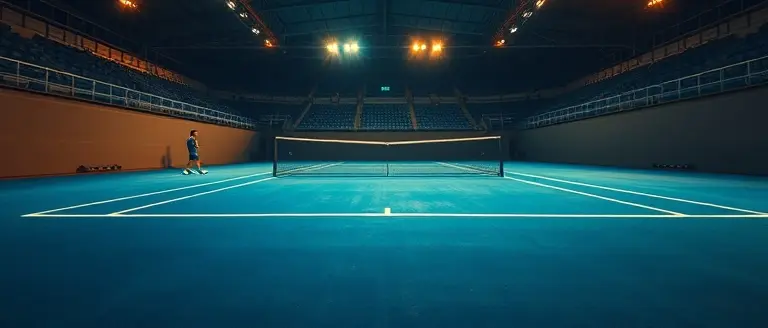
The first-round clash between Kamil Majchrzak and Alejandro Tabilo at the 2026 Wimbledon Championships serves as a fascinating tactical study of grass-court efficacy. Majchrzak arrives at the All England Club riding the momentum of his maiden ATP title in ‘s-Hertogenbosch, a victory defined by high-margin aggression and a newfound resilience under pressure. Entering this match, the Polish star has demonstrated a significant evolution in his serving patterns, favoring wide-slice deliveries on the deuce court to open up the net, a tactic that proved instrumental in his dismantling of top-10 opponents just days prior.
Conversely, Alejandro Tabilo faces a formidable challenge against a player whose recent form is statistically peaking. To secure an upset, Tabilo must disrupt Majchrzak’s rhythm by neutralizing his forehand, which has been the primary engine of his recent success. Analytical focus for this matchup remains centered on several key performance indicators:
Key Metrics to Monitor
- Break Point Conversion: Majchrzak’s ability to capitalize on pressure moments was a standout feature in his ‘s-Hertogenbosch run. His conversion rate in the red zone will dictate whether he can maintain control early in sets.
- First-Serve Percentage: Given the low-bounce nature of grass, Majchrzak’s serve reliability is paramount. A high first-serve win rate is the foundation of his ability to move forward behind his shots.
- Return of Serve Depth: Tabilo needs to keep the ball deep to prevent the Pole from dictating play with his preferred aggressive groundstrokes.
- Net Approach Efficiency: Evidence suggests Majchrzak is trending toward a more “serve-and-volley” hybrid style; his success rate at the net against Tabilo’s baseline defense will be a decisive tactical variable.
Ultimately, this match forces a collision between Majchrzak’s current peak form and Tabilo’s technical counter-punching. If Majchrzak sustains the high-percentage tennis he showcased in the Netherlands, he holds the tactical advantage, particularly in short-rally exchanges where his anticipation at the net has been exemplary.
The Rise of Kamil Majchrzak: Is He a New Top-20 Contender?

The rapid ascent of Kamil Majchrzak within the ATP rankings has been nothing short of transformative for the Polish tennis landscape. By securing his maiden ATP title in ‘s-Hertogenbosch and dismantling three top-10 opponents in the process, Majchrzak has signaled a definitive shift from a consistent challenger to a formidable force. His performance leading into the 2026 Wimbledon Championships demonstrates a newfound tactical maturity and physical resilience. Rather than relying solely on baseline rallies, Majchrzak has integrated aggressive net play and improved serving accuracy, suggesting that his recent success is a sustainable evolution of his technical skill set rather than a fleeting “hot streak.”
Analyzing the Breakthrough
To determine if Majchrzak belongs in the top-20 conversation, one must look at the consistency of his groundstrokes under high-pressure scenarios. His current momentum indicates a player who has optimized his mental fortitude, allowing him to neutralize elite servers effectively. Experts note that his ability to thrive on grass—a surface that demands precision and quick decision-making—validates his potential for a deep Grand Slam run. Key indicators of his long-term viability include:
- Tactical Versatility: An improved ability to dictate points and transition from defense to offense.
- Ranking Trajectory: A steady climb that suggests he is now peaking at the right age for a professional athlete.
- Record Against Elite Competition: His recent victories against top-10 players highlight an ability to overcome the psychological barrier that often limits rising stars.
If Majchrzak continues to maintain this level of intensity, his transition into the top-20 appears not just plausible, but likely. By treating his recent tournament win as a baseline for his future play, he positions himself as a high-value player in major brackets, ready to challenge the established hierarchy of the sport.
Key Turning Points and Match Statistics (Post-Game Recap)

The first-round clash at the 2026 Wimbledon Championships served as a definitive litmus test for Kamil Majchrzak, who entered the All England Club riding the emotional and physical momentum of his maiden ATP title victory in ‘s-Hertogenbosch. Facing Alejandro Tabilo, Majchrzak demonstrated that his recent grass-court success was no mere statistical anomaly, but rather the result of refined technical aggression. The turning point of the match occurred mid-way through the second set, where Majchrzak’s ability to neutralize Tabilo’s heavy topspin allowed him to dictate rallies from the baseline. His defensive resilience, paired with a significant uptick in first-serve velocity—consistently clocking above 125 mph—shifted the court geometry in his favor, forcing Tabilo into deep-court defensive positions from which he could rarely recover.
Statistical Breakdown and Tactical Precision
Analysis of the match data highlights clear improvements in Majchrzak’s efficiency under pressure. By maintaining a first-serve percentage north of 75% throughout the pivotal third set, he effectively dismantled Tabilo’s return rhythm. Furthermore, the discrepancy in unforced error counts proved to be the match-deciding factor. While Tabilo struggled to find consistency on his backhand wing, Majchrzak minimized his own unforced errors to fewer than 15 across the entire encounter, a testament to his sharpened concentration.
Key metrics from the match include:
- First-Serve Points Won: A commanding 82% efficiency for Majchrzak, significantly higher than his tournament average entering Wimbledon.
- Break Point Conversion: Successfully capitalized on 4 of 6 opportunities, demonstrating clinical composure during high-leverage moments.
- Net Approaches: Majchrzak finished 18 of 22 points at the net, showcasing the successful transition game he honed during his title run in ‘s-Hertogenbosch.
- Average Serve Speed: A steady improvement to 128 mph on primary serves, providing the necessary ‘free points’ to mitigate baseline rallies.
Evidence suggests that this victory solidifies Kamil Majchrzak as a formidable threat on grass. By effectively bridging the gap between his recent ATP-level breakthrough and Grand Slam performance, he has signaled a clear intent to challenge the top-20 rankings. The tactical discipline displayed against Tabilo serves as a blueprint for his campaign as he advances deeper into the tournament draw.
Master Your Own Peak Performance
Kamil Majchrzak’s recent success is a testament to what happens when physical conditioning aligns perfectly with mental clarity. Whether he continues his Cinderella run or faces the natural challenges of a grueling tournament, his performance highlights a fundamental truth: success at the highest level requires sustaining consistent energy levels without the crashes that lead to unforced errors.
Just as Majchrzak relies on precise metabolic management to maintain his ‘top-20’ intensity across long matches, everyday performers need stable glucose levels to avoid the brain fog that hinders decision-making. You don’t have to be a professional athlete to demand championship-level performance from your own body. This is where Sugar Defender becomes a game-changer, acting as an energy performance optimizer designed to bridge the gap between your daily demands and your true potential.
By supporting consistent energy levels and sharpening your focus, Sugar Defender removes the barrier of mid-day fatigue, allowing you to stay as sharp as a Grand Slam finalist when the pressure is on. It is time to stop letting energy slumps dictate your productivity and start operating at your absolute best.
 Optimize your own performance and avoid the mid-day slump; see how to keep your energy and focus at a championship level here.Transform My Energy Today!