
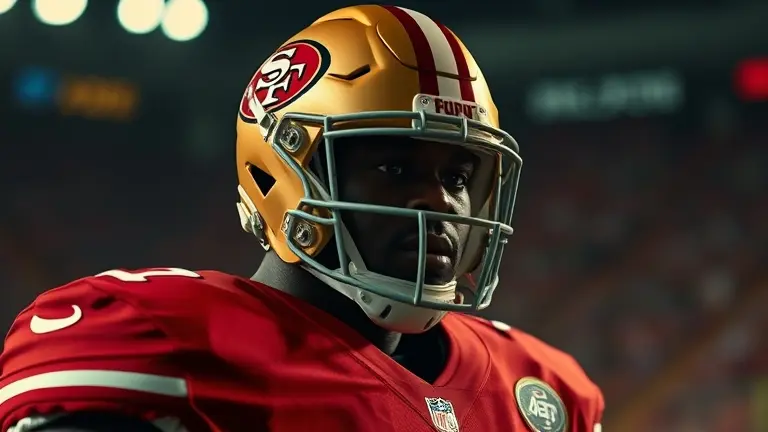
The volatile standoff between Brandon Aiyuk and the San Francisco 49ers has moved far beyond simple locker room friction. With the star wide receiver publicly labeling leadership as ‘weirdos’ and expressing open disdain for the NFLPA, the narrative has shifted from a contractual dispute into a full-blown professional divorce. While the media remains fixated on the interpersonal drama, the real story lies in the cold, hard mechanics of the 2026 salary cap and the legal precedent regarding bonus clawbacks. As insiders increasingly signal that Aiyuk has played his final snap in the Bay Area, the conversation must pivot from gossip to the objective reality of trade destination power rankings and the financial feasibility of his departure.
Analyzing the intricate architecture of an NFL trade—especially one involving a high-value asset like Aiyuk—requires peak cognitive performance to navigate the labyrinth of dead money, roster needs, and compensatory picks. Before we dissect the tactical breakdowns of where Aiyuk fits into the league’s 2026 landscape, we must consider how to optimize your mental focus for the complexity ahead. Mastering the data requires more than just passion; it demands a sharpened analytical edge that can cut through the noise of the headlines.
The Breakdown: Analyzing the Aiyuk-49ers Standoff
The professional relationship between Brandon Aiyuk and the San Francisco 49ers has reached a critical inflection point as of June 2026, marking a stark departure from the optimism surrounding his four-year, $120 million extension signed in August 2024. What was once viewed as a foundational agreement has devolved into a volatile standoff characterized by public hostility and organizational discord. The deterioration is evident in Aiyuk’s recent, unfiltered critiques of team leadership, specifically labeling head coach Kyle Shanahan and general manager John Lynch as “weirdos.” This public rhetoric, paired with Aiyuk’s vocal dissatisfaction with the NFL Players Association (NFLPA), suggests that the disconnect is no longer merely contractual but deeply personal.
Escalation and Contractual Consequences
The organizational response to this breakdown has been swift and firm. With internal tensions mounting, the 49ers front office is reportedly exploring legal and procedural avenues to recoup portions of the bonus money already paid out under the extension. From a management perspective, the goal is to protect the team’s salary cap integrity and address the perceived violation of team conduct expectations. The current impasse involves several compounding factors:
- Public Outbursts: The use of social media to challenge management and the union has irreparably damaged the professional rapport necessary for a star receiver to function within the 49ers’ scheme.
- Bonus Recoupment: The team is assessing the feasibility of recovering signing bonuses, a move that often triggers complex grievances within the collective bargaining framework.
- Trade Probability: Insiders increasingly suggest that the bridge between Aiyuk and the organization has been burned, with the likelihood of a trade surpassing the possibility of reconciliation.
As the situation progresses, the 49ers must weigh the financial impact of a potential trade against the internal pressure of maintaining a disciplined roster. The narrative has shifted entirely from contract negotiation to damage control, leaving analysts to question whether the 2024 agreement is essentially void in the eyes of the organization. For Aiyuk, the primary objective has moved toward securing a path to a new roster where his role and relationship with leadership can be reset.
Strategic Trade Destinations: Power Rankings for 2026
As the professional relationship between Brandon Aiyuk and the San Francisco 49ers nears a terminal point, NFL front offices are performing deep-dive financial audits to determine the viability of a trade. Integrating a wide receiver of Aiyuk’s caliber requires not only draft capital but significant 2026 salary cap flexibility to absorb the remaining value of his four-year, $120 million extension. While his public outbursts have damaged his leverage, his performance on the field remains elite, making him a primary target for franchises looking to anchor their passing attack.
Top Trade Destinations
The following teams possess the necessary financial runway and roster deficiencies to justify an aggressive pursuit of Aiyuk:
- 1. New England Patriots: Armed with substantial projected cap space, the Patriots are in a critical growth phase for their young quarterback. Aiyuk would serve as the prototypical WR1 needed to stabilize a fluctuating offensive scheme. Their ability to front-load his contract makes them the most logical landing spot for a long-term rebuild.
- 2. Los Angeles Chargers: With a mandate to modernize their vertical passing game, the Chargers remain a top contender. Despite balancing veteran contracts, the front office has maneuvered skillfully to create enough room for a premier playmaker. Aiyuk provides the reliable, high-volume threat necessary to complement their existing roster composition.
- 3. Washington Commanders: By utilizing mid-tier cap space effectively, the Commanders represent a rising threat in the NFC. Their need for a vertical threat to pair with their developing core is undeniable. A trade here would be aggressive, yet it aligns with their trajectory to move from playoff contenders to legitimate Super Bowl threats.
Each destination must account for the contractual mechanics regarding Aiyuk’s bonus structure. Prospective teams are likely factoring in the 49ers’ current attempts to recoup bonus money, which may alter the final trade package. Ultimately, acquiring Aiyuk is a calculated gamble on his production outweighing the risks of his current contract standoff.
The Financial Chess Match: Unpacking Bonus Recoupment

The standoff between Brandon Aiyuk and the San Francisco 49ers has moved beyond mere locker room friction, entering the complex territory of NFL contract law. Central to this dispute is the organization’s potential attempt to recoup portions of the massive four-year, $120 million extension signed in August 2024. Under the terms of the current Collective Bargaining Agreement (CBA), teams possess specific mechanisms to pursue the clawback of signing or roster bonuses if a player fails to fulfill his contractual obligations, such as refusing to report to mandatory team activities or holding out during the regular season.
Understanding the Mechanics of Clawbacks
For an organization like the 49ers, the legal path to recouping funds hinges on whether Aiyuk’s actions are classified as “conduct detrimental” or a “failure to render services.” While the NFLPA typically provides a robust defense for players, the specific language in Aiyuk’s 2024 deal likely contains performance and participation riders that trigger financial penalties upon a breach. Key factors influencing this financial chess match include:
- Prorated Bonus Structures: Most NFL contracts distribute bonuses over the life of the deal. If the team moves to claw back funds, they are essentially arguing that the player has voided the “services rendered” clause associated with that specific fiscal year.
- Mandatory Activity Clauses: The 49ers may argue that Aiyuk’s public outbursts and absence from team-sanctioned events constitute a material breach, allowing the team to withhold future payments or pursue the recovery of past bonuses through a grievance process.
- Arbitration Hurdles: Any attempt to reclaim money will almost certainly move to an independent arbitrator, where the precedent for clawbacks remains inconsistent and heavily contested by the players’ union.
Ultimately, the 49ers are leveraging the threat of financial recovery to gain leverage in trade negotiations. However, the move is a high-stakes gamble; if the organization fails to prove a clear contractual breach, they risk further alienating a star wide receiver while inviting a lengthy, public legal battle that could damage their reputation with future free agents. For Aiyuk, the financial implications are significant, as a successful clawback would not only reduce his career earnings but also potentially complicate his leverage as a trade target for other NFL franchises.
Market Valuation: Aiyuk Relative to the Elite WR Class

Determining the trade value of Brandon Aiyuk requires a nuanced look at the 2026 wide receiver market. Despite the volatility surrounding his current standing with the San Francisco 49ers, Aiyuk remains a high-efficiency weapon whose production metrics place him firmly in the top tier of NFL pass-catchers. Unlike receivers who rely solely on vertical speed, Aiyuk’s elite route-running ability and yards-after-catch (YAC) proficiency make him a versatile asset for any offensive scheme. When evaluating his worth against other star receivers, general managers must weigh his proven consistency against the high salary cap figures now associated with his four-year, $120 million extension.
Analyzing Trade Return Potential
While the public discourse focuses on the friction between Aiyuk and leadership, front offices are prioritizing his quantifiable impact on the field. To acquire a player of his caliber, interested organizations should expect a significant bidding war involving multiple high-value draft picks. Based on recent historical precedents for elite WR trades, the return for Aiyuk would likely mirror the following structural expectations:
- Draft Capital: The 49ers hold strong leverage; a package starting with a 2027 first-round pick plus a conditional mid-round pick is the floor for initial negotiations.
- Player Assets: Teams with deep rosters may look to include a cost-controlled player at a position of need for San Francisco, such as a young defensive back or an interior offensive lineman, to mitigate the financial impact of Aiyuk’s contract.
- Positional Value: Aiyuk’s age and durability provide a higher return on investment compared to older veteran receivers currently on the trade block, as he enters the prime window of his physical capability.
Evidence suggests that while the 49ers’ desire to recoup bonus money creates a complex financial hurdle, Aiyuk’s status as a premier route runner ensures that his market value has not plummeted. Even with the internal strife, his ability to elevate a passing game makes him one of the most valuable assets available in the current landscape.
Mastering the Tactical Landscape of the 2026 NFL Offseason
The path forward for Brandon Aiyuk is no longer a question of if, but where. As we have examined, the intersection of cap constraints and contractual clawback mechanisms creates a rigid framework that dictates his market value. To truly understand these trade scenarios, you must be able to filter out the inflammatory rhetoric and focus on the strategic depth that defines elite front-office decision-making. High-stakes sports analysis is a marathon, not a sprint, and maintaining clarity amidst this data-heavy turbulence is the key to staying ahead of the league’s shifting tides.
Analyzing the dense contractual architecture of an NFL trade requires peak cognitive performance, so before we dive further into the specific cap space data for potential trade partners, let’s look at how to optimize your mental focus for the complexity ahead. The Brain Song is designed specifically for those who demand more from their analytical process. By combating mental fatigue and sharpening cognitive capacity, this supplement acts as an ‘analytical accelerator,’ enabling you to clear the mental clutter and identify the subtle roster patterns that others miss. It is the essential tool for any serious analyst or fan looking to navigate the intricacies of the modern NFL labor market with superior concentration and precision.
Whether you are managing a high-stakes fantasy lineup or tracking the financial maneuvering of the league’s biggest franchises, your ability to synthesize information is your greatest asset. Don’t let the viral noise obscure your vision. Elevate your analytical game and prepare for the next phase of the Aiyuk saga by ensuring your mind is operating at its peak potential.
 Optimize your analytical edge and sharpen your focus for the upcoming roster deep-dive by incorporating The Brain Song into your daily routine.Sharpen My Analytical Focus Now!