
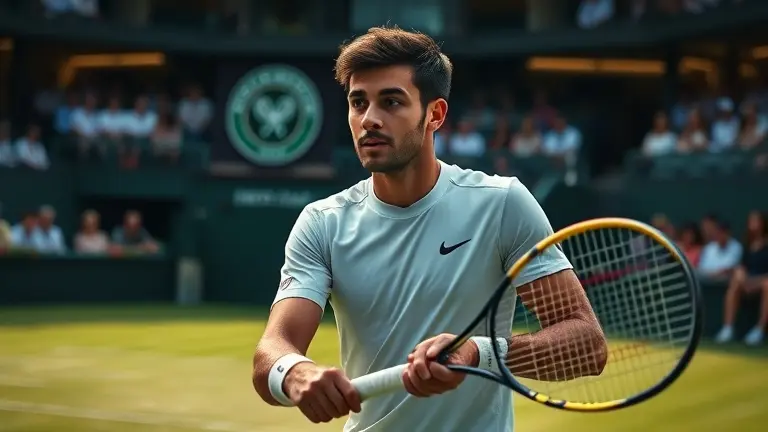
In the high-stakes arena of professional tennis, the leap from the obscurity of the Challenger circuit to the hallowed grass courts of the 2026 Wimbledon Championships is rarely a straight line. Yet, Rafael Jodar has defied convention, evolving from World No. 600 to a formidable Wimbledon seed in a breathtakingly short span. As he steps onto the court to face Felix Gill, tennis analysts and fans alike are not just watching a match; they are witnessing the emergence of a new archetype. Jodar represents a lethal blend of raw power and tactical precision, challenging the established hierarchy of legends like Sinner and Djokovic.
Beyond the highlights, Jodar’s trajectory invites a deeper question: what separates a fleeting breakout from a sustained champion’s career? While physical training is the bedrock of any pro career, the true differentiator in the modern #NextGenATP era is cognitive resilience. As we dissect the mechanics of Jodar’s rapid rise, it becomes clear that his ability to maintain elite focus amidst the relentless pressure of a Grand Slam is the secret weapon propelling him toward the top of the game.
Rafael Jodar: The Meteoric Rise of a Wimbledon 2026 Breakout Star

The ascent of Rafael Jodar from the relative obscurity of the Challenger circuit to a seeded position at the 2026 Wimbledon Championships is nothing short of unprecedented. Entering the season ranked outside the top 600, the young Spaniard’s rapid trajectory has caught the tennis world by surprise. His recent performance metrics, particularly his aggressive baseline play and improved net transition, have earned him a reputation as one of the most exciting #NextGenATP prospects currently on tour. This momentum serves as the foundation for his high-stakes opening-round match against British hopeful Felix Gill, a contest that pits raw, surging confidence against the home-crowd advantage.
Why Jodar is Considered a Serious Threat
Analysts and sports commentators are increasingly highlighting Jodar as a legitimate “entertainer” capable of disrupting the established hierarchy at the All England Club. While top-tier titans like Jannik Sinner and Novak Djokovic remain the favorites, Jodar’s tactical versatility poses a unique problem for veteran competitors. His ability to adapt his game—honed on clay courts—to the lower, faster bounces of grass has been a revelation this summer.
Key factors driving the hype surrounding his Wimbledon debut include:
- Rapid Ranking Surge: An explosive climb from World No. 600 to his current seeded status within a single calendar year.
- Tactical Versatility: A refined ability to flatten out his groundstrokes, a necessary adjustment for maintaining aggression on the grass.
- Clutch Performance: High statistical efficiency in pressure situations, as evidenced by his recent qualifying rounds where he saved multiple break points against higher-ranked opponents.
Whether Jodar can maintain this performance level remains to be seen, but current betting odds and expert discourse suggest he is the player most likely to force an early-round upset. By blending high-risk, high-reward shotmaking with disciplined defense, Jodar has transitioned from an unranked prospect into a dark horse contender who forces even the elite to adjust their tactical blueprints.
From World No. 600 to the Main Draw: The Road to SW19

The meteoric rise of Rafael Jodar from the fringes of the top 600 to a main draw contender at the 2026 Wimbledon Championships serves as one of the most compelling narratives in modern tennis. For many, his emergence appeared sudden, but a deeper look at his recent tactical evolution reveals a carefully constructed ascent. The catalyst for his professional breakout was undoubtedly his clinical performance during the recent clay-court swing in Rome, where he demonstrated a newfound ability to dictate baseline exchanges against top-50 opponents. This momentum proved vital as he transitioned to grass, a surface that rewards his aggressive, front-foot mentality and improved service efficiency.
Tactical Evolution and Mental Grit
Jodar’s transition from the Challenger circuit to the Grand Slam stage has been defined by a significant shift in his technical approach. Analysts have noted that his capacity to absorb pace has evolved, allowing him to neutralize heavy hitters who previously disrupted his rhythm. His success is built on several key pillars:
- Shot Selection: A disciplined reduction in unforced errors during high-pressure deuce games.
- Surface Adaptation: Utilizing a flatter, more penetrating backhand to slice through the grass, minimizing the high-bounce targets favored by his rivals.
- Mental Toughness: A demonstrated ability to remain stoic when facing break points, a psychological trait that has become his hallmark during his rapid ATP Tour climb.
By mastering these elements, Jodar has transformed from a promising NextGenATP prospect into a legitimate threat to established seeds. His current performance at Wimbledon is not merely a product of talent but the culmination of rigorous tactical refinement and an unwavering temperament. As he continues his campaign, observers are increasingly confident that his adaptability on grass—long considered a hurdle for clay-court specialists—is the final piece in his transformation into an elite competitor. The tennis world is watching closely, as Jodar moves from a dark horse candidate to a fixture in the professional game.
Tactical Breakdown: How Jodar Disrupts the Modern Baseline Game
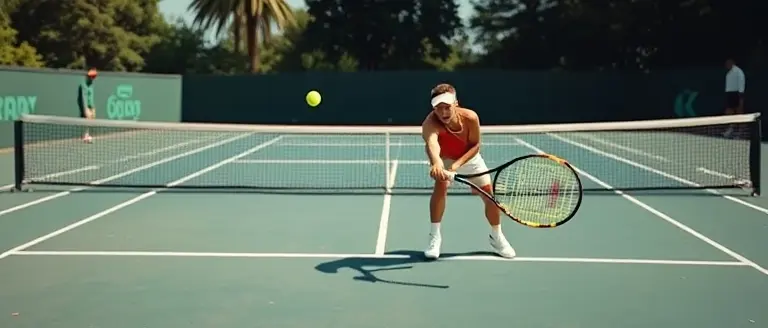
Rafael Jodar has rapidly distinguished himself within the #NextGenATP circuit by rejecting the rigid, high-topspin baseline patterns that define much of the modern professional game. While many of his peers rely on punishing groundstrokes from deep behind the baseline, Jodar employs a disruptive “all-court” methodology that forces opponents to contend with unpredictable geometry. His game is defined by a high-frequency transition to the net, a tactical choice that has proven exceptionally effective during his transition to the Wimbledon 2026 grass courts. By taking the ball early, he denies high-velocity baseliners the time required to set up their shots, effectively shrinking the court for his opponents.
Tactical Versatility and Grass-Court Adaptability
Jodar’s success stems from a unique synthesis of traditional serve-and-volley mechanics and modern court coverage. His ability to disrupt rhythm is rooted in several key tactical pillars:
- Shot Selection Variety: Jodar utilizes a refined slice backhand—rarely seen in his generation—to stay low on grass, forcing opponents to hit up on the ball and creating ideal passing-shot opportunities.
- Aggressive Serve Placement: Rather than relying exclusively on raw power, Jodar emphasizes placement, utilizing wide serves to open up the court before following with an aggressive approach shot.
- Net-Play Efficiency: His movement patterns demonstrate an intuitive sense of “closing the gate.” He anticipates cross-court passing lanes, allowing him to neutralize power hitters like Sinner or Djokovic by cutting off angles early in the rally.
Evidence suggests that Jodar’s rapid climb from World No. 600 is directly tied to his comfort in the transition zone. While his contemporaries often look unsettled when pulled forward, Jodar demonstrates elite footwork and reaction speed at the net. This versatility makes him a uniquely difficult matchup on grass, as his game forces opponents to abandon their comfort zones, leading to forced errors and frustration. As he continues his campaign at the 2026 Wimbledon Championships, his tactical fluidity remains his greatest weapon against the baseline-dominant status quo.
The Next Gen ATP Wave: Jodar’s Potential to Upset the Status Quo

The meteoric rise of Rafael Jodar within the #NextGenATP cohort represents more than just a statistical anomaly; it signals a tactical shift in how emerging talent challenges the established hierarchy. By vaulting from World No. 600 to a seeded position at the 2026 Wimbledon Championships, Jodar has introduced a brand of high-variance, aggressive tennis that forces established veterans like Sinner and Djokovic to recalibrate their traditional baseline strategies. Unlike many of his contemporaries who rely solely on heavy topspin, Jodar’s aptitude for shortening points and his clinical transition to the net on grass surfaces make him an uncomfortable matchup for players who prefer methodical, rhythm-based rallies.
Tactical Disruptions and Future Projections
Jodar’s ability to thrive under pressure—evidenced by his composure during the high-stakes qualifying rounds—suggests that his tactical ceiling remains largely untested. As he integrates into the elite sphere, several factors define his trajectory for the remainder of the 2026 season:
- Adaptability to Surface Variability: Having successfully transitioned from the clay courts of the European spring to the quick-paced grass of SW19, Jodar demonstrates a refined technical range that is essential for top-10 consistency.
- Forcing Strategic Adjustments: The “entertainer” label assigned by media outlets is rooted in his unpredictable shot selection. Top seeds can no longer rely on standardized scouting reports, as Jodar frequently disrupts conventional defensive geometry.
- Sustainability of Momentum: Given his rapid ascent, the primary challenge for the remainder of the season will be managing physical durability. Evidence suggests that if he maintains his current service efficiency, he is well-positioned to threaten deep runs at the upcoming North American hard-court swing.
For tennis analysts and fans alike, Rafael Jodar is the blueprint for the next wave of disruptive athletes. While his debut on the grass-court stage is the immediate focus, his sustained pressure on the status quo will likely dictate the narrative for the remainder of the 2026 ATP calendar.
Mastering the Mindset of a Champion
The story of Rafael Jodar is not merely about physical talent or technical training; it is a masterclass in mental conditioning. In the elite levels of professional sports, the difference between a promising prospect and a champion often boils down to a player’s ability to maintain cognitive clarity during high-stakes match points. When the noise of the crowd fades and the margin for error shrinks, it is the athlete who can sustain peak concentration who secures the victory.
Bridging the gap between physical athleticism and mental acuity is the next frontier for any competitor, whether you are stepping onto a center court or navigating the complexities of your professional life. Much like the tactical preparation seen in Jodar’s rise, you can cultivate an edge through deliberate cognitive optimization. By eliminating the cognitive fog that hinders high-performance decision-making, you prepare yourself to handle pressure with the same composure as a Grand Slam seed.
To achieve this level of performance, you need a system that sharpens your focus and enhances your learning capacity. This is exactly where The Brain Song becomes the essential tool for those committed to elite output. By integrating this neuroscience-based approach into your daily routine, you move beyond basic training and enter the realm of true mental conditioning, aligning your cognitive state with your highest ambitions.
 Unlock your own ‘champion-level’ focus and mental performance by integrating this 12-minute daily routine into your training schedule.Transform My Life Today