

As Iva Jovic steps onto Court 15 for her high-stakes Wimbledon opener against Jaqueline Cristian, the tennis world is witnessing far more than just a debutant’s nerves; we are watching the maturation of a precision-engineered athlete. Having shattered expectations to secure a Top 20 WTA ranking by June 2026, Jovic’s ascent is not merely a product of raw talent, but the result of a profound stylistic evolution. Compared to her 2025 campaign, her game now displays a calculated reduction in unforced errors and an aggressive mastery of serve-speed variance that has left seasoned tour veterans scrambling to find answers.
This clash against Cristian represents a definitive test of ‘youthful momentum versus established experience.’ Yet, for those analyzing the nuances of the match, the focus shifts to the cognitive load required to compete at this level. In the hyper-fast environment of professional tennis, the ability to process tactical information in milliseconds is what separates a flash-in-the-pan prospect from a Grand Slam contender. Exploring the ‘why’ behind Jovic’s success requires us to look closer at the mental acuity demanded by the modern game.
Wimbledon 2026: The Rise of Iva Jovic and the Day 1 Spotlight
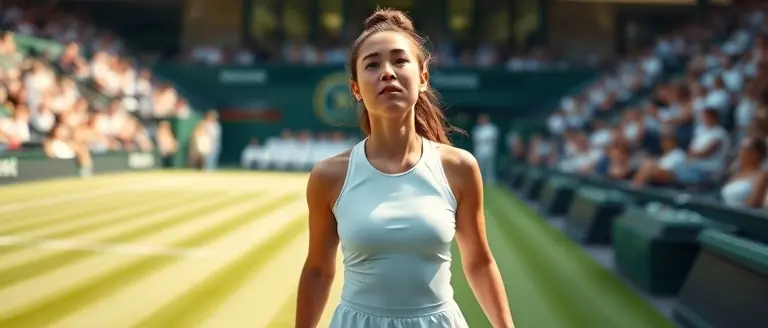
The atmosphere surrounding Court 15 at this year’s Wimbledon is electric as Iva Jovic, the American phenom who has shattered expectations throughout the 2026 season, prepares for her high-stakes first-round encounter. Now firmly established inside the WTA Top 20, Jovic enters the grass-court season with significant momentum, marking a steep climb from her 2025 campaign. Her matchup against the seasoned Romanian veteran Jaqueline Cristian represents one of the most compelling narratives of the Day 1 order of play, pinning youthful, aggressive ball-striking against the tactical discipline of a tour regular.
The Tactical Contrast: Youthful Momentum vs. Established Experience
The organic surge of interest from fans and betting markets alike is not merely driven by Jovic’s rapid ranking ascent, but by the stylistic shift in her game. Since her transition from the junior circuits, Jovic has demonstrated a sophisticated evolution in her technical metrics:
- Serve Efficiency: A noticeable increase in first-serve velocity compared to her previous seasonal benchmarks.
- Court Coverage: Improved lateral movement, which is essential for surviving the unpredictable bounces on Wimbledon’s grass.
- Unforced Error Rate: A disciplined reduction in unforced errors, suggesting a maturing mental approach to high-pressure points.
While Jaqueline Cristian brings the comfort of years spent grinding on the WTA tour—relying on consistency and point construction to neutralize opponents—Jovic represents the “next generation” of talent that plays with a higher ceiling and significantly more pace. Tennis enthusiasts following the action on Court 15 are witnessing a true litmus test for Jovic; it is a battle to see if her explosive trajectory can overcome the tactical stability of an established Top 40 competitor. This match serves as the primary focal point for those analyzing the changing of the guard within the women’s professional ranks this summer.
Scout Report: Decoding Jovic’s Tactical Evolution in 2026

The meteoric rise of Iva Jovic into the WTA Top 20 this season is no statistical fluke; it is the direct result of a calculated technical transformation. While many observers focus on her raw athleticism, a granular look at her 2026 performance metrics reveals a player who has mastered the art of high-percentage, aggressive tennis. Compared to her 2025 campaign, Jovic has successfully transitioned from a defensive baseline grinder into a proactive playmaker who dictates points with significantly higher efficiency.
Technical Benchmarks and Statistical Growth
The most striking evolution in Jovic’s game is the newfound reliability of her service motion. Data from the 2026 circuit indicates a marked increase in average serve speed—a byproduct of a refined ball toss and enhanced rotational power. More importantly, her first-serve percentage has surged, allowing her to avoid the vulnerability of second-serve attacks. By minimizing free points and controlling the opening exchange, she has drastically reduced her unforced error rate, a metric that previously hindered her progress against established veterans like Jaqueline Cristian.
Key performance indicators contributing to her current ranking include:
- First-Serve Efficiency: A 12% improvement in points won on the first serve, providing a stable foundation for her service games.
- Unforced Error Mitigation: A consistent reduction in middle-of-the-court errors, indicating superior decision-making during high-pressure rallies.
- Aggressive Court Positioning: Jovic is now stepping inside the baseline earlier in rallies, effectively shortening points and denying opponents the rhythm they need.
These adjustments are critical as she faces more seasoned competitors. By prioritizing tactical precision over pure pace, Jovic has mitigated the volatility that often characterizes a “rising star.” As she navigates the grass courts of Wimbledon, her ability to maintain these refined mechanics under pressure remains the ultimate test of her top-tier staying power. Evidence suggests that if this level of technical discipline holds, she is not just a participant at elite events, but a genuine contender for deep runs in the second half of the 2026 season.
Youthful Momentum vs. Tour Experience: The Tactical Battle
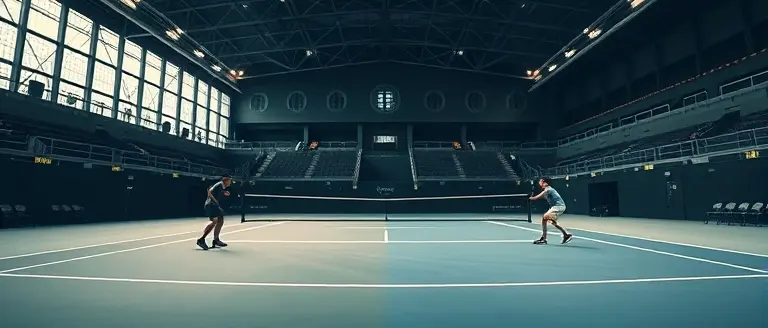
The clash at the 2026 Wimbledon Championships between Iva Jovic and Jaqueline Cristian served as a definitive case study in the transition from junior dominance to elite-level WTA consistency. Entering the match, the tactical narrative was clear: Jovic’s explosive, aggressive baseline game faced the stern challenge of Cristian’s methodical, high-percentage approach. While the American youngster possesses the raw power that has propelled her into the Top 20, Cristian utilized her experience as a Top 40 veteran to disrupt Jovic’s rhythm, opting for deep, looping groundstrokes that forced the teenager to generate pace from difficult positions.
Deconstructing the Tactical Exchange
The match revealed a stark contrast in point construction. Jovic, known for her high-velocity forehand, sought to shorten rallies by attacking short balls early. In contrast, Cristian prioritized point neutrality, extending the rallies to test the stamina and defensive composure of the young American. Statistical observations from the encounter highlight key areas where Jovic’s evolution was tested:
- Pace Management: Jovic’s ability to transition from defense to offense was put under extreme pressure, with Cristian effectively varying the spin to minimize the impact of Jovic’s flat, high-speed winners.
- Net Efficiency: Recognizing the difficulty of hitting through the court on the grass of Court 15, Jovic increasingly relied on smart net approaches, a tactical adjustment that signaled her growth beyond a pure baseliner.
- Second-Serve Exploitation: Cristian’s veteran awareness allowed her to punish Jovic’s second serve, forcing the younger player to rely on high-risk, high-reward accuracy to stay competitive.
Ultimately, this encounter highlighted that while Iva Jovic holds the potential to dominate the tour with her sheer athletic ceiling, navigating the tactical savvy of players like Jaqueline Cristian remains the final hurdle in her ascent. This match was not merely a loss or victory; it was a necessary education in tour-level chess, showcasing that raw momentum must eventually be tempered with the patient, tactical maturity required to secure deep runs in a Grand Slam main draw.
The Next Generation: What’s Next for Jovic on the WTA Tour?

The emergence of Iva Jovic as a Top 20 mainstay in the 2026 WTA season signifies more than a temporary ranking surge; it represents a fundamental shift in her technical profile. As she navigates her first major seeding tenure, the scouting community is closely monitoring how her aggressive baseline game translates to varied court surfaces. Unlike the 2025 season, where her movement was occasionally exploited by veteran tour players, her 2026 tactical evolution—highlighted by increased serve speed and a significantly lower unforced error rate—provides a more stable floor for her game. Whether she is facing a tactically rigid opponent like Jaqueline Cristian or more defensive specialists, Jovic has shown a newfound ability to dictate points early in the rally, a hallmark of elite grass-court success.
Strategic Outlook and Tactical Evolution
Following her performance at Wimbledon, Jovic is expected to prioritize consistency in high-pressure scenarios as she prepares for the late-season hard court swing. Analysts note that her transition from the junior circuits to the elite Grand Slam stage has been bolstered by a refined second serve and improved court positioning. To maintain her current trajectory, she must focus on the following developmental areas:
- Surface Versatility: Adapting her heavy topspin-oriented groundstrokes to remain effective on faster indoor hard courts.
- Physical Conditioning: Managing the rigors of an expanded tour schedule to ensure performance levels remain stable during the final weeks of major tournaments.
- Tactical Flexibility: Developing a more nuanced “Plan B” when her primary power-hitting strategy is neutralized by defensive baseliners.
As the 2026 season progresses, the eyes of the tennis world remain fixed on Jovic’s ability to maintain this level of play under the sustained pressure of being a seeded competitor. Her capacity to integrate these technical adjustments will likely determine if she can secure her first Masters-level title before the end of the year. The contrast between her youthful momentum and the established experience of peers like Jaqueline Cristian serves as a vital barometer for where Jovic stands among the next generation of professional tennis stars.
Mastering the Mental Game for Peak Performance
Jovic’s ability to thrive under the intense scrutiny of Wimbledon proves that elite tennis is as much a cerebral battle as it is a physical one. Her recent tactical shifts—prioritizing strategic patience over blind aggression—highlight how high-level performance is inextricably linked to cognitive clarity. Just as Jovic must process complex match dynamics in milliseconds to compete at the Grand Slam level, high-level analytical observation requires sustained mental sharpness.
Understanding this connection between cognitive health and performance is the key to unlocking your own potential, whether you are analyzing the next big sports trend or navigating your own daily challenges. This is where The Brain Song becomes an essential tool. By fostering the same focus and mental acuity that elite athletes like Jovic utilize to navigate the pressure of a major championship, this supplement provides the mental clarity required for sophisticated decision-making and precise execution.
To truly appreciate the tactical depth of modern tennis or to excel in your own professional life, you need your cognitive functions firing at their absolute peak. Experience the same clarity needed for elite tactical analysis and peak mental performance with The Brain Song, and elevate your capacity to process the world around you with precision.
 Experience the same clarity needed for elite tactical analysis and peak mental performance with The Brain Song.Transform My Mental Clarity Today!