
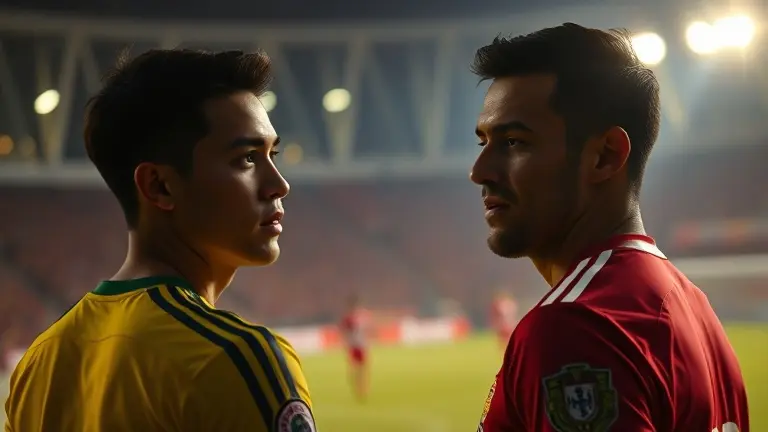
The Miami air was thick with tension on June 27, 2026, as the world watched a Group K collision that lived up to its billing. The Colombia vs Portugal fixture promised a tactical masterclass, pitting the veteran brilliance of Cristiano Ronaldo against the disciplined, high-octane grit of the Colombian squad. What transpired, however, was a defensive stalemate that ended in a 0-0 draw, only to be defined by a singular, agonizing moment of VAR intervention that stripped Colombia of a last-gasp victory and ignited a firestorm of global debate.
While the scoreline reads as a dull deadlock, the reality behind the colombia – portugal match is far more complex. To truly understand the World Cup 2026 Group K standings and the tactical implications of that disallowed goal, fans must look beyond the emotional surface. In an era where digital noise and refereeing controversies dominate our screens, the difference between a casual viewer and a deep-dive analyst lies in the ability to process dense data without falling prey to mental fatigue.
The Colombia vs. Portugal Standoff: A World Cup 2026 Instant Classic

The June 27, 2026, fixture in Miami transformed into an instant classic, capturing the global imagination as Colombia vs Portugal delivered a masterclass in tactical tension. Held under the high-pressure stakes of Group K, the match drew massive crowds to the venue, fueled by the narrative of a surging Colombian squad eager to prove its international pedigree against a star-studded Portuguese side. The air in Miami was electric, with fans creating an environment reminiscent of a tournament final, all centered on the prospect of seeing legendary forward Cristiano Ronaldo compete on such a pivotal stage.
The Colombia – Portugal battle was defined by a stalemate that defied the high-octane offensive capabilities of both nations. While many analysts predicted a goal-fest, the match evolved into a grueling 0-0 tactical chess match. Portugal’s defensive discipline held firm against Colombia’s relentless pressing, while the latter successfully neutralized the aerial threats posed by the Portuguese attack.
Key Factors Shaping the Match Intensity
- Elite Venue Energy: Miami hosted an atmosphere of unprecedented intensity, with thousands of supporters amplifying the stakes for both teams.
- Cristiano Ronaldo’s Impact: Even without a goal, the presence of Cristiano Ronaldo demanded constant tactical adjustments from the Colombian defense, effectively creating space for his teammates.
- Strategic Stalemate: The 0-0 scoreline was a direct result of mutual respect, as both managers prioritized structural integrity over reckless attacking maneuvers.
- Group K Implications: This draw significantly tightened the World Cup 2026 Group K standings, leaving the door open for late-stage drama as teams fight for favorable knockout positioning.
Ultimately, the match served as a testament to the defensive evolution of international soccer, even if the eventual controversy overshadowed the technical brilliance displayed throughout the 90 minutes. While the final score read 0-0, the significance of the portugal vs colombia draw will be felt well into the final rounds of the tournament, leaving fans and pundits alike to debate the thin margins that now define elite football.
The VAR Controversy: Breaking Down the Disallowed Goal

The Colombia vs Portugal fixture in the 2026 FIFA World Cup will long be remembered for the officiating decision that defined the Group K encounter. In the dying moments of the match, Colombia appeared to secure a dramatic victory, only for the goal to be abruptly chalked off following a lengthy VAR controversy. Technical analysis suggests the review centered on a marginal offside call during the buildup, an interpretation that has ignited fierce debate across social media platforms like Reddit and TikTok. While the official application of the laws of the game technically supported the decision, the millimeter-precise nature of the call has left fans questioning the current implementation of technology in high-stakes international football.
Technical Analysis vs. Fan Sentiment
From a regulatory standpoint, the match officials adhered to the current offside protocols, which mandate that any part of the body used to score or play the ball must be behind the second-to-last defender. However, the disconnect between the rulebook and the “spirit of the game” is where the portugal vs colombia narrative has turned volatile. Supporters argue that such granular reviews remove the fluidity of the sport, especially when the attacking advantage was minimal.
Key points of contention regarding the colombia portugal disallowed goal include:
- Precision vs. Interpretation: Critics argue that the semi-automated offside technology lacks the context of active play, focusing purely on freeze-frame geometry.
- Impact on Group K: The 0-0 draw significantly alters the World Cup 2026 Group K standings, putting increased pressure on both squads heading into the final group stage fixtures.
- Star Power Influence: Fans have speculated whether the presence of Cristiano Ronaldo and the high-profile nature of the tournament influenced the referees’ cautious approach under the scrutiny of global cameras.
Ultimately, while the statistical reality confirms that the officiating team followed procedural standards, the emotional impact on the Colombian squad and their global fanbase remains profound. As the dust settles on this intense match, the incident serves as a primary case study for the ongoing debate over whether the current VAR framework enhances match integrity or diminishes the excitement of the beautiful game.
Tactical Breakdown: Colombia’s Collective Force vs. Ronaldo’s Presence

The Colombia vs Portugal Group K fixture was a masterclass in tactical discipline, contrasting Colombia’s fluid, high-pressing collective unit against the individual gravity of Cristiano Ronaldo. From the opening whistle in Miami, the Colombian setup prioritized spatial denial, employing a compact mid-block that forced Portugal into predictable wide play. By narrowing the passing lanes, the South American side successfully stifled the service lines usually feeding into the Portuguese attack. This tactical commitment meant that Colombia – Portugal became a battle of attrition, where individual brilliance was frequently sacrificed for defensive stability and organized transition play.
Neutralizing the Ronaldo Factor
While Cristiano Ronaldo remained the focal point of the Portuguese offensive strategy, he found himself isolated by Colombia’s relentless man-marking and recovery runs. The defensive core effectively utilized a “sandwich” technique, with a holding midfielder tracking his deep drops while a central defender maintained a tight high line. Key tactical observations include:
- Forced Efficiency: Ronaldo was restricted to peripheral touches, forcing him to drift into deeper areas to find the ball, which ultimately dragged him away from the danger zone.
- Vertical Speed: Colombia countered the threat of Portuguese transitions by maintaining a high defensive line, utilizing rapid recovery speed to snuff out counter-attacks before they could develop into high-percentage scoring chances.
- Tactical Fatigue: As the game progressed into the final 20 minutes, the physical toll of managing Ronaldo’s movement tested Colombia’s concentration, yet their discipline held firm despite the late VAR-induced heartbreak.
This 0-0 draw highlights that while Portugal vs Colombia featured global icons, the outcome was dictated by the structural integrity of the collective. The statistical reality suggests that while Portugal dominated possession, Colombia created higher-quality xG (Expected Goals) through structured build-up play, even if the final result was marred by a controversial officiating decision that remains a massive talking point for Group K standings.
Group K Standings and Path to the Knockout Stages
The stalemate between Colombia vs Portugal has significantly tightened the race in Group K, leaving both nations navigating a precarious path toward the 2026 FIFA World Cup knockout stages. With the final whistle confirming a 0-0 draw, the points table reflects a deadlock that places immense pressure on the remaining group fixtures. While defensive solidity was the hallmark of the match, the Colombia – Portugal result highlights how a single officiating decision can rewrite the trajectory of a tournament. Analysts looking at the World Cup 2026 Group K standings note that both teams now rely heavily on their final group stage matches to secure a comfortable path to the Round of 32, as the margin for error has effectively vanished.
Strategic Implications and Qualification Scenarios
The tactical setup displayed during the fixture demonstrated why both squads are considered serious contenders. Portugal, led by the persistent presence of Cristiano Ronaldo, struggled to break through a resilient Colombian defensive block, while Colombia utilized counter-attacking transitions that nearly secured all three points before the controversial VAR intervention. Reviewing the Colombia vs Portugal highlights, it is evident that the lack of clinical finishing—combined with the disallowed goal—has left both managers scrambling to adjust their attacking blueprints.
To secure progression, the following factors remain critical:
- Goal Difference: With the 0-0 draw, goal tally becomes a secondary tie-breaker that could prove decisive if teams finish level on points.
- Match Discipline: Following the VAR controversy, both teams must maintain composure to avoid potential suspensions or disciplinary points affecting their standing.
- Final Group Fixtures: The pressure is now on to capitalize against lower-ranked opponents in the group, where maximizing goal output is essential to bypass the volatility of the group stage table.
Ultimately, this columbia portugal showdown has transformed Group K into one of the most unpredictable brackets of the tournament, ensuring that the final matchday will be a high-stakes affair for fans and bettors alike.
Mastering the Fine Details of the Beautiful Game
The aftermath of the Colombia vs Portugal clash serves as a reminder that football is as much a mental game for the spectator as it is for the athlete on the pitch. Dissecting the intricacies of VAR rules, tactical positioning, and the statistical narrative of Portugal vs Colombia requires a level of sharp focus that can easily be dulled by the intense, non-stop cycle of social media analysis and recurring brain fog.
Just as players need peak mental sharpness to execute under pressure during a high-stakes World Cup match, dissecting complex VAR controversies requires your own focus to be at its absolute best. If you find yourself struggling to cut through the noise and capture the fine details of the game, it is time to optimize your cognitive performance. The Brain Song is designed for the analytical fan who refuses to miss a beat, providing the mental clarity needed to turn overwhelming data into a competitive analytical edge.
By integrating a proven, 12-minute daily routine into your pre-match preparation, you ensure your brain remains as agile as the stars you are watching. Stop letting mental fatigue limit your perspective. Unlock your analytical potential today and gain the clarity required to master the complexities of the 2026 World Cup.
 Unlock your maximum analytical potential—try The Brain Song’s 12-minute daily routine to sharpen your focus for the next match.Sharpen My Analytical Edge Now!