

The 2026 Austrian Grand Prix qualifying session has left the Formula 1 world in a state of high-octane turmoil. When Mercedes’ George Russell clinched a controversial pole position, the jubilation in the garage was quickly met by a firestorm of fan protest and technical debate. The flashpoint? A late-session crash by Red Bull’s Max Verstappen in Q3 that triggered double-waved yellow flags, moments before Russell crossed the line to secure the fastest lap. As fans flood forums and social platforms to pick apart the telemetry, the central question remains: did the regulations hold, or did the pursuit of pole position push one driver beyond the boundaries of fair play?
While mainstream reports maintain that Russell’s time stands, the discrepancy between the raw results and the visual data has ignited a demand for deeper forensic analysis. Moving beyond the surface-level headlines, we must examine the specific application of yellow flag protocols and how this incident stacks up against historical controversies in the sport. To truly understand the decision-making process in those high-stakes, split-second windows, we must look closer at the cognitive demand placed on these drivers—and why your ability to analyze these complex details is more important than ever.
The 2026 Austrian Grand Prix Qualifying Controversy: George Russell’s Pole Position Explained
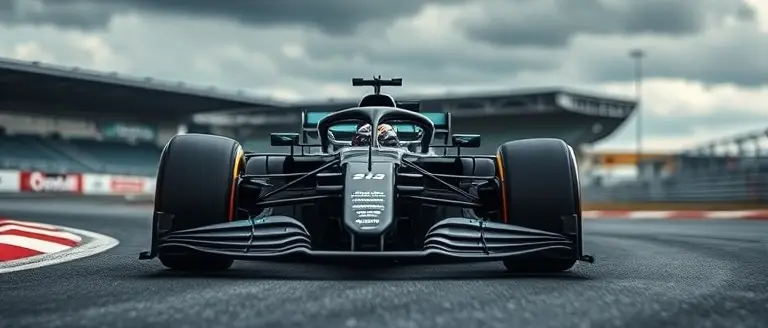
The 2026 Austrian Grand Prix qualifying session reached a fever pitch during the final minutes of Q3, culminating in a sequence of events that has left the Formula 1 community divided. The session, which had been tracking toward a tight battle for the front row, took a dramatic turn when Max Verstappen lost control of his Red Bull, suffering a heavy crash that necessitated an immediate deployment of double-waved yellow flags. This incident effectively halted the momentum of the remaining drivers on track, with the exception of George Russell, who managed to cross the finish line just moments later to secure a highly contentious pole position for Mercedes.
The Sequence of Events and Steward Review
The primary point of contention centers on whether Russell sufficiently reduced his speed in the sector where the incident occurred. Under FIA regulations, a double-waved yellow flag requires drivers to significantly reduce their speed and be prepared to stop. Following the session, the stewards conducted a comprehensive review of the F1 qualifying results and onboard telemetry data to determine if Russell gained an unfair advantage. Despite intense pressure from competing teams and vocal frustration from fans across platforms like Reddit, the stewards concluded that Russell complied with the necessary protocols. Key factors in their decision-making process included:
- Telemetry Analysis: The data provided evidence that Russell lifted off the throttle and applied the brakes before the flag zone.
- Sector Timing: Comparisons were made against his previous laps to evaluate the delta during the affected sector.
- Proximity to the Incident: The stewards assessed the exact timing of the display of the flags relative to Russell’s location on the track.
Ultimately, the ruling confirmed that Russell’s pole position stands, maintaining his place at the front of the grid for the main event. While the George Russell pole controversy continues to fuel debate among fans and analysts—particularly regarding the consistency of officiating—the official standings remain unchanged. This incident serves as a significant case study in the ongoing application of safety regulations during high-stakes qualifying sessions, highlighting the complex interplay between competitive drive and mandatory track safety requirements.
Technical Breakdown: Decoding FIA Yellow Flag Protocols in Q3
The f1 qualifying session at the Austrian Grand Prix has thrust the nuances of the FIA International Sporting Code back into the spotlight. At the heart of the debate surrounding George Russell and his controversial pole position is the interpretation of “double-waved yellow flags.” Under current FIA regulations, a double-waved yellow signal requires drivers to significantly reduce their speed and be prepared to change direction or stop. Race control monitors this compliance through high-fidelity telemetry that records throttle application, braking points, and gear shifts relative to the sector time where the incident occurred.
Telemetry vs. Competitive Momentum
The fundamental conflict in modern f1 qualifying results arises from the physiological and mechanical requirement to keep tires at optimal operating temperatures while simultaneously adhering to safety protocols. In the case of the Verstappen crash in Austria, the data analysis hinges on whether the driver demonstrated a “clear and visible” reduction in speed.
Technical experts evaluate compliance using these key metrics:
- Throttle Lift: Did the driver perform a lift-off-throttle maneuver significantly earlier than their previous, non-flagged laps?
- Braking Input: Was there an immediate application of the brake pedal, or was the braking zone altered to compensate for the hazard?
- Time Delta: Did the driver abort the sector entirely, or did they merely optimize their racing line to bypass the hazard while maintaining high exit speeds?
The challenge for the stewards is that “significantly reduced speed” remains a subjective metric rather than a defined numerical value in the regulations. While fans on platforms like Reddit argue that any time spent accelerating during a yellow sector should result in a lap deletion, the rulebook allows for a degree of nuance. If a driver can demonstrate that they maintained control and bypassed the hazard safely, they are often permitted to keep the lap, provided they were not pushing at absolute maximum capacity through the specific sector of the incident. This creates a recurring tension between safety-first protocols and the ultra-competitive nature of a flying lap.
Precedent vs. Present: Comparing Historical Yellow Flag Rulings

The f1 qualifying session at the 2026 Austrian Grand Prix has reignited a long-standing debate regarding the consistency of FIA steward interventions. When George Russell secured pole position amid the Max Verstappen crash and the subsequent double-waved yellow flags, the incident immediately drew comparisons to historical controversies. In Formula 1, the rule is clear: drivers must significantly reduce speed and be prepared to change direction or stop if necessary. However, the interpretation of “significant” often oscillates between rigid enforcement and subjective leniency, leading to frustration among fans and competitors.
Historical Consistency and Steward Discretion
Comparing this incident to previous rulings reveals a fractured landscape of officiating. For instance, in past seasons, drivers who failed to abandon laps during yellow flags—even when their sector times appeared to show a reduction in speed—have faced grid penalties or the deletion of their fastest lap times. Conversely, there have been high-profile moments where data analysis allowed drivers to maintain their positions if their telemetry indicated a lift-off point that satisfied stewards.
Key factors that complicate these evaluations include:
- Telemetry Verification: Stewards now rely heavily on sensor data rather than just camera angles. If a driver lifts off the throttle at the designated point, they often escape sanction regardless of the absolute lap time.
- Incident Severity: Double-waved yellow flags signify a blocked track, which usually mandates a stricter penalty than single-waved flags.
- Subjectivity in “Meaningful” Reduction: The lack of a universal, standardized time-delta penalty for yellow flags remains a primary source of inconsistency.
The outcome for George Russell suggests that the current officiating team prioritized his clear demonstration of throttle reduction over the fact that he retained a competitive pace through the affected sector. This aligns with a more recent shift toward favoring telemetry-backed evidence over pure optical perception. Nevertheless, as the f1 qualifying results from Austria continue to be analyzed, the gap between these rulings highlights a persistent lack of standardization. Until the FIA introduces a concrete, time-based penalty structure for yellow flag infractions, these contentious decisions will continue to fuel debates over the fairness of the starting grid.
The Court of Public Opinion: Analyzing Fan Sentiment on Grid Fairness

The aftermath of the 2026 Austrian Grand Prix qualifying session has ignited a firestorm across digital platforms, most notably on Reddit’s r/formula1 and various dedicated fan forums. As f1 qualifying results were finalized, a deep rift emerged between the official FIA ruling and the collective perception of the fanbase. Many supporters of Ferrari drivers Charles Leclerc and Lewis Hamilton have voiced significant frustration, arguing that George Russell‘s pole position lacks legitimacy due to his speed through the sector where Max Verstappen crashed. This sentiment is driven by a belief that the current application of yellow flag regulations was applied inconsistently, creating a perceived imbalance in grid fairness.
Digital Forensics and Fan Empowerment
Modern F1 fans are no longer passive observers; they are active analysts. The accessibility of high-definition onboard footage and granular telemetry data has empowered the community to perform their own forensic investigations. By conducting frame-by-frame analyses of the incident, fans are comparing Russell’s delta times against historical precedents and the FIA’s own technical requirements for mandatory deceleration under yellow flags. This trend has created a “court of public opinion” that operates in parallel to the stewards’ office. Key points driving this online debate include:
- Telemetry Comparison: Enthusiasts are mapping Russell’s throttle application against the sector time gaps, claiming his lack of significant speed reduction undermines sporting integrity.
- Historical Precedent: Fans are frequently citing past disqualifications or lap deletions for yellow flag infringements to highlight perceived bias in the George Russell pole controversy.
- Transparency Demands: There is a growing, vocal request for the FIA to publish standardized data after every major incident to prevent the spread of misinformation and social media toxicity.
This shift in data consumption means that official decisions are now subject to immediate, rigorous, and often skeptical scrutiny. While the f1 qualifying results remain unchanged, the intense discourse suggests that the sport must improve its transparency protocols to maintain fan trust, as the digital era has permanently altered the relationship between race control and the global audience.
Master the Data Behind the Drama
The controversy surrounding George Russell’s pole position at the 2026 Austrian Grand Prix serves as a masterclass in the razor-thin margins of Formula 1. While fans debate the yellow flag protocols and the validity of his sector times, the reality remains that elite racing is won in the milliseconds—those fleeting moments where cognitive processing speed and precise execution define success. Whether Russell lifted his foot enough to satisfy the stewards is a matter of forensic debate, but the intensity of the scrutiny highlights the complex, data-driven nature of the sport.
Just as George Russell must analyze telemetry to shave those critical milliseconds off his lap, you need peak cognitive clarity to cut through the noise and decode the technical complexities of modern F1. Being a truly informed fan requires more than just watching the broadcast; it demands the mental agility to process data-heavy reports, compare historical precedents, and form your own evidence-based conclusions. This is where your ability to synthesize high-stakes information becomes your ultimate advantage.
To achieve that level of deep, analytical focus, you need a cognitive edge that mirrors the precision of the grid. By incorporating a routine designed for enhanced mental acuity, you can transform how you engage with the sport—processing complex information with the same speed and accuracy as the top engineers in the paddock. Sharpen your analytical edge and improve your mental clarity to decode the next race with precision—try the 12-minute Brain Song routine today.
 Sharpen your analytical edge and improve your mental clarity to decode the next race with precision—try the 12-minute Brain Song routine today.Unlock My Peak Cognitive Clarity Now!