
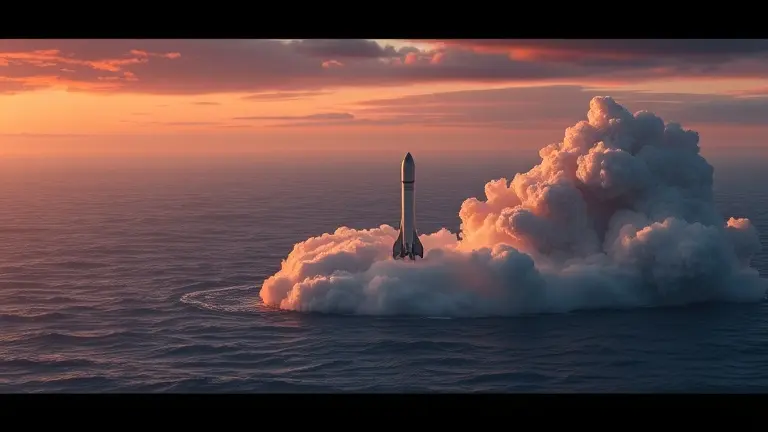
When SpaceX debuted on the public markets on June 12, 2026, it didn’t just ring the bell—it shattered records, raising $75 billion and immediately cementing its status as the most consequential IPO in history. Yet, for the retail investor, the initial euphoria has quickly collided with the brutal reality of extreme post-IPO volatility. With shares swinging wildly amid a broader tech-heavy sell-off and the shadow of a $25 billion bond sale looming, the market has transformed into a high-stakes arena where only the most disciplined participants remain standing.
The current market landscape is a crucible, forcing a direct confrontation between the long-term, visionary mission of space exploration and the immediate, often irrational, movements of macro-economic sentiment. Whether this performance mimics the turbulent early days of Tesla and Nvidia, or sets a new, grimmer precedent for upcoming tech giants like OpenAI, depends on more than just reading charts. To thrive in this environment, investors must stop reacting to the noise and start mastering the cognitive demands of institutional-grade decision-making.
The SpaceX IPO: Analyzing the Historic Debut and Subsequent Volatility

On June 12, 2026, the financial world witnessed a milestone event as SpaceX officially entered the public markets. In what stands as the largest initial public offering in history, the company successfully raised approximately $75 billion, debuting at an offering price of $135 per share. This monumental entry valued the aerospace giant at roughly $1.75 trillion. However, the excitement surrounding the SpaceX initial public offering returns was quickly tempered by the realities of a turbulent macroeconomic environment. In the two weeks following the launch, the stock experienced extreme price swings, characterized by an initial rally followed by a sharp correction that saw shares dip as much as 16% before stabilizing in the $150–$156 range by June 26, 2026.
Drivers of Market Turbulence
The volatility observed during this post-IPO period is not solely a reflection of investor sentiment toward SpaceX; rather, it is a byproduct of several converging factors:
- Broader Tech Sell-off: The debut coincided with a significant cooling of the U.S. tech-heavy indices, which pressured high-growth stocks across the board and dampened the “IPO pop” typically expected with such high-profile listings.
- The $25 Billion Bond Issuance: Shortly after the equity raise, news of an aggressive $25 billion bond sale caught institutional investors off guard. This move triggered widespread skepticism regarding the company’s capital structure and future cash-burn expectations, leading to heightened defensive trading.
- Valuation Concerns: As the market processed the company’s long-term mission against current fiscal realities, many analysts signaled caution, suggesting that the initial valuation priced in years of perfect execution.
This period of instability serves as a critical case study for retail investors. While the long-term outlook remains tied to SpaceX’s dominance in space infrastructure, the short-term market volatility underscores the necessity of distinguishing between the company’s technological potential and the immediate pressures of public market performance. As investors look toward the upcoming inclusion in the Russell 1000 and the Nasdaq 100, the focus has shifted from the initial IPO hype to the structural impact of forced institutional buying and the potential for future price discovery.
Historical Benchmarks: SpaceX vs. The Trajectories of Tesla and Nvidia

To understand the current SpaceX initial public offering returns, one must look beyond the immediate noise of a volatile market and examine the historical blueprint of monumental tech disruptors. When Tesla (TSLA) debuted in 2010 and Nvidia (NVDA) underwent its long-term scaling phase, both experienced severe early-stage turbulence. Tesla, in particular, spent its first several months struggling with skepticism regarding its capital-intensive business model, much like the current concerns surrounding SpaceX’s $75 billion equity raise and subsequent bond issuance. Historically, high-growth, mission-driven companies often face a “digestion period” in their first 30 to 90 days as institutional investors rebalance their portfolios and retail sentiment oscillates between euphoria and fear.
Analyzing Early-Stage Volatility and Growth
Evidence suggests that the current 16% slump observed in SpaceX shares is less of a fundamental failure and more of a characteristic “growing pain” common among category-defining firms. By comparing these trajectories, we see distinct patterns:
- The Valuation Gap: Like Tesla in its early days, SpaceX faces immense pressure to justify its $1.75 trillion valuation against the backdrop of a tech-heavy sell-off.
- Institutional Anchoring: The forced buying from index funds, such as the Russell 1000, provides a floor for stock price stability that retail investors often overlook during periods of panic selling.
- Mission vs. Market: Nvidia’s historical trajectory proves that companies capable of fundamentally altering their respective industries—AI then, space infrastructure now—eventually decouple from short-term macro-economic trends.
While the current volatility is heightened by the sheer scale of the IPO, it mirrors the historical experiences of companies that eventually dominated their sectors. Retail investors should view these fluctuations not as a death knell, but as a classic transition phase for massive market entrants. For those tracking the SpaceX initial public offering returns, the key takeaway from the Nvidia and Tesla playbooks is that technical consolidation is often the precursor to long-term institutional accumulation. The ongoing market adjustment serves as a critical test of the company’s ability to maintain its growth narrative amidst broader economic headwinds.
Bridging the Gap: Long-Term Mission vs. Short-Term Market Realities

The SpaceX initial public offering returns have become a masterclass in the psychological divide between visionary technology and quarterly financial expectations. While the company’s core mission remains firmly anchored in interplanetary travel, the development of Starlink, and the scaling of orbital infrastructure, the stock’s performance since the June 12, 2026, debut has been dictated by macro-economic headwinds and broader tech-sector volatility. For the retail investor, the disparity between the “mission” and the “ticker” is the primary source of current portfolio anxiety. When a company is valued at roughly $1.75 trillion, every price fluctuation is magnified by the scrutiny of institutional algorithms, often obscuring the underlying growth trajectory of the space economy.
Separating Strategy from Sentiment
To navigate the current climate, investors must distinguish between operational milestones and market-driven noise. The recent slump—partly influenced by a wider U.S. tech sell-off—reflects sentiment regarding interest rates and liquidity, not necessarily a failure in SpaceX’s launch cadence or technological dominance. To manage exposure during this volatile period, consider the following strategic framework:
- Focus on Fundamental Milestones: Track SpaceX’s revenue-generating milestones, such as successful Starship missions or Starlink subscriber growth, rather than daily share price movements.
- Contextualize Volatility: Acknowledge that the post-IPO volatility following the $135 offering price is typical for high-growth, “moonshot” companies. Historical data from tech giants often shows deep corrections in the first 90 days of trading.
- Assess the Impact of Indexing: With forced institutional buying pressure expected as the stock enters the Russell 1000 and potentially the Nasdaq 100 in July, temporary price distortions are likely.
- The “Mission” Horizon: If your thesis for holding is based on the multi-decade expansion into space, avoid reactive selling during short-term corrections triggered by macroeconomic sensitivity or bond sale speculation.
Ultimately, the goal is to detach from the immediate emotional cycle of the ticker. While the financial markets may oscillate based on external variables, the foundational growth drivers of SpaceX remain distinct. By treating volatility as an expected feature of a long-term investment rather than a signal to exit, investors can better align their portfolios with the company’s ambitious roadmap.
The Valuation Ripple Effect: Impacts on OpenAI, Anthropic, and the Tech Sector
The SpaceX initial public offering returns have effectively become the industry’s unofficial barometer for assessing market appetite for capital-intensive, high-valuation technology firms. As SpaceX navigated its $1.75 trillion valuation debut, the subsequent price volatility has sent shockwaves through boardrooms at firms like OpenAI and Anthropic. Institutional investors are no longer merely looking at the growth potential of generative AI or orbital infrastructure; they are scrutinizing the ability of these companies to maintain valuation stability in the face of macro-economic pressures and liquidity concerns.
The market’s lukewarm reaction to post-IPO price corrections suggests that the era of “valuation at any cost” has reached a critical juncture. For prospective entrants like OpenAI and Anthropic, the current climate dictates a pivot in strategy:
- Valuation Recalibration: Institutional players are demanding more conservative entry multiples, shifting focus from pure revenue growth to tangible path-to-profitability metrics.
- Liquidity Sensitivity: The recent $25 billion bond sale by SpaceX, occurring shortly after their equity raise, has heightened investor skepticism regarding how much capital these firms truly require to sustain their long-term missions.
- IPO Timing Adjustments: With SpaceX shares experiencing notable swings between $150 and $156, firms preparing for public debuts are likely to delay their timelines to avoid the “valuation drag” currently plaguing the tech-heavy Nasdaq.
Ultimately, the SpaceX debut serves as a stark reminder that even the most innovative firms are subject to broader market sentiment. If the volatility surrounding SpaceX persists throughout its inclusion in the Russell 1000, it will likely force OpenAI and Anthropic to reconsider their capital-raising structures. Investors are now favoring entities that can demonstrate operational resilience over those relying solely on speculative hype, creating a more disciplined—and perhaps more challenging—environment for upcoming tech IPOs.
Mastering the Cognitive Edge in Market Volatility
The path forward for SpaceX investors is not found in chasing daily price swings, but in the analytical rigor applied to the ‘post-mortem’ of these first thirty days. By comparing current performance against historical data points—such as the forced index inclusion effects or the strategic pivots seen in other AI-hyped sectors—we move from guessing to calculating. However, the most vital asset in this endeavor is not the data itself; it is the clarity of the mind that processes it.
Navigating the complexity of hyper-growth IPOs requires immense mental processing capacity. Market noise can easily trigger analysis paralysis, clouding your judgment exactly when you need to be at your sharpest. This is where your cognitive strategy must evolve. The Brain Song is designed to help you filter out the chaos of the ticker tape, providing the mental optimization necessary to maintain a rational, focused, and data-driven perspective amidst high-stakes fluctuations.
By integrating this tool into your research routine, you align your biological performance with your financial goals, ensuring you remain calm while others succumb to speculative panic. The difference between an overwhelmed trader and a master investor often comes down to who has the better handle on their own mental state. Now is the time to sharpen your focus and prepare for the next market cycle with institutional-grade clarity.
 Optimize your analytical focus for the next market cycle by incorporating The Brain Song into your daily research routine.Transform My Cognitive Clarity Today!