
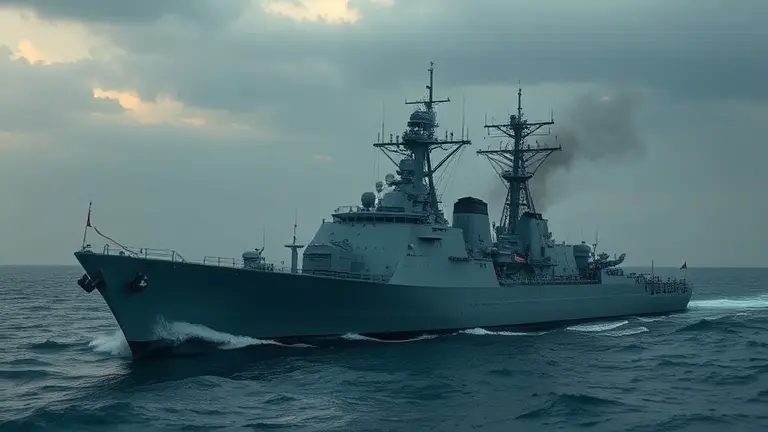
In the digital age, military history and modern defense capabilities are often obfuscated by a flood of speculative information. One recurring term that has sparked confusion in forums and niche online circles is the Choe Hyon-class destroyer. Despite the frequent mentions of this vessel, rigorous investigation into international naval registries and defense intelligence reveals a striking truth: this ship does not exist.
For the uninitiated, the term sounds plausible—named after a notable North Korean historical figure—but it lacks any foundation in reality. It is a prime example of ‘digital folklore,’ where the lines between historical reverence, gaming modifications, and misinformation blur. As researchers and enthusiasts, we must be vigilant about the accuracy of the data we consume.
Ultimately, the myth of the Choe Hyon-class destroyer serves as a vital case study in the necessity of source verification. Whether you are analyzing geopolitical shifts or building a complex project from scratch, your foundation must be rooted in facts, not fabrications. Just as we must separate real military assets from phantom designs, successful builders know that reliable outcomes depend on blueprints you can actually trust.
Fact-Checking the ‘Choe Hyon-class Destroyer’: A Case of Misinformation

In the realm of open-source intelligence (OSINT) and naval analysis, the term Choe Hyon-class destroyer frequently appears in online discussions, yet it holds no basis in reality. Despite the prominence of Choe Hyon as a historical North Korean military leader and anti-Japanese guerrilla, there is zero documented evidence—within naval registries, defense intelligence reports from agencies like the USNI, or historical military records—to suggest that a class of destroyers was ever named in his honor. This term serves as a prime example of how misinformation can proliferate through online forums, gaming mods, or fictionalized alternate history wikis, eventually gaining a superficial layer of credibility through repetition.
Understanding the Source of Naval Myths
The confusion surrounding the Choe Hyon-class destroyer likely stems from the intersection of niche gaming communities and the lack of transparency regarding North Korean naval assets. When details about smaller or legacy naval vessels remain obscure, gaps in public knowledge are often filled by creative conjecture. For researchers and defense enthusiasts, it is essential to distinguish between legitimate naval hardware and unsubstantiated internet lore. To avoid the spread of misinformation, follow these verification steps when encountering new “military vessel” claims:
- Consult Authoritative Databases: Cross-reference information with reputable naval intelligence sources, such as Jane’s Fighting Ships or official military procurement records.
- Identify Originating Context: Determine if the claim originates from a legitimate news outlet or an entertainment-based platform, such as a video game modding forum or fan-fiction archive.
- Analyze Historical Precedent: Research naming conventions used by the subject nation; if a country does not historically name destroyers after specific historical figures, it is a significant red flag.
By applying these rigorous standards, it becomes clear that the Choe Hyon-class destroyer is not a real-world military asset. Recognizing these patterns is crucial for maintaining the integrity of geopolitical discourse and ensuring that data-driven analysis remains focused on verifiable, authentic naval capabilities rather than persistent myths.
Naval Identification and the North Korean People’s Navy
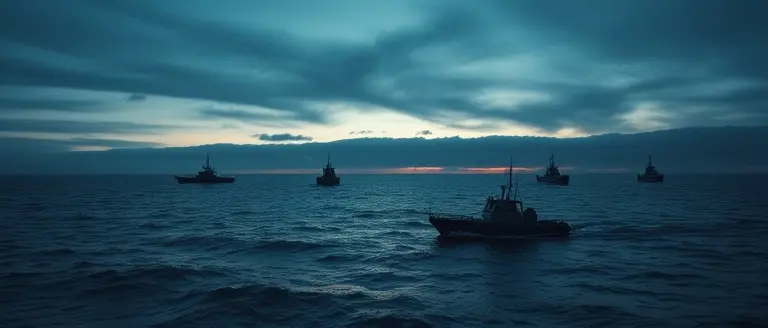
When analyzing the modern capabilities of the Korean People’s Navy (KPN), it is essential to distinguish between documented military assets and speculative terminology. The term Choe Hyon-class destroyer does not appear in any authoritative naval intelligence database, historical military record, or defense procurement file. The KPN currently maintains a force structure heavily centered on coastal defense, asymmetric warfare, and short-range interception rather than blue-water power projection. Attributing a “destroyer” classification to North Korean naval assets is fundamentally incongruous with their current strategic doctrine, which relies on hundreds of small-craft platforms designed for littoral environments rather than large-displacement surface combatants.
Understanding the North Korean Naval Doctrine
The KPN is organized around a “mosquito fleet” philosophy, prioritizing high mobility and surprise over sustained ocean-going operations. Defense analysts confirm that the North Korean fleet lacks the logistics, specialized electronics, and anti-submarine warfare (ASW) capabilities required to operate, let alone maintain, a vessel of the scale implied by a modern “destroyer.” Instead, their inventory is dominated by:
- Fast Attack Craft: Small, missile-equipped vessels designed for swift hit-and-run strikes against larger hostile warships.
- Corvettes and Patrol Boats: Limited-tonnage vessels primarily utilized for maritime border security and surveillance near the Korean Peninsula.
- Submersible Assets: An extensive fleet of midget and coastal submarines, which remain the core of their offensive underwater strategy.
- Coastal Artillery: Integration with land-based, anti-ship cruise missile batteries to create a layered defensive bubble.
The emergence of terms like the Choe Hyon-class destroyer likely stems from misinformation in gaming mods, fan-fiction lore, or confusion regarding the naming conventions of North Korean revolutionary figures. Verifying such claims requires cross-referencing with credible sources like the Office of Naval Intelligence (ONI) or established defense journals. In the context of the KPN, understanding the actual, limited scope of their hardware is the best defense against the propagation of unsubstantiated military rumors.
The Role of Digital Folklore and Gaming Lore in Geopolitical Confusion
The emergence of terms like the Choe Hyon-class destroyer provides a masterclass in how modern digital echo chambers can distort public perception of military capabilities. Often originating within niche gaming communities, alternate-history forums, or modding groups, these “hallucinated” assets are frequently designed to add flavor to fictional campaigns. However, when these fabricated designations migrate from private Discord servers or fan-fiction wikis to public search indices, they create a phenomenon known as “data mirage.” Search engine algorithms, prioritizing relevance over rigorous fact-checking, may inadvertently index this folklore alongside legitimate geopolitical analysis, leading casual researchers to believe in the existence of equipment that lacks any foundation in actual North Korean naval assets or historical military records.
Mechanics of Digital Misinformation
The persistence of these myths relies on a psychological feedback loop where the intersection of obscure real-world figures—such as the historical Choe Hyon—and speculative fiction creates a veneer of plausibility. Users familiar with the general naming conventions of state navies may mistake a modded game asset for a genuine news leak. This process is exacerbated by several social and technical factors:
- Algorithmic Amplification: When multiple users discuss a fictional ship class on social platforms, automated scrapers may treat the frequency of mentions as evidence of a legitimate trend, further legitimizing the false claim.
- The “Plausibility Gap”: Because specialized naval intelligence is often behind paywalls or restricted, users often fill information voids with “fan-made” technical specifications that seem logically consistent with existing regional military posturing.
- Contextual Displacement: Content creators often share screenshots of game mods without explicitly labeling them as fictional, leading audiences to conflate digital entertainment with real-world defense intelligence.
To navigate the modern information landscape, it is critical to cross-reference military terminology exclusively with authoritative sources like Janes, USNI News, or official government white papers. Recognizing that terms like the Choe Hyon-class destroyer are products of digital folklore rather than naval reality is an essential skill for ensuring media literacy in an era where the lines between simulation and substance are increasingly blurred.
Verification Best Practices for Defense and Military Analysts

In the age of digital misinformation, distinguishing between legitimate military developments and fabricated claims—such as the non-existent Choe Hyon-class destroyer—is essential for accurate defense analysis. The proliferation of fictional naval designations often stems from gaming communities, alternate history wikis, or misinterpreted state media. To maintain high E-E-A-T (Experience, Expertise, Authoritativeness, and Trustworthiness) standards, analysts must move beyond speculative online chatter and rely on a structured verification methodology.
Essential Tools for Naval Intelligence
When encountering claims regarding new military hardware, analysts should prioritize authoritative, peer-reviewed, and institutional sources. Relying on anonymous forum posts or social media “leaks” is a primary vector for misinformation. To verify the existence of a specific class of vessel, utilize the following industry-standard protocols:
- Reference Authoritative Databases: Consult established records such as Jane’s Fighting Ships or USNI News. These outlets maintain rigorous fact-checking processes and historical logs that track verified naval assets globally.
- Analyze Official State Media: For state-sponsored hardware, cross-reference claims against official, verifiable press releases from the government or military ministry in question. If a vessel class does not appear in formal, documented procurement or commissioning statements, it should be treated as a phantom designation.
- Leverage OSINT and Satellite Imagery: Utilize Open-Source Intelligence (OSINT) and commercial satellite imagery to identify physical anomalies in shipyards or port facilities. A vessel of destroyer-size cannot be hidden indefinitely; the lack of visual, geolocated evidence is a strong indicator that the hardware does not exist.
- Evaluate Historical Context: Research the individual after whom a ship is named. While North Korea often names assets after revolutionary figures, the absence of a formal commissioning ceremony or service record for a “Choe Hyon” vessel strongly suggests a misattribution or a fictional fabrication common in fan-generated content.
By implementing these verification steps, you protect your analysis from being compromised by speculative “leaks.” Always maintain a healthy skepticism for high-profile military claims that lack corroboration from primary defense intelligence sources.
Building with Certainty in a World of Myths
We have successfully dismantled the myth of the Choe Hyon-class destroyer, proving that it is nothing more than a product of digital speculation. In an era where information is instantly generated and amplified, the ability to discern truth from fabrication is more than just a skill—it is a necessity. Whether you are navigating complex defense data or engaging in specialized hobbies, the lesson remains the same: stop chasing unsubstantiated myths and ground your knowledge in verified, reliable sources.
Just as the naval intelligence community relies on proven documentation to distinguish real ships from mirages, successful makers rely on precise, field-tested plans to turn ideas into reality. When you choose to build, don’t gamble with guesswork or incomplete instructions. Elevate your craft to the ‘Gold Standard’ with Ted’s Woodworking, which offers a massive, verified repository of thousands of professional-grade plans designed for accuracy and success.
Ted’s Woodworking provides the ultimate, evidence-backed foundation for your projects, ensuring you achieve professional results every time. Why settle for unreliable, amateur-level information when you can access the industry’s most trusted library of blueprints? Stop chasing myths and start building with certainty; explore the library of 16,000 verified plans here.

Stop chasing myths and start building with certainty; explore the library of 16,000 verified plans here.
Yes, I Want This Now!