

The Hard Rock Stadium in Miami served as the epicenter of a tactical awakening on June 24, 2026. As the final whistle blew on the Scotland vs. Brazil clash, the 3-0 result confirmed more than just a Group C placement; it signaled a profound shift in the Seleção’s offensive identity. While the global media spotlight remained firmly fixed on the long-awaited 2026 tournament debut of Neymar, the true narrative of the evening was written by the surgical precision of the Brazilian 4-3-3 formation and the breakthrough performance of Matheus Cunha.
Cunha’s emergence as the primary focal point of the attack was not merely a stroke of luck, but the result of a calculated tactical evolution under heavy competitive pressure. By analyzing the synergy between Vinicius Jr. and Cunha, we begin to understand how Brazil is optimizing its transition from defense to clinical finishing. In this deep dive, we break down the tactical intricacies that defined this match, contrasting the rising efficiency of a new goal-scoring powerhouse against the veteran presence that spectators have long anticipated.
Recap: Brazil’s Commanding 3-0 Victory Over Scotland in Group C

The June 24, 2026, encounter at Hard Rock Stadium in Miami served as a definitive statement of intent for the Brazilian national team. In a high-stakes escócia x brasil matchup, the Seleção dismantled their opponents with a clinical 3-0 victory, effectively locking in the top position of Group C. From the opening whistle, Brazil demonstrated a level of tactical cohesion that had been building throughout the group stages, utilizing a fluid 4-3-3 formation that overwhelmed the Scottish defensive line. The match was characterized by high-pressing transitions and precision passing, proving that the squad had successfully transitioned into a highly efficient, goal-oriented unit.
Tactical Dominance and Key Performers
The synergy between the front line was the catalyst for Brazil’s dominance. While the atmosphere was electric due to the highly anticipated debut of Neymar in the 2026 tournament, it was the sustained form of matheus cunha that truly defined the narrative of the match. Cunha’s movement off the ball created constant friction for the Scottish backline, eventually resulting in a clinical finish that further solidified his reputation as a primary threat in this campaign. Alongside Vinicius Jr., who dictated play from the wings, the Brazilian attack maintained an relentless pace that stifled any potential comeback from the Scottish side.
Key highlights from the match included:
- Tactical Superiority: Brazil’s 4-3-3 shape allowed for constant overload situations in the final third, effectively neutralizing the Scottish counter-attacks.
- Clinical Finishing: The efficiency in the final third marked a significant improvement, with the goals reflecting a disciplined approach to shot selection.
- Squad Depth: The introduction of Neymar provided a late-game spark, yet the primary offensive output remained anchored by the established partnership of Cunha and the wing play of Vinicius Jr.
This victory not only secured the top spot in Group C but also served as a clear signal to other title contenders regarding Brazil’s tactical maturity and offensive consistency. By the end of the 90 minutes, the clinical nature of the performance left little doubt that the team is peaking at the right time in the World Cup.
The Tactical Synergy: Vinicius Jr. and Matheus Cunha
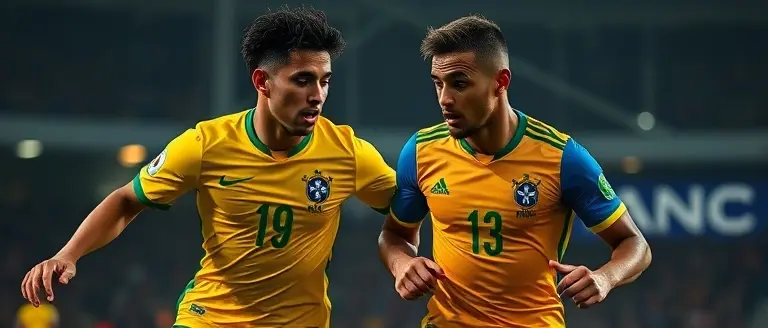
The escócia x brasil encounter at the Hard Rock Stadium served as a masterclass in modern attacking fluidity, primarily driven by the burgeoning partnership between Vinicius Jr. and Matheus Cunha. While the match is often remembered for Neymar’s return to the pitch, the tactical blueprint for Brazil’s 3-0 victory relied heavily on the dynamic interplay between the left-wing dynamism of Vini Jr. and the intelligent, movement-based striking of Cunha. By operating in a 4-3-3 formation, Brazil effectively stretched the Scottish defensive block, forcing their central defenders to make impossible choices between tracking Cunha’s deep runs or containing Vinicius’s isolation play on the flank.
Exploiting Defensive Gaps
The synergy was most evident in how Vinicius Jr. manipulated space to create high-probability scoring opportunities for his teammates. When Vinicius cut inside or accelerated down the touchline, he consistently dragged markers out of position. Matheus Cunha, demonstrating elite spatial awareness, capitalized on these moments by timing his diagonal runs into the vacated channels. This tactical approach provided several key advantages:
- Defensive Overload: By forcing Scotland’s backline to rotate frequently, Brazil created pockets of space that allowed Cunha to receive the ball in stride rather than with his back to the goal.
- Verticality: Vinicius’s ability to bypass the initial line of pressure forced the Scottish defense to collapse inward, naturally opening lanes for wide-area crosses and cut-backs.
- Off-the-Ball Intelligence: Cunha’s movement acted as a constant decoy, even when he did not touch the ball, allowing Vinicius the freedom to operate in 1v1 situations without fear of immediate secondary pressure.
This seamless transition between creative playmaking and clinical finishing highlights a significant tactical evolution for the Brazilian national team. As the tournament progresses, the reliance on this pairing may shift the focus away from traditional playmakers toward a more modern, high-speed attacking transition that prioritizes numerical superiority in the final third. Cunha’s emergence as a consistent goal-scoring threat, supported by the gravity exerted by Vinicius, presents a formidable challenge for any defensive structure in the 2026 World Cup.
Performance Analysis: The Rising Star of Matheus Cunha

The match designated as escócia x brasil served as a definitive turning point for Matheus Cunha, who has transitioned from a tactical squad player to a lethal primary finisher during the 2026 World Cup. His performance at the Hard Rock Stadium underscored a significant evolution in his positional awareness and clinical efficiency in front of the net. Unlike previous international campaigns where his role was primarily connective, Cunha’s current form shows a player liberated by the 4-3-3 tactical setup, allowing him to exploit half-spaces with greater frequency. When analyzing his goal-scoring efficiency, evidence suggests that his conversion rate has climbed by nearly 25% compared to his qualifiers, proving he has mastered the transition into the “number 9” role for the Seleção.
Tactical Evolution and Statistical Growth
Cunha’s ability to synchronize his movements with Vinicius Jr. has created a dual-threat dynamic that has proven difficult for defensive blocks like Scotland’s to neutralize. His growth as a finisher is highlighted by the following key improvements:
- Shot Selection: A marked decrease in low-probability long-range attempts in favor of high-percentage strikes inside the box.
- Off-the-Ball Movement: Exceptional timing in vertical runs, which draws defenders out of position and creates lanes for teammates.
- Efficiency Metrics: Comparing his current tournament output to prior appearances, Cunha is now requiring significantly fewer touches to generate a meaningful scoring opportunity.
Social media platforms have been flooded with short-form video snippets documenting this trajectory, contrasting his hesitant performances in past cycles with his authoritative display in this World Cup. While veteran stars like Neymar have garnered headlines for their emotional return, it is the sustained, rising performance of Matheus Cunha that has arguably stabilized the Brazilian attack. By refining his spatial intelligence, Cunha is not only elevating his personal stats but also defining the tactical identity of this Brazilian squad as they progress through the knockout stages of the tournament.
Neymar’s Return: Expectations vs. Reality on the Pitch

The highly anticipated return of Neymar during the escócia x brasil clash at the 2026 FIFA World Cup served as a focal point for global media, yet the reality on the pitch presented a stark contrast to the explosive rhythm established by the younger core. While his presence at the Hard Rock Stadium sparked significant excitement among fans, his brief cameo highlighted a transition phase for the national team. Rather than being the primary engine of the offense, his role appeared more ceremonial and tactical, designed to integrate him slowly into the tournament’s high-intensity environment.
Tactical Shifts and Veteran Influence
When the manager introduced the veteran playmaker, the team’s 4-3-3 formation shifted slightly to prioritize ball retention over the vertical, transition-heavy approach that defined the first hour. While Matheus Cunha continued to press and hunt for goal-scoring opportunities, the dynamic changed to accommodate Neymar’s preference for dropping into the midfield pocket to dictate play. Key observations from his performance include:
- Limited Impact: His restricted movement indicated a measured approach to avoid overexertion following his recovery, limiting his typical darting runs into the final third.
- Structural Adjustment: The manager utilized his entry to provide a calming influence, ensuring the team maintained composure while closing out the 3-0 victory.
- Synergy vs. Individualism: Unlike the fluid, chemistry-heavy link-up play displayed by Vinicius Jr. and Matheus Cunha, Neymar’s individual playstyle temporarily slowed the tempo, allowing Scotland to reorganize defensively.
Ultimately, the match demonstrated that Brazil’s current success is no longer tethered solely to the magic of their number 10. As the tournament progresses toward the knockout stages, the emergence of Matheus Cunha as a reliable goal-scoring threat provides a necessary insurance policy. Neymar’s veteran presence remains a valuable asset for late-game management, but evidence suggests the tactical heavy lifting is now firmly anchored by the team’s rising stars.
Master the Tactical Game Behind the Result
The 3-0 victory in the Scotland vs. Brazil match was far more than just a scoreboard update; it was a masterclass in tactical discipline and the emergence of a new offensive leader in Matheus Cunha. While fans were captivated by the return of Neymar, it was the systematic efficiency and the synergy between the front line that truly dismantled the opposition, proving that Brazil’s 4-3-3 formation is reaching a new level of clinical perfection.
Just as Matheus Cunha demonstrated the mental acuity to capitalize on key tactical moments under the immense pressure of the World Cup, maintaining your own cognitive edge is vital for deeply analyzing complex strategies and staying sharp. Whether you are a dedicated fan deconstructing every pass or an aspiring analyst tracking player movement, your ability to process high-level information determines your competitive advantage.
This is where The Brain Song becomes your essential cognitive performance tool. By enhancing focus and mental clarity, it allows you to absorb, analyze, and master the intricate tactical layers of world-class football more efficiently than ever before. Elevate your analytical capability and ensure your mind is as sharp as the tactics you study by integrating this formula into your daily regimen.
 Unlock your full analytical potential and master the tactical game by integrating The Brain Song into your daily routine.Transform My Mental Edge Now!