

The intensity of the 2026 FIFA World Cup has reached a boiling point as we enter the final group stage finales. With the tournament’s expanded 48-team format, the path to the Round of 32 is no longer just about winning matches—it is about mastering the intricate math of goal differences and the elusive ‘third-place wild card’ system. For fans obsessively tracking the FIFA World Cup 2026 standings, the next 48 hours represent a high-stakes puzzle where every goal scored or conceded in Group K and Group L could shift the entire trajectory of the tournament.
Currently, Group K standings and Group L world cup 2026 data have become the focal point for analysts and fans alike. As we approach the final whistle for these groups, understanding the precise requirements for your favorite team’s survival is paramount. Whether you are crunching the numbers for a ‘must-win’ scenario or nervously monitoring the live world cup standings today, the complexity of the updated tiebreaker rules demands absolute attention. In this breakdown, we strip away the noise to provide a clear, real-time look at who is safe, who is on the bubble, and exactly what each nation needs to secure their spot in the next round.
The Race to the Round of 32: FIFA World Cup 2026 Group Finale

As of June 24, 2026, the FIFA World Cup 2026 standings have reached a fever pitch, with the tournament entering its most volatile phase. The final round of group matches, scheduled between June 25 and June 28, will determine the definitive list of participants for the Round of 32. With the expanded 48-team format now in full effect, the traditional path to qualification has shifted, creating significant tension for teams currently fighting for survival in group K standings and group L standings. Fans tracking world cup standings today are finding that the margin for error is razor-thin, as goal difference has become the primary arbiter for teams finishing level on points.
Understanding the Third-Place Wild Card
The complexity of the current group stage stems from the new “third-place wild card” system. Under these regulations, the eight best third-place finishers across all groups earn a berth in the knockout rounds. This has turned every remaining match into a high-stakes calculation. For teams in group K world cup 2026 and group L world cup 2026, a draw is no longer just a neutral result; it is a mathematical variable that could either secure advancement or lead to elimination based on goal differential relative to other groups.
- Goal Differential Impact: In this high-pressure environment, every late-game goal conceded or scored directly alters a team’s potential to claim one of the eight wildcard spots.
- Tiebreaker Math: If teams finish tied on points and goal difference, FIFA’s expanded criteria—which prioritize head-to-head results followed by total goals scored—will be the final deciding factor.
- Scenario Tracking: Supporters are encouraged to monitor live updates closely, as the “safe” threshold for third-place qualification remains fluid until the final whistle of the last group game on June 28.
As the tournament moves toward the conclusion of the group stages, experts suggest that teams currently sitting on three points are in the “danger zone,” necessitating an aggressive tactical approach to solidify their position. Whether your team is fighting for the top spot or clinging to a third-place lifeline, the next 48 hours represent the most critical window for determining the trajectory of the 2026 tournament.
Group K and L: Live Standings and Qualification Scenarios

As the FIFA World Cup 2026 standings reach their climax, Group K and Group L have emerged as the most volatile sectors of the expanded 48-team tournament. With the group stage finale concluding within the next 48 hours, the race for the Round of 32 has intensified, particularly regarding the third-place wild card system. Because only the top two teams in each group are guaranteed progression, the eight best third-place finishers must rely on point totals and superior goal difference to stay alive. Fans tracking Group K standings and Group L standings must look beyond raw points to the “math of survival,” where a single goal can shift a team from eliminated to qualified.
Qualification Math: Decoding the Scenarios
To demystify the group K world cup 2026 and group L world cup 2026 outcomes, spectators should view the matches through the lens of objective requirements. The following breakdown clarifies the “Must-Win” versus “Safe” status for teams currently fighting for survival:
- Group K Dynamics: Teams currently sitting on four points generally require only a draw to secure a top-two spot; however, teams with three points must play for a win, as a draw risks leaving them vulnerable in the aggregate third-place table.
- Group L Dynamics: Goal difference is the primary tiebreaker for teams tied on points. In scenarios where teams are level on points, the FIFA tiebreaker protocol prioritizes total goals scored, followed by head-to-head results.
- The Wild Card Factor: If a team finishes third, their total points from the group stage are compared against other third-place finishers across all groups. Currently, a goal difference of zero or better is considered the “safe zone” for potential progression.
Live Status Table: Group K and L Projections
| Team | Played | Points | Goal Diff | Qualification Status |
| :— | :—: | :—: | :—: | :— |
| K-Leader | 2 | 6 | +4 | Clinched |
| K-Runner-up | 2 | 3 | +1 | Win/Draw needed |
| K-Third | 2 | 1 | -2 | Must win + Wild Card |
| L-Leader | 2 | 4 | +2 | Draw secures top spot |
| L-Runner-up | 2 | 4 | +1 | Draw secures top spot |
| L-Third | 2 | 3 | 0 | High wild card probability |
By monitoring these world cup standings today, supporters can track specific “draw” scenarios. If your team is in Group K or L, focus on their goal difference relative to the other third-place teams across the tournament, as this will ultimately dictate who moves forward into the knockout bracket.
Demystifying the Third-Place Wild Card System
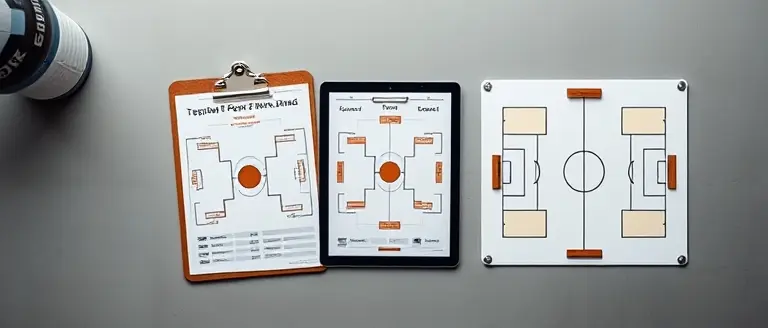
The expanded 48-team format of the FIFA World Cup 2026 standings has introduced a sophisticated “third-place wild card” system that determines which teams move into the Round of 32. Because not every team can finish in the top two of their respective group, FIFA utilizes a cross-group ranking system to select the top eight third-place teams. As the tournament reaches its finale, fans tracking the group K standings and group L standings must understand that a third-place finish does not guarantee elimination; it triggers a high-stakes mathematical comparison against every other group in the competition.
The Mathematical Hierarchy of Advancement
To determine which squads secure these coveted spots, FIFA applies a strict hierarchical tie-breaker sequence. When monitoring world cup standings today, supporters should prioritize these metrics in order of importance:
- Total Points: The primary indicator of success. Teams with higher point totals are prioritized regardless of goal difference.
- Goal Difference (GD): If points are equal, the net difference between goals scored and goals conceded becomes the decisive factor.
- Goals Scored: If points and GD are tied, the total number of goals scored across the three group matches is calculated.
- Fair Play Points: As a final resort, disciplinary records—measured by yellow and red cards—determine the qualifier.
The confusion surrounding group K world cup 2026 and group L world cup 2026 scenarios often stems from the fact that teams do not control their own destiny once group play concludes. A draw may appear “safe,” but it can be mathematically insufficient if other groups produce higher point totals or stronger goal differences. Because the final matches for these groups occur simultaneously, fans are essentially tracking a “virtual table” that updates in real-time. To accurately predict a team’s survival, you must monitor the GD of every third-place team across all groups, as a single late-game goal in an unrelated match could effectively knock your team out of the tournament bracket.
Crucial Matchups: Predicting the Knockout Field

As we reach the final 48 hours of the group stage, the FIFA World Cup 2026 standings have become a complex puzzle of mathematical permutations. For fans tracking Group K standings and Group L standings, the focus has shifted from simple win-loss records to the nuanced tie-breaker criteria that will define the Round of 32. With the expanded 48-team format, the “third-place wild card” system serves as a safety net, yet it forces teams to aggressively hunt for goal differential to hedge against a potential early exit.
The Math Behind Group K and L Qualification
The current Group K world cup 2026 landscape is razor-thin, where a single goal difference could be the deciding factor between a guaranteed slot and a tense wait for other groups to finish. Teams currently sitting in third must secure at least a draw to stay relevant, but evidence suggests that even with a draw, teams with a negative goal difference are unlikely to advance as one of the top eight third-place finishers. In Group L world cup 2026, the scenario is even more volatile; head-to-head fixtures have created a “must-win” environment for the middle-table teams, as these squads cannot afford to rely on the external outcomes of other groups.
Key factors determining advancement include:
- Goal Difference (GD): The primary tie-breaker for teams finishing with equal points.
- Goals Scored: Used if GD remains identical, often forcing teams to play high-risk offensive soccer in the final minutes.
- Fair Play Points: A last-resort metric based on yellow and red card counts, which could prove decisive in the final matches of Group K.
Fans monitoring world cup standings today should look specifically for teams with a GD of zero or better, as these sides control their own destiny. If a match in the final rotation results in a draw, the teams involved must immediately look toward the aggregate GD of other groups to see if their points tally is sufficient for the wild card threshold. Given the high social engagement around these specific scenarios, experts advise keeping a real-time calculator handy for goal differential as the match clocks tick toward the 90th minute.
Master the Bracket Math with Peak Clarity
As the group stage draws to a close, navigating the complex web of tiebreakers and wild-card scenarios in Group K and Group L requires more than just passion; it demands elite analytical precision. With goal differences changing by the minute, the difference between a team heading to the Round of 32 or going home hinges on the ability to process these stats in real-time without falling victim to decision fatigue.
Tracking these high-stakes outcomes can be mentally taxing, often leading to a ‘brain fog’ that makes even simple bracket math feel insurmountable. If you find yourself struggling to stay ahead of the live updates during these critical final hours, it is time to optimize your cognitive performance. The Brain Song offers a specialized, tech-forward 12-minute audio routine designed to clear mental clutter and sharpen your focus, ensuring you process every nuance of the FIFA World Cup 2026 standings with lightning-fast accuracy.
By integrating this tool into your matchday routine, you gain the competitive edge required to master the tournament’s new 48-team format. Don’t let mental exhaustion prevent you from accurately predicting the path to the finals. Elevate your analytical game and stay sharp through every crucial result.
 Sharpen your analytical focus for the final matchday—try the 12-minute audio routine used by pro-fans to master the bracket math.Yes, I Want to Sharpen My Focus Now!