
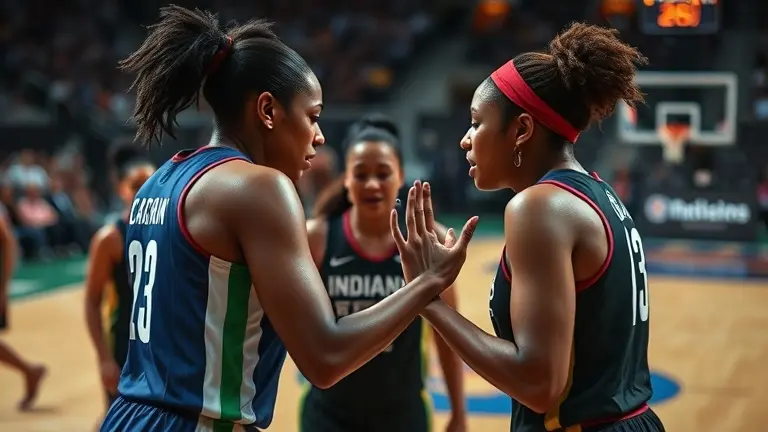
The intensity of the 2026 WNBA season reached a fever pitch on June 22 when a routine post-up play between Indiana Fever’s Caitlin Clark and Phoenix Mercury’s DeWanna Bonner devolved into a league-wide talking point. What began as a physical battle under the basket quickly escalated, resulting in five technical fouls and leaving fans and analysts alike scrambling to understand the implications. With Clark now hovering precariously close to a mandatory one-game suspension, the incident has ignited a fierce debate regarding officiating consistency and whether the league’s rising star is being unfairly targeted by the whistle.
However, beneath the sensationalist headlines and the social media firestorm lies a crucial, often misunderstood reality: the WNBA’s technical foul threshold. As we navigate the complexities of the 2026 officiating trends, it is imperative to look past the emotion and examine the rules that dictate the pace and physicality of the game. In this analysis, we will break down the specific policies governing player conduct and evaluate if the current officiating climate is truly a systemic shift or simply the natural evolution of a high-pressure, elite-level sports environment.
Breaking Down the June 22 Fever-Mercury Incident
The tension during the June 22, 2026, matchup between the Indiana Fever and the Phoenix Mercury reached a boiling point in the fourth quarter, transforming a standard competitive game into a volatile display of league-wide physicality. The Caitlin Clark DeWanna Bonner altercation began when officials assessed a defensive foul against Clark while she was attempting to navigate Bonner’s post-up positioning. What initially appeared to be a routine play quickly escalated into a heated verbal confrontation, drawing players from both benches into the fray. The intensity of the interaction was underscored by the chaotic aftermath, which saw referees issue a total of five technical fouls across both squads as they struggled to maintain control of the game’s momentum.
Escalation and Officiating Fallout
The severity of the incident was compounded by the subsequent fallout regarding league discipline. This specific event resulted in Caitlin Clark receiving her fifth technical foul of the 2026 WNBA season, placing her in a precarious position regarding the league’s disciplinary thresholds. Following the final buzzer, Clark did not shy away from expressing her frustration regarding the officiating crew’s decision-making process. In post-game remarks, she openly labeled the assessment of the technical fouls as “ridiculous,” a sentiment that has since ignited a firestorm of debate across social media platforms like Reddit and major sports news outlets.
Key elements of the incident included:
- The Trigger: A contested defensive foul call during a critical fourth-quarter post-up play.
- The Penalty: A flurry of administrative action resulting in five total technical fouls assessed to players involved in the skirmish.
- League Impact: Clark’s mounting technical foul count, which has moved the star guard dangerously close to a mandatory one-game suspension.
- Player Involvement: Significant participation from other key players, including Sophie Cunningham, who became central to the disputes surrounding the initial call.
This matchup has reignited long-standing conversations among fans and analysts about the current level of physicality allowed in the WNBA. While proponents argue that the game’s intensity is a natural evolution of professional play, critics are increasingly questioning whether the current officiating trends are inconsistently applying rules to star-caliber athletes, thereby influencing game outcomes through disciplinary intervention.
The WNBA Technical Foul Policy Explained

Understanding the league’s disciplinary framework is essential to grasping the intensity surrounding the Caitlin Clark DeWanna Bonner altercation. The WNBA maintains a strict cumulative system for technical fouls designed to discourage unsportsmanlike conduct and maintain order on the court. During the regular season, players are monitored closely, and once a specific threshold of technical fouls is reached, the league mandates automatic penalties, including fines and potential game suspensions.
How Technical Foul Accumulation Works
The WNBA rulebook stipulates that for the first seven technical fouls assessed to a player during the regular season, the player is subject to a fine. However, the stakes escalate significantly once a player reaches that critical threshold. According to current regulations:
- Fines: Each of the first seven technical fouls results in a monetary fine.
- Suspension Trigger: Upon receiving the seventh technical foul, a player is automatically suspended for one game.
- Subsequent Penalties: Following the initial suspension, every two additional technical fouls (the 9th, 11th, etc.) result in further one-game suspensions.
The recent incident, which saw Caitlin Clark receive her fifth technical foul of the 2026 season, highlights how quickly stars can approach the danger zone. While casual fans often view these calls as subjective, the league’s officiating crews are tasked with maintaining a consistent application of these rules to prevent game-altering disruptions. As the season progresses, the cumulative count becomes a major focal point for coaching staffs, who must manage their players’ on-court temperaments to ensure they remain eligible for high-stakes matchups.
Why the Policy Matters
The debate sparked by the Caitlin Clark DeWanna Bonner altercation underscores the tension between physical defensive play and technical officiating. When star players reach their fifth or sixth tech, their aggressive style of play is inadvertently curtailed by the threat of a suspension. This creates a challenging dynamic where officials must balance the enforcement of the WNBA technical foul policy with the league’s desire to allow for a physical, competitive brand of basketball. For players like Clark, navigating this threshold is as much a part of their professional development as mastering their offensive skill sets.
Star Power and Officiating: A Growing Tension
The 2026 WNBA season has brought the inherent tension between star power and officiating to the forefront, particularly following the highly publicized caitlin clark dewanna bonner altercation. As the league experiences unprecedented growth, the level of physicality on the court has become a central point of contention. For elite players like Clark, who serve as the league’s primary ambassadors, the increased defensive intensity—often characterized by aggressive post-ups and hard screens—raises legitimate questions about how officials balance “playoff-style” basketball with the mandate to protect the game’s brightest faces.
The Challenge of League-Wide Consistency
The recent flashpoint involving Clark and Bonner highlights the difficulty officials face in maintaining a consistent standard across a high-octane 40-minute contest. Critics often argue that high-profile rookies are “targeted” by veterans testing their composure, while the league maintains that officiating standards remain uniform across the roster. The incident, which resulted in five total technical fouls, illustrates the ripple effect such confrontations have on game flow and player availability. Several key factors contribute to this growing friction:
- Veterans Testing Rookies: Established stars are naturally physical with high-profile rookies to disrupt rhythm, often pushing the boundaries of legal contact.
- Officiating Thresholds: The pressure on referees to manage game emotions often leads to “quick whistle” scenarios, which can negatively impact star players nearing suspension thresholds.
- Media and Fan Scrutiny: Increased visibility means every controversial call is dissected on social media, fueling narratives about potential bias or league-wide inconsistencies.
Ultimately, the WNBA is grappling with the evolution of its brand. While the league promotes competitive, hard-nosed basketball, the mounting concern is that constant altercations and subsequent technical fouls distract from the skill-based narrative that helped the sport reach its current peak. Striking the right balance is no longer just about fairness; it is about protecting the viability and star-driven appeal of the professional product.
Assessing the Cumulative Impact on Playoff Seeding
The caitlin clark dewanna bonner altercation has sparked a wider conversation regarding how the WNBA’s disciplinary structure directly influences team success during the home stretch of the regular season. For a franchise like the Indiana Fever, the prospect of a mandatory one-game suspension for a cornerstone player is not merely a disciplinary footnote—it represents a significant strategic risk. In a league where playoff seeding is often decided by a razor-thin margin, the absence of a primary playmaker or leading scorer can jeopardize a team’s position in the standings, potentially shifting home-court advantage or determining a favorable first-round matchup.
Navigating the Technical Foul Threshold
The current disciplinary framework, which mandates a suspension upon the accumulation of a specific number of technical fouls, forces players into a delicate balancing act. To remain eligible, stars like Clark must recalibrate their on-court communication and defensive aggression. This often leads to:
- Diminished Defensive Intensity: Players may hesitate to challenge physical plays or contest aggressive drives to avoid drawing the ire of officials.
- Communication Constraints: The fear of a “disrespecting the game” or “dissent” call often stifles a player’s ability to advocate for themselves or lead teammates effectively during high-stakes moments.
- Strategic Vulnerability: Opponents may exploit a player’s “tech-sensitive” status, intentionally playing with increased physicality to bait the star into an emotional reaction that risks a suspension.
Whether this policy serves as a necessary deterrent for professional conduct or an impediment to the natural flow of basketball remains a point of intense debate. While the WNBA aims to maintain order, evidence suggests that the cumulative nature of these calls can disproportionately impact high-usage players who are naturally more involved in heated, high-intensity sequences. As the season progresses, the league’s officiating consistency will be under a microscope, as fans and analysts weigh the necessity of these rules against the need for stars to remain on the court during the most critical games of the year.
Mastering the Rules and Your Focus
The recent altercation between Caitlin Clark and DeWanna Bonner is more than a fleeting sports headline; it is a clear symptom of the high-stakes environment in the 2026 WNBA season. As we have dissected, the tension on the court is matched only by the complexity of the officiating rules. Understanding the cumulative weight of technical fouls is essential for any fan who wants to look past the media noise and truly appreciate the professional, tactical game unfolding on the hardwood.
Just as athletes like Caitlin Clark must maintain extreme mental focus under the pressure of tight officiating, you need a clear, uncluttered mind to navigate the nuances of the WNBA rulebook without succumbing to the mental fatigue of typical, emotionally charged sports debates. Whether you are analyzing officiating trends or keeping track of league thresholds, cognitive clarity is your greatest asset.
This is where The Brain Song becomes your essential partner. Designed as a science-based cognitive performance tool, it helps you maintain the sharp, \”locked-in\” mindset required to master intricate details and process complex information effectively. By supporting your mental sharpness, you can move beyond the surface-level narratives and engage with the game at a deeper, more analytical level. Don’t let mental fog cloud your sports IQ—achieve your own peak performance and stay ahead of the game.
 Achieve your own peak performance; try The Brain Song today to sharpen your focus and master the details.Sharpen My Focus Now!