
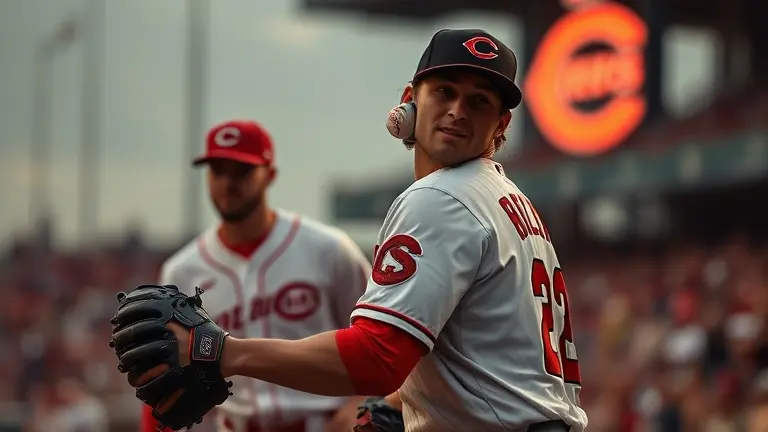
The intensity surrounding the Brewers vs. Reds series is palpable, and for good reason. As Milwaukee looks to solidify its command over the National League Central with a dominant 46-29 record, Cincinnati’s desperate search for momentum adds a layer of high-stakes tension to this three-game set. While headlines are currently saturated with basic broadcast schedules and standard betting odds, the true story lies in the microscopic details: the tactical chess match between Brandon Woodruff and Brady Singer, the looming impact of Elly De La Cruz’s highly anticipated return from injury, and the sheer dominance of Jacob Misiorowski on the mound.
To navigate this series effectively, one must look beyond the box score. This is not just another mid-season matchup; it is a critical juncture that will define the trajectory of both clubs heading toward the All-Star break. For the dedicated baseball strategist, understanding the nuances of these pitching rotations and the cascading effects of roster changes is paramount. In the following deep-dive, we move past the noise to provide the expert-led analytical framework necessary to evaluate the tactical implications of this NL Central showdown.
Brewers vs. Reds: The Battle for NL Central Supremacy

The June 22 series opener between the Milwaukee Brewers and the Cincinnati Reds carries significant weight as the National League Central race intensifies. Entering the set with a commanding 46-29 record, the Brewers arrive as the undisputed heavyweights of the division. Their sustained excellence has been fueled by a potent blend of top-tier starting pitching and efficient situational hitting, positioning them to further distance themselves from the pack. Conversely, the Reds (37-39) find themselves at a critical inflection point; they are actively fighting to reclaim a .500 winning percentage and remain relevant in the hunt for a postseason berth.
Strategic Stakes and Division Dynamics
For Milwaukee, this three-game series is about maintaining momentum and asserting dominance over a familiar rival. With Jacob Misiorowski emerging as a legitimate NL Cy Young contender, the Brewers possess the rotational depth required to suppress the Reds’ aggressive base-running style. For Cincinnati, the narrative is defined by urgency and resilience. Having struggled with inconsistency throughout the first half of the season, the Reds view this series as a barometer for their post-All-Star break potential. Key factors influencing the outcome include:
- Pitching Mismatch: The marquee duel between Brandon Woodruff and Brady Singer highlights the technical gap between the two bullpens.
- The De La Cruz Factor: The highly anticipated return of shortstop Elly De La Cruz on June 23 provides a massive boost to the Reds’ lineup, shifting the series’ strategic complexion.
- Division Insulation: A Milwaukee sweep would effectively put the division title out of reach for the Reds, while a Cincinnati series win would tighten the standings significantly.
Ultimately, the Brewers’ superior run differential and pitching consistency make them the favorites, but the Reds’ ability to disrupt established rotations could make this one of the most unpredictable stretches of the summer. Both teams understand that every game played during this mid-June window serves as a foundational building block for their respective October aspirations.
Jacob Misiorowski’s Surge: Is the Cy Young Trophy Within Reach?

The emergence of Jacob Misiorowski as a dominant force in the Milwaukee Brewers’ rotation has transformed the narrative of the 2026 National League Central. While the brewers vs reds series highlights team-wide depth, Misiorowski’s individual performance metrics have propelled him into the heart of the NL Cy Young conversation. Unlike veteran aces who rely on established command patterns, Misiorowski has utilized an elite combination of high-velocity heat and unique pitch tunneling to keep hitters off balance throughout the first half of the season. His ability to maintain a high strikeout rate while limiting hard contact suggests that his early-season dominance is built on a sustainable foundation of advanced analytics rather than mere luck.
Analyzing the Pitching Metrics
Misiorowski’s statistical profile compares favorably to league leaders, characterized by:
- Elite Whiff Rate: His secondary offerings generate a higher-than-average chase rate, forcing batters to expand the zone early in counts.
- Vertical Movement: Independent research indicates his fastball trajectory creates a “rising” effect that complicates the decision-making process for opposing hitters.
- Consistency: Unlike many young prospects who face a “sophomore slump,” his command-to-walk ratio has remained remarkably stable under high-leverage pressure.
When contrasting Misiorowski against traditional veteran aces, the difference lies in his aggressive approach to the strike zone. While many pitchers look to navigate around contact, Misiorowski thrives by attacking the inner half, a strategy that aligns perfectly with the Brewers’ overall pitching philosophy. As the season progresses, his performance in critical series—such as this matchup against Cincinnati—will serve as the ultimate litmus test for his candidacy. If he sustains this level of production through the dog days of summer, the argument for him as the most impactful arm in the National League will become increasingly difficult for voters to ignore.
The Impact of Elly De La Cruz’s Return to the Reds’ Lineup

The highly anticipated return of Elly De La Cruz to the Cincinnati Reds lineup on June 23 serves as a pivotal inflection point for the team’s offensive identity. Having been sidelined by a nagging hamstring injury, De La Cruz’s absence left a noticeable void in the Reds’ top-of-the-order production and, more importantly, their base-running dynamism. As the Reds look to gain ground against a dominant Milwaukee Brewers squad in this brewers vs reds series, the shortstop’s ability to force defensive errors through aggressive base-running becomes their most potent weapon. His presence effectively forces opposing pitchers to operate with heightened anxiety, often causing them to prioritize holding runners over executing precise location-based deliveries.
Strategic Shifts and Defensive Pressure
De La Cruz’s return changes the fundamental calculus for the Brewers’ pitching staff. His unique blend of speed and power forces infielders to play deeper, opening up gaps that were previously covered during his recovery period. When evaluating the tactical implications of this series, consider the following impacts:
- Pitcher Distraction: Brewers pitchers—including potential Cy Young frontrunner Jacob Misiorowski—must now account for De La Cruz’s elite threat level on the basepaths, which often leads to “fattened” pitches over the heart of the plate.
- Offensive Synergy: His return stabilizes the Reds’ batting order, creating a “protection effect” for surrounding hitters who can now leverage better counts and more favorable matchups.
- Defensive Range: Beyond his offensive contribution, De La Cruz’s defensive range at shortstop minimizes the hits allowed in the hole, providing much-needed support for the Reds’ pitching rotation as they attempt to weather the Brewers’ offensive barrage.
For the Reds to post a successful post-All-Star surge, they must utilize De La Cruz not just as a power hitter, but as a catalyst for disruption. By forcing the Brewers to shift their defensive focus away from fundamental pitching, the Reds can exploit small inefficiencies in the Milwaukee defense, potentially shifting the momentum of this NL Central rivalry.
Pitching Dynamics: Breaking Down the Woodruff vs. Singer Duel

The brewers vs reds series opener presents a fascinating tactical contrast on the mound, pitting the veteran command of Brandon Woodruff against the heavy-sinker approach of Brady Singer. For Milwaukee, Woodruff remains the anchor of a rotation currently spearheaded by Jacob Misiorowski’s Cy Young-caliber performance. Woodruff’s game is built on elite pitch tunneling; he utilizes his four-seam fastball to set up a devastating changeup and slider, effectively keeping hitters off-balance by mimicking arm-slot release points. His ability to navigate high-leverage situations—often inducing weak contact rather than relying solely on strikeouts—will be the primary defensive wall against a Reds lineup desperate to jumpstart their offense.
In opposition, Brady Singer offers a distinct look that forces opposing hitters to put the ball on the ground. Singer relies heavily on his heavy sinking fastball and a slider that breaks late, an approach designed to generate double plays and minimize pitch counts. However, success for Singer against the Brewers will depend entirely on his ability to execute low-zone placement. The Brewers’ disciplined approach at the plate, which ranks among the best in the National League at avoiding chase-pitches, will test whether Singer can maintain his command throughout the middle innings.
Tactical Keys to the Matchup
- Pitch Sequencing: Watch how Woodruff utilizes the high-fastball to expand the zone, a strategic signature that creates difficulty for hitters looking to drive the ball into the gap.
- Groundball Efficiency: Singer’s effectiveness is tied to his groundball-to-flyball ratio; if the Brewers succeed in elevating his sinker, he will be forced to rely on his secondary offerings earlier than anticipated.
- The Leverage Factor: With both teams viewing this series as a pivot point for the NL Central standings, expect both managers to pull their starters at the first sign of diminishing peripheral velocity, placing significant pressure on the bullpens to protect narrow leads.
This duel is less about raw velocity and more about the chess match of tunneling. Whoever succeeds in forcing the opposing lineup into predictable, two-strike counts will likely dictate the momentum for the remainder of this high-stakes series.
Mastering the NL Central Chess Match
As this pivotal series unfolds, the distinction between the casual fan and the true baseball tactician comes down to the ability to synthesize complex data. Whether you are tracking Jacob Misiorowski’s Cy Young trajectory or decoding the strategic repercussions of Elly De La Cruz’s return to the Reds lineup, the depth of analysis required to truly understand the Brewers vs. Reds dynamic is immense. Keeping pace with these evolving variables demands more than just passion—it requires peak cognitive precision.
Just as the managers in the dugout rely on high-level mental strategy to secure a competitive edge, the serious analyst must optimize their own cognitive performance to effectively process these intensive statistical breakdowns. This is where The Brain Song becomes your essential edge. By providing the mental clarity needed to navigate through layers of performance data and injury impact reports, it serves as the ultimate performance tool for fans who refuse to settle for surface-level news.
Don’t let the cognitive fog of data overload dull your competitive advantage. Sharpen your insight and process every pitch, movement, and trend with unparalleled focus. It is time to transform your experience from passive observation into expert-level analysis.
 Unlock your peak analytical performance and sharpen your focus before the next pitch with The Brain Song.Yes, I Want to Sharpen My Focus Now!