
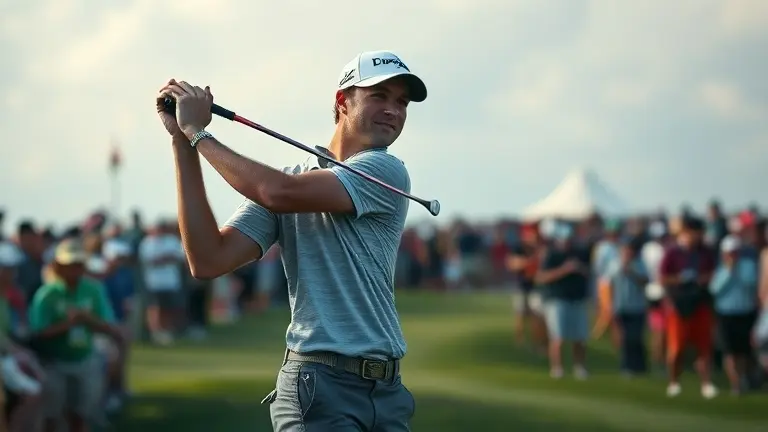
When Scottie Scheffler stepped onto the first tee at Shinnecock Hills this past June, the air was thick with more than just the coastal breeze; it carried the weight of history. Marking his 30th birthday, the world number one found himself in the crosshairs of destiny, attempting to complete the elusive Career Grand Slam on the most significant day of his life. As fans serenaded him with ‘Happy Birthday,’ the scene was set for a coronation. Yet, the 2026 U.S. Open proved that even for the most dominant player of his generation, the ‘final hurdle’ of a major championship is often a psychological battlefield as much as a tactical one.
Finishing tied for 4th after a high-stakes Sunday pairing, Scheffler’s performance invites a deeper analysis of the ’30-year-old threshold’ in elite golf. While his technical game remains unparalleled, the challenge of closing out a Major under the crushing expectations of the golfing world highlights a critical evolution required for future success. This wasn’t just a missed trophy; it was a defining moment that reveals the true cognitive demands of sustaining greatness when every shot is magnified under the global spotlight.
The Birthday Quest: Scottie Scheffler’s High-Stakes Sunday at Shinnecock Hills
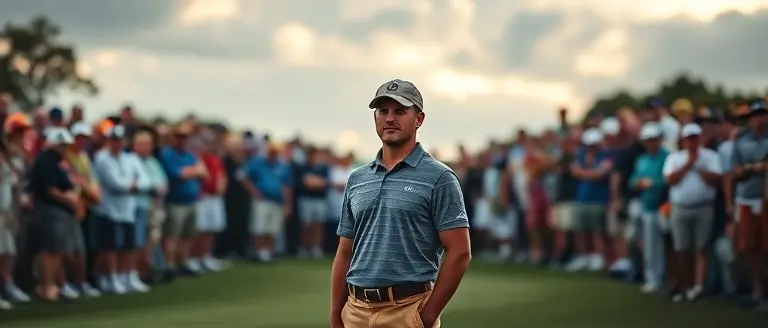
The 2026 U.S. Open at Shinnecock Hills presented a narrative arc that transcended standard professional golf. Entering Sunday, all eyes were on Scottie Scheffler, who stood on the precipice of history. His pursuit of the Career Grand Slam coincided perfectly with his 30th birthday on June 21, creating an atmosphere of palpable anticipation. While the Scottie Scheffler U.S. Open performance was statistically impressive—culminating in a T4 finish at Even par—the emotional weight of the day underscored the sheer difficulty of winning the year’s most grueling major. Fans at Shinnecock Hills were deeply invested in the outcome, turning the first tee into a cathedral of support as spectators broke into spirited renditions of “Happy Birthday,” a rare moment of human vulnerability amidst the hyper-focused, high-stakes environment of a final-round pairing.
Pressure, Expectation, and the 30-Year Threshold
The juxtaposition of a celebratory birthday and the cold, calculated execution required to navigate a U.S. Open layout created a unique psychological crucible. Though he ultimately finished four strokes behind winner Wyndham Clark, Scheffler’s performance served as a defining moment for his trajectory. Experts and observers noted several key factors that defined his Sunday round:
- Mental Fortitude: Scheffler maintained composure despite the constant crowd interaction, showcasing the “resilient” temperament that has become his hallmark on the PGA Tour.
- The Shinnecock Challenge: The course demanded a level of tactical precision that tested his ball-striking, forcing him to adapt under the most intense public scrutiny of his career.
- The Emotional Toll: The public’s emotional investment, highlighted by the birthday fanfare, added a layer of external pressure rarely seen in Major Championship golf, yet Scheffler’s focus remained largely unshaken until the final holes.
While the elusive Grand Slam title remains just out of reach, this tournament solidified his status as the sport’s most consistent competitor. The result, while bittersweet, provides a critical foundation for his future campaigns, proving that he possesses both the talent and the mental infrastructure to compete for titles under the brightest spotlights in the sport.
The 30-Year-Old Threshold: Defining a Legacy Beyond the Scorecard
For elite athletes, the transition into their thirties often represents a shift from raw, youthful dominance to a more measured, tactical approach to the game. Scottie Scheffler’s U.S. Open performance at Shinnecock Hills, occurring on the exact day he turned 30, served as more than just a leaderboard result. While a T4 finish is statistically impressive, the narrative weight of his pursuit for the Career Grand Slam introduced a psychological hurdle rarely seen in modern golf. By entering the final round in contention, Scheffler faced the immense pressure of expectation, underscored by the poignant, viral moment of fans singing “Happy Birthday” on the first tee—a rare intersection of human sentiment and professional scrutiny that tests even the most stoic competitors.
The Weight of Expectations and Major Championships
The “Grand Slam” narrative creates a unique burden for players of Scheffler’s caliber. When a golfer is widely regarded as the best in the world, every major championship becomes a referendum on their legacy. Analyzing his performance through the lens of a career milestone reveals several key insights into why this tournament was a defining juncture:
- Psychological Load: The expectation to clinch a title on his 30th birthday amplified the pressure, moving the goalposts from simple tournament success to historical significance.
- Tactical Evolution: Shinnecock Hills demands a specific brand of resilience. Scheffler’s ability to remain in contention despite the external noise confirms that his 2026 season trajectory remains on an upward curve, even if the result fell short.
- Legacy Reframing: Rather than viewing the T4 finish as a failure, it should be categorized as an essential stepping stone. History suggests that dominant golfers often reach their peak “majors-winning” phase in their early thirties, as they combine physical consistency with the mental maturity required for high-stakes layouts.
As Scheffler moves past this threshold, the focus shifts to how he translates the intensity of this major experience into his upcoming schedule. His ability to balance the fame of being a world-number-one with the relentless pursuit of perfection will determine how he navigates the remaining legs of his pursuit for the Career Grand Slam in the years to come.
Statistical Reality: Parsing the Performance at the 2026 U.S. Open
To understand the Scottie Scheffler U.S. Open performance at Shinnecock Hills, one must look beyond the final scorecard. While a T4 finish represents elite-level consistency, the statistical divergence between Scheffler and eventual champion Wyndham Clark reveals where the title slipped away. Throughout the 2026 tournament, Scheffler maintained his signature excellence in Strokes Gained: Approach, consistently putting himself in positions to score. However, Sunday’s final round exposed a subtle but critical gap in putting pressure under major championship conditions.
The Metrics of the Sunday Gap
Advanced analytics from the 2026 U.S. Open highlight a tactical bottleneck that hindered Scheffler’s bid for the Career Grand Slam. While Scheffler’s ball-striking remained statistically superior to the field average, his performance on the lightning-fast greens of Shinnecock Hills lacked the necessary conversion rate compared to Clark. Specifically, the data points show:
- Strokes Gained: Putting: On Sunday, Scheffler struggled to convert birdie opportunities from the 10-to-15-foot range, a hallmark of his successful 2026 campaign that failed to manifest during his birthday round.
- Proximity to the Hole: Despite leading the field in iron play accuracy, Scheffler’s proximity metrics on Sunday were marginally higher than Clark’s, forcing longer, high-stress par saves that eventually resulted in dropped strokes on the back nine.
- Pressure Management: The viral “Happy Birthday” atmosphere on the first tee created an emotional weight that, statistically, may have contributed to a tighter, more cautious putting stroke early in the round.
Ultimately, the T4 finish was not a failure of strategy but a testament to Scheffler’s floor as a golfer. Even in a tournament where he was not at his peak putting rhythm, his ability to grind out an even-par performance reinforces his status as the most resilient player in the professional game. The stats confirm that while the U.S. Open title remains elusive, his tactical foundation is sound; he simply requires the final piece of the putting puzzle to close the four-stroke deficit that separated him from the trophy this June.
The Road Ahead: Reassessing the Pursuit of the Grand Slam
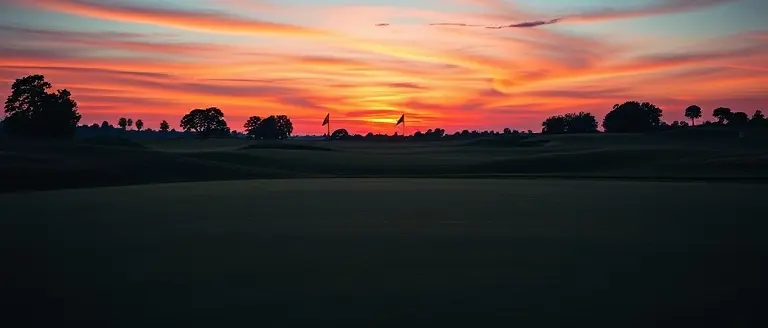
The T4 finish at Shinnecock Hills marks more than just a statistical footnote; it serves as a pivot point in the Scottie Scheffler U.S. Open performance narrative. Entering his thirties, Scheffler is transitioning from the era of raw, youthful potential into a phase defined by calculated legacy-building. While the missed Grand Slam opportunity on his 30th birthday may sting, it provides the necessary competitive scar tissue for an elite golfer of his caliber. The physical and mental toll of such high-stakes major championship weeks is immense, and his management of this schedule will be the deciding factor in whether he eventually conquers the U.S. Open layout.
Strategic Adjustments for Major Success
Moving forward, Scheffler’s team will likely scrutinize his preparation protocols to ensure he remains at peak performance during the four major championship weeks. The focus will shift from general tournament dominance to specific, high-level tactical preparation tailored for the demands of the U.S. Open. Key areas for development include:
- Load Management: Balancing the rigorous PGA Tour schedule to prevent burnout while ensuring he stays “tournament sharp” for major-season peaks.
- Tactical Evolution: Refining shot-making techniques specifically designed to mitigate the risks associated with penal U.S. Open course setups.
- Mental Fortitude: Leveraging the experience from the 2026 Shinnecock heartbreak to sharpen his focus during high-pressure final-round scenarios.
The “30-year-old threshold” often signifies a player’s entry into their physical and tactical prime. By reassessing his approach to course management and recovery, Scheffler is positioning himself to convert these near-misses into major victories. His upcoming schedule will be viewed through the lens of this pursuit, with every event serving as a laboratory for the adjustments needed to finally secure the missing piece of his career Grand Slam. For fans, the message is clear: the chase is far from over—it is merely evolving into a more refined, veteran-led campaign.
The Path to Sustained Major Championship Greatness
The 2026 U.S. Open serves as a reminder that peak physical talent is only half the equation in professional sports. To overcome the mounting pressure of the 30-year-old threshold and finally claim that Grand Slam title, athletes must master the internal game. The difference between a top-five finish and hoisting the trophy often resides in the ability to maintain unwavering cognitive clarity when the nerves begin to fray and the weight of legacy feels heaviest.
Just as elite athletes must sharpen their physical game for the layout of Shinnecock Hills, they must also optimize their neural focus to handle the immense pressure of the final round—which is why many professionals are turning to advanced auditory science to sustain their competitive edge. The Brain Song functions as a specialized cognitive training tool, helping to quiet the noise and induce a state of flow, ensuring that mental fatigue never compromises your performance when it matters most.
By integrating this 12-minute daily audio routine into your regimen, you can cultivate the same level of mental resilience and focus required by the world’s elite to navigate high-stakes environments. It is the essential next step for anyone aiming to perform at their personal peak, providing the mental agility necessary to navigate life’s toughest challenges with the precision of a champion.
 Discover how the 12-minute daily audio routine used by high-performers to maintain mental sharpness can help you achieve your own professional ‘Grand Slam’ of focus.Unlock My Peak Performance Now!