
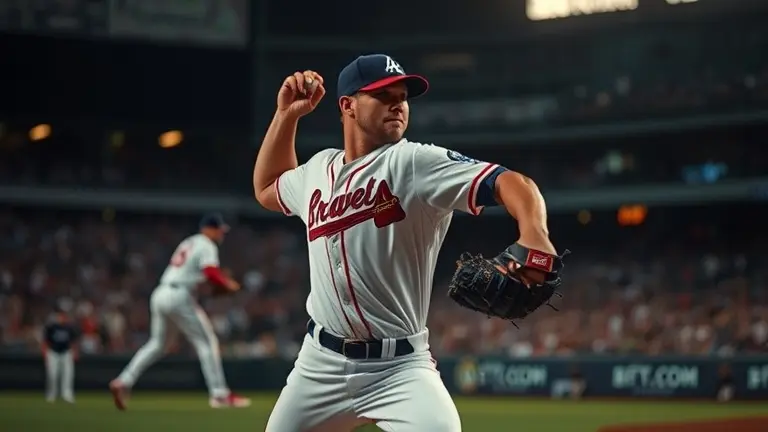
The atmosphere at Truist Park has reached a fever pitch as the Milwaukee Brewers clash with the Atlanta Braves in a high-stakes series that could redefine the National League standings. Following the electrifying 4-3 walk-off victory on June 20—sealed by Ozzie Albies’ dramatic heroics—the baseball world is locked in on the tactical chess match unfolding between these two contenders. At the heart of this intensity is the resurgence of Braves ace Chris Sale, whose clinical command and strikeout metrics have provided a masterclass in modern pitching efficiency. This isn’t just about a win in the column; it is a fundamental battle of strategy, mental fortitude, and execution under pressure.
For the serious fan and the data-driven bettor, the Brewers vs Braves matchup offers more than mere entertainment—it provides a complex landscape of stats, leverage, and momentum shifts. As we look past the box scores to evaluate the deeper impact of Sale’s dominance on the NL playoff race, understanding the mental precision required to process these granular details becomes just as crucial as the game itself. Staying ahead of the competition in DFS markets requires a razor-sharp analytical mind capable of dissecting every pitch sequence and defensive adjustment in real-time.
Brewers vs. Braves: Series Overview and June 2026 Drama

The June 20-22, 2026, showdown between the Milwaukee Brewers and the Atlanta Braves has quickly become the focal point of the National League mid-season landscape. As both franchises jockey for critical playoff positioning, this three-game series serves as a litmus test for their respective rosters. The atmosphere at Truist Park reached a fever pitch on June 20, as the opening game delivered the kind of high-stakes tension that baseball fans and bettors crave. The contest lived up to the hype, culminating in a dramatic 4-3 walk-off victory for the Braves, punctuated by a towering home run from Ozzie Albies that sent the home crowd into a frenzy.
Analyzing the Impact of the June 20th Opener
The intensity of the series opener underscored the narrow margins that often define elite MLB matchups. Beyond the final scoreboard, the game highlighted why the brewers vs braves series is viewed as a potential postseason preview.
- The Walk-Off Heroics: Ozzie Albies’ walk-off home run proved the difference, capitalizing on late-inning defensive positioning and securing a momentum-shifting win for Atlanta.
- Pitching Excellence: The series has been defined by elite arms, with Chris Sale standing out as the centerpiece for Atlanta. Entering the series with a stellar 8-5 record and a 2.30 ERA, Sale’s presence on the mound provides the Braves with a distinct tactical advantage.
- Playoff Implications: With both teams vying for top seeds in the National League, each win in this series carries significant weight regarding tiebreakers and home-field advantage scenarios.
For daily fantasy sports (DFS) players and those tracking betting markets, the focus remains on the starting pitching duels. The contrast in styles between the Braves’ established rotation and the Brewers’ aggressive approach creates a volatile, high-engagement environment that keeps analysts and fans tuned in for every pitch of the three-day set.
Pitching Masterclass: Analyzing Chris Sale vs. Kyle Harrison

The Brewers vs Braves series has become a focal point for baseball analysts and fantasy sports enthusiasts alike, primarily due to the elite-level pitching display on the mound. At the heart of this matchup is Atlanta’s veteran ace, Chris Sale, whose 2026 campaign has been nothing short of a resurgence. Entering this series with an 8-5 record and a stellar 2.30 ERA, Sale continues to demonstrate the efficiency and strikeout command that defined his prime. For DFS players, Sale remains a high-floor asset, as his ability to consistently command the zone and maintain high strikeout rates offers a distinct advantage in both head-to-head and tournament formats.
Opposing him is Milwaukee’s Kyle Harrison, a pitcher whose profile offers a compelling contrast in style. While Sale relies on a seasoned mix of deception and precise breaking pitches, Harrison’s arsenal challenges hitters with high-velocity movement that often dictates the pace of the game. When evaluating the Brewers vs Braves pitching dynamics, consider the following metrics that are currently influencing betting markets and lineup optimization:
Key Metrics for Pitcher Evaluation
- Strikeout Percentage (K%): Chris Sale has maintained an elite K/9 rate, consistently racking up punch-outs even against disciplined Milwaukee lineups.
- Pitch Efficiency: Both pitchers show strong ground-ball rates, which is critical when neutralizing the power hitters found throughout both starting rosters.
- WHIP and Command: Tracking Walks plus Hits per Inning Pitched (WHIP) is essential here, as both aces have focused on limiting free passes to mitigate scoring opportunities in tight, low-scoring contests.
- Hard-Hit Rate: Evidence suggests that Harrison’s ability to suppress exit velocity is a primary factor in keeping the Brewers competitive during this high-stakes series.
Ultimately, this pitching duel represents more than just a box score; it is a tactical battle of attrition. Whether you are tracking the series for betting purposes or adjusting your fantasy rosters, focusing on the strikeout-to-walk ratio of these two starters provides the most reliable indicator of potential success as the series progresses.
DFS and Betting Strategy: Navigating the Brewers-Braves Series

The Brewers vs Braves series has become a focal point for both casual bettors and Daily Fantasy Sports (DFS) enthusiasts, particularly as Atlanta looks to build on the momentum of their thrilling 4-3 walk-off victory. When constructing DFS lineups or evaluating betting lines, the presence of Chris Sale as the Braves’ ace is the single most significant variable. With a stellar 8-5 record and an impressive 2.30 ERA entering this series, Sale remains an essential anchor for any roster. His ability to rack up high strikeout totals provides a high floor for fantasy managers, even when the Milwaukee offense manages to manufacture runs against the back end of the Atlanta rotation.
Tactical Betting Considerations
For those analyzing the betting markets, the outcome of the opening game underscores the volatility of these tight pitching duels. Key factors to weigh for the remaining games include:
- Pitcher Efficiency: Monitor the pitch counts closely. Sale’s efficiency allows him to go deep, often shifting the value toward the “Under” on total runs when he is on the mound.
- Bullpen Usage: The high-leverage situation in the first game forced significant bullpen usage. Check the availability of middle-relief arms, as fatigue can lead to inflated totals in the latter stages of the series.
- Momentum Shifts: While Milwaukee’s lineup is capable of explosive production, the home-field advantage at Truist Park and the recent heroics from players like Ozzie Albies suggest the Braves may see favorable line adjustments.
DFS Lineup Optimization
When optimizing your DFS lineups, focus on the “Pitcher vs. Batter” dynamic. While Chris Sale is a consistent play, high-strikeout pitchers often drive value toward cheap, high-contact hitters who can exploit defensive shifts. If the Braves’ bullpen is taxed, look for value in Milwaukee’s power hitters who could provide leverage if the game enters extra innings or features high-scoring, late-game scenarios. Always cross-reference starting lineups against the latest weather reports and injury designations to avoid losing equity on non-starters.
NL Standings Impact: The Post-Series Tactical Breakdown

The outcome of this intense three-game set between the Brewers vs Braves carries significant weight for the 2026 National League playoff picture. By securing a dramatic 4-3 walk-off victory in the series opener, the Braves have signaled their intent to remain a top-tier contender despite a crowded field. For the Milwaukee Brewers, dropping a close contest highlights the margins that define mid-season success, specifically how their bullpen navigates high-leverage situations against elite offensive lineups. As both franchises look toward the postseason, this series serves as a litmus test for divisional stability and tie-breaker potential.
Strategic Implications for the NL Race
The resurgence of Chris Sale as a cornerstone of the Braves’ rotation provides Atlanta with a distinct advantage in the NL East. With his 2.30 ERA, Sale acts as the primary stabilizer for a pitching staff that requires deep innings to protect their relievers. Conversely, the Brewers continue to rely on a balanced roster, but their inability to close out the Braves in the series opener suggests that bullpen management will be the defining variable for their division title hopes. Key takeaways from this series impacting the standings include:
- Division Positioning: Every game in this series functions as a four-point swing, directly influencing seeding for the wild-card and divisional brackets.
- Pitching Efficiency: The performance of starters like Sale dictates the usage patterns of the bullpen, a critical factor for teams maintaining momentum through the dog days of summer.
- Tie-Breaker Scenarios: Given the competitive density of the National League, securing the head-to-head season series is a vital insurance policy for teams battling for home-field advantage.
As we move deeper into the season, the ability of both squads to manufacture runs against elite pitching—demonstrated by the Braves’ walk-off heroics—will be the deciding factor in maintaining their respective leads in the NL standings. If the Brewers hope to secure a top-two seed, they must address the late-inning gaps that allowed this specific series to tilt in Atlanta’s favor.
Sharpen Your Competitive Edge for the Final Stretch
The Brewers vs Braves series serves as a powerful reminder that elite performance is built on a foundation of mental clarity. Whether you are analyzing Chris Sale’s movement profiles or calculating player props for the next slate, your ability to synthesize complex sports data is your biggest asset. Just as Chris Sale requires absolute mental precision to locate his pitches in high-leverage situations, you need a sharpened mind to consistently beat the house and outmaneuver your DFS competition.
This is where The Brain Song becomes an essential tool for the analytical sports fan. By integrating this 12-minute auditory routine into your pre-game workflow, you can optimize your neural pathways for enhanced focus, improved cognitive capacity, and faster data processing. It is the perfect mental warm-up to prepare your brain for the high-intensity analysis required to navigate the complexities of the current MLB season.
Don’t let mental fatigue cloud your judgment during the most critical part of the season. Use this performance tool to gain the hidden advantage that separates the casual observer from the expert bettor. Click the link below to start your routine and gain the edge you need before the first pitch tonight.
 Optimize your cognitive performance for tonight’s slate—click here to start your 12-minute daily focus routine before the first pitch.Sharpen My Focus Today!