
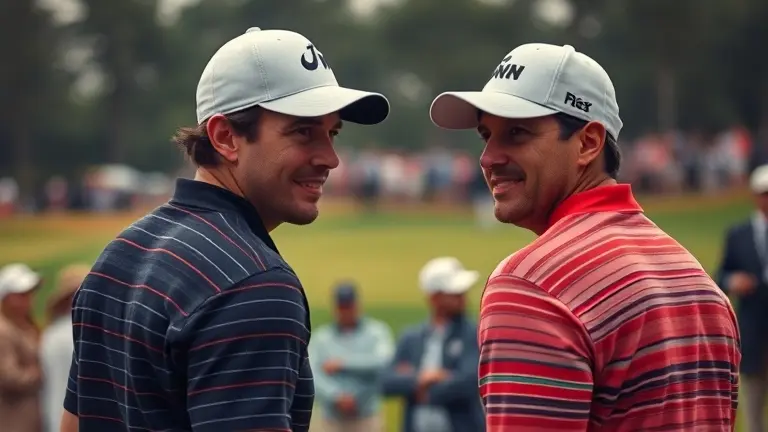
The 126th U.S. Open at Shinnecock Hills has transformed into a high-stakes psychological crucible, where the pressure of a major championship meets the unpredictable variables of Long Island weather. As Wyndham Clark enters the final round holding a narrow but significant lead, all eyes are locked on the mesmerizing pairing with world No. 1 Scottie Scheffler. Yet, the story beneath the leaderboard is one of architectural contention. Purists have voiced growing frustration over the USGA’s decision to soften the legendary greens, an adjustment that has sparked a fierce debate over whether the governing body has neutralized the traditional, uncompromising defense that once defined this historic venue.
This final round is no longer just a contest of skill; it is a tactical war of attrition played out on a course that has become a lightning rod for controversy. The tension between the delicate, softened surfaces and the immense pressure of a Sunday finish requires more than just mechanical consistency from our leaders. For fans and analysts alike, keeping pace with the shifting dynamics of the Clark-Scheffler showdown demands a razor-sharp ability to process every adjustment, every missed opportunity, and every strategic gamble in real-time. As the intensity reaches its boiling point, we explore what it truly takes to maintain clarity when the world of professional golf is watching.
The 126th U.S. Open at Shinnecock Hills: A Final Round Defined by Tension

The final round of the 126th U.S. Open at Shinnecock Hills Golf Club has evolved into a high-stakes psychological duel. Entering the Sunday finale, Wyndham Clark maintains a commanding lead, displaying the poise required to navigate one of the most storied layouts in golf. However, the presence of world No. 1 Scottie Scheffler in the final pairing creates an undeniable pressure cooker. While Clark has dictated the pace throughout the tournament, the unpredictable weather conditions at the Southampton venue threaten to turn the leaderboard into a volatile landscape, forcing both leaders to adjust their tactical approach on every hole.
Tactical Battles and Environmental Pressures
The narrative of this us open is as much about the environment as it is about the players. Beyond the Clark-Scheffler showdown, several factors are shaping the championship’s closing act:
- Course Dynamics: The recent controversy surrounding the ‘softening’ of the greens by the USGA has drawn sharp criticism from golf purists who argue that the legendary Shinnecock Hills should demand more severe accuracy.
- Weather Volatility: With shifting winds and the potential for late-afternoon precipitation, the degree of difficulty remains fluid, challenging even the most experienced professionals.
- The Amateur Record: The historic presence of 20 amateurs in the field has added a layer of unpredictability, further complicating the strategic landscape for the leaders.
This usopen golf championship has highlighted a fundamental tension between modern course management and traditionalist expectations. As the final groups navigate the back nine, observers are closely watching whether the reduced green speeds—intended to manage the health of the course—will inadvertently allow the chasing pack to bridge the gap against Clark. For fans tracking the action via Peacock or real-time tickers, the drama lies in whether Clark can maintain his composure or if the intensified pressure of a major Sunday will trigger a shift in momentum in favor of Scheffler’s clinical pursuit.
The Psychological Duel: Wyndham Clark vs. Scottie Scheffler

The final round of the 126th U.S. Open at Shinnecock Hills Golf Club has evolved into a high-stakes psychological chess match between the tournament leader, Wyndham Clark, and the indomitable world No. 1, Scottie Scheffler. For Clark, maintaining his lead is not merely a test of technical ball-striking, but a profound exercise in mental fortitude. Carrying the weight of the us open lead into Sunday requires a player to shut out the noise of the gallery and the looming shadow of one of the most consistent golfers in history. The pairing forces a distinct contrast in styles: Clark, known for his aggressive, confident approach, must reconcile his offensive instincts with the inherent discipline required to navigate the firm, yet contentious, surfaces of Shinnecock Hills.
Pressure and Playing Dynamics
Scheffler’s presence in the final group introduces a unique brand of “silent pressure.” Unlike players who exhibit overt emotion, Scheffler’s methodical, unflappable demeanor often forces his playing partners to feel as though they must manufacture birdies to keep pace, which can lead to unforced errors. Key factors shaping this head-to-head battle include:
- Momentum Management: How Clark responds to early charges by Scheffler will dictate the tempo. If Clark plays purely defensive golf, he risks losing the assertive rhythm that put him in the lead.
- The “Softened” Greens Factor: While the USGA has faced intense backlash for the course setup, both players must adapt. Clark’s ability to trust his approach shots, despite the “softening” controversy, will be the deciding factor in whether he remains in the red or allows the field to close the gap.
- Major Championship Temperament: The usopen golf stage is unforgiving; Clark must demonstrate the same composure that secured his prior successes, treating the presence of Scheffler as a standard final-round hurdle rather than an insurmountable obstacle.
Ultimately, this duel represents a clash of paradigms—the challenger looking to cement his place in golf history against the established force of the current era. The outcome at this historic Southampton venue will likely hinge on who manages the inevitable swings in momentum with greater emotional neutrality.
The Controversy at Shinnecock Hills: Has the USGA Softened the Challenge?

The 126th U.S. Open at Shinnecock Hills Golf Club has descended into a heated debate regarding the integrity of the course setup. Known historically as one of the most penal and demanding venues in major championship golf, Shinnecock Hills has seen its trademark bite significantly dulled during the 2026 iteration. Fans and analysts alike have taken to social media to voice their frustration, claiming that the USGA has preemptively “softened” the greens through excessive watering and strategic pin placements, effectively neutralizing the natural hazards that typically define this legendary Southampton track.
The Impact on Scoring and Professional Integrity
The tactical decision to prioritize player safety and accessibility over the traditional “par-is-a-good-score” mentality has sparked a divide between modern tournament management and the purist expectations of the usopen golf audience. While the USGA often justifies these measures as a response to unpredictable weather, the result has been a notable shift in the tournament’s landscape:
- Scoring Averages: We have observed lower-than-anticipated scoring averages across the field, which undermines the “ultimate test” reputation the U.S. Open claims to uphold.
- Architectural Neutralization: By softening the firm, fast conditions that characterize links-style play, the course’s intricate contours—designed to funnel errant shots away from the hole—have been rendered less effective.
- Psychological Shift: Players like Wyndham Clark are finding success in a more aggressive, birdie-hunting style of play rather than the defensive, scrambling mindset typically required at a U.S. Open.
While a lower score makes for an exciting leaderboard, evidence suggests that the current management of Shinnecock Hills has stripped away the inherent psychological pressure that should be the hallmark of this major. As the final round concludes, the debate persists: has the pursuit of a “fair” course ruined the spectacle of a championship designed to identify the most disciplined golfer in the world? Many believe the current configuration is a departure from the grit that defines the sport’s most difficult test.
Weather Volatility and Course Dynamics in the Final Stretch

The final round of the U.S. Open at Shinnecock Hills Golf Club has evolved into a strategic chess match, dictated as much by the elements as by the leaderboard. Southampton’s coastal weather has introduced a volatile layer of uncertainty, with shifting wind patterns forcing players to abandon stock yardages in favor of high-stakes, reactive shot-making. As Wyndham Clark maintains his narrow lead over Scottie Scheffler, the interplay between gusty winds and the controversial “softened” greens has fundamentally altered the typical U.S. Open difficulty profile.
Adapting to Softened Greens and Shifting Winds
The decision by the USGA to dampen the surfaces has drawn sharp criticism from golf traditionalists who expected the firm, fast conditions that historically define a major championship. However, for the leaders, the soft turf has created a unique tactical challenge:
- Approach Precision: With the greens holding shots more effectively than anticipated, players are attacking pins with aggressive lofted irons rather than playing the traditional “bump and run” or low-trajectory fades favored in firmer conditions.
- Wind-Adjusted Club Selection: The swirling Southampton breeze requires constant calibration. Both Clark and Scheffler have been observed leaning heavily on their caddies to calculate “feels-like” yardages, often clubbing up to account for the resistance against the ball’s apex.
- Green Management: Even with the “softened” designation, the undulations at Shinnecock Hills remain treacherous. A miscalculated approach that lands on the wrong quadrant of the green often leaves an impossible downhill putt, turning what should be a routine birdie look into a tense par save.
For a leader like Wyndham Clark, the mental hurdle is balancing a conservative lead-protecting strategy with the need to account for the erratic winds that can turn a safe wedge shot into a long-range nightmare. As the tournament reaches its conclusion, the ability to adapt to these fluid course dynamics remains the primary separator between the champion and the rest of the field.
Mastering the Mental Game of Championship Golf
As the final groups navigate the undulating, softened surfaces of Shinnecock Hills, the 2026 U.S. Open serves as a masterclass in psychological endurance. Whether it is the pressure on Wyndham Clark to maintain his lead or the calculated precision required by Scottie Scheffler, victory here is won as much in the mind as it is with the wedge and putter. The ability to remain centered amidst swirling wind and shifting course expectations is the hallmark of a true champion.
Just as Clark and Scheffler require peak cognitive stillness to master the complexities of these historic greens, you need that same level of sharpened mental clarity to keep pace with the tactical nuances of today’s finish. High-velocity sports demand intense focus, and when the stakes are this high, even a momentary lapse in concentration can obscure the reality of the competition unfolding before your eyes.
The Brain Song is engineered to help you achieve that elite-level mental performance, eliminating the brain fog that keeps you from truly understanding the strategic battles on the course. By tapping into the same cognitive optimization used by top-tier athletes, you can elevate your analytical perspective and experience the U.S. Open with unrivaled focus and clarity. Don’t just watch the history unfold; witness it with the sharpened mind of a pro.
 Unlock your own peak focus and analyze the final round with the clarity of a pro—try The Brain Song today.Yes, I Want Peak Focus Now!