
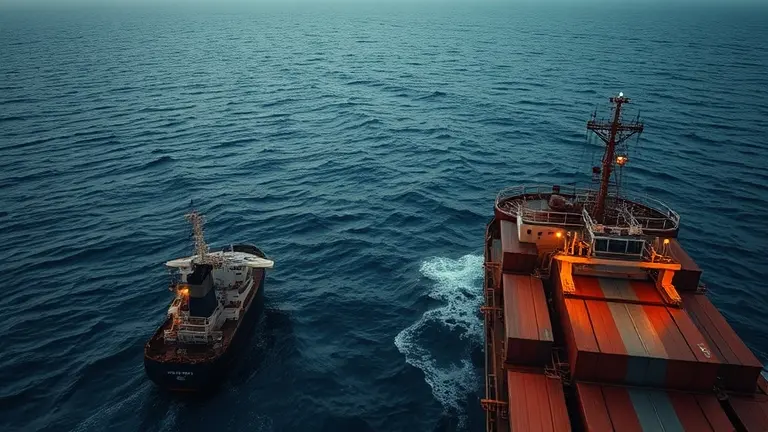
As of June 20, 2026, the Strait of Hormuz has descended into a state of profound geopolitical instability, leaving global supply chains in a precarious limbo. Following the collapse of a fragile interim agreement, Iran has announced a renewed closure of the waterway, explicitly citing military operations in Lebanon as the catalyst. Yet, the reality on the ground remains muddied by conflicting reports: while Tehran frames the closure as a firm sovereign act, U.S. military officials maintain that the strait remains technically open, even as shipping traffic grinds to a historic, cautionary crawl. For business leaders and logistics experts, the binary question of whether the strait is ‘open’ or ‘closed’ has become a dangerous distraction from the more pressing economic reality: the waterway has effectively become a political weapon where uncertainty is the only constant.
This ongoing volatility forces a critical realization: relying on ambiguous data and speculative claims is a high-stakes gamble that no professional can afford to win. Whether navigating the complex maritime corridors of the Middle East or managing the intricate demands of a large-scale project, the absence of a ‘single-source’ truth creates a dangerous reliance on trial-and-error. Just as international trade requires verified, transparent logistics to avoid costly disruption, your professional and personal projects require the same level of absolute precision and reliability to guarantee a successful outcome.
The Standoff at the Strait: Understanding the Current Geopolitical Fog

As of June 20, 2026, the Strait of Hormuz has become the epicenter of a complex geopolitical standoff, leaving global markets in a state of high uncertainty. The situation is defined by a deep disconnect between Iranian state rhetoric and U.S. military observational data. While Tehran has officially announced that the Strait of Hormuz is closed in response to ongoing Israeli military operations in Lebanon, U.S. officials maintain that the waterway remains technically open. This discrepancy underscores that the status of the strait is currently being used as a political weapon rather than a simple indicator of maritime navigation. The short-lived interim agreement between the U.S. and Iran, which briefly allowed for a trickle of traffic on June 19, has effectively collapsed, with Tehran citing “bad faith” negotiations as the primary trigger for the renewed blockage.
Navigating the Reality of “Closed” vs. “Open”
For commercial shippers and energy analysts, the question of whether the strait of hormuz closed is no longer a binary status, but rather a calculation of risk and insurance premiums. While data from sources like Kpler suggest that only a marginal fraction of normal traffic—approximately 25 vessels, including 14 oil tankers—transited the region during the brief reopening window, the current reality on the ground is far more restrictive. Key factors contributing to this ongoing volatility include:
- Regional Spillover: The link between the Hormuz transit and the conflict in Lebanon remains the central friction point, with Iran positioning maritime control as leverage against Western-backed Israeli operations.
- Conflicting Reports: The contrast between Iranian state-run media claims of closure and U.S. military monitoring reports creates a “fog of war” that prevents commercial vessels from reliably planning transit.
- Economic Stagnation: With shipping volume sitting well below pre-war levels, the logistical impact is profound, forcing companies to weigh the extreme cost of increased insurance premiums against the risk of navigating a contested chokepoint.
Ultimately, the hormuz closed narrative is a reflection of a fragile, performative diplomatic process that has failed to stabilize regional tensions. Observers should expect continued fluctuations in status as long as the broader geopolitical standoff remains unresolved.
The Anatomy of a Failed Agreement: Why the U.S.-Iran Interim Deal Collapsed

The collapse of the interim agreement between the U.S. and Iran represents a significant breakdown in maritime diplomacy. While the deal was initially heralded as a cooling-off period to ensure the Strait of Hormuz remained functional, structural weaknesses rendered it unsustainable from the outset. The agreement relied on the assumption that technical maritime access could be decoupled from broader regional geopolitical friction. However, as of June 20, 2026, the reality is that the hormuz closed narrative is being driven less by actual physical blockades and more by the escalating conflict in Lebanon, which serves as a constant destabilizing trigger for Tehran’s policy decisions.
Drivers of Diplomatic Failure
The breakdown was characterized by a fundamental lack of trust, with both sides accusing the other of “bad faith” negotiations. The agreement struggled under several core pressures:
- External Triggers: Iran has explicitly linked its maritime policy to ongoing Israeli military operations in Lebanon, using the waterway as a geopolitical lever rather than a neutral transit zone.
- Contradictory Communication: While Tehran announced a formal closure, U.S. military officials maintain that the waterway remains technically navigable, highlighting a dangerous “information war” that complicates risk assessments for commercial shipping.
- The “Performative” Nature of Transit: Data from Kpler confirms that even during the temporary reopening on June 19, only about 25 vessels passed through, indicating that the shipping industry had little confidence in the long-term stability of the arrangement.
For global supply chains, this environment has turned the question “is the strait of hormuz open” into a misleading binary. In reality, the economic impact is driven by massive spikes in war-risk insurance premiums and extreme uncertainty. Whether or not Iran closes the strait of hormuz in a total physical sense is secondary to the fact that transit is no longer commercially viable for many operators, effectively leaving the strait of hormuz closed to the vast majority of international trade.
Shipping Data vs. Rhetoric: Distinguishing Perception from Reality

In the current geopolitical climate, determining whether the Strait of Hormuz is truly closed requires looking beyond the aggressive political messaging emanating from Tehran. While Iranian officials have declared a formal closure of the waterway citing military operations in Lebanon, U.S. naval monitors and independent AIS (Automatic Identification System) data provide a more complex narrative. The reality is that the strait is not a binary “on-off” switch; instead, it is experiencing a significant degradation in operational utility driven by market-wide fear rather than a complete physical blockade.
The Disconnect Between Claims and Cargo
When Tehran claims the hormuz closed status, they are effectively utilizing the waterway as a geopolitical bargaining chip. However, real-time tracking from platforms like Kpler suggests that shipping traffic has plummeted to a fraction of its historical average. This reduction is not solely the result of Iranian naval interdiction, but rather a calculated withdrawal by global carriers. Key factors influencing this decline include:
- Surging Insurance Premiums: War-risk insurance rates for vessels transiting the region have become prohibitively expensive, forcing many operators to bypass the route entirely.
- Corporate Risk-Aversion: Most commercial fleets are prioritizing safety over speed, viewing the risk of being caught in an Iran closes Strait of Hormuz escalation as an unacceptable liability.
- Operational Uncertainty: Even when the strait is theoretically “open,” the threat of sudden military movement makes scheduling unpredictable for oil tankers and cargo ships alike.
Understanding the Economic Reality
For global supply chains, the question of whether the strait of Hormuz closed is secondary to the reality of transit costs. The current environment has created a de facto blockade where the physical water remains navigable, but the economic conditions for passage have become untenable for many firms. As long as the broader regional conflict persists, stakeholders should expect continued volatility. The discrepancy between official statements and maritime activity confirms that the strait remains a contested space where rhetoric acts as a primary tool of economic pressure, complicating the recovery of international energy logistics.
Navigating Risk: The New Economic Calculus for Global Logistics
For global energy markets, the question of whether the Strait of Hormuz is officially “closed” or “open” has become secondary to the skyrocketing cost of doing business. As of June 2026, the Strait of Hormuz closed status—or at least the threat of it—has forced shipping companies to move away from binary logistical planning toward a high-stakes risk-reward model. With Tehran’s latest declarations and the ongoing instability tied to the conflict in Lebanon, the economic reality is defined by massive uncertainty rather than clear-cut maritime access.
The Impact of Insurance and Freight Premiums
The primary mechanism influencing this landscape is the insurance market, particularly those controlled by Lloyd’s of London. When geopolitical tensions spike, underwriters categorize the waterway as a “high-risk zone,” leading to a surge in war-risk insurance premiums. This creates a tangible “Hormuz tax” on every barrel of oil or ton of cargo passing through the region. Companies are currently weighing the following factors when deciding whether to transit the Strait:
- Insurance Escalation: Premiums have reached levels that make standard profit margins unsustainable for smaller bulk carriers.
- Asset Allocation: Fleet managers are increasingly rerouting vessels to avoid the bottleneck entirely, despite the higher fuel costs of traversing alternative, longer routes.
- The “Performative” Risk: Because the U.S.-Iran interim agreement has proven so fragile, shipping lines can no longer rely on diplomatic reassurances to guarantee safe passage, leading to a de-facto avoidance of the waterway.
Long-Term Strategic Shifts
The volatility surrounding Iran’s closure of the Strait of Hormuz is accelerating a permanent shift in global oil logistics. Major energy exporters are aggressively seeking diversification, investing in pipeline infrastructure that bypasses the Strait to minimize exposure to geopolitical leverage. While the waterway remains technically functional according to U.S. naval observations, the “Hormuz risk” is now a permanent line item on balance sheets. For the foreseeable future, the market will treat the region as a constricted corridor, where cargo flow is dictated by the ability to absorb extreme insurance costs rather than the simple availability of the shipping lane.
Moving Beyond Uncertainty to Proven Results
The situation at the Strait of Hormuz serves as a sobering reminder that when environments become opaque and unpredictable, the cost of guesswork skyrockets. Whether you are dealing with fluctuating global oil premiums or the logistical hurdles of a complex workshop build, the principle remains identical: you cannot succeed by relying on incomplete plans or unreliable data. In an era defined by volatility, having a ‘gold standard’ for your own operations is not a luxury; it is the only way to insulate yourself from the chaotic noise of external variables.
We understand that just as maritime strategists are currently struggling to navigate a path forward through the fog of rhetoric, you are likely looking for a way to strip away the frustration of trial-and-error in your own work. You deserve a solution that replaces ambiguous methods with verified, foolproof frameworks. By providing a comprehensive library of 16,000 workshop-tested plans, we offer the same kind of stability and technical certainty that the shipping industry is currently missing—ensuring that your projects are built on a foundation of precision, not speculation.
It is time to leave the instability behind and take full control of your output. When you move from ‘what-if’ scenarios to a structured, guaranteed process, you transform your productivity. Don’t let incomplete information derail your progress—invest in the clarity and reliability that only proven, professional-grade blueprints can provide.
 For those who value precision and want to move from uncertainty to a finished project, explore the 16,000 workshop-tested plans here.Yes, I Want This Now!