
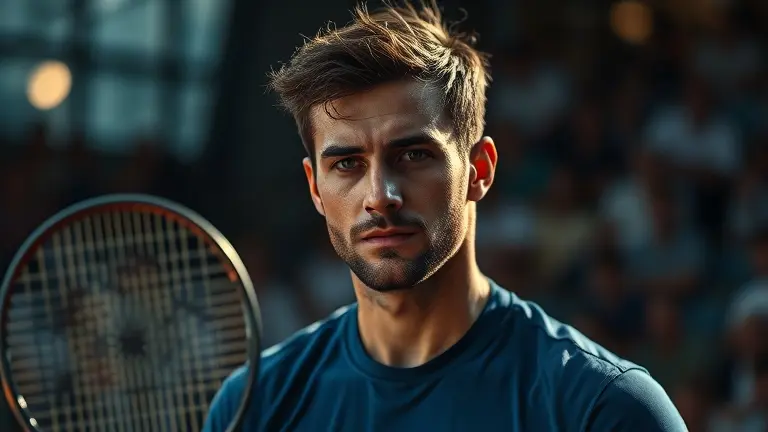
The landscape of professional tennis is currently shifting beneath our feet, defined by the meteoric rise of a new Italian guard that is as precise as it is powerful. At the heart of this movement is Matteo Arnaldi, whose historic run to the 2026 French Open semifinals has captured the global imagination. Having navigated the brutal clay courts of Paris with tactical brilliance—culminating in a quarterfinal victory over Matteo Berrettini—Arnaldi now faces an immediate, grueling transition to the lightning-fast grass courts of Eastbourne. This rapid pivot, occurring in a matter of days, demands more than just physical endurance; it requires a profound recalibration of sensory input and timing.
Alongside contemporaries like Jannik Sinner and his upcoming semifinal opponent, Flavio Cobolli, Arnaldi represents a generation that treats tennis as a high-speed chess match. As fans prepare for the Arnaldi-Cobolli clash and watch his swift adaptation to the English grass, the conversation has moved beyond mere stats. It is about the cognitive architecture required to master these surface transitions. While the world tracks his backhand and serve speed, the true story lies in the milliseconds of processing time that separate a winner from a forced error—the internal battle of maintaining peak mental acuity under the glare of the world stage.
The Italian Surge: Arnaldi’s Remarkable Run from Roland Garros to Eastbourne
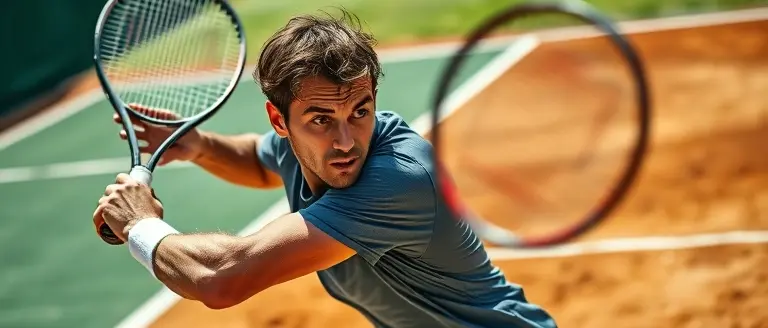
The 2026 season has solidified a historic chapter in the Italian tennis renaissance, with Matteo Arnaldi emerging as a central protagonist alongside global stars like Jannik Sinner and his upcoming French Open semifinal opponent, Flavio Cobolli. Arnaldi’s progression through the Roland Garros draw captured the world’s attention, culminating in a poignant quarterfinal victory over Matteo Berrettini. While the 7-5, 5-2 retirement win was finalized by a hip injury to the veteran, Arnaldi’s tactical dominance and composure throughout the tournament proved he has reached an elite tier of professional play. This deep run not only validates the depth of the Italian talent pool but also signals a changing of the guard in European tennis.
The Grueling Surface Transition
Transitioning from the punishing, slow red clay of Paris to the fast-paced, unpredictable grass courts of Eastbourne represents one of the most difficult physical and technical pivots in the sport. Arnaldi faces an immediate turnaround to compete against Alastair Gray on June 20, 2026. This move requires a near-total recalibration of his game, involving:
- Footwork Adjustment: Shifting from the trademark sliding mechanics of clay to the lower-center-of-gravity, explosive movements required on grass.
- Tactical Rhythm: Minimizing the backswing and shortening points, as grass surfaces amplify the speed of serves and favor aggressive, serve-and-volley transitions.
- Physical Recovery: Managing the residual fatigue from a grueling two-week Slam campaign while adapting the body to the vastly different shock absorption profiles of grass.
Arnaldi’s ability to move from the pressure of a Grand Slam semifinal to the technical demand of a grass-court warm-up event is a testament to the conditioning and mental fortitude of the new generation. While market analysts and betting platforms often view this immediate transition as a wildcard, Arnaldi’s recent form suggests he possesses the baseline consistency necessary to navigate the “green transition” effectively. His performance in Eastbourne will be a critical bellwether for his potential impact on the upcoming grass-court circuit.
The Semifinal Showdown: Arnaldi vs. Cobolli
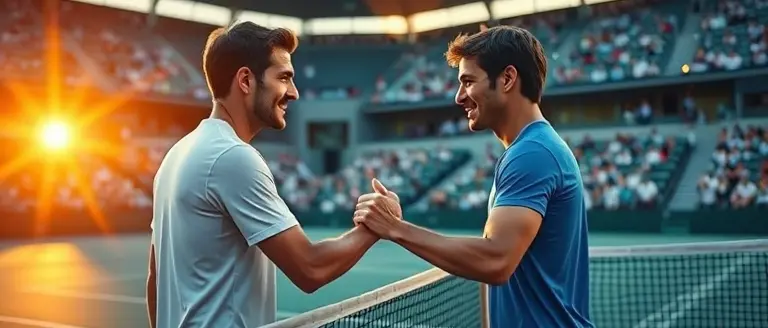
The anticipation surrounding the French Open semifinal clash between Matteo Arnaldi and Flavio Cobolli marks a watershed moment for the Italian Tennis Renaissance. Both players represent a new, aggressive generation of talent that has effectively emerged from the shadows of established veterans. For Arnaldi, the path to this semifinal was cemented by his clinical victory over Matteo Berrettini, demonstrating a composure under pressure that characterizes his meteoric rise in the ATP rankings. Meanwhile, Cobolli’s technical versatility has allowed him to navigate the red clay of Roland Garros with surgical precision, setting the stage for a tactical duel that transcends mere statistical output.
Tactical Implications and Generational Shift
Analysts observing the matchup note that both athletes favor high-intensity baseline rallies, yet they possess distinct stylistic nuances. Arnaldi relies heavily on his fluid movement and exceptional court coverage—traits that were instrumental in his transition to the latter stages of the tournament. Conversely, Cobolli utilizes a more varied shot selection, often incorporating short angles to disrupt his opponent’s rhythm. Their rivalry represents more than just a bracket clash; it signifies:
- Elevated National Standards: The internal competition between these rising stars pushes both to refine their tactical approach, mirroring the upward trajectory seen in other dominant tennis nations.
- Tactical Maturity: Both players have shown an improved ability to shift gears mid-match, a necessity for competing at the Grand Slam level.
- ATP Ranking Momentum: This semifinal provides crucial points that will likely dictate the top 20 landscape for the remainder of the 2026 season.
As they prepare for the high-stakes environment of the semifinals, the tennis world is witnessing a shift in the guard. The success of Arnaldi and Cobolli ensures that Italy’s influence on the ATP Tour remains profound, positioning these two as permanent fixtures in the future of competitive tennis.
Anatomy of a Playstyle: Comparing the Italian Contenders
The current surge in Italian tennis is characterized by a fascinating diversity of tactical profiles, with Matteo Arnaldi serving as a unique bridge between pure grinders and aggressive power hitters. While Jannik Sinner dominates the tour through relentless, high-octane baseline pressure and explosive ball speed, Arnaldi offers a more nuanced approach. His game is defined by elite lateral movement and a high degree of defensive efficiency that allows him to neutralize heavy hitters like Matteo Berrettini. Unlike Berrettini, whose game relies on a massive serve-forehand combination, Arnaldi thrives in prolonged rallies, utilizing his court coverage to turn defensive situations into offensive opportunities.
Technical Breakdown: Arnaldi vs. The Field
When analyzing how Arnaldi stacks up against his contemporaries, several key tactical differences emerge:
- Matteo Arnaldi: His playing style is predicated on superior footwork and consistency. He excels at absorbing pace, making him particularly effective on the clay of Roland Garros, where his ability to slide and reset during points keeps opponents off-balance.
- Jannik Sinner: Sinner represents the vanguard of modern, high-tempo tennis. His game is built on sheer offensive volume and early ball-striking, whereas Arnaldi focuses more on tactical construction and finding the right moment to pivot from defense to attack.
- Flavio Cobolli: Arnaldi’s upcoming semifinal opponent, Cobolli, possesses a game that mirrors Arnaldi’s physicality but often incorporates more variety in spin and angle. Their matchup represents a tactical chess match between two of the most agile defenders in the new Italian generation.
- Matteo Berrettini: The contrast here is stark. Berrettini utilizes a “first-strike” mentality, looking to end points rapidly. Arnaldi’s path to victory consistently involves extending rallies to force errors, showcasing a maturity that allows him to capitalize on his opponents’ physical fatigue, as seen during his recent quarterfinal progression.
This stylistic versatility is precisely why Arnaldi is becoming a force to be reckoned with. His ability to transition from the grueling, slow-paced clay of the French Open to the low-bounce, rapid nature of grass courts in Eastbourne highlights a high tennis IQ. While power hitters often struggle with the sudden decrease in reaction time on grass, Arnaldi’s balanced, footwork-heavy style provides a solid foundation for this difficult surface switch.
Adapting to the Green: The Challenge of the Surface Transition
The professional tennis calendar demands an extreme level of athletic versatility, specifically when players like Matteo Arnaldi must pivot from the grueling, high-bouncing clay courts of the French Open to the slick, low-skidding surface of the grass courts in Eastbourne. This transition is not merely a change in venue; it represents a fundamental shift in the physics of the game. On clay, players rely on sliding into their shots and extended baseline rallies, where the court surface absorbs pace and rewards patience. Conversely, the transition to grass—as seen in Arnaldi’s immediate shift to face Alastair Gray—requires a drastic reduction in backswing and a necessity for quicker, more aggressive footwork.
Tactical Shifts in a High-Pressure Schedule
For a rising star like Matteo Arnaldi, the challenge of adapting his game mid-tournament run is significant. The grass at Eastbourne rewards players who can shorten their points and serve with precision. Unlike the heavy topspin used in Roland Garros to manipulate the bounce, grass necessitates flatter hitting to prevent the ball from sitting up for the opponent. Key adjustments include:
- Footwork Refinement: Players must stop the “clay slide” habit to avoid losing traction on the greener, potentially slick surfaces.
- Backswing Compression: The faster pace of grass means Arnaldi must shorten his preparation to handle incoming power, a common struggle for athletes coming directly from Paris.
- Net Aggression: Because the surface favors shorter, sharper exchanges, increasing frequency at the net becomes a strategic imperative.
Mental fatigue compounds this physical demand. Coming off a high-stakes semifinal run—including the quarterfinal victory against Matteo Berrettini—Arnaldi is forced to immediately recalibrate his tactical focus. His ability to navigate this quick turnaround against opponents like Gray is a testament to the maturity of this new generation of Italian tennis, which is currently surging alongside figures like Jannik Sinner and Flavio Cobolli. As Arnaldi evolves, this capacity to “reset” his game under pressure will be the defining trait of his ascent in the ATP rankings.
Mastering the Mindset of a Champion
As Matteo Arnaldi demonstrates, the path to elite tennis success is as much about neuroplasticity as it is about physical training. Transitioning from the sliding, methodical pace of the French Open to the explosive, low-bouncing reality of grass requires an elite level of mental sharpness that keeps a player ahead of the ball. This mental demand is universal for anyone seeking to perform at their best, whether on the court or in the high-pressure environment of a modern career.
While fans often overlook the silent work of the mind, the true secret weapon of top-tier athletes lies in cultivating sustained cognitive focus. This is where The Brain Song becomes the natural evolution of your performance toolkit. By supporting the mental agility and neuroplasticity needed to thrive in fast-paced environments, it bridges the gap between raw potential and sustained excellence. It is designed for those who refuse to accept mental fog as a side effect of high-stakes pressure.
Elevate your own mental game and sharpen your focus for the upcoming tournament season with the same principles used for cognitive peak performance: learn more about The Brain Song here.
 Elevate your own mental game and sharpen your focus for the upcoming tournament season with the same principles used for cognitive peak performance: learn more about The Brain Song here.Transform My Mental Performance Now!