
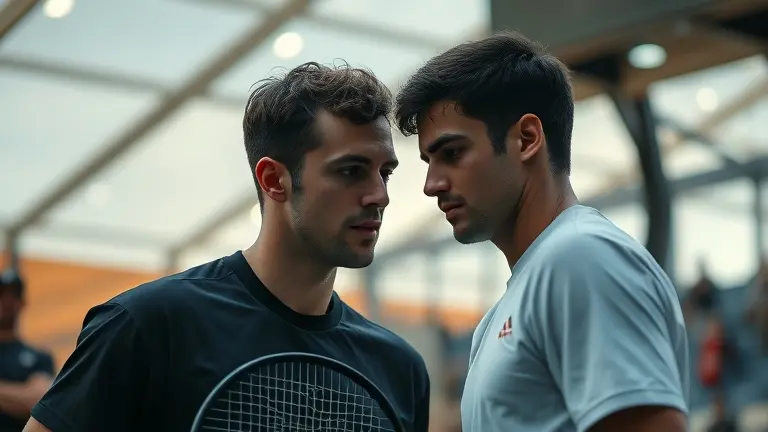
In the high-octane world of professional tennis, the margins between victory and defeat are often measured in milliseconds and mental fortitude. Following an electrifying final at the BOSS OPEN in Stuttgart, where Ben Shelton narrowly edged out Taylor Fritz to claim the title, the two American stars are already bracing for a high-stakes rematch at the Terra Wortmann Open in Halle. This rapid 72-hour turnaround forces both players into a grueling psychological chess match, testing their ability to adapt tactics and maintain extreme cognitive sharpness on the unforgiving grass courts of Germany.
The narrative of the ‘American Tennis Renaissance’ reaches a fever pitch this week as Shelton and Fritz trade serves and volleys in back-to-back tournaments. While fans and analysts speculate on technical adjustments—from serve placement to net-rushing frequency—the most compelling storyline remains the mental endurance required to face a familiar rival immediately after a championship loss. To understand how these giants of the game navigate such intense pressure, we must look closer at the intersection of raw athletic talent and the relentless mental clarity needed to perform when the world is watching.
The Stuttgart Sequel: Ben Shelton vs. Taylor Fritz Back-to-Back

The tennis world is currently witnessing a rare and electrifying phenomenon as Ben Shelton and Taylor Fritz prepare for their second high-stakes showdown in less than a week. Fresh off his impressive triumph at the BOSS OPEN in Stuttgart, where he successfully navigated a grueling final to claim the title, Shelton finds himself on a direct collision course with Fritz once again. This time, the venue shifts to the prestigious Terra Wortmann Open in Halle, Germany, where the two American stars are slated for a high-intensity quarter-final clash. Such a rapid-fire turnaround is exceptionally uncommon at the professional level, creating a unique psychological and tactical environment for both players.
For fans and analysts, this back-to-back sequence serves as a fascinating case study in professional adaptation. Facing an opponent you just defeated in a tournament final provides a rare “second-chance” dynamic for the loser and a “defensive adjustment” challenge for the champion.
Key factors defining this immediate rematch include:
- Tactical Familiarity: Both players have intimate, real-time data on their opponent’s serve patterns, return preferences, and grass-court movement from their Stuttgart encounter just days ago.
- The American Renaissance: This rivalry is currently at the forefront of the US tennis surge, with both athletes establishing themselves as premier grass-court threats ahead of Wimbledon.
- Psychological Pressure: Shelton enters the match carrying the confidence of a recent title, while Fritz is under pressure to execute a tactical pivot to neutralize the momentum that led to his Stuttgart defeat.
Shelton has openly acknowledged the challenge, noting that he expects a much more aggressive version of Fritz in Halle. As the grass-court season intensifies, this rivalry is rapidly becoming the definitive narrative of the pre-Wimbledon swing. Whether Shelton can maintain his dominance or Fritz successfully recalibrates his game will likely come down to minute technical adjustments and the ability to handle the mental fatigue inherent in this grueling, consecutive-week schedule.
Tactical Breakdown: How the BOSS OPEN Final Shapes the Halle Rematch

The rapid-fire transition from the BOSS OPEN final in Stuttgart to the quarter-finals at the Terra Wortmann Open in Halle creates a fascinating laboratory for tactical adjustments. Having just squared off, both Ben Shelton and Taylor Fritz enter this match with intimate knowledge of the other’s current form on grass. Shelton’s recent victory in Stuttgart was predicated on his ability to neutralize aggressive returns, but the shift to Halle’s slightly different grass composition will demand a recalibration of serve patterns and baseline positioning.
Adjustments in Serve and Baseline Strategy
Shelton’s primary weapon in Stuttgart was his high-velocity first serve, which frequently put Fritz on the defensive. To secure a win in the rematch, Fritz will likely look to shorten the points, moving closer to the baseline to take Shelton’s kick serve on the rise. Conversely, Shelton must be wary of his predictability.
Key tactical factors include:
- Serve Placement Variety: Expect Shelton to integrate more “body serves” to jam Fritz, preventing the Californian from extending his wingspan on the backhand wing.
- Net Aggression: Both players utilized serve-and-volley tactics in Stuttgart; however, look for Fritz to attempt more “chip-and-charge” plays to disrupt Shelton’s rhythm during service games.
- Baseline Consistency: While Shelton dominated the power game last week, the Halle surface may offer a truer bounce, favoring Fritz’s technical baseline precision if he can extend the rallies beyond the six-shot mark.
Ultimately, the psychological adjustment is just as critical as the technical one. Shelton has openly acknowledged that Fritz will likely hunt for redemption, meaning the mental fortitude displayed in high-pressure break points will determine which American advances. By studying their previous service locations and passing shot sequences, both players have a rare, immediate blueprint to exploit the vulnerabilities identified during their Sunday showdown.
The Psychological Chess Match: Facing a Familiar Rival

The rapid-fire schedule of the grass-court season has thrust Ben Shelton and Taylor Fritz into a unique mental battle: the immediate rematch. Following Shelton’s hard-fought victory at the BOSS OPEN in Stuttgart, the narrative has shifted from celebrating a title to managing the intense psychological pressure of playing the same elite opponent just days later at the Terra Wortmann Open in Halle. For Fritz, the quarter-final matchup serves as a high-stakes “revenge factor,” while Shelton must navigate the cognitive challenge of maintaining his momentum while avoiding the trap of complacency.
Cognitive Load and Strategic Adjustments
Facing an opponent who possesses a fresh data set on your recent weaknesses forces both players into an accelerated feedback loop. In professional tennis, the “Stuttgart final” is essentially a scouting report for the Halle rematch.
- The Fritz Adjustment: Expect Taylor Fritz to scrutinize the service patterns and rally-ending sequences that Shelton exploited last Sunday. His ability to pivot from his previous game plan without overthinking will be the ultimate litmus test for his mental fortitude.
- The Shelton Confidence: Ben Shelton enters this encounter with the clear psychological edge of a recent trophy, yet he acknowledges that his rival will “come after him.” His task is to remain unpredictable, potentially changing the depth of his groundstrokes or the placement of his serve to disrupt Fritz’s rhythm.
The intellectual burden here lies in the “what stays and what changes” dilemma. When two top-tier American stars face each other back-to-back, the match often devolves into a game of attrition. Both players understand that the smallest technical tweak—a slight variation in court coverage or a more aggressive approach to the second serve—could dictate the outcome. This mental chess match underscores the rising intensity of the American tennis renaissance as both stars prepare for the looming pressure of Wimbledon.
Betting Insights and Predictions for the Halle Quarter-Final

The rapid-fire rematch between Ben Shelton and Taylor Fritz at the Terra Wortmann Open has created a unique dynamic for sports bettors and analysts alike. Following his victory at the BOSS OPEN in Stuttgart last weekend, Shelton enters this quarter-final clash with significant momentum. However, oddsmakers are remaining cautious, acknowledging that a back-to-back encounter on grass often produces different tactical outcomes as players adjust to their opponent’s specific service patterns and return strategies within a compressed 72-hour window.
Key Metrics and Betting Considerations
While Shelton currently holds the psychological edge, savvy bettors should monitor specific technical metrics that influenced the outcome of their previous meeting. The Stuttgart final was largely decided by critical margins in high-pressure scenarios, making the following data points essential for predicting the Halle result:
- Break Point Conversion: In their previous match, Shelton’s ability to capitalize on limited opportunities proved decisive. If Fritz can improve his efficiency under pressure, he may be able to force a deciding set.
- First-Serve Percentage: On the slick grass courts of Halle, the serve is the primary weapon. Any dip in first-serve consistency for either player will likely be punished, as both competitors excel at dictating rallies from the baseline once the point begins.
- Return Game Adjustments: Expect Fritz to attempt to neutralize the heavy spin and pace of the Shelton serve. Analysts suggest that if Fritz moves closer to the baseline to take the ball early, the tactical landscape of the match could shift in his favor.
From a betting perspective, the market is currently showing a slight lean toward a tighter, three-set battle. The immediate nature of this rematch forces both men to rely on their primary weapons rather than lengthy strategic overhauls. While Ben Shelton carries the confidence of a recent title, Taylor Fritz is historically adept at refining his game after a loss, making him a dangerous underdog for those looking at value-driven markets. Bettors should expect a high-intensity affair where the outcome may hinge on a handful of points separated by just a few tactical adjustments.
Mastering the Mental Game: Your Path to Peak Performance
As the tennis world turns its eyes to the Terra Wortmann Open, the rematch between Ben Shelton and Taylor Fritz serves as a profound reminder that elite success is decided as much in the mind as it is on the court. While these athletes scramble to adjust their tactical blueprints within a mere 72-hour window, they are demonstrating the exact kind of cognitive agility required to thrive under extreme pressure. Mastering such rapid-fire transitions isn’t just for professionals; it is the ultimate skill for anyone looking to conquer complex challenges in their own daily life.
Just as Shelton and Fritz must achieve absolute mental clarity to sharpen their performance after a bruising final, you too can bridge the gap between ordinary effort and extraordinary results. By optimizing your cognitive focus, you can eliminate the mental fog that clouds decision-making during your most competitive moments. This is where The Brain Song becomes your essential edge, utilizing neuroscience-backed methods to help you achieve the same ‘zone-in’ mental state that fuels the world’s greatest athletes.
Integrating this tool into your routine doesn’t just sharpen your focus; it empowers you to approach every obstacle with the tactical precision of a champion. Elevate your cognitive potential and stay sharp, whether you are analyzing a high-stakes match or navigating your own professional arena. Don’t leave your performance to chance—tap into the clarity you need to win.
 Unlock your peak cognitive potential and sharpen your focus for the next big match-up by integrating The Brain Song into your daily routine.Yes, I Want to Sharpen My Focus Now!