
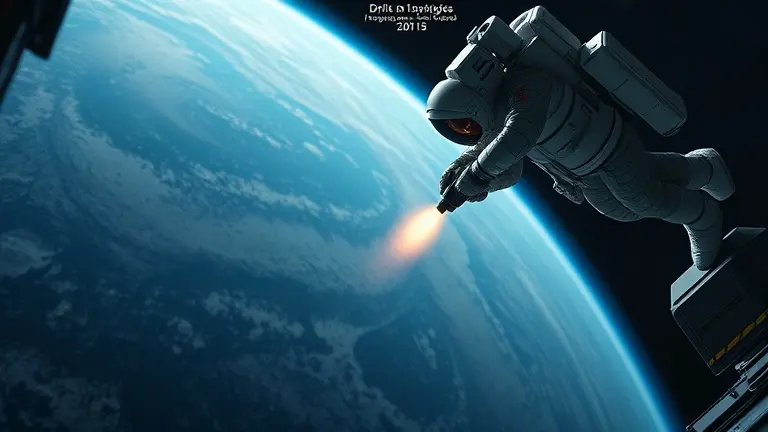
When the thin metal hull of the International Space Station (ISS) becomes the setting for an emergency repair involving power tools, the margin for error effectively drops to zero. Recent reports of Russian crew members considering the use of a drill and saw to address persistent leaks have sent shockwaves through the aerospace community, forcing NASA to initiate emergency sheltering procedures. This isn’t merely a geopolitical disagreement; it is a profound technical crisis that highlights the existential vulnerability of a modular laboratory nearing the end of its operational lifespan. At 250 miles above Earth, there is no hardware store, and there is no room for amateur mistakes when the integrity of a pressurized environment is at stake.
This incident underscores a growing divide in maintenance philosophy between Roscosmos and NASA, raising critical questions about safety protocols for aging spacecraft. As we analyze the technical feasibility of these high-stakes repairs, we must look beyond the immediate headlines to understand why ‘on-the-fly’ improvisations are viewed as a catastrophic risk. By exploring the history of international space cooperation and the brutal physics of vacuum-sealed hardware, we can better grasp why precision engineering remains the only barrier between mission success and total system failure.
The Zvezda Leak Crisis: An Analysis of the Recent Safety Protocol Incident
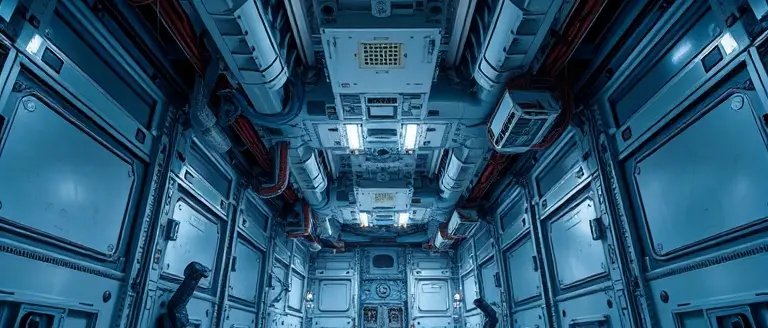
The recent escalation regarding iss russia drill tension highlights a critical divergence in risk management philosophies between NASA and Roscosmos. Over the last 48 hours, the focus of the international space community has centered on the persistent air leak within the aging Zvezda service module. The situation intensified when Russian technicians proposed using heavy-duty industrial tools—specifically drills and saws—to perform direct structural modifications in an attempt to seal the breach. This proposal triggered an immediate, high-level safety review, with NASA flight controllers ultimately directing American astronauts to seek shelter in adjacent modules, viewing the use of abrasive, high-torque tools on a pressurized hull as a potential catalyst for catastrophic failure.
Technical Risks of In-Situ Hull Modification
The technical hazard of using power tools in a vacuum-exposed, pressurized environment cannot be overstated. Unlike ground-based industrial repairs, orbital maintenance requires extreme precision to avoid secondary damage. The risks identified by safety experts include:
- Stress Fracture Propagation: Drilling into the thin, already compromised aluminum hull could introduce microscopic cracks, leading to rapid, uncontainable decompression.
- Debris Contamination: The generation of metal shavings and dust in a microgravity environment poses a significant threat to internal air filtration systems and sensitive electronic components.
- Structural Integrity: Heavy mechanical intervention risks breaching additional sealants or internal piping, turning a localized leak into a station-wide emergency.
This incident underscores the deepening geopolitical and operational friction regarding the International Space Station as it nears its planned retirement. While Roscosmos views these aggressive repairs as a necessary stopgap to maintain station viability, NASA’s stringent safety protocols prioritize risk mitigation over immediate operational uptime. This clash reflects the broader challenges of maintaining an aging orbital asset when international partners hold diverging perspectives on the balance between hardware longevity and crew safety. As the iss russia drill tension continues to evolve, the ability of both agencies to align on non-destructive maintenance strategies remains the primary factor in ensuring the station’s short-term survival.
Structural Integrity and the Perils of Drilling in a Vacuum-Sealed Environment

The recent iss russia drill tension highlights a profound misunderstanding of orbital mechanics and material science. To the untrained eye, drilling into a space station module might seem like a simple repair procedure; however, in a vacuum-sealed environment, the ISS represents a highly pressurized vessel under extreme stress. When an aging module—already suffering from persistent leaks—is subjected to mechanical vibrations or the removal of material, it risks catastrophic structural failure.
The Physics of Risk
Drilling creates two immediate hazards: vibration-induced fracture propagation and the creation of metallic debris. In a microgravity environment, these concerns are magnified:
- Pressure Differentials: The station maintains an internal atmosphere of approximately 14.7 psi, creating an outward force against the vacuum of space. Any compromised seam is prone to “zipper-effect” tearing if structural integrity is further weakened by drilling.
- Micro-Fractures: Aging aluminum hulls are susceptible to stress corrosion cracking. The mechanical torque of a drill bit can trigger these hidden fissures, turning a localized leak into a rapid decompression event.
- Debris Containment: Metal shavings in orbit are lethal; they behave like high-speed projectiles in microgravity, capable of damaging sensitive life-support instrumentation or embedding themselves in crew equipment.
NASA’s directive for astronauts to seek shelter was not an overreaction but a standard safety threshold protocol. When physical intervention threatens the containment of the pressurized volume, isolating the crew in a separate module provides a buffer against sudden decompression. This operational friction underscores the difficulty of managing aging hardware when Russian and American standards for “acceptable risk” diverge. As the ISS nears its operational sunset, these maintenance debates confirm that structural integrity is not merely a technical issue but a core geopolitical concern impacting the safety of all international partners.
Diverging Philosophies: Roscosmos’ Maintenance Strategy vs. NASA’s Risk Thresholds
The recent iss russia drill tension highlights a profound cultural and operational rift between Roscosmos and NASA. At the heart of this friction lies two historically distinct approaches to space engineering. Russia’s methodology, rooted in the legacy of the Mir space station, favors hands-on, “expedient repair” strategies. Engineers in this tradition often prioritize immediate functionality, relying on iterative fixes to keep aging hardware operational in harsh, unpredictable environments. In contrast, NASA employs a stringent, documentation-heavy risk management framework. This process requires exhaustive simulations and multi-level approvals before any invasive procedure is performed on a pressurized module.
These diverging philosophies create significant operational friction as the station reaches the end of its intended lifecycle. While Russian cosmonauts may view aggressive mechanical intervention as a necessary survival tactic, NASA’s leadership identifies these actions as unacceptable threats to station structural integrity. The primary concerns regarding this difference in maintenance strategy include:
- Structural Integrity: NASA mandates that any drilling into pressurized hulls undergoes rigorous stress-analysis, fearing that micro-fractures could propagate under the extreme thermal cycles of the ISS.
- Contamination Risks: The use of mechanical saws and drills releases metallic debris and dust, which pose severe respiratory and vision risks to astronauts if not properly contained within the station’s delicate life-support filtration systems.
- Geopolitical Alignment: These safety disagreements are exacerbated by broader geopolitical tensions, making technical maintenance decisions difficult to decouple from international relations.
Ultimately, the aging nature of the Russian segment is pushing these protocols to their breaking point. As hardware integrity declines, the clash between “expedient repairs” and “protocol-heavy safety” is no longer just a technical disagreement; it has become a central challenge to the viability of the entire International Space Station partnership. Without a unified, transparent safety protocol moving forward, the risk of further miscommunication between these two space powers remains a critical vulnerability.
The Future of the ISS: Aging Infrastructure and Geopolitical Constraints

The recent iss russia drill tension highlights a critical inflection point for the International Space Station (ISS) as it approaches its planned retirement. As hardware nears the end of its operational lifecycle, the reliance on aging modules has created significant friction between NASA and Roscosmos. These disputes are no longer merely technical; they reflect broader geopolitical fractures that complicate the maintenance of a pressurized, life-critical environment. When safety protocols regarding hull integrity become points of contention, the resulting operational uncertainty threatens the stability of all remaining missions aboard the station.
Risks of Prolonged ISS Operations
The structural challenges facing the ISS are exacerbated by the difficulty of performing repairs in orbit. Drilling into a pressurized module is an inherently high-risk endeavor that threatens catastrophic decompression. Key concerns for the long-term viability of the station include:
- Material Fatigue: Years of thermal cycling and exposure to micrometeoroids have weakened the station’s primary hull.
- Operational Divergence: Differing maintenance philosophies between international partners are leading to disagreements on acceptable repair techniques.
- Commercial Transition: The ongoing instability complicates the transition toward commercial space stations, as agencies must now weigh the costs of emergency patching against the timelines for deploying new, privately owned orbital facilities.
Ultimately, this situation forces both agencies to reconsider their long-term operational dependencies. As the ISS nears its end-of-life, the ability to coordinate effectively on safety-critical issues will serve as a bellwether for international space cooperation. If technical disputes continue to evolve into diplomatic friction, the remaining years of the station’s lifespan may be defined more by reactive risk mitigation than by the original goal of seamless, collaborative scientific research. The shift toward a new era of space exploration will likely depend on whether space agencies can navigate these hardware limitations without compromising the safety of their crews.
Mastering Precision Beyond the Vacuum of Space
The harrowing situation aboard the ISS serves as a stark reminder that in any high-stakes environment—whether 250 miles above the planet or in your own home workshop—improvisation is often the precursor to disaster. When the consequences of a technical failure involve the loss of life or the compromise of structural integrity, the only defense is a rigorous adherence to proven, expert-verified planning. Just as an astronaut cannot afford to guess when sealing a pressure leak, a professional creator cannot afford to cut corners without the guidance of precise, engineered blueprints.
This is where the principles of professional-grade project management collide with the reality of your next build. While the astronauts on the ISS deal with the catastrophic risks of improper maintenance, you can ensure your projects are anchored in technical certainty. Our product offers the professional standard for precision, providing verified, workshop-tested blueprints that eliminate costly errors and guesswork. By utilizing these meticulously crafted plans, you adopt the mindset of an engineer, ensuring that every measurement is accurate and every material choice is sound, effectively insulating your work against the common failures that plague amateur attempts.
Don’t gamble with your project’s integrity; ensure every cut and measure is perfect with the industry’s most reliable workshop-tested blueprints. You deserve a result that is as sturdy and reliable as the engineering behind a spacecraft—without the life-threatening volatility. It is time to move beyond the uncertainty of DIY trial-and-error and step into the clarity of professional, total technical certainty.
 Don’t gamble with your project’s integrity; ensure every cut and measure is perfect with the industry’s most reliable workshop-tested blueprints.Yes, I Want Professional Precision Now!