

The recent news that actor Faizon Love, known for his memorable roles in Elf and Friday, was booked into the Orient Road Jail in Tampa has sent shockwaves through the entertainment industry. While the headlines focus on the surface-level drama of a celebrity arrest, the reality of the situation is rooted in a complex, ongoing paternity and child support dispute. Love’s incarceration on two counts of contempt of court follows his claims of having earned “zero” income over the past year—a statement that clearly failed to satisfy the court’s rigorous expectations regarding his financial obligations.
This high-profile incident serves as a stark reminder that even for Hollywood stars, the legal system remains unmoved by fame when it comes to family law. Beyond the sensationalism, this case highlights a growing trend: the intersection of public celebrity scrutiny and the private, often devastating, breakdown of financial and emotional agreements. As we look beneath the surface of this legal standoff, it becomes clear that these public crises are often the final, explosive manifestations of years of unresolved friction, lack of communication, and deep-seated emotional detachment.
Actor Faizon Love Booked into Tampa Jail: A Breakdown of the Facts
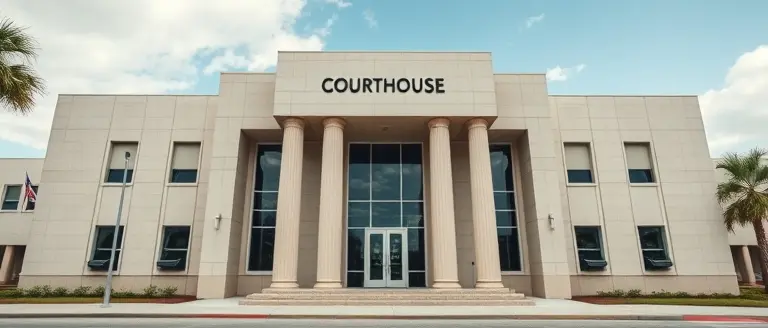
On June 16, 2026, actor Faizon Love, widely recognized for his iconic performances in films like Elf, Friday, and Couples Retreat, was arrested in Tampa, Florida. Public records confirm that the 58-year-old performer was booked into the Orient Road Jail following legal proceedings that have brought his private financial affairs into the public eye. The arrest is specifically linked to an ongoing paternity and child support dispute, a legal matter that has transitioned from civil courtroom arguments to formal criminal or quasi-criminal enforcement action.
Understanding the Charges
The core of the legal action involves two counts of contempt of court. In the context of family law and child support obligations, contempt of court is a serious enforcement tool used by judges when an individual is deemed to have willfully disobeyed a prior court order. According to reports, the catalyst for this specific filing involves recent court documents submitted by the actor. Within these filings, Love reportedly claimed that he earned “zero” income during the previous calendar year.
The legal system’s decision to move toward incarceration indicates that the presiding court found these financial claims either insufficient or non-compliant with standing support mandates. Key details regarding this situation include:
- Location: The arrest occurred in Tampa, where Love was subsequently processed at the Orient Road Jail facility.
- Legal Basis: The booking stems from two distinct counts of contempt of court related to non-payment of child support.
- Financial Disclosures: The actor’s recent legal declarations regarding his lack of earnings appear to be the primary friction point between his defense team and the court’s expectations.
While the situation has garnered significant media attention, it remains a procedural enforcement of existing child support obligations rather than a new criminal charge. As the case progresses, the court will likely determine whether the “zero income” claim meets the legal threshold for modification of payments or if the contempt citations will remain in effect.
Understanding ‘Contempt of Court’ in Child Support Disputes

When reports regarding Faizon Love in jail surface, the conversation often shifts toward the legal mechanism of contempt of court. In the context of family law, this designation is not merely a label for non-payment; it is a serious legal finding that a party has willfully disobeyed a court order. For high-profile figures, these disputes frequently draw public scrutiny, yet the underlying legal principles remain consistent for all litigants. A judge typically holds a hearing to determine if the individual had the “ability to pay” but chose not to comply, or if they failed to follow specific directives mandated by the court, such as providing accurate financial disclosures.
Civil vs. Criminal Contempt
Understanding why an individual may face incarceration requires distinguishing between the two primary forms of contempt used in child support matters:
- Civil Contempt: This is the most common approach. The goal is to coerce compliance. A judge may order jail time, but the individual often holds the “keys to their own cell,” meaning they can be released once they pay the outstanding balance or fulfill the court’s requirement.
- Criminal Contempt: This is punitive in nature and is reserved for cases where the court deems the defiance as an affront to its authority. This typically involves fixed sentences intended to punish the individual for past conduct rather than simply forcing future payment.
In scenarios involving child support disputes, courts emphasize that support orders are legally binding obligations. When an individual files documents claiming “zero” income—as reportedly seen in recent high-profile cases—the court must verify these assertions. If the evidence presented contradicts reality or if the individual ignores court-ordered financial reviews, the judge may invoke contempt powers to maintain the integrity of the judicial process. Ultimately, while incarceration is often a measure of last resort, it serves as the ultimate enforcement tool when traditional collection methods fail to ensure the welfare of the children involved.
The Financial Scrutiny of Celebrities in Legal Battles

The recent news regarding Faizon Love in jail highlights a growing trend where high-profile entertainers face intense public and legal scrutiny over their personal finances. In the entertainment industry, where income is often fluctuating, irregular, or commission-based, proving “ability to pay” becomes a complex legal hurdle. When a public figure claims “zero income” in the face of standing child support obligations, the judicial system often views these assertions with extreme skepticism, necessitating a forensic deep dive into their financial history.
The Mechanism of Court-Mandated Disclosure
When a party in a paternity and child support dispute fails to meet court-ordered payments, the resulting contempt of court charge is not merely a penalty for debt; it is a sanction for failing to comply with a judicial mandate. Courts rely on comprehensive financial disclosures to determine support amounts. When an individual claims total indigency, judges frequently look beyond basic W-2 forms or tax filings to ensure the party is not intentionally shielding assets or under-reporting earnings. Key areas of judicial investigation often include:
- Lifestyle Analysis: Comparing reported income against visible spending habits, travel, and lifestyle maintenance.
- Asset Liquidation: Evaluating whether an individual has the capacity to liquidate assets to satisfy support obligations rather than claiming a lack of liquid cash.
- Earning Capacity: Assessing whether the party is willfully underemployed to avoid paying higher support amounts.
The legal process surrounding these disputes is designed to prioritize the child’s welfare over the parent’s reported financial status. By placing Faizon Love in jail on contempt charges, the court signals that it has found sufficient evidence to doubt the claim that no income exists to cover the mandated support. This situation serves as a stark reminder that in the eyes of the law, celebrity status provides no immunity from the rigorous investigation of one’s finances when obligations to family are at stake.
Navigating Public Interest vs. Legal Reality

The news regarding Faizon Love in jail has sparked significant public discussion, much of which centers on the perceived financial status of the veteran actor. However, it is essential to distinguish between sensationalist headlines and the procedural complexities of the legal system. When a celebrity is involved in a high-profile contempt of court case, the public often rushes to assume that the individual is completely destitute. In reality, the legal system serves as a venue for verification rather than a platform for social commentary on an entertainer’s bank account. Financial fluctuations are a standard reality in the entertainment industry, where income is rarely consistent, and legal disputes over support obligations are often rooted in disagreements over net earnings and asset valuation rather than absolute poverty.
The Procedural Nature of Contempt
In the context of the recent arrest of Faizon Love, it is crucial to understand that contempt of court is a legal mechanism, not a judgment on personal character. Courts utilize this tool to compel compliance with standing orders, such as paternity and child support mandates. When a party claims “zero income,” the court is tasked with performing a forensic review of that claim to ensure that the individual is fulfilling their legal obligations.
Key aspects of these proceedings include:
- Verification of Assets: Courts often require exhaustive financial disclosures to determine if a claim of low income matches the reality of the defendant’s lifestyle and business holdings.
- Compliance vs. Punishment: The primary objective of such incarceration is to gain compliance with an existing court order, not necessarily to impose punitive measures for the sake of public spectacle.
- Industry Volatility: Unlike traditional salaried positions, careers in film and television often involve gaps between roles, which can complicate the calculation of recurring support payments.
Rather than speculating on the actor’s personal finances, it is more accurate to view this situation as a standard administrative review. The legal process is designed to weigh evidence objectively, ensuring that the interests of all parties are protected through established judicial channels. As the case proceeds, maintaining a focus on the procedural facts—rather than rumors—provides a much clearer picture of the situation.
Navigating the Hidden Triggers of Relational Conflict
While the court system focuses on the cold mechanics of child support and income documentation, the true tragedy in cases like Faizon Love’s often lies in the breakdown of the underlying relationship long before the gavel falls. These legal battles are rarely just about money; they are the symptoms of a profound disconnect and a failure to navigate the complex psychological needs that sustain a healthy, cooperative partnership. When communication fails, legal intervention becomes the only remaining path, leading to the kind of public fallout that ruins reputations and drains personal resources.
Understanding these underlying dynamics is essential to preventing the cyclical friction that turns private family matters into public legal nightmares. Our featured resource, His Secret Obsession, offers a sophisticated toolkit designed to help you decode the often-hidden psychological triggers that cause men to pull away or resist long-term commitment. By learning how to foster genuine connection and emotional security, you can build a foundation of mutual respect that prevents resentment from festering into the type of catastrophic financial and legal disputes we see in the headlines today.
Don’t wait for communication gaps to turn into irreparable crises. Gain the insights you need to cultivate a deeper, more resilient bond and navigate the complexities of male psychology with confidence and grace. It is time to move beyond the reactive cycle of conflict and start building the lasting devotion you deserve.
 Learn how to trigger the ‘Hero Instinct’ and build a foundation of lasting devotion before minor disagreements spiral into legal crises.Transform My Life Today