
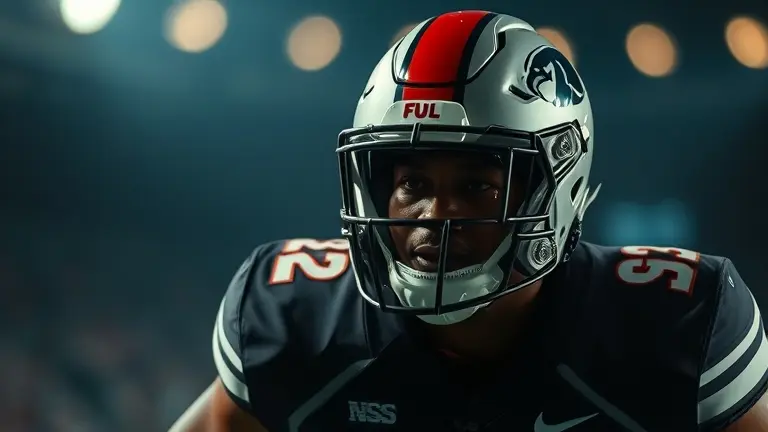
The college football landscape shifted seismically in the last 15 hours as 5-star running back sensation David Gabriel Georges made the bold decision to cancel his scheduled official visit to the University of Georgia. This unexpected development has effectively tightened the race for the Baylor School standout, leaving Tennessee, Ohio State, and Ole Miss as the primary contenders for one of the most electric prospects in the Class of 2027. Fans and analysts are now left scrambling to decode what this means for the SEC hierarchy and the future of their respective backfields.
Moving beyond the breaking news headlines, the true intrigue lies in the tactical fit of Georges within these high-powered offensive schemes. Whether it is the breakneck pace of Josh Heupel’s system in Knoxville, the pro-style precision demanded in Columbus, or the creative versatility of the Rebels’ attack, Georges represents a foundational piece for any elite program. Understanding this commitment requires a deep-dive, builder’s perspective on how talent, scheme, and coaching staff vision intersect to create a championship-caliber roster.
David Gabriel Georges Shakes Up 2027 Recruitment: UGA Visit Canceled

In a move that has sent shockwaves through the college football landscape, 5-star running back prospect David Gabriel Georges has officially canceled his highly anticipated visit to the University of Georgia. This sudden shift in plans signals a major pivot in the Class of 2027 recruiting cycle. By removing the Bulldogs from his list of potential suitors, Georges has effectively trimmed his final contenders down to three primary programs: the University of Tennessee, Ohio State University, and Ole Miss.
Strategic Implications of the Georgia Withdrawal
The decision to bypass Athens comes as a surprise to many analysts, as Georgia is frequently viewed as a perennial landing spot for elite running back talent. While the exact motivations remain behind closed doors, this development suggests that Georges is prioritizing specific offensive schemes and early playing time opportunities over the general prestige of the UGA program. His narrowing of the field to the Volunteers, Buckeyes, and Rebels highlights a deliberate move toward programs known for explosive, high-tempo, or running-back-friendly offensive identities.
What This Means for the 2027 Landscape
The impact of this decision on the Class of 2027 cannot be overstated. As one of the highest-rated recruits in the country, Georges acts as a bellwether for other top-tier prospects. His finalists offer distinct tactical advantages:
- Tennessee: Offers a high-octane, up-tempo system under Josh Heupel that heavily utilizes elite backfield talent.
- Ohio State: Provides the prestige of a consistent national championship contender with a proven track record of developing NFL-caliber running backs.
- Ole Miss: Presents a modernized, versatile offensive scheme that allows for significant creative utilization of a dynamic playmaker.
As the recruiting race intensifies, the Tennessee faithful have been particularly vocal on social media, viewing this development as a significant window of opportunity for the Volunteers to secure a potential cornerstone offensive piece for their future recruiting class. Analysts will be monitoring the upcoming visit schedules for these three programs closely, as any further adjustments could indicate an imminent commitment announcement.
The Contenders: Analyzing Tennessee, Ohio State, and Ole Miss

The recruitment of David Gabriel Georges has reached a critical juncture, with the 5-star running back narrowing his collegiate destination to Tennessee, Ohio State, and Ole Miss. Each program offers a distinct offensive philosophy that could define the trajectory of his professional career.
Tennessee’s High-Tempo Spread
Under Josh Heupel, the Volunteers utilize a high-octane, pace-based attack designed to stretch the field horizontally. For a prospect like Georges, this scheme provides unique advantages:
- Space Creation: The heavy reliance on vertical passing clears out the box, allowing elite backs to exploit one-on-one matchups in the open field.
- Volume Opportunities: Tennessee’s offense is designed to maximize total plays per game, ensuring high-usage rates for primary running backs.
- Regional Loyalty: As a Tennessee-based talent from the Baylor School, staying home carries significant weight for program legacy.
Ohio State’s RB Development
The Buckeyes possess a proven track record of placing running backs in the NFL. Ohio State’s scheme is traditionally more balanced, focusing on physical interior running and pro-style power concepts. Choosing the Buckeyes would signal a commitment to technical development and NFL-readiness. Their history of producing high-round draft picks provides a compelling case for Georges to prioritize professional grooming over scheme fit.
Ole Miss and the Aggressive Strategy
Ole Miss, led by Lane Kiffin, offers a high-variance, creative offense that consistently ranks among the most productive in the nation. The Rebels prioritize versatility, often utilizing their backs as dual-threat receivers out of the backfield. Georges’ ability to be a pass-catching asset makes him a seamless fit for Kiffin’s unpredictable, motion-heavy offensive identity, which often highlights the individual skill sets of its top-tier recruits.
Roster Depth and Opportunity: The Path to Early Playing Time

For a 5-star recruit like David Gabriel Georges, the decision between Tennessee, Ohio State, and Ole Miss hinges on more than just prestige; it rests on the tangible path to securing a starting role. Evaluating these programs requires a look at current backfield congestion and the anticipated turnover by the time a 2027 prospect steps onto campus.
Assessing the Backfield Landscape
Each finalist offers a unique value proposition regarding playing time. Analyzing the depth charts reveals varying levels of competition:
- Tennessee: Josh Heupel’s high-tempo offense relies on constant rotation, which theoretically benefits a freshman aiming for early snaps. However, the Volunteers’ success in recruiting high-tier talent means Georges would likely compete against a flurry of blue-chip underclassmen who are already acclimated to the fast-paced scheme.
- Ohio State: The Buckeyes consistently attract top-tier running back talent. While the prestige of Ohio State is undeniable, the depth chart is frequently crowded with multi-year starters and high-profile transfers. A commitment here suggests Georges is prepared to compete in an “iron sharpens iron” environment where the starting job is rarely guaranteed to a newcomer.
- Ole Miss: Lane Kiffin’s offense is renowned for utilizing versatile backs who can thrive in both run and pass concepts. With recent trends pointing toward heavy utilization of the portal, the Rebels offer a dynamic but unpredictable path. Georges could find an immediate vacancy if the program shifts its strategy toward building around a foundational, elite freshman presence.
Ultimately, the choice comes down to Georges’ confidence in his ability to displace established depth. While Ohio State offers a proven pipeline to the NFL, Tennessee’s system and Ole Miss’s scheme flexibility present arguably clearer avenues for a premier talent to seize lead-back duties by his sophomore campaign. Given his trajectory, Georges must weigh whether he prefers a program with a solidified hierarchy or one that provides a more open-ended opportunity for early-career production.
Recruiting Implications: What to Watch for in the Final Stretch

The sudden shift in the recruitment of David Gabriel Georges has sent shockwaves through the 2027 cycle, transforming a wide-open race into a high-stakes three-way battle between Tennessee, Ohio State, and Ole Miss. With the Georgia visit officially off the table, analysts expect an accelerated timeline for his final decision. While no specific date has been set, the tactical cancellation suggests that Georges is moving toward a private consensus with his family. The “recruiting ripple effect” of this move cannot be overstated; top-tier prospects often look for momentum-building commitments to solidify their own class rankings, meaning Georges’ choice will likely trigger a series of subsequent pledges from fellow blue-chip athletes watching his decision closely.
Critical Variables Influencing the Final Decision
As the race enters its final stretch, three primary factors will dictate where the 5-star running back ultimately lands:
- Coaching Staff Stability: In an era of the transfer portal and rapid turnover, Georges is prioritizing long-term relationships. Potential recruits are increasingly wary of staff instability; therefore, the coordinators at each respective school will be under intense pressure to demonstrate long-term commitment to the program.
- Offensive Scheme Synergy: Georges is evaluating how his specific skill set—characterized by elite vision and breakaway speed—aligns with the tempo of Josh Heupel’s offense at Tennessee versus the more balanced, pro-spread systems utilized by the Buckeyes and the Rebels.
- Roster Depth Charts: His final choice will likely hinge on the current depth at the running back position. Georges is looking for a path to immediate playing time, and how each school manages its current rotation will be a significant data point in his assessment.
Ultimately, the exclusion of Georgia serves as a bellwether for the intensity of the current recruiting landscape. Whether he opts for the explosive potential in Knoxville, the development machine in Columbus, or the high-octane environment in Oxford, his decision will undoubtedly redefine the trajectory of the 2027 recruiting class. All eyes remain on his camp as the final recruitment phase reaches its climax.
Building a Legacy Through Precision and Strategy
As the recruitment of David Gabriel Georges nears its climax, it becomes clear that success—whether on the gridiron or in a workshop—is never accidental. It is the result of meticulous planning, tactical foresight, and the ability to visualize how every individual component fits into a larger, winning structure. The teams vying for Georges aren’t just scouting a player; they are engineering an offensive blueprint that demands absolute precision to execute effectively.
This same ‘builder’s mindset’ is what separates the elite from the amateur. Just as a top-tier coaching staff uses data-driven projections to secure a 5-star talent, you deserve the same level of technical accuracy when bringing your own projects to life. If you are tired of the guesswork and are ready to stop wasting time on trial-and-error, you need a system that offers the professional-grade blueprints required for absolute success. Our comprehensive library of 16,000 plans provides the ‘structural foundation’ you need to turn complex ideas into reality with total certainty.
Precision is the difference between a project that holds together and one that stands the test of time. Much like a 5-star prospect transforming a team’s offensive potential, the right tools will transform your workspace into a site of professional achievement. Don’t leave your success to chance—adopt the precision that high-level recruitment demands.
 Ready to move past the speculation and build something with precision? Get access to the ultimate workshop-tested plans here.Yes, I Want My Professional Plans Now!