
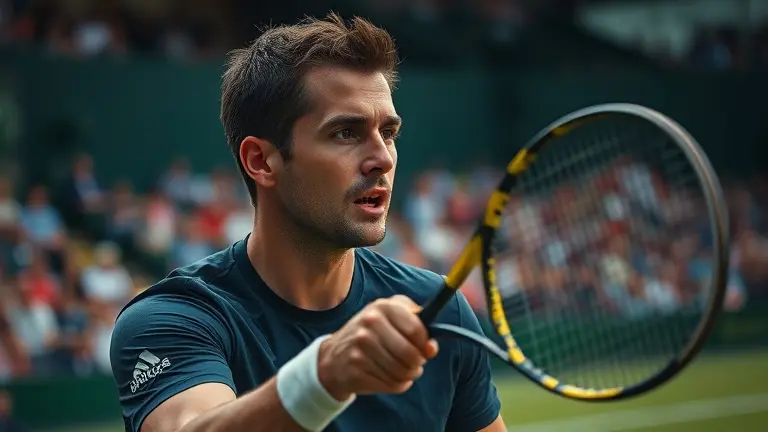
The grass courts of Stuttgart witnessed a seismic shift in the tennis landscape this past June 14, 2026, as Ben Shelton dismantled Taylor Fritz to claim his first career title on the surface. With a decisive 6-4, 2-6, 6-4 victory, the young American powerhouse proved that his game is no longer confined to the hard courts of his homeland; it is evolving into a lethal weapon designed for the lightning-fast conditions of SW19. As the tennis world turns its collective gaze toward the looming start of the 2026 Wimbledon Championships, Shelton’s technical maturity—specifically his refined serve-and-volley progression and tactical patience—has elevated him from a rising prospect to a legitimate dark horse contender.
Yet, the road to London is paved with more than just physical prowess. In an era where the margin between victory and defeat is measured in milliseconds, the ability to maintain cognitive dominance under the immense pressure of a Grand Slam final is what separates champions from contenders. Shelton’s recent tactical surge has sparked a deeper conversation: is he truly ready to conquer the grass, and what does it take for an elite athlete to sustain that level of mental sharpness when the world is watching?
The Stuttgart Breakthrough: Ben Shelton’s Rise to Grass-Court Prominence
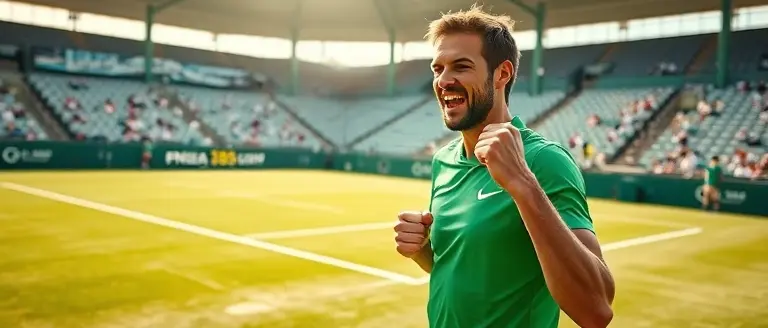
On June 14, 2026, Ben Shelton solidified his status as a legitimate contender on faster surfaces by capturing his first career grass-court title at the Stuttgart Open (BOSS Open). In a high-stakes, all-American final, Shelton navigated a challenging three-set battle against Taylor Fritz, ultimately securing a 6-4, 2-6, 6-4 victory. This win marks a pivotal milestone in his professional trajectory, serving as his third tournament title of the 2026 season and showcasing an impressive evolution in his court coverage and tactical discipline. The scoreline reflects the intense parity between the two Americans, with Shelton’s ability to stabilize his serve and execute under pressure during the decider proving to be the difference-maker.
Momentum Shifts to Halle and Wimbledon
Following his triumph in Stuttgart, Shelton immediately transitioned to the Terra Wortmann Open (Halle Open) in Germany, aiming to maintain his rhythm ahead of the Wimbledon Championships beginning June 29, 2026. This rapid turnaround underscores his commitment to mastering the nuances of grass, an area where he has historically faced greater hurdles than his clay or hard-court campaigns. His performance in Halle is being closely monitored by analysts, as it serves as the final proving ground for his Wimbledon 2026 odds and potential deep-run prospects.
Beyond the baseline, Shelton’s recent rise has been accompanied by significant digital discourse. Viral discussions—including public commentary from figures like Trinity Rodman—have highlighted perceived imbalances in how media outlets cover Shelton’s achievements compared to his peers. As the tennis world pivots toward London, the conversation remains split between:
- Tactical Progression: His improved serve-and-volley efficiency during the Stuttgart grass-court swing.
- Media Narrative: The ongoing debate regarding his visibility and the “New American Guard” movement.
- Grand Slam Readiness: Whether his current form can translate into a breakthrough performance at the All England Club.
Shelton’s current trajectory suggests he is moving beyond the status of a rising star and into the tier of players who must be considered serious threats for every trophy they contest.
Tactical Evolution: How Shelton Mastered the Grass Surface

The victory at the Stuttgart Open served as a definitive statement regarding Ben Shelton and his rapid adaptation to the nuances of grass-court tennis. Traditionally, Shelton’s game has been defined by the explosive, high-octane baseline power suited for North American hard courts. However, his Stuttgart performance against Taylor Fritz revealed a calculated shift in geometry and patience. To thrive on the slick, lower-bouncing surface, Shelton significantly refined his movement, favoring shorter, more compact steps that allow him to neutralize low-skidding balls—a departure from his more elongated hard-court strides.
Technical Adjustments for the All England Club
The most significant evolution in Shelton’s arsenal is the development of a reliable, skidding slice backhand. By utilizing the backhand slice to keep the ball low, he effectively forced his opponents to hit upward, creating perfect transition opportunities for his signature serve-and-volley game. Key tactical improvements include:
- Refined Net Approaches: Shelton has moved away from purely reactive net play, instead timing his approaches behind heavy, redirected groundstrokes that pin opponents into the corners.
- High-Velocity Serve Efficiency: His massive serve remains his greatest weapon, but on grass, he has focused on hitting his spots with greater frequency rather than relying solely on raw power. This precision limits the windows for returners to get a racquet on the ball.
- Point Construction: Rather than seeking the immediate winner, Shelton displayed a newfound willingness to engage in “plus-one” tennis—serving big and finishing the point with a crisp volley or a controlled forehand put-away.
This tactical maturation positions the American as a legitimate dark horse for the 2026 Wimbledon Championships. By successfully blending his natural raw athleticism with the precision required for grass-court success, Shelton has proven that his Stuttgart title was no fluke. As he gains more court time at the Halle Open, the tennis world is witnessing the birth of a more sophisticated, well-rounded player capable of deep runs at the sport’s most prestigious events.
Shelton’s Wimbledon 2026 Odds and Trajectory
Following his stellar performance at the Stuttgart Open, Ben Shelton has rapidly ascended the list of favorites for the upcoming Wimbledon 2026 championships. Before his victory over Taylor Fritz, oddsmakers viewed the young American as a long-shot, primarily due to his limited experience on grass. However, his recent tactical masterclass—showcasing improved serve-and-volley transitions and a more disciplined approach to net play—has shifted the betting landscape significantly. As of late June 2026, Shelton’s Wimbledon 2026 odds have tightened, reflecting increased confidence from analysts who now view him as a potential “dark horse” capable of disrupting the dominance of established grass-court specialists.
Momentum and Tactical Readiness
Shelton’s transition to the Terra Wortmann Open in Halle serves as the ultimate litmus test for his grass-court viability. His ability to maintain the high-intensity level shown in Stuttgart will determine if he can sustain this momentum through the two-week gauntlet in London. His trajectory is being closely watched for several key indicators:
- Serve Efficiency: Shelton’s ability to exploit the slick surface with his high-velocity serve remains his greatest weapon.
- Net Aggression: Improved comfort at the net suggests he is finally maximizing his physical frame for the demands of Wimbledon’s fast-paced environment.
- Resilience under Pressure: Having navigated a grueling three-set final against a top-tier peer like Fritz, Shelton has demonstrated the mental fortitude required for Grand Slam success.
While veteran players often rely on experience to navigate the unique bounces of Wimbledon, Shelton is currently riding a wave of peak athletic form. If he continues to refine his defensive baseline tactics in Germany, he is well-positioned to make a deep run at the All England Club. For bettors and fans alike, Shelton is no longer just an emerging talent; he is a statistical threat who is forcing the field to adjust their defensive strategies ahead of the June 29 start date.
Highlight Reel: Key Points Behind the Winning Streak
The Stuttgart Open final served as a masterclass in adaptation, proving that Ben Shelton has successfully unlocked the tactical nuances required for elite-level grass-court tennis. In his 6-4, 2-6, 6-4 victory over Taylor Fritz, the defining narrative was Shelton’s ability to remain composed under extreme pressure. Throughout the match, his serve—a weapon that has long been his primary catalyst—found new rhythm on the slick surface. Rather than relying solely on raw power, Shelton demonstrated a sophisticated usage of wide-angle kick serves to pull Fritz off the court, consistently setting up quick-strike forehands that dictated the tempo of the rally.
Tactical Mastery Under Pressure
During the pivotal third set, Shelton’s composure was on full display. Fans reviewing the match highlights—which have already surpassed 124,000 views—will note three specific areas of improvement:
- Serve-and-Volley Precision: Shelton aggressively moved forward behind his delivery, shortening points and denying Fritz the baseline rhythm he prefers.
- Neutralizing the Return: By shortening his backswing, Shelton managed the lower bounce of the grass more effectively, allowing him to absorb pace and redirect the ball with clinical accuracy.
- High-Stakes Mental Toughness: Faced with a mid-match slump in the second set, Shelton reset his mental state, exhibiting the maturity of a veteran when serving for the championship in the final game.
This shift in playstyle is a significant departure from his earlier reliance on pure explosive athleticism. By integrating these technical refinements, Ben Shelton transformed his grass-court game into a multifaceted attack. As he continues his momentum into the Halle Open and looks toward the 2026 Wimbledon Championships, these highlight-reel moments serve as evidence that he is no longer just a high-potential prospect, but a genuine contender who can dominate on the world’s fastest surfaces. His ability to blend his trademark energy with newfound tactical discipline marks a new, dangerous chapter in his professional trajectory.
Unlocking the Cognitive Edge of a Champion
Ben Shelton’s rapid ascent is a masterclass in adaptation, proving that technical skill must be underpinned by an unbreakable mental framework. Whether he is navigating a high-stakes tie-break at the Halle Open or preparing for the intensity of Wimbledon, his success hinges on his capacity for rapid decision-making and laser-like focus. As elite sports evolve, the most successful athletes are those who prioritize mental conditioning as rigorously as they train their forehands and volleys.
This is where your journey mirrors that of a professional athlete. Just as Shelton uses mental precision to dismantle his opponents, you can optimize your own cognitive performance to conquer your professional and personal goals. The Brain Song is more than a tool; it is your gateway to the sharpened mental clarity and peak cognitive state required to navigate high-pressure environments with ease. By integrating this into your daily routine, you are choosing to prioritize the very mental conditioning that defines the elite tier of modern sports.
It is time to stop playing small and start operating at your maximum potential. Take control of your focus, sharpen your decision-making, and perform at the level you were always meant to achieve.
 Elevate your own mental game and focus just like the pros—click here to start your daily brain-optimization routine.Transform My Mental Performance Now!