

As the 126th U.S. Open descends upon the unforgiving fairways of Shinnecock Hills, all eyes are locked on Bryson DeChambeau. Yet, the narrative surrounding the ‘Scientist’ has shifted from his signature long-ball dominance to a cold, analytical debate over his 2026 slump. Following two underwhelming major performances, whispers of a technical regression have grown louder, fueled by a high-stakes search for the perfect equipment—most notably, an experimental TaylorMade driver engineered to conquer this specific setup. But DeChambeau is no longer just a player seeking form; he is a corporate stakeholder, actively lobbying for critical investments to secure the future of LIV Golf.
This isn’t just a quest for another trophy; it is a complex intersection of physics, professional pressure, and institutional influence. To understand DeChambeau today, we must look past the binary betting odds and examine how his data-driven blueprint is colliding with the reality of modern tournament demands. Whether he finds his groove on these storied greens or continues his struggle, his path forward reveals as much about his meticulous approach to golf as it does about the evolving landscape of the sport itself.
The Shinnecock Test: Bryson DeChambeau at the 126th U.S. Open

The arrival of Bryson DeChambeau at Shinnecock Hills for the 126th U.S. Open marks a pivotal intersection in his professional career. Following a turbulent start to the 2026 season—characterized by missed cuts in the first two majors—the “Scientist” finds himself under intense scrutiny. While betting markets have adjusted their expectations, casting him as a long-shot compared to previous cycles, the reality of his performance metrics suggests a more nuanced narrative. His struggles are not necessarily a failure of his physics-based approach, but rather a reflection of the challenges in recalibrating his high-velocity swing mechanics against the unforgiving, firm conditions typically found at Shinnecock.
A Defining Moment for Dual Roles
Beyond the scorecard, DeChambeau is navigating an unprecedented dual existence. As he steps onto the first tee, he is not merely competing as a golfer; he is acting as a primary stakeholder in the future of LIV Golf. Reports indicate that DeChambeau has been instrumental in spearheading new investment strategies, effectively moving from a marquee player to a corporate influencer. This dual pressure creates a unique psychological environment:
- Strategic Distraction: Balancing high-level financial negotiations with the rigorous physical demands of U.S. Open preparation.
- Technological Pivots: His rumored experimentation with a new TaylorMade driver highlights an ongoing commitment to optimizing gear-to-swing synergy, even in the midst of a competitive slump.
- Legacy Impact: A strong performance at Shinnecock would validate his business influence, proving that his analytical methods remain superior even when his current form faces skepticism.
Whether this week results in a resurgence or a continued slide, DeChambeau remains the most scrutinized figure in the field. His ability to compartmentalize his boardroom responsibilities while executing precision shots on a major championship layout will ultimately define his legacy throughout the 2026 campaign.
From Fairway to Boardroom: DeChambeau’s New Role as an LIV Power Broker
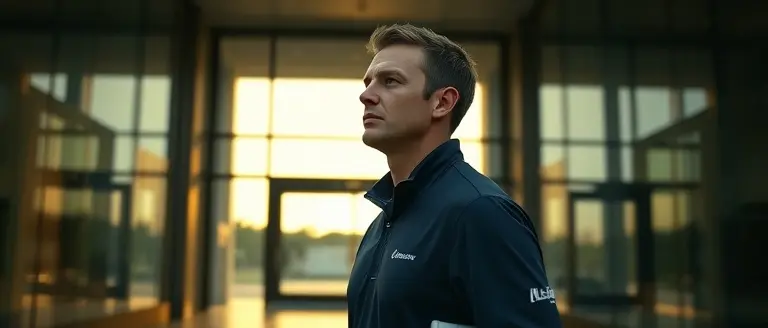
The narrative surrounding Bryson DeChambeau has shifted dramatically throughout the 2026 season. While his performance on the course has been marked by inconsistency—evidenced by missed cuts in the season’s first two majors—his influence behind the scenes has surged. DeChambeau is no longer merely a high-profile athlete; he has effectively transitioned into a corporate stakeholder and power broker for LIV Golf. Reports from the 126th U.S. Open at Shinnecock Hills indicate that DeChambeau is spearheading critical efforts to secure long-term external investment for the league, a responsibility that separates him from the traditional professional golfer who focuses solely on tournament preparation.
The Balancing Act of a Corporate Athlete
This dual role presents a unique challenge for the “Mad Scientist” of golf. Balancing the high-pressure demands of major championship competition with the geopolitical and financial complexities of league management is an unprecedented endeavor for an active player. Industry insiders and peers, such as Laurie Canter, have noted the extent of DeChambeau’s involvement in LIV’s future, suggesting that his intellectual bandwidth is currently stretched thin.
The consequences of this extracurricular burden are becoming a focal point of concern for analysts tracking his game:
- Strategic Distraction: The mental load required to negotiate complex investment deals may be hindering his ability to enter the “flow state” necessary for elite performance.
- Analytical Shift: His trademark data-driven approach, typically reserved for optimizing launch conditions and equipment testing, is now being applied to organizational viability rather than his own swing mechanics.
- Public Scrutiny: As the face of this financial pivot, DeChambeau faces heightened skepticism when his on-course results—such as those leading into this year’s U.S. Open—fall below expectations.
Evidence suggests that his active involvement in steering the ship at LIV Golf is not merely a side project but a defining element of his professional identity. Whether this pivot will ultimately enhance his legacy as an influencer or permanently disrupt his competitive form remains the defining question of his 2026 season.
The Engineering Mind: Deconstructing the Rumored TaylorMade Prototype

At the heart of the Bryson DeChambeau resurgence narrative at the 126th U.S. Open lies a familiar, calculated variable: the equipment. Amidst a challenging 2026 season defined by missed cuts and fluctuating form, DeChambeau has turned to his signature analytical methodology, reportedly testing a new TaylorMade prototype driver at Shinnecock Hills. For a player whose career is built upon the synthesis of physics and kinetic energy, this switch is not merely a reactionary “gear swap,” but a deliberate attempt to recalibrate his launch parameters. Evidence suggests that DeChambeau is leveraging custom club specs as a stabilizer for his swing mechanics, seeking to tighten his dispersion patterns against the unforgiving fairways of a U.S. Open venue.
Precision Engineering vs. The Slump
DeChambeau’s reliance on technical customization reflects his belief that performance degradation is often a measurable data mismatch rather than a fundamental flaw. By partnering closely with TaylorMade engineers to refine the prototype’s center of gravity and spin-rate efficiency, he is attempting to “engineer” his way out of the current slump. This approach prioritizes:
- Optimal Spin Loft: Adjusting the driver’s loft-face interaction to maximize distance without sacrificing the fairway accuracy required for Shinnecock’s firm conditions.
- Moment of Inertia (MOI) Tuning: Using specific tungsten weighting to combat the erratic misses that have plagued his performance in the previous two majors of 2026.
- Kinetic Feedback Loops: Utilizing real-time swing data to ensure the clubhead’s response matches his current, slightly modified swing plane.
Whether this experimental gear can override the psychological pressure of back-to-back major disappointments remains the primary question for analysts. However, for Bryson DeChambeau, the prototype is more than a marketing curiosity—it is a diagnostic tool. By isolating the driver as a controlled variable, he aims to validate his long-term “physics-based” approach, signaling to the field that his commitment to data-driven golf remains absolute even when the results have yet to mirror his ambition.
Performance Metrics: A Data-Driven Look Beyond the Results

While the narrative surrounding Bryson DeChambeau in early 2026 focuses heavily on missed cuts and perceived slumps, a granular analysis of his Strokes Gained (SG) metrics reveals a more nuanced reality. Despite the high-profile failures at the year’s first two majors, DeChambeau’s underlying data suggests that his “physics-based” approach remains statistically sound, even if the execution has faltered under competitive pressure. His Driving Efficiency remains well above the tour average, with his total distance numbers maintaining their elite status. However, the data highlights a concerning trend in Strokes Gained: Approach and Proximity to the Hole, specifically on long-iron shots where his historical edge has diminished.
Analyzing the Statistical Variance
The discrepancy between his raw power and his scoring average stems from a breakdown in situational decision-making rather than a fundamental decline in ball-striking capability. When evaluating the 2026 season data, several key metrics stand out:
- SG: Off-the-Tee: DeChambeau continues to rank in the top percentile, showing that his transition to new equipment—including the rumored TaylorMade driver prototype—has not negatively impacted his ability to gain strokes off the tee.
- Approach Accuracy: His proximity to the hole from 175-225 yards has regressed compared to his career-highs, indicating that the complexity of modern course setups is currently forcing him into low-percentage recovery shots.
- Short Game Resilience: The most significant statistical dip appears in his up-and-down percentage from greenside rough, a metric that historically bolstered his floor during previous professional slumps.
Evidence suggests that DeChambeau is not necessarily “broken,” but rather caught in a feedback loop where experimental equipment testing is colliding with the extreme demand for precision at major championships. His statistical baseline indicates that if he can stabilize his wedge play and recover his rhythm under pressure, his game is theoretically primed for a resurgence. Rather than a systemic collapse, the data reflects a deviation caused by excessive technical optimization—a recurring challenge for a player who treats professional golf as a laboratory.
Returning to the Blueprint of Precision
Whether DeChambeau finds the mechanical consistency to contend at Shinnecock Hills or continues to battle his internal technical variables, his journey remains a testament to the power of a systematic, engineering-first mindset. He operates under the belief that professional success is never an accident, but rather the result of a perfectly executed, data-backed blueprint. When the results falter, it is rarely a failure of ambition—it is a calibration error that demands a return to fundamental construction and unwavering precision.
For those of us building our own projects, the lesson is clear: trial-and-error is the enemy of excellence. Much like Bryson’s reliance on rigorous testing and structural optimization, you deserve a framework that eliminates guesswork and delivers professional-grade results from the very first cut. Precision is not merely a goal; it is a structural necessity for anyone who refuses to settle for mediocrity.
You can apply this same engineering-first mindset to your own workspace with the ultimate library of master-level plans. Stop leaving your results to chance and start building with the confidence of a professional. By utilizing a proven, comprehensive system, you ensure that every project is constructed with the mathematical accuracy required for perfection.
 See how you can apply the same engineering-first mindset to your own projects with the ultimate library of precision plans.Transform My Projects Today!