
In the high-stakes arena of 2026, few figures loom as large over the professional wrestling landscape as Cody Rhodes. No longer merely a competitor, the \”American Nightmare\” has transformed into the definitive architectural pillar of the modern WWE. His journey, defined by a strategic return and a dominant, narrative-heavy championship reign, has transcended traditional ring work to reshape the very business model of sports entertainment in the post-Vince McMahon era.
However, beneath the theatrics, the pyrotechnics, and the global merchandise dominance lies a deeper story of cognitive discipline and elite-level focus. To maintain the consistent brilliance required to lead an industry, top-tier performers like Rhodes must navigate immense pressure while executing complex, long-form storytelling. This is the hidden mental game that separates a fleeting star from a true cultural icon.
In this deep-dive analysis, we pull back the curtain on the business and mental machinery behind the American Nightmare. We examine how his unique blend of narrative-driven wrestling, calculated personal branding, and unwavering focus has established a new benchmark for what it means to be a professional wrestler in today’s mainstream media environment.
The American Nightmare in 2026: A Post-WrestleMania Status Report
As of April 2026, Cody Rhodes stands as the definitive anchor of the WWE product, transitioning from the underdog narrative of his \”grand chase\” to the formidable authority of a long-term Undisputed WWE Champion. Following the conclusion of the WrestleMania season, Rhodes has successfully moved into a \”stabilization phase,\” where his presence serves as the primary benchmark for the company’s internal growth and external brand value. Evidence suggests that his current reign has not only cemented his status as the face of the organization but has also fundamentally shifted the company’s creative trajectory toward a more narrative-heavy, serialized format that leans into his unique brand of theatrical storytelling.
Assessing the Championship Landscape
With the summer event cycle approaching, the speculation regarding his next major championship defense has reached a fever pitch. Fans and industry analysts are closely monitoring his match schedule to see how the creative team positions him against a new wave of emerging talent. His influence extends far beyond the ring, as he continues to act as a crucial mentor to younger roster members, effectively bridging the gap between the wrestling traditions of the past and the modern requirements of the post-Vince McMahon era.
Key focus areas for the current period include:
- The \”American Nightmare\” Brand Equity: Analyzing how his merchandise sales and public ambassador roles serve as a blueprint for modern wrestling crossover stardom.
- Strategic Rivalry Development: Evaluating how WWE management balances his heavy workload with the necessity of establishing a deep bench of credible challengers.
- In-Ring Performance Evolution: Observing how his high-stakes match style continues to raise the industry standard for televised athletic competition.
The current atmosphere surrounding Rhodes is one of anticipation. As he moves deeper into 2026, the industry is watching to see if the \”American Nightmare\” can maintain this unprecedented momentum, keeping the product fresh while ensuring that the WWE championship remains the most coveted prize in the professional wrestling ecosystem.
The Economics of an Icon: Analyzing Merchandise and Brand Revenue
Since his high-profile return to the organization, Cody Rhodes has evolved from a top-tier performer into a primary commercial engine for WWE. The \”American Nightmare\” brand represents more than just ring gear; it has become a case study in modern sports-entertainment retail dominance. By leveraging a narrative-driven persona that appeals to multi-generational demographics, Rhodes has successfully bridged the gap between the classic \”hero\” archetype and the modern, influencer-savvy athlete. Data from the post-WrestleMania 2026 window indicates that his merchandise—ranging from high-end apparel to signature accessories—consistently outperforms industry benchmarks, securing his status as the company’s most bankable individual asset.
Setting New Retail Benchmarks
The commercial impact of Rhodes is largely attributed to his deliberate aesthetic branding. Unlike many contemporaries who rely on standard event-specific logos, the Rhodes brand utilizes a consistent, luxury-adjacent design language that appeals to adult demographics as much as younger fans. This shift has fundamentally altered how the company approaches product development, prioritizing \”lifestyle\” wearability over traditional wrestling t-shirts.
Key drivers of this economic growth include:
- Strategic Merchandising: Rhodes’ influence has helped pivot WWE retail toward premium quality materials and designs that are socially acceptable outside of arena settings.
- Demographic Penetration: His ability to tap into the \”nostalgia\” market while simultaneously capturing the younger, digital-native audience has created a broad, resilient revenue base.
- Crossover Marketability: By transitioning into a mainstream ambassador role, his brand visibility extends into sponsorship segments and non-wrestling media, driving organic interest that translates directly into merchandise unit sales.
Industry analysts suggest that the \”Cody Rhodes effect\” has provided a blueprint for talent development in the post-Vince McMahon era, where character depth and personal brand management are as critical as in-ring performance. As he continues his tenure as the Undisputed WWE Champion, his role as a merchandising powerhouse appears set to remain a pillar of WWE’s long-term financial strategy.
Mainstream Crossover: Bridging the Gap Between Wrestling and Pop Culture
In the landscape of modern professional wrestling, Cody Rhodes has evolved far beyond the confines of the squared circle, successfully repositioning himself as a legitimate crossover celebrity. Unlike many of his peers who remain tethered strictly to the WWE ecosystem, Rhodes has cultivated an image that appeals to the general entertainment industry. His transition is no coincidence; it is a calculated effort backed by a sophisticated understanding of public relations and personal branding. By leveraging his background in reality television and his refined, traditional aesthetic, Rhodes has become the primary face WWE utilizes to court mainstream media partnerships, major brand endorsements, and charitable initiatives.
The Architect of Modern Personal Branding
The \”American Nightmare\” persona serves as more than just a ring character; it acts as a corporate identity. Evidence suggests that Rhodes’ ability to communicate with media outlets—often lacking the defensive or \”insider\” tone typical of professional wrestlers—has made him a preferred subject for talk shows and lifestyle programming. This strategic positioning has helped bridge the gap between niche wrestling fandom and the broader pop-culture audience. Key elements driving this mainstream influence include:
- Strategic Media Appearances: Utilizing polished, articulate press rounds that focus on his narrative-driven journey rather than technical wrestling jargon.
- Charitable Ambassadorship: His extensive work with organizations like the Make-A-Wish Foundation, which has significantly enhanced his public equity outside of WWE storylines.
- Aesthetic Continuity: Maintaining a \”clean-cut\” yet iconic look that aligns with high-end apparel brands and mainstream commercial expectations.
By effectively acting as an ambassador for the company, Rhodes has helped stabilize the post-Vince McMahon era, signaling to investors and casual fans alike that the product is maturing into a more accessible, premium entertainment property. This crossover capability not only elevates his individual market value but also establishes a new standard for how top-tier talent should interact with the global entertainment stage, ensuring that his influence is felt long after the final bell rings on his Undisputed WWE Championship defenses.
Defining the ‘Cody Style’: How Narrative-Driven In-Ring Work Changed WWE
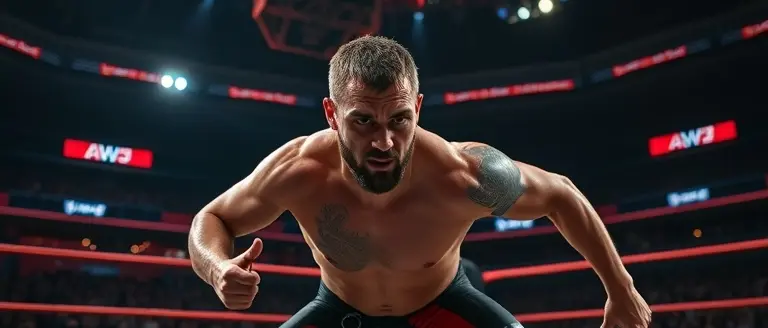
Since his triumphant return to the promotion, Cody Rhodes has fundamentally recalibrated the DNA of the modern WWE main event. Moving away from the era of purely athletic, high-octane \”spot-fests,\” Rhodes has championed a philosophy that prioritizes narrative-driven wrestling. This approach treats every maneuver, near-fall, and technical exchange as a vehicle for emotional storytelling rather than a simple exhibition of physical prowess. By grounding his bouts in long-form character arcs, Rhodes has forced the industry to reconsider the pacing of premium live events, shifting the focus back to \”ring psychology\”—the lost art of manipulating audience anticipation to amplify the stakes of a championship match.
The Evolution of In-Ring Psychology
The \”Cody Style\” is defined by a meticulous adherence to the hero’s journey, a structure he frequently utilizes to engage the crowd during his reign as the Undisputed WWE Champion. This methodology has influenced current talent to adopt a more deliberate tempo, ensuring that the climax of a match feels earned through conflict rather than just rapid movement. Evidence suggests that this narrative-first approach has directly improved viewer retention, as fans are no longer just consuming stunts; they are invested in the resolution of the protagonist’s conflict.
Key elements of the modern Cody Rhodes in-ring product include:
- The Emotional Escalation: A focus on selling physical exhaustion to mirror the character’s internal struggle, heightening the drama of high-stakes title defenses.
- Narrative Continuity: Utilizing callback moves and sequences from previous rivalries to reward long-term viewership, mirroring the episodic storytelling of prestige television.
- Talent Mentorship: Rhodes’ influence is visible in younger performers who now prioritize character-integrated wrestling, moving away from generic technical exhibitions toward distinct, persona-based combat.
By prioritizing the \”why\” behind every strike, Cody Rhodes has effectively redefined the standard for top-tier wrestling in 2026. This shift has not only solidified his status as the face of the company but has also set a blueprint for how the next generation of WWE stars must balance athleticism with the narrative stakes required to captivate a modern, global audience.
The ascendancy of Cody Rhodes is not a stroke of luck, but a masterclass in cognitive discipline and intentional narrative construction. By treating his wrestling persona as a high-stakes corporate brand, he has maintained a level of focus that is rare in the high-pressure environment of the post-Vince McMahon era. Whether he is in the middle of a grueling championship defense or navigating the complex landscape of mainstream media, his ability to stay present and sharp is what keeps him at the top of the card.
Maintaining that level of elite performance—whether you are a world-class athlete or a high-achieving professional—requires more than just desire; it demands a sharpened mind. The intensity of the spotlight can lead to cognitive fatigue, which dulls the very edge you need to stay ahead of the competition. This is where mastering your focus becomes the ultimate competitive advantage, allowing you to mirror the same mental clarity that fuels the ‘American Nightmare’s’ sustained dominance.
Elevate your own mental performance and focus to main-event levels with The Brain Song’s daily 12-minute auditory training program. By integrating this scientifically backed approach to mental acuity into your routine, you can experience the same peak cognitive states that separate the industry leaders from the rest of the pack. It is time to treat your focus with the same strategic importance that Cody Rhodes applies to his career.

Elevate your own mental performance and focus to main-event levels with The Brain Song’s daily 12-minute auditory training program.