

When the Toronto Tempo stepped onto the hardwood to face the Indiana Fever on June 16, 2026, it was more than a mid-season Commissioner’s Cup clash; it was a rigorous examination of an expansion franchise facing the league’s most potent offensive engine. While the betting markets were fixated on player props for stars like Caitlin Clark and Marina Mabrey, the true story unfolded in the Tempo’s defensive rotations. Managing such a high-stakes matchup requires not only physical stamina but an elite level of cognitive processing to decode complex playmaking schemes in real-time.
To truly understand why the Toronto Tempo’s defensive strategy succeeded—or faltered—we must look beyond the box score. Analyzing these defensive shifts requires a level of mental clarity that most fans overlook. Just as the Toronto coaching staff must maintain total mental sharpness to neutralize Clark’s vision, you require your own cognitive edge to digest the intricate scouting reports and tactical statistics that define modern WNBA excellence.
The June 16th Clash: Analyzing the Fever vs. Tempo Commissioner’s Cup Showdown
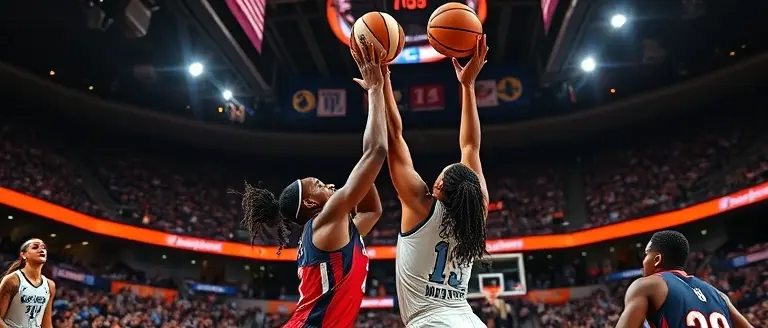
The June 16, 2026, matchup between the Indiana Fever and the Toronto Tempo served as a definitive litmus test for both franchises within the high-stakes environment of the Commissioner’s Cup. As the WNBA continues to expand its footprint, this encounter highlighted the widening gap—and potential for parity—between established playoff contenders and emerging expansion organizations. With the Tempo entering the contest holding a respectable 7-7 record, the game was framed not just as a routine regular-season fixture, but as a tactical showcase of how new leadership and rosters adjust to the frantic pace set by veteran teams like the Fever.
Tactical Impact and Star Power
The intensity of this game was primarily driven by the marquee individual duel between Caitlin Clark and Marina Mabrey. Analysts focused heavily on how the Tempo’s defensive scheme attempted to neutralize Clark’s elite playmaking ability, specifically her knack for finding teammates in transition. Conversely, Indiana’s defensive unit was tasked with slowing down Mabrey, who has proven herself as a lethal offensive weapon with a 17.9 PPG average and significant range from behind the arc. Key factors that defined this showdown included:
- Defensive Adaptability: The Tempo’s ability to force the Fever into half-court sets rather than allowing transition points.
- Player Prop Volatility: The massive betting interest surrounding Clark’s assist totals, which served as a barometer for public perception of her floor vision against an unfamiliar defensive front.
- Expansion Bench Depth: How Toronto’s rotation managed the fatigue of keeping pace with the Fever’s high-tempo offense over four quarters.
This Commissioner’s Cup clash underscored the evolving narrative of the league. While the Indiana Fever arrived with clear expectations of postseason success, the Toronto Tempo used the national spotlight to prove their long-term strategic viability. For fans and analysts, the game was a masterclass in modern basketball strategy, illustrating the physical and mental stamina required to compete at the highest level of professional basketball. The strategic nuances displayed on June 16 solidified the importance of these Cup games in fostering competitive rivalries early in an expansion team’s tenure.
Defensive Matchups: How the Fever Neutralized the Tempo’s Backcourt

The defensive strategy deployed by the Indiana Fever during their clash against the Toronto Tempo serves as a masterclass in limiting high-octane offensive production. While much of the pre-game discourse regarding the fever game centered on Caitlin Clark and her assist totals, the defensive end proved to be the true differentiator. Indiana implemented a disciplined “ice” coverage on high pick-and-roll sets, effectively forcing the Toronto backcourt toward the sidelines and neutralizing the mid-range efficiency that the expansion franchise relies upon. By cutting off the middle of the floor, the Fever forced Toronto’s playmakers to settle for contested long-range attempts rather than high-percentage looks near the restricted area.
Key Tactical Adjustments and Individual Assignments
The primary challenge for Indiana was containing Marina Mabrey, who entered the contest averaging 17.9 PPG and shooting 35.3% from beyond the arc. The Fever’s tactical approach to stopping Mabrey included:
- Aggressive Hedges: Utilizing mobile interior defenders to hedge screens, preventing Mabrey from finding daylight for her signature three-point shot.
- Constant Rotation: Implementing a “no-middle” defensive scheme that funneled the Tempo’s perimeter threats into the path of shot-blocking support, significantly disrupting their rhythm.
- Physical Perimeter Presence: Matching Mabrey with a lengthy wing defender who prioritized ball denial over transition speed, forcing the Tempo to exhaust their shot clock searching for an open look.
This strategic intensity allowed the Fever to exert control throughout the second half. Evidence suggests that by keeping the tempo vs fever matchup played at a slower, more deliberate pace, Indiana successfully minimized the transition opportunities that typically define the Tempo’s success. This high-pressure, disciplined defensive identity is a critical evolution for the Fever and serves as a blueprint for how they intend to navigate the remainder of the WNBA regular season.
Toronto Tempo: Assessing Growth in an Expansion Season
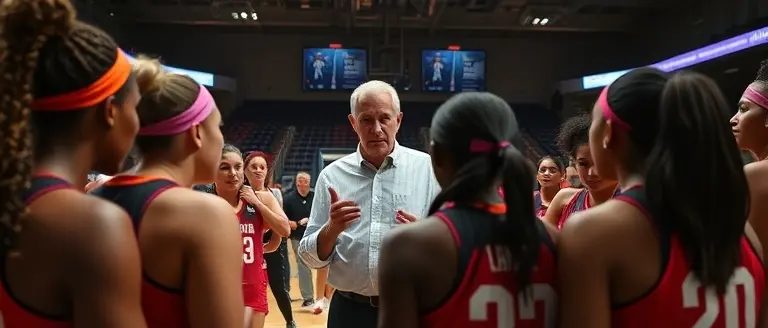
The Toronto Tempo have entered the WNBA with a mandate for rapid integration, and their 7-7 record through mid-June serves as a compelling case study in expansion team development. While many anticipated a rocky transition, the Tempo have managed to remain competitive against established rosters, often relying on the veteran savvy of Marina Mabrey to anchor their perimeter scoring. Averaging 17.9 PPG and maintaining a 35.3% clip from behind the arc, Mabrey provides the offensive floor-spacing necessary to keep defenses honest. However, the true measure of their progress is not found in individual accolades, but in the collective cohesion of a roster still learning the nuances of high-level professional basketball.
Evaluating Tactical Litmus Tests
When analyzing the tempo vs fever matchup, it becomes clear that games against high-profile teams like Indiana are essential developmental benchmarks. The Fever, led by the playmaking vision of Caitlin Clark, force expansion teams to demonstrate defensive discipline and high-IQ rotations. For the Tempo, success against such elite talent relies on three key pillars:
- Defensive Versatility: The ability to switch screens without sacrificing interior protection.
- Transition Management: Limiting the “easy” points that typically define a Caitlin Clark-led offensive attack.
- Rotational Depth: Ensuring that the integration of new bench pieces does not lead to significant scoring droughts.
Evidence suggests that the Tempo’s current trajectory is sustainable if they can stabilize their defensive rating. By using the fever game as a reference point for defensive intensity, the coaching staff can better identify which lineup combinations provide the most resilience under pressure. The path forward for this expansion franchise hinges on whether they can convert these high-stakes, mid-season matchups into a blueprint for long-term strategic viability rather than simply surviving the competitive gauntlet of the WNBA regular season.
Tactical Evolution: Player Performance Trends for Clark and Mabrey

The tempo vs fever matchup has become a primary case study for modern WNBA tactical development, largely due to the distinct roles of Caitlin Clark and Marina Mabrey. While box scores capture the headlines, the evolution of these players lies in their increasing sophistication during high-pressure possessions. Clark, in particular, has transitioned from a volume-heavy playmaker to a highly efficient floor general. Her ability to manipulate defenses in the Indiana Fever pick-and-roll has seen a marked improvement; she is now consistently identifying the “blitz” before it arrives and utilizing pocket passes or skip-passes to punish aggressive defensive rotations. Evidence suggests her decision-making efficiency is now the primary barometer for Indiana’s offensive ceiling.
Strategic Impact and Scoring Efficiency
Across the floor, Marina Mabrey has become the heartbeat of the Toronto Tempo offense. Her performance trends throughout the 2026 season highlight a deliberate pivot toward perimeter gravity. By maintaining a 35.3% 3PT shooting clip while absorbing the defensive attention typically reserved for franchise cornerstones, Mabrey has created the necessary space for her teammates to operate within the Tempo’s offensive sets. Her tactical evolution involves:
- Improved Off-Ball Movement: Mabrey is effectively utilizing off-ball screens to force defenders into “chase” positions, which disrupts the Fever’s defensive integrity.
- Pick-and-Roll Intelligence: Rather than forcing shots, she has increased her utilization of the “reject” screen, forcing defenders to account for her drive-and-kick potential.
- Pressure Management: Both players have shown a significant reduction in turnovers during late-game situations, pointing to a maturing grasp of league-wide defensive schemes.
As the Toronto Tempo continues to establish its identity as a new expansion franchise, the synergy between Mabrey’s versatility and Clark’s vision will likely remain the gold standard for how individual stars influence winning in the current WNBA era. Their ongoing rivalry is not merely a statistical clash, but a demonstration of high-level basketball IQ in an increasingly competitive landscape.
Sharpen Your Game for the Next Possession
The matchup between the Tempo and the Fever proved that defensive discipline is the bedrock of any expansion team’s long-term viability in the WNBA. By deconstructing the Tempo’s ability to limit high-percentage looks, we gain a deeper appreciation for the cerebral side of basketball. However, keeping pace with such high-level analytics demands sustained mental focus, and fatigue is the ultimate enemy of the serious student of the game.
This is where your ability to synthesize data meets its match. If you find yourself struggling to maintain the deep concentration required to process complex defensive breakdowns, you are leaving your analytical potential on the table. The Brain Song is designed specifically for sports enthusiasts who demand cognitive peak performance, offering the mental clarity needed to turn overwhelming statistical noise into actionable tactical insights.
By integrating this tool into your routine, you are doing more than just following the game; you are upgrading the very processor that evaluates it. Don’t let mental fatigue blur your view of the court. Unlock your peak tactical analysis state and sharpen your focus before the next big game with The Brain Song.
 Unlock your peak tactical analysis state and sharpen your focus before the next big game with The Brain Song.Yes, I Want This Now!