
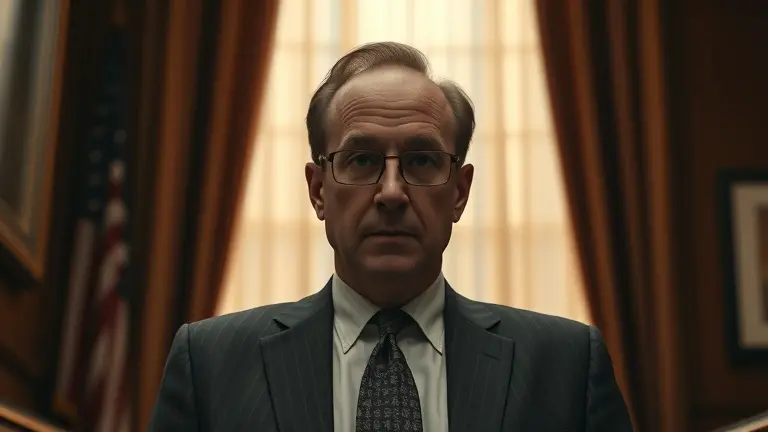
When Bob Odenkirk unexpectedly reappeared as the slick, morally malleable Saul Goodman in the “Know Your Rights” PSA this June, the internet erupted in a predictable cycle of nostalgia and debate. As America gears up for its 250th birthday, this campaign uses the iconic legal persona to deliver a sharp, satirical commentary on the state of the nation. Yet, beyond the buzz of a beloved character’s return, Odenkirk’s latest move highlights a broader, more calculated shift in entertainment: the weaponization of legacy IP to navigate an increasingly polarized political landscape.
While fans revel in the wit Odenkirk brings to his roles—whether in his action-hero turn in Normal or his legendary comedy chemistry with David Cross—a growing contingent of the audience is feeling the weight of this trend. We are witnessing a strategic saturation where our cultural icons are being folded into corporate marketing, leaving many viewers grappling with a sense of fatigue. This isn’t just about entertainment anymore; it is about the cognitive cost of constant, highly-produced media influence.
The Return of Saul Goodman: Analyzing the ‘Know Your Rights’ PSA

On June 16, 2026, the internet experienced a sudden surge in traffic as Bob Odenkirk officially reprised his iconic role as the slippery criminal lawyer Saul Goodman. The surprise release of the “Know Your Rights” PSA, which also features a notable appearance by Jonathan Banks, serves as a high-profile, satirical bridge between the beloved Better Call Saul universe and the upcoming US Semiquincentennial on July 4, 2026. By utilizing Goodman’s signature legal double-speak, the campaign cleverly critiques the complexities of American bureaucracy as the nation approaches its 250th birthday.
Leveraging Iconic IP for Satire
The decision to bring back Saul Goodman for a promotional video ahead of the 250th anniversary highlights a growing trend in marketing: the use of legacy television characters to frame modern socio-political discourse. The “Know Your Rights” PSA does not merely attempt to sell a product; it positions Odenkirk’s character as an ironic guide through the labyrinthine nature of national milestones. Key elements of the campaign include:
- Genre-Bending Satire: The PSA adopts the familiar aesthetic of legal television to mask a deeper, biting commentary on the state of American institutions.
- Strategic Nostalgia: By pairing Odenkirk with Banks, the production taps into deep-seated audience loyalty, ensuring maximum social media engagement across platforms like X (formerly Twitter) and Reddit.
- National Context: The campaign effectively pivots the character from his Albuquerque legal office to a broader, national stage, aligning with the patriotic yet polarized atmosphere surrounding the Semiquincentennial.
While the return of the character has sparked immense excitement among the fanbase, it has also reignited debates regarding the “weaponization” of established media intellectual property. As audiences continue to navigate this trend, the effectiveness of using a character synonymous with moral ambiguity to represent a milestone of national pride remains a focal point of intense critical discussion. Evidence suggests that while some viewers find the meta-commentary refreshing, others express a degree of “corporate fatigue,” noting that the lines between entertainment and institutional advertising have never been more blurred.
IP Nostalgia vs. Corporate Fatigue: The Marketing Weaponization Trend

The June 16, 2026, emergence of Bob Odenkirk as the morally flexible lawyer Saul Goodman in the “Know Your Rights” PSA highlights a sophisticated, albeit polarizing, shift in advertising. By leveraging the immense cultural capital of Better Call Saul to frame the lead-up to America’s 250th anniversary, marketers are utilizing a high-risk, high-reward strategy. This trend of “IP weaponization” involves placing beloved, complex characters into satirical promotional roles to capture attention in an increasingly fragmented media landscape. While the initial engagement metrics from the PSA, which reunites Odenkirk with Jonathan Banks, demonstrate that nostalgia remains an incredibly potent tool for driving visibility, the reception reveals a deepening divide between fan excitement and a phenomenon known as “corporate fatigue.”
Analysis of online sentiment, particularly within forums like r/Fauxmoi, indicates that the audience’s relationship with legacy characters is reaching an inflection point. While superfans celebrate the return of an iconic persona, a growing segment of the public expresses exhaustion at seeing fictional icons repurposed to validate or critique national milestones. This “nostalgia barrier” suggests that for many viewers, the lines between artistic legacy and commercial exploitation have become uncomfortably blurred. Key drivers of this fatigue include:
- Saturation of Intellectual Property: Repeatedly pulling characters from their original narrative arcs to serve as brand or political mascots can diminish the perceived value of the original art.
- Contextual Friction: Using a character defined by legal corruption to comment on a foundational national celebration creates a dissonance that can either alienate viewers or render the message ineffective.
- Artistic Dilution: When Bob Odenkirk balances his critically acclaimed, gritty action work in the film Normal with character reprises, the shift between “serious actor” and “corporate pitchman” can cause viewer whiplash.
Ultimately, the effectiveness of using characters like Saul Goodman as vehicles for political satire remains to be seen. As we approach July 4th, 2026, the success of such campaigns will depend less on the character’s popularity and more on whether audiences perceive these appearances as authentic extensions of the character or merely cynical attempts to capitalize on cultural sentimentality.
From Sketch Comedy to Action Icon: The Odenkirk Evolution
The professional trajectory of Bob Odenkirk serves as a masterclass in career reinvention, spanning the irreverent heights of Mr. Show with Bob and David to the gritty, physical intensity of modern cinema. While the 2026 landscape has been dominated by the surprise revival of the Saul Goodman persona for the “Know Your Rights” PSA, Odenkirk’s versatility remains his most formidable asset. His recent high-profile appearances at the 2026 Tribeca Festival alongside long-time collaborator David Cross offered a poignant reminder of his roots in avant-garde, sketch-driven comedy. These interactions satisfy a deep-seated nostalgia for fans who grew up with his groundbreaking alternative humor, proving that Odenkirk retains his comedic timing even while operating in more serious creative spaces.
Simultaneously, Odenkirk has successfully pivoted toward the role of a credible action star, a transition cemented by the wide release of his latest film, ‘Normal’. Distributed by Magnolia Pictures, this project highlights his ability to command the screen with a physicality that contrasts sharply with the frantic energy of his past comedic characters. This dual-track career path—balancing the intellectual, irony-laced comedy of his early work with the visceral, high-stakes requirements of contemporary action films—contributes to his unique ubiquity in the current entertainment climate.
Key factors driving his 2026 industry standing include:
- Genre Fluidity: An uncanny ability to oscillate between morally ambiguous legal drama and grounded, intense action sequences without alienating his core audience.
- Legacy Preservation: Cultivating his history with David Cross while simultaneously embracing new, franchise-adjacent roles.
- Strategic Visibility: Leveraging high-impact projects like Normal to move beyond the “TV actor” label, effectively establishing himself as a versatile cinematic force.
Ultimately, Odenkirk’s current status is defined by his refusal to remain stagnant. By blending his past as a sketch comedy pioneer with his present as a legitimate Hollywood action lead, he maintains a level of relevance that few performers of his generation can claim. Whether he is reviving the iconic Saul Goodman or pushing his physical boundaries in a new blockbuster, Odenkirk remains a pivotal figure in the shifting tides of American media.
The 250th Birthday Campaign: Is Satire Losing its Edge?

The surprise return of Bob Odenkirk as Saul Goodman in the “Know Your Rights” PSA has reignited a fierce debate regarding the intersection of legacy media and national identity. As the United States approaches its 250th birthday—the Semiquincentennial—marketers are increasingly leaning on established IP to reach a fragmented audience. However, utilizing a character defined by moral ambiguity, legal loopholes, and cynicism to frame a celebratory national milestone presents a distinct, if not contradictory, branding choice. By invoking the spirit of Better Call Saul, the campaign aims to capture the cultural zeitgeist, yet it risks alienating viewers who find the weaponization of beloved icons for political or civic messaging inherently disingenuous.
The Effectiveness of the ‘Goodman’ Persona
While fans were undoubtedly thrilled to see Jonathan Banks and Odenkirk reunite, online discourse—particularly on platforms like Reddit—suggests a growing “corporate fatigue.” The effectiveness of this campaign as a piece of political satire hinges on whether the irony lands or is perceived as a hollow marketing stunt. Key factors influencing this perception include:
- Cognitive Dissonance: Using a character who thrived on exploitation to promote national civic awareness creates a tonal clash that some argue dilutes the gravity of the 250th anniversary.
- The Nostalgia Trap: Relying on legacy characters may provide an immediate engagement spike, but evidence suggests it can overshadow the actual message, turning the campaign into a meme rather than a movement.
- Satirical Utility: In a polarized climate, the Saul Goodman filter offers a safe way to critique systems; however, there is a risk that the “wink” to the audience replaces genuine, constructive commentary.
Ultimately, whether this strategy succeeds depends on whether the public views the PSA as a clever cultural critique or a symptom of a creative industry struggling to manufacture relevance. As Odenkirk balances this high-profile return with his gritty performance in the action film Normal, he remains a master of subverting expectations, even if the vehicle for that subversion is increasingly debated.
Reclaim Your Focus from the Media Noise
The return of Saul Goodman is a masterclass in nostalgia-driven marketing, but it also serves as a stark reminder of how saturated our attention spans have become. Between the excitement of seeing a favorite character and the growing unease toward corporate-backed political satire, audiences are caught in a cycle of constant, high-stakes messaging that leaves little room for individual thought. As we navigate the lead-up to the US Semiquincentennial, it is becoming clear that protecting our mental clarity is a necessary act of resistance against the endless barrage of repurposed media.
While creators continue to leverage nostalgia to grab our attention, it is no surprise that fans are reporting a sense of mental clutter and exhaustion from the endless barrage of media—which is why many are now turning to tools like The Brain Song to clear the fog and regain focus. This tool acts as a personal “de-programming” suite, providing a neuroscience-based auditory reset that helps you tune out the noise of modern marketing campaigns and reclaim your cognitive sharpness. It is the perfect antidote to the “critical exhaustion” many feel in today’s digital climate.
By integrating a 12-minute daily audio reset into your routine, you can move past the corporate fatigue and restore your mental edge. Don’t let the cycle of recycled IP drain your cognitive resources; take control of your attention today.
 Reclaim your mental edge and cut through the media noise with a daily 12-minute audio reset.Transform My Mental Clarity Today!