
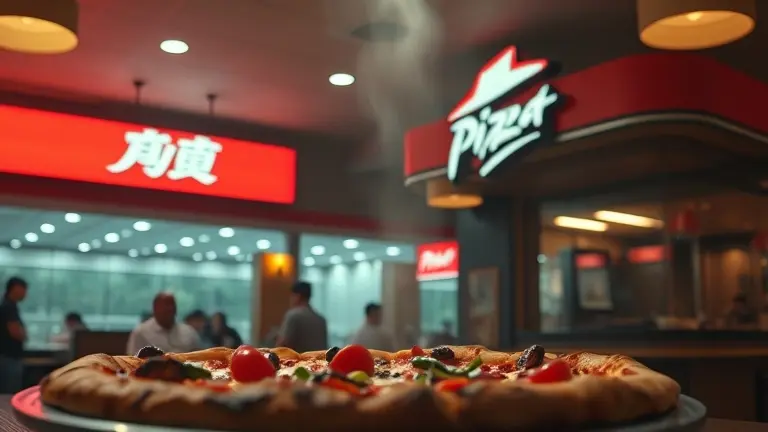
For nearly half a century, the red roof of Pizza Hut served as an American cultural landmark, defining the classic “sit-down” pizza experience for generations. However, that era officially closed on June 16, 2026, when Yum! Brands announced the divestiture of the iconic chain in a $2.7 billion deal. With the majority of global operations moving to the private equity firm LongRange Capital and the mainland China business shifting to Yum China Holdings, the industry is bracing for a total overhaul. This massive restructuring comes after years of structural stagnation, marked by lagging sales and a struggle to keep pace with agile, delivery-first competitors.
This is more than a mere change in ownership; it is a fundamental shift in the landscape of American dining. As Yum! Brands pivots to focus on the relative stability of Taco Bell and KFC, the future of the Pizza Hut brand remains a question of survival versus evolution. For the millions of consumers who grew up with the brand, the transition from a neighborhood restaurant to a leaner, data-driven delivery machine represents a wider cultural pivot. As we move away from the heavy, brick-and-mortar habits of the past, we are forced to ask: What does this decline of the traditional fast-food institution mean for our own health and the legacy consumption patterns we are finally starting to shed?
The End of an Era: Yum! Brands Divests Pizza Hut in $2.7 Billion Deal
On June 16, 2026, a transformative chapter in fast-food history concluded as Yum! Brands officially announced the divestiture of the Pizza Hut brand in a landmark $2.7 billion transaction. This strategic exit ends a nearly 50-year association, signaling a profound shift in how the parent company intends to navigate the future of quick-service dining. The deal is split into two distinct geographic segments: the majority of the global Pizza Hut business is being acquired by private equity firm LongRange Capital, while the lucrative mainland China operations are transitioning to Yum China Holdings.
Financial Rationale and Strategic Pivot
The decision to offload the pizza giant stems from persistent structural challenges that have hampered the brand’s performance for years. Despite its historical significance, Pizza Hut has struggled to keep pace with the hyper-efficient logistics of modern delivery-first competitors and the changing preferences of a more health-conscious consumer base. By removing this lagging asset, Yum! Brands aims to sharpen its focus on its more resilient and profitable core portfolios: Taco Bell and KFC.
To demonstrate its commitment to shareholders and a new direction, Yum! Brands simultaneously unveiled a massive $4 billion share buyback program. This aggressive capital allocation serves as a clear signal to the market that the company is shedding its “legacy” baggage to prioritize high-growth, high-margin segments. Key drivers for this shift include:
- Operational Efficiency: Reducing the burden of managing a sprawling, aging brick-and-mortar footprint that has failed to adapt to modern delivery demands.
- Portfolio Optimization: Redirecting capital and management attention toward brands like Taco Bell, which continue to dominate the US market through menu innovation and digital integration.
- Regional Consolidation: Allowing Yum China Holdings to integrate Pizza Hut into its local supply chain infrastructure, potentially stabilizing the brand in the competitive Asian market.
As ownership transfers to private equity, industry analysts are closely watching how LongRange Capital will approach the brand’s identity—specifically whether they will aggressively modernize the remaining physical locations or pivot entirely to a low-overhead, delivery-only model.
Who is LongRange Capital? Assessing the Turnaround Specialist

The acquisition of Pizza Hut by LongRange Capital signals a significant shift in strategy for the iconic chain. As Yum! Brands divests the asset for $2.7 billion to sharpen its focus on more agile performers like Taco Bell and KFC, industry analysts are closely scrutinizing the private equity firm’s playbook. LongRange Capital has cultivated a reputation for operational restructuring, specifically targeting legacy brands that possess immense brand equity but suffer from bloated real estate footprints and inefficient supply chains. Unlike firms that focus solely on rapid liquidation, LongRange typically emphasizes “bottom-up” transformations, aiming to revitalize tired concepts through targeted capital investment and modern technology integration.
Strategic Objectives for the Pizza Hut Brand
For the global operations now under their control, LongRange faces a dual challenge: addressing the brand’s “delivery-first” identity while reconciling its outdated brick-and-mortar legacy. Observers suggest that the firm’s approach will likely prioritize the following areas to improve profitability:
- Real Estate Optimization: Consolidating or shuttering underperforming sit-down locations to shift focus toward high-margin, smaller-footprint delivery hubs.
- Digital Transformation: Overhauling the mobile and web interface to better compete with third-party delivery giants that have historically outperformed the chain.
- Menu Rationalization: Reducing SKU complexity in the supply chain to lower overhead costs and improve ingredient quality consistency.
While critics often associate private equity involvement with aggressive cost-cutting, the scale of this transaction implies that LongRange is banking on long-term brand equity. The firm is expected to avoid a total “asset strip” in favor of a modernization effort intended to return the brand to a competitive footing. Whether this results in a genuine resurgence or a managed decline remains to be seen, but the move definitively marks the end of the Yum! Brands era and initiates a high-stakes transition period for the world’s most recognized pizza franchise.
The Consumer Perspective: Will Your Local Pizza Hut Change?

Following the news that Pizza Hut sold to LongRange Capital in a landmark $2.7 billion deal, many loyal customers are wondering if their neighborhood slice will look, feel, or taste any different. While transitions of this magnitude often trigger concerns regarding menu consistency and service quality, experts suggest that significant, visible changes for the average consumer are unlikely in the immediate future. Private equity firms typically prioritize operational efficiency and supply chain optimization before attempting high-profile brand overhauls. For the time being, the day-to-day operations—from the signature crust recipes to existing delivery protocols—are expected to remain stable as the new ownership integrates the business.
What Consumers Can Expect Moving Forward
While the brand undergoes this structural shift away from Yum! Brands, customers should look for subtle refinements rather than wholesale disruption. The acquisition aims to solve the systemic challenges that have long plagued the chain, particularly in a landscape dominated by specialized, app-driven delivery competitors. Potential developments likely to affect the user experience include:
- Digital Integration: Accelerated investments in mobile ordering and delivery logistics to keep pace with modern expectations.
- Store Footprint Optimization: A possible thinning of aging, underperforming brick-and-mortar locations in favor of high-efficiency “express” units.
- Menu Streamlining: A potential reduction in underperforming menu items to focus on the core classics that defined the brand’s history.
- Service Standards: A renewed focus on delivery speed, which has been a primary pain point in recent years.
Ultimately, whether this transition results in a much-needed “brand refresh” or simply business as usual depends on how LongRange Capital balances cost-cutting measures with the need for competitive quality. Because the brand’s identity is so deeply tied to its legacy, the new owners are incentivized to protect the core customer base while aggressively modernizing the technology that powers the business. For now, consumers should expect the status quo to hold as the company navigates this transition period.
Brand Evolution or Managed Decline: The Future of Pizza Hut

The news that Pizza Hut sold to private equity firm LongRange Capital for $2.7 billion marks a definitive turning point for the legacy chain. For years, the brand struggled to maintain its relevance in an industry dominated by hyper-efficient, app-based delivery services and the rising popularity of fast-casual pizza concepts. By shedding the asset, Yum! Brands is signaling a strategic pivot to focus its resources on the more resilient core pillars of its portfolio, specifically Taco Bell and KFC. The fundamental question now facing consumers and investors alike is whether this transition represents a necessary brand refresh or the final stages of a managed decline for a business model long burdened by its aging brick-and-mortar footprint.
Strategic Hurdles in a Digital-First Era
The traditional “Red Roof” restaurant experience has largely become an anchor rather than an asset. As delivery culture transitioned from a convenience to a necessity, Pizza Hut’s reliance on large-format dining rooms created significant overhead that its competitors—many of whom are built entirely around off-premise, tech-forward logistics—did not have to carry. To recapture market share, the brand must likely address several critical operational inefficiencies:
- Footprint Optimization: Transitioning away from large, high-maintenance dining spaces toward streamlined, delivery-and-carryout-only locations.
- Technological Integration: Overhauling digital ordering platforms to match the friction-less experiences provided by third-party delivery giants.
- Market Bifurcation: The operational split, where Yum China Holdings manages the chain’s presence in mainland China while LongRange Capital navigates the rest of the world, suggests a “two-speed” future where the brand identity may diverge significantly by region.
Whether LongRange Capital can successfully pivot the brand depends on their ability to execute a lean, technology-driven turnaround. While many see this sale as confirmation that the legacy pizza giant is an “obsolete” asset, others suggest that the brand’s massive global footprint remains a sleeping giant. If the new ownership can effectively strip away legacy costs and reinvest in digital infrastructure, there is a narrow path to modernization. However, if the focus remains purely on debt management and asset liquidation, the sale may merely serve as the closing chapter for a once-dominant titan of the American fast-food landscape.
Turning the Page on Your Own Health History
The sale of Pizza Hut to LongRange Capital represents more than just a $2.7 billion corporate shuffle; it signifies the definitive end of the classic, sit-down pizza parlor era. As the market shifts toward cold, hyper-efficient delivery models, it forces us to reconsider the legacy brands we’ve relied on for decades. This transition is a wake-up call to evaluate not just where we order our food, but how those long-standing, high-calorie dining habits have impacted our long-term wellness.
Just as the dining industry is evolving to prioritize lean efficiency over the bloated, brick-and-mortar footprint of the past, many of us are now reassessing our own daily routines to shed the habits of a less health-conscious era. Moving past the sluggishness associated with traditional fast-food consumption is the first step toward reclaiming your vitality. You don’t have to carry the weight of yesterday’s choices into your future.
CitrusBurn serves as the perfect metabolic tool for the modern professional ready to leave behind the stagnation of outdated lifestyles. By reactivating your natural metabolism, this formula helps you break free from the stubborn weight gain tethered to years of legacy fast-food dependence, aligning your body’s performance with the fast-paced, efficient world we now inhabit. It is the natural next step for anyone ready to modernize their health journey.
 See how you can support your metabolic health and break free from the stagnation of outdated habits.Transform My Life Today