
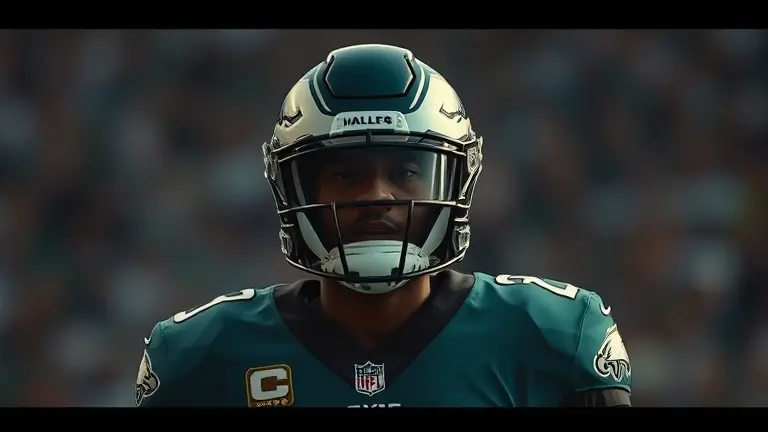
As the Philadelphia Eagles emerge from the quiet of minicamp, the atmosphere surrounding Jalen Hurts has shifted from typical off-season preparation to a palpable, high-stakes tension. Headlines are dominated by speculation about his job security and the pressure of a “make-or-break” season, often ignoring the granular reality of the team’s tactical transformation. With the installation of a new offense under coordinator Sean Mannion and the absence of long-time playmakers, the narrative has become binary: total success or an inevitable search for a replacement. However, this reactionary cycle frequently fails to capture the technical complexity of the adjustments Hurts is making under center.
To truly evaluate the future of the Eagles’ franchise, we must move beyond the “Revenge Tour” soundbites and dive into the mechanics of the game. The 2026 campaign is less about binary outcomes and more about cognitive execution, adaptability, and the discipline to manage a redesigned playbook. This deep-dive analysis deconstructs the structural changes facing Hurts, offering an evidence-based look at the season ahead. By stripping away the clickbait, we provide a sophisticated roadmap for understanding the rigorous mental and physical demands placed on the quarterback, allowing fans to analyze the season with the depth and accuracy it deserves.
The 2026 Crossroads: Deconstructing the ‘Make-or-Break’ Narrative

As the Philadelphia Eagles exit minicamp, the discourse surrounding Jalen Hurts has reached a fever pitch of volatility. We are currently witnessing a stark divergence between traditional sports media—which favors the romanticized “Revenge Tour” framing—and a growing segment of the fanbase on platforms like Reddit and 94WIP that is increasingly skeptical of his long-term viability. This narrative tension is not merely an incidental byproduct of the off-season; it is a calculated cycle of speculation. Media outlets are aggressively linking the Eagles to “former MVP QBs,” transforming theoretical scenarios into click-driven headlines. However, fans and analysts must distinguish between the industry’s need for high-engagement content and the reality of organizational decision-making.
The current “make-or-break” framing ignores the structural complexities of the 2026 season, particularly the massive schematic transition underway. Moving beyond the binary of “success or replacement” requires a nuanced look at the following factors:
- Schematic Evolution: Under new offensive coordinator Sean Mannion, Hurts is being asked to process reads with increased horizontal and vertical complexity, a change that naturally leads to a learning curve during early summer workouts.
- Personnel Shifts: The departure of veteran playmakers like A.J. Brown has fundamentally altered the team’s passing identity, forcing Hurts to develop a rapport with a reconfigured receiving corps.
- The “Insider” Mirage: Much of the chatter regarding potential replacements for Hurts stems from secondary sources and unsubstantiated rumors rather than verifiable front-office intent.
Evidence suggests that these rumors persist because they capitalize on the intense, high-pressure environment of the Philadelphia sports market, where patience is often in short supply. Rather than succumbing to reactionary takes, stakeholders should evaluate Hurts based on his mechanical refinement and decision-making speed within Mannion’s scheme. The path forward is not about satisfying manufactured “revenge” narratives, but rather about executing a coherent, data-driven strategy that prioritizes technical growth over the noise of the news cycle.
The Sean Mannion Effect: Decoding the 2026 Offensive Blueprint

The arrival of offensive coordinator Sean Mannion signals a definitive departure from the hero-ball tendencies that defined the Philadelphia Eagles‘ aerial attack in previous seasons. Evidence from 2026 minicamp suggests a technical shift toward a rhythm-based passing game designed to minimize reliance on individual playmakers like the departed A.J. Brown. For Jalen Hurts, this transition necessitates a fundamental recalibration of his pre-snap processing and mechanical efficiency. Unlike previous iterations that favored extended vertical concepts, Mannion’s scheme prioritizes quick-game concepts, requiring Hurts to expedite his decision-making process to get the ball out of his hands within the 2.5-second threshold.
Tactical Evolution: Mechanics and Personnel Distribution
The shift in offensive philosophy forces a pivot from a concentrated target share to a democratic, multi-receiver approach. Under this new structure, the burden of production is redistributed, demanding more from the tight ends and slot specialists. To achieve success in this system, Hurts must demonstrate improvement in the following technical areas:
- Pre-Snap Read Sophistication: Moving away from simplified reads toward full-field progressions to identify leverage mismatches before the snap.
- Rhythm and Timing: Enhancing footwork consistency in the pocket to match the precise, timing-based routes mandated by Mannion’s playbook.
- Pocket Discipline: Reducing unnecessary scrambles in favor of maintaining passing lanes, specifically when pressure is generated from the interior.
- Target Diversity: Executing high-percentage throws to a wider range of receivers, reducing the predictability of the Eagles’ offense.
By diversifying the passing tree, the coaching staff intends to neutralize defensive coverages that previously funneled the ball toward singular, elite threats. While critics often mistake this evolution for a lack of offensive identity, it represents a calculated tactical move to shield the quarterback from high-leverage defensive traps. For Jalen Hurts, mastering these nuances is not merely about stat accumulation; it is about proving his capacity to function as an elite, cerebral processor within a complex, modern NFL offense. The “make-or-break” discourse ignores this reality: the 2026 season is less about an individual’s physical ceiling and entirely about his transition into a more disciplined, distributed offensive architect.
Redefining Success: Evidence-Based Metrics for 2026
The discourse surrounding Jalen Hurts entering the 2026 season has been dominated by binary “Super Bowl or bust” narratives, which often overlook the technical evolution required within the new Philadelphia Eagles offensive scheme. To objectively assess whether Hurts is effectively mastering the system implemented by offensive coordinator Sean Mannion, fans and analysts must pivot toward granular, performance-based metrics rather than reactionary headlines. Success in this new era of Eagles football should be measured by systemic consistency and efficiency, specifically in areas where mobile quarterbacks traditionally face the steepest learning curves.
Key Performance Indicators for 2026
To determine if Hurts is successfully navigating the transition away from previous veteran playmakers, the following metrics serve as the primary evidence of his development:
- Passer Rating Under Pressure: This is the ultimate litmus test for a quarterback’s composure. Given the personnel changes in the receiving corps, Hurts must demonstrate the ability to process secondary reads when the pocket collapses, rather than defaulting to his legs.
- Third-Down Conversion Efficiency: As the Eagles QB adapts to Mannion’s play-calling, sustaining drives through high-percentage intermediate completions—specifically in the 10-to-19-yard range—will indicate his mastery of the new timing-based concepts.
- Red Zone Completion Percentage: With a renewed focus on field positioning and methodical scoring, maintaining a high completion rate inside the 20-yard line is essential for stability.
- Adjusted Net Yards per Attempt (ANY/A): This stat offers a more comprehensive view of value per dropback than standard completion percentage, accounting for sacks, touchdowns, and interceptions in a way that highlights true tactical efficiency.
By focusing on these specific data points, observers can distinguish between superficial “Revenge Tour” narratives and the actual tactical growth required for long-term viability. If Hurts shows incremental improvement in these categories, it signifies a successful evolution in the Sean Mannion offense, regardless of whether the team meets the high-variance outcome of a championship appearance. Evaluating performance through these objective lenses provides a necessary cooling mechanism for the current wave of unsubstantiated Eagles QB uncertainty rumors.
Organizational Stability vs. Insider Speculation

In the high-pressure environment of the Philadelphia Eagles, the gap between legitimate organizational strategy and digital-age speculation has never been wider. As the 2026 season approaches, headlines suggesting the team is targeting “former MVP QBs” to replace Jalen Hurts have become a staple of the off-season news cycle. However, fans must distinguish between genuine front-office maneuvers and the performative nature of modern sports media. Historically, the Eagles’ front office, led by Howie Roseman, operates with a calculated, long-term philosophy focused on contractual leverage and asset management rather than reactive benching based on fan-driven narratives. The current discourse surrounding Hurts is often symptomatic of a “make-or-break” media cycle that seeks to monetize uncertainty during the quiet months of the NFL calendar.
Navigating the Noise: A Fan’s Toolkit
To filter through the current barrage of “insider” rumors, supporters should evaluate reports based on verifiable organizational intent rather than speculative “what-if” scenarios. Consider these critical indicators:
- Contractual Reality: Analyze the salary cap implications. Organizations rarely move on from a franchise quarterback when the financial penalty—specifically in terms of dead cap—would cripple the team’s ability to build around a successor.
- Tactical Integration: Evaluate how much time the team is investing in the new Sean Mannion offense. If coaching staff resources are dedicated to refining mechanics with Hurts, it is a stronger indicator of belief than any anonymous source claiming a replacement is imminent.
- Source Credibility: Differentiate between aggregate “clickbait” sites that thrive on reactionary takes and established beat writers who cover daily practice and team press conferences.
While the pressure on Jalen Hurts to adapt is real—particularly as he masters new reads under the updated scheme—it is essential to separate technical hurdles from the manufactured instability of the rumor mill. The Eagles remain committed to an objective, data-driven evaluation of their roster; for fans, focusing on on-field performance metrics rather than off-season gossip provides a more accurate picture of the team’s trajectory.
Beyond the Headlines: Elevating Your Analytical Lens
Ultimately, the 2026 season for Jalen Hurts is not a binary referendum on his career, but a complex evolution under Sean Mannion’s offensive scheme. While the media churn remains obsessed with reactionary narratives, the reality lies in the intricate mechanical and tactical adjustments occurring behind the scenes. Understanding these nuances requires more than just casual observation; it demands a sharpened, analytical perspective that can filter out the noise of the “insider” rumor mill.
Just as Jalen Hurts must systematically clear the mental fog of an evolving playbook to execute under immense pressure, dissecting these technical shifts requires your own peak cognitive focus. To stay ahead of the curve and process the high-velocity data of the 2026 Eagles season with surgical precision, you need more than just passion—you need optimized mental clarity.
This is where The Brain Song becomes your ultimate advantage. Designed to support cognitive health and eliminate mental fatigue, this tool is the perfect companion for the serious fan who demands substance over speculation. By sharpening your focus and improving your learning capacity, you ensure that you aren’t just watching the game, but truly understanding the strategic depth that others miss. It is time to treat your analytical game with the same intensity as the professionals on the field.
 Optimize your own analytical game—sharpen your focus and process the 2026 season with total clarity using The Brain Song.Unlock My Cognitive Potential Today!