

For millions, the morning begins not with coffee, but with the familiar gray-and-green grid of Wordle. As we approach puzzle #1823, it is easy to fall into the habit of relying on luck or common starting words. However, the true mastery of this daily ritual lies in your methodology. Instead of scrambling for a lucky guess, high-performing players view Wordle as an exercise in information theory—a strategic dance of eliminating variables and maximizing the value of every single attempt.
This guide moves beyond the standard spoiler-heavy lists that dominate search results. Here, we focus on Wordle strategy: learning how to manage vowels, identify common linguistic patterns like ‘-IGHT’ or ‘ST—‘, and improve your cognitive efficiency. By adopting a ‘Strategy-First’ mindset, you are not just solving a puzzle; you are sharpening your analytical thinking. Whether you are a casual player or a daily completionist, understanding the mechanics of your guesses will dramatically increase your success rate and turn your morning word game into a true mental edge.
Wordle #1823: Your Daily Strategy Guide for June 16, 2026

Welcome to your daily companion for Wordle #1823. For millions of players across the United States, engaging with this New York Times puzzle has become a cornerstone of the morning routine. Whether you are sipping your first cup of coffee or commuting to work, the ritual of solving the daily grid provides a satisfying cognitive challenge that sets the tone for the day. However, we have all faced that moment of gridlock—when you have three gray squares and two yellows, and the path to the solution remains frustratingly obscured. This guide is designed to provide you with a Wordle hint that preserves the challenge while nudging you toward the correct answer.
Elevating Your Daily Wordle Performance
To master Wordle today, one must move beyond simple guessing and adopt a strategic framework. Rather than jumping straight to the solution, consider these tactical approaches that high-performing players utilize to maintain their winning streaks:
- Prioritize Vowel Placement: If your early guesses leave you with empty slots, focus on identifying the position of primary vowels (A, E, I, O, U) before testing obscure consonants.
- Analyze Letter Frequency: Utilize common high-value letters like ‘S’, ‘T’, ‘R’, ‘L’, and ‘N’ within your first two attempts to narrow down the potential linguistic patterns.
- Avoid “Hard Mode” Traps: It is often wiser to use a “disposable” second word that tests entirely new letters if your opening guess only yields a single yellow hit.
- Identify Common Patterns: Many puzzles rely on standard English suffixes or prefixes. If you identify a terminal ‘Y’ or a ‘CH’ combination, use your remaining guesses to test structural variations rather than random words.
By treating the puzzle as an exercise in information gathering rather than a race to the answer, you can emulate the efficiency of the famous Wordle Bot. This spoiler-free approach ensures that when you finally place that last green tile, the sense of accomplishment remains entirely yours. Use these insights to navigate the linguistic landscape of #1823 and keep your streak alive.
Spoiler-Free Hints for Today’s Puzzle

If you are looking for a wordle hint to help you maintain your streak for puzzle #1823, you have come to the right place. Navigating a difficult grid requires more than just luck; it demands a strategic approach to word selection. Whether you are playing the daily Wordle — The New York Times edition or practicing your vocabulary skills, these clues are designed to guide you toward the solution without ruining the satisfaction of the solve. Before you exhaust your remaining guesses, consider these linguistic nudges:
Strategic Linguistic Clues
- Part of Speech: Today’s answer is commonly used as a noun, though it can occasionally function as a verb in specific contexts. It refers to a concrete object or concept rather than an abstract state of being.
- Vowel and Consonant Structure: The word contains two vowels. One of these is a primary vowel often found in high-frequency English words, while the other provides a unique structural anchor for the word’s internal rhythm. There are no repeating letters in today’s solution.
- Semantic Context: Think about the physical world. This word often relates to structural elements or something that can be organized into a specific sequence or hierarchy. If you have already identified common consonants like ‘S’, ‘T’, or ‘R’, you are likely on the right track toward success.
To improve your Wordle today performance, consider how these letters interact within common word patterns. If you find yourself stuck, look at your keyboard; if you haven’t used the most common vowels (A, E, I, O, U) yet, prioritize placing them early. Many high-level players find that establishing the vowel structure is the most effective way to narrow down the possibilities before guessing the terminal consonant cluster. Use these insights to refine your next guess and stay in the game.
Optimizing Your Starting Word Strategy

To master Wordle today, you must transition from guessing based on intuition to employing a strategy rooted in information theory. The most successful players prioritize information gain over immediate word discovery. Your first guess should not be an attempt to solve the puzzle, but rather a diagnostic tool designed to eliminate or confirm the most common letters in the English language. By focusing on high-frequency consonants like S, L, T, and R, combined with versatile vowels like A, E, and O, you significantly prune the possibilities for your subsequent guesses. This approach mimics the logic used by the official Wordle—The New York Times Bot, which consistently prioritizes words that yield the highest probability of reducing the remaining word pool.
Why Entropy Matters in Your Guesses
Think of each guess as a filter. If you select a word with rare letters like “J” or “X” early on, you squander a valuable opportunity to narrow down the search space. Instead, aim for words that maximize the chance of turning a gray box into a yellow or green one. Effective starting words should:
- Include at least two vowels: This helps determine the vowel structure of the target word immediately.
- Avoid letter repetition: Using a word with unique letters provides five distinct data points rather than wasting a slot on a recurring character.
- Prioritize common patterns: Seek words that contain frequent letter combinations, such as the “-ST” or “-TH” suffixes, which frequently appear in English vocabulary.
By consistently applying this “strategy-first” mindset, you will find that you require fewer hints to reach the final answer. When searching for a Wordle hint, remember that the best way to improve your performance is to refine your opening moves; a strong start is the single most effective way to maintain a winning streak without relying on external spoilers. Over time, you will learn to intuitively recognize which letters are “must-haves” for a given puzzle, effectively training your brain to solve even the most difficult daily grids.
Reveal the Answer for Wordle #1823

If you have navigated through your six available guesses and remain stumped by the grid, you are certainly not alone. Wordle today, which is puzzle #1823 according to the official Wordle — the New York Times release schedule, presents a distinct linguistic challenge that may trip up even veteran players. While we always encourage users to utilize our spoiler-free strategy guide first—focusing on entropy-based guessing and common consonant clusters—we recognize that sometimes you simply need to move on with your day. High-urgency search intent often demands a direct solution, and this section is designed to provide that relief without forcing you to hunt through unnecessary text.
Why Puzzle #1823 is Tricky
This specific iteration of the game highlights why relying on common patterns is essential. Players often find that when they reach their final attempt, the remaining possibilities are narrowed down by only a single letter. To maintain your streak and effectively “reset” your game for tomorrow, having the correct answer is a common necessity for those who treat the daily game as a non-negotiable morning ritual. If you feel like your streak is on the line, there is no shame in using a lifeline to ensure your progress remains intact.
The Solution for Wordle #1823
To view the solution, click the toggle below to reveal the secret word. We have hidden the answer to ensure that those who are still playing can maintain the integrity of their daily challenge.
Click here to reveal the answer for Wordle #1823
The answer for Wordle #1823 is PLATE.
By utilizing this Wordle hint and solution resource, you can continue your streak and prepare for tomorrow’s puzzle with a fresh perspective. Remember that consistent practice with varied starting words, such as those rich in vowels and common letters like ‘R’, ‘S’, and ‘T’, will significantly improve your long-term success rate without needing to rely on external help.
Elevate Your Analytical Edge
Mastering Wordle is about more than just luck; it is about refining your linguistic intuition and applying a systematic approach to every grid. By moving away from brute-force guessing and embracing entropy-based strategies, you transform a daily habit into a genuine exercise in cognitive agility. When you approach the game with a clear, focused mind, you notice patterns faster and navigate tricky letter combinations with confidence, turning even the most difficult puzzles into satisfying victories.
However, we all face those mornings where the mental fog feels impenetrable, making that first guess a daunting task. Just as your Wordle strategy requires calibration, your brain performs best when it is primed for peak analytical activity. This is why many top-tier puzzle enthusiasts have integrated a specific cognitive warm-up into their morning routine to clear away distractions and sharpen their mental focus before they even type their first letter.
Consider this the ultimate tool to optimize your morning mental state. By engaging with a brief audio-based priming routine, you effectively transition your brain into a state of heightened clarity and improved pattern recognition. It is the missing piece for those who want to solve their daily puzzles in record time with unmatched precision.
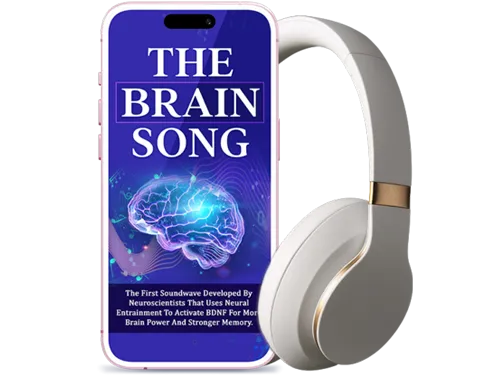 Try this 12-minute brain-priming audio routine today to sharpen your focus and tackle your Wordle in record time.Yes, I Want This Now!