
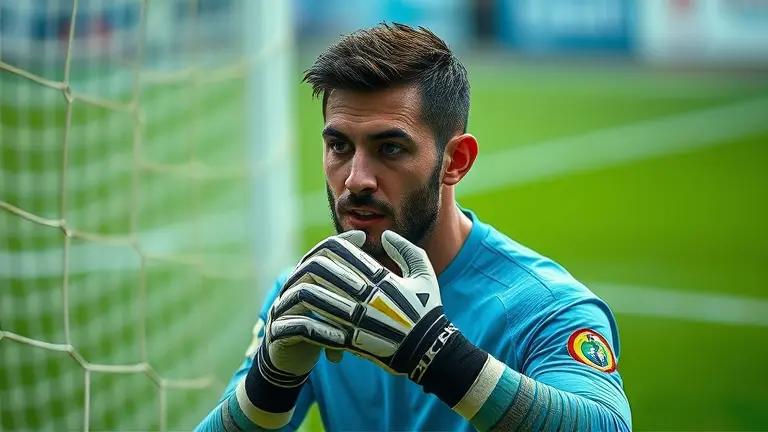
In the 41st minute of Uruguay’s 2026 World Cup opener against Saudi Arabia in Miami, the footballing world watched a moment of profound vulnerability. Fernando Muslera, the 40-year-old veteran and five-time World Cup participant, committed an uncharacteristic error, fumbling a save that handed Saudi Arabia an unexpected opening goal. While Uruguay battled back to secure a 1-1 draw, the incident ignited a global debate: was bringing a retired legend back into the international fold a stroke of managerial genius by Marcelo Bielsa, or a gamble that ignored the biological realities of elite sports?
Muslera’s journey is a rare feat of longevity, yet the scrutiny surrounding his performance highlights the fine line between experience and regression. As we analyze this ‘Muslera Dilemma,’ we aren’t just looking at a single tactical error; we are examining the limits of the human body in high-stakes competition and the uncomfortable question of when the torch should finally be passed. In the ruthless theater of modern football, performance demands efficiency, and even the most storied careers must eventually contend with the slowing march of time.
The Miami Blunder: Analyzing Muslera’s Opening Match Error

The June 15, 2026, Group H opener in Miami turned into a referendum on Fernando Muslera’s selection after a high-profile error shifted the match’s trajectory. In the 41st minute, what appeared to be a manageable situation for the veteran Uruguayan goalkeeper turned catastrophic. As the ball arrived, Muslera misjudged the handling of a routine effort, resulting in a fumble that left the goal exposed. Saudi Arabian defender Abdulelah Al-Amri was perfectly positioned to capitalize on the rebound, slotting home the opening goal and silencing the pro-Uruguay crowd at Hard Rock Stadium. This moment of individual fallibility served as a stark reminder of the volatility inherent in deploying a 40-year-old goalkeeper on the world’s biggest stage.
While Uruguay eventually salvaged a 1-1 draw, the statistical and tactical impact of the error was immediate and profound. The fumble effectively nullified Uruguay’s early dominance and forced Marcelo Bielsa’s side to expend significant energy chasing a deficit. The incident sparked intense discourse across social media platforms like X and Threads, where critics questioned whether sentimentality outweighed tactical prudence in Bielsa’s decision to bring the veteran out of international retirement.
Key takeaways from the match incident include:
- Technical Lapse: The 41st-minute fumble highlighted potential concerns regarding muslera’s reaction speed and focus during high-pressure international fixtures.
- Momentum Shift: The goal fundamentally changed the game’s tactical landscape, forcing a shift in Uruguay’s offensive structure for the remainder of the first half.
- Public Scrutiny: The stark contrast between his five-tournament legacy and this specific blunder intensified the debate surrounding the reliability of aging starters in the modern, high-tempo era of the World Cup.
Despite the draw, the performance underscored the “Muslera Dilemma.” While his leadership and experience remain invaluable assets, his recent lapse provides fuel for those arguing that the physical demands of modern goalkeeping at age 40 may be creating an unsustainable risk for teams with deep tournament aspirations.
The Muslera Dilemma: Should Veteran Keepers Still Carry the Torch?

The 2026 FIFA World Cup opener between Uruguay and Saudi Arabia served as a sobering case study on the risks of placing faith in aging icons. Fernando Muslera, at 40 years old, represents a dying breed of international stalwarts, yet his fumble in the 41st minute—which allowed Abdulelah Al-Amri to capitalize—reignites the fierce debate regarding the viability of veteran goalkeepers in the modern era. While Marcelo Bielsa’s decision to recall the retired shot-stopper was rooted in a desire for leadership and familiarity on the global stage, the tactical evolution of the game demands more than just seniority.
The Trade-off: Experience vs. Agility
Modern football has shifted toward the “sweeper-keeper” model, where rapid recovery speeds and high-line positioning are non-negotiable. As Muslera embarks on his historic fifth World Cup campaign, the friction between his immense legacy and the biological reality of reaction time degradation has become impossible to ignore. Coaches often prioritize the psychological fortitude veterans bring to high-pressure environments, but this reliance creates specific tactical vulnerabilities:
- Reaction Latency: Even elite keepers experience microscopic declines in explosive lateral movement as they enter their late 30s.
- Tactical Rigidity: Veterans are often accustomed to traditional styles, making the transition to the high-intensity, proactive pressing game demanded by modern managers increasingly difficult.
- The “Legacy Bias”: Managers may overlook younger, faster alternatives due to the comfort of trusting a known quantity, even when physical markers suggest a decline.
Ultimately, the Muslera dilemma forces national teams to ask if the leadership value of a veteran outweighs the risk of individual errors in a tournament where margins are razor-thin. While his career is undeniably storied, the Saudi Arabia match provides empirical evidence that at the pinnacle of international sport, tactical agility must eventually supersede legendary status to ensure a team’s continued viability.
Marcelo Bielsa’s Selection Philosophy and the Risk of Sentimentality

The decision by Marcelo Bielsa to entice Fernando Muslera out of international retirement to compete in the 2026 FIFA World Cup serves as a fascinating case study in modern squad management. Known for his tactical rigor and uncompromising commitment to high-intensity football, Bielsa’s choice to rely on a 40-year-old veteran raised immediate questions regarding the balance between experience and physical regression. By prioritizing Muslera—a five-time World Cup participant—Bielsa seemingly sought a stabilizing presence in the locker room, perhaps hoping that the goalkeeper’s extensive institutional knowledge would mitigate the pressures of a high-stakes tournament. However, the costly fumble in the opening match against Saudi Arabia has forced a re-evaluation of whether this reliance on a legendary figure was a calculated tactical necessity or an instance of coaching sentimentality.
The Tactical vs. Psychological Balance
The risk-reward ratio of selecting a veteran in a twilight stage of his career involves several critical factors:
- Institutional Memory: Elite tournaments demand composure. Muslera brings a level of familiarity with the international stage that younger alternatives lack, providing a leadership anchor for a younger Uruguayan defensive line.
- Physical Deterioration: Even the most decorated goalkeepers face a decline in reaction time and explosiveness. The error that allowed Abdulelah Al-Amri to score highlights the fragility of relying on aging reflexes in a tournament where margins for error are razor-thin.
- Squad Harmony: Integrating a returning veteran can boost team morale or, conversely, stunt the development of rising goalkeepers who need competitive tournament minutes to grow.
Ultimately, the scrutiny surrounding Muslera is not merely a critique of a single mistake, but a broader conversation about the evolution of goalkeeper demands. As the game continues to trend toward higher intensity and speed, coaches must decide if the intangible benefits of a veteran’s leadership outweigh the tangible risks of diminished athletic output. Bielsa’s gamble represents a classic dilemma in high-performance sports: the tension between honoring a legacy and adapting to the unforgiving reality of tournament-level demands.
Five Tournaments of History: A Legacy Beyond the Mistake

The narrative surrounding Fernando Muslera at the 2026 FIFA World Cup is complex, shaped as much by his historic longevity as by the high-profile error against Saudi Arabia. Participating in his fifth consecutive tournament, the 40-year-old veteran has cemented his status as a pillar of Uruguayan football. Reaching this milestone is an elite achievement, placing him in an exclusive tier of global athletes who have maintained competitive relevance across nearly two decades of international play. While his fumble in the 41st minute provided a moment of vulnerability, it serves as a stark reminder of the immense pressure inherent in the goalkeeper position at the highest level of the sport.
The Rarity of Five-Tournament Endurance
Muslera’s journey from a young standout to an elder statesman of the La Celeste squad highlights a rare combination of physical maintenance and mental resilience. Few players manage the technical consistency required to remain a starting goalkeeper for a nation as historically demanding as Uruguay. His decision to come out of international retirement to compete under the tactical system of Marcelo Bielsa underscores a profound commitment to the national team.
- Elite Longevity: Muslera joins a short list of legends who have graced five or more World Cup tournaments, showcasing unparalleled dedication.
- Tactical Reliability: Despite the recent scrutiny, his decades of experience have provided Uruguay with stability during periods of defensive transition.
- National Icon Status: Beyond the statistics, he represents a bridge between the golden generation of Uruguayan football and the current emerging talent.
While the critique of age-related regression is a valid component of modern sports analysis, reducing his career to a single match incident ignores the decades of saves and leadership that defined his legacy. The “Muslera Dilemma” is not merely about whether a veteran can avoid mistakes; it is about weighing the value of psychological security and experience against the potential for inevitable physical decline. For fans and analysts alike, Muslera remains a defining figure whose contribution transcends the scoreboard.
Maintaining Peak Vitality Beyond Your Prime
The Muslera case study serves as a stark reminder that even at the highest levels, elite performance is a relentless battle against biological decline. Just as legendary athletes must innovate to sustain their edge as they cross the threshold of their late thirties, everyday high-performers often find themselves fighting the same invisible drain. Maintaining your peak output isn’t just a concern for professional keepers—it is a daily reality for anyone over 35 who refuses to let their energy and metabolic health slip away.
As you navigate your own professional and personal milestones, you may recognize that same “thermogenic resistance” that makes it harder to stay lean and energetic as the years progress. This is where CitrusBurn becomes a natural companion to your lifestyle. Designed to combat the metabolic slowing that catches up to all of us, it acts as a strategic optimizer, helping you restore natural fat-burning and sustained energy levels. By supporting your body’s internal efficiency, you aren’t just managing aging; you are reclaiming the metabolic potential you thought was a thing of the past.
Just as you admire the grit of those who refuse to quit the game, you deserve the same focus on your own longevity. You don’t have to accept a decline in your vitality—you have the power to stay at the top of your game, both physically and mentally. Start supporting your body’s potential today with a solution designed for the long haul.
 Reclaim your peak performance and energy today with the same focus on longevity—try CitrusBurn to support your body’s natural potential.Yes, I Want To Restore My Energy Today!